Uk politics

Stopping Brexit means stopping democracy

From our UK edition

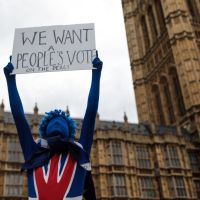
I always shudder when I hear people say, ‘Let’s stop Brexit’. They say it so casually, so cavalierly. It rolls off the tongue as if it were no big deal. They seem utterly unmoved by what ‘stopping Brexit’ would entail and the consequences it would have. It would mean blocking the largest act of democracy in the history of this nation. And its consequences would be to sow mass doubt in Britain’s democratic institutions and bring about an exodus of ordinary people from public life. ‘What’s the point in voting’, they would ask, ‘when they just ignore us?’. We have to get real. Stopping Brexit means stopping democracy. If we kill Brexit, we kill democracy itself.

Michael Gove will not resign from DEFRA

From our UK edition

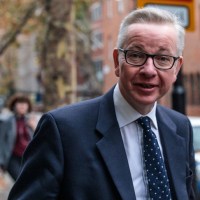
Michael Gove is staying as DEFRA Secretary. Yesterday, Theresa May offered him the job of Brexit Secretary. Gove said that he could only do that job if he was given the opportunity to pursue his own course. May said that she wanted the Brexit Secretary to stay on the exact same course she had plotted. So, Gove turned down the job. May, though, asked him to stay as DEFRA Secretary and Gove has now decided to do so. So, why is he staying? Well, I understand that he didn’t see what would be achieved by going. It might doom this deal, but there would be nothing to put in its place. He felt it would be a nihilistic act, not a constructive one.

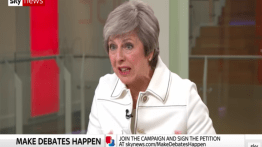
Watch: Theresa May taken to task on LBC phone in

From our UK edition

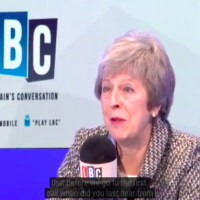
Theresa May has just been doing her best to sell her Brexit plan to voters. But the Prime Minister's pitch didn't go down well with those calling into LBC. The PM's first call came from a Tory councillor who urged her to stand down and let someone else negotiate with the European Union. And she finished off her half-hour stint by being compared to Neville Chamberlain: 'Do you consider yourself the modern day Chamberlain, who also went to Europe and negotiated with a foreign power and came back as having appeased that foreign power and not having stood up for our country?' Mr S. thinks it is safe to say that things could have gone better...

Which MPs backed May’s Brexit deal and who has vowed to vote it down?

From our UK edition

Theresa May spent three hours on her feet in the Commons defending her Brexit deal. Unfortunately, the Prime Minister's perseverance did little to persuade her parliamentary colleagues to back her plan. It was an hour before any Tory MPs publicly supported the PM. A total of 135 MPs spoke during the debate – and only 15 came out in favour, compared to the 109 MPs who vowed to vote the plan down when it comes before Parliament. The debate, where May spent as much time turning to her own benches as to the opposition, confirmed what we already knew. The chances of this deal making it through the Commons in a few weeks' time look vanishingly small.

Full text: Theresa May defends her Brexit deal

From our UK edition

Serving in high office is an honour and privilege. It is also a heavy responsibility. That is true at any time - but especially when the stakes are so high. And negotiating the UK’s withdrawal from the EU after 40 years, and building from the ground-up a new and enduring relationship for the good of our children and grandchildren is a matter of the highest consequence. It touches almost every area of our national life: our whole economy and virtually every job; the livelihoods of our fellow citizens; our integrity as a United Kingdom of four nations; our safety and security – all of these are at stake. My approach throughout has been to put the national interest first. Not a partisan interest. And certainly not my own political interest.

The Tories deserve a lengthy spell in opposition

From our UK edition

Brexit has many theme tunes but the Rolling Stones’ “You Can’t Always Get What You Want” is as good as any. If only the Brexiteers could understand this; if only they could grasp that compromise means exactly that. But, consumed by their own monomania, they cannot for they are blind to everything except their own convictions.  Jacob Rees-Mogg, a man evidently guilty of believing too much in his own fan mail, sonorously declares it is time for Theresa May to go. Nick Timothy, a courtier whose chutzpah has few equals in recent British political history, decries what he terms the Prime Minister’s “capitulation” to Brussels or, as some of us view it, reality.

Watch: Alan Duncan walks out of Brexit deal interview

From our UK edition

Rory Stewart has already been caught out claiming wrongly that 80 per cent of the public back Theresa May's Brexit plan. Now another of the Prime Minister's defenders has come unstuck while trying to support May's withdrawal deal. Alan Duncan was asked whether the government had a problem if the majority of the public don't back the deal. How did Duncan respond? He walked off: https://twitter.com/rosskempsell/status/1063092180594708481?ref_src=twsrc%5Etfw Oh dear...

Watch: Jacob Rees-Mogg’s withering verdict on May’s Brexit deal

From our UK edition

Only a handful of MPs have spoken up in support of Theresa May's Brexit deal in the Commons. But the criticism from a certain Tory backbencher will worry her more than most. Jacob Rees-Mogg took to his feet in the Commons to ask why he shouldn't now hand in a letter of no confidence in the Prime Minister. Here's what he said: 'My right honourable friend – and she is unquestionably honourable – said we would leave the customs union. Annex two says otherwise. My right honourable friend said that she would maintain the integrity of the United Kingdom. A whole protocol says otherwise. My right honourable friend said that we would be out of the jurisdiction of the European Court of Justice. Article 174 says otherwise.

Can Theresa May’s critics unite around an alternative plan?

From our UK edition

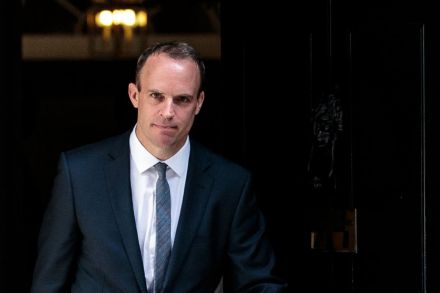
Ahead of the crunch Cabinet meeting No. 10 aides privately admitted that the one minister they could not afford to lose was Dominic Raab. It wasn't just that losing a second Brexit Secretary would send a very bad signal about the government's Brexit policy. More importantly, Raab is regarded as a pragmatic Brexiteer and there was a fear that his resignation would have a domino effect. Those fears were correct. So far today we have seen a second Cabinet minister resign as well as a number of junior ministers. What's more, there is a very good chance more will come. So, where does May go from here? Not only does her Brexit deal look dead on arrival, May's premiership is at maximum danger point. There is an expectation that there will be a confidence vote within days.

Full text: Theresa May’s Brexit Commons statement

From our UK edition

With permission, Mr Speaker, I would like to update the House on our negotiations to leave the European Union. First, I want to pay tribute to my Rt Hon Friends the Members for Esher and Walton and Tatton. Delivering Brexit involves difficult choices for all of us. We do not agree on all of those choices but I respect their views and thank them sincerely for all that they have done. Mr Speaker, yesterday we agreed the provisional terms of our exit from the European Union, set out in the Draft Withdrawal Agreement. We also agreed the broad terms of our future relationship, in an Outline Political Declaration. President Juncker has now written to the President of the European Council to recommend that “decisive progress has been made in the negotiations.

Esther McVey’s resignation adds to Theresa May’s woes

From our UK edition

Esther McVey has quit the government. The Work and Pensions Secretary has long known to be unhappy with Theresa May’s Brexit policy and at yesterday’s Cabinet pushed repeatedly for a vote, so she could register her objection to the withdrawal agreement. Having been denied that vote, she realised that the only way a Cabinet Minister can really show that they oppose a policy is by resigning—and has done so this morning. McVey’s resignation is less of a blow to May than Raab’s; most Tory MPs were expecting her to go at some point. But it adds to the sense of crisis surrounding the government this morning. In total, four ministers have quit the government so far this morning—Suella Braverman, a junior DEXEU Minister, and Shailesh Vara have also gone.

Theresa May and the 48 letters: could it be today?

From our UK edition

If Tory MPs are right when they tell me that by lunchtime today there will be 48 letters of no-confidence in Theresa May lodged by them with Sir Graham Brady, chairman of the 1922 backbench committee, what does that actually mean? Well it is all about how they hate the Brexit plan she unveiled yesterday – or so I am told by rebel Brexiter MPs. It is their “proof”, if such were needed, that May could not get her Brexit plan approved by Parliament in a “meaningful vote”. The logic is that if they are prepared to vote against her leadership of the party, they are obviously prepared to vote down the deal. It does not however prove that May would be ousted if she ran in a subsequent leadership contest triggered by the letters. But that is irrelevant to them.

MPs should not fall for the EU’s promises on the future relationship

From our UK edition

A note leaked to the Times written by the EU's deputy chief negotiator shows that the EU has no intention of releasing the UK from the customs union if May's deal is signed. This attitude should come as little surprise to those close to the deal. Throughout the process, the EU have wished to hamper the UK's future trading relationships to ensure that Brexit does not set a precedent for other countries who might seek to leave. But, in spite of this leaked memo, the EU will not be admitting their intentions in public any time soon. Quite the opposite. The political agreement that will be published alongside the withdrawal agreement will be full of overblown promises about a tailor-made trade deal.

Michel Barnier hails the draft Brexit Withdrawal Agreement

From our UK edition

‘White is the new green’, said Michel Barnier as he held the draft Brexit withdrawal agreement aloft at a press conference in Brussels tonight. The EU’s chief negotiator was referring to the chunks of text that had previously been coloured in where there had been disagreement. Not too long ago, the white sections were few and far between. Now, the colours are all gone and the mammoth 585 page proposed Brexit agreement is the result. A no deal Brexit has, for now at least, been avoided. We’re all familiar with the dire warnings of the cost to Britain of an acrimonious Brexit. These predictions are contentious but one thing is sure: on a personal level, no deal would have been a disaster for Barnier.

Full text: Theresa May’s Brexit Cabinet statement

From our UK edition

The Cabinet has just had a long, detailed and impassioned debate on the draft Withdrawal Agreement and the Outline Political Declaration on our future relationship with the European Union. These documents were the result of thousands of hours of hard negotiation by UK officials, and many, many meetings, which I and other ministers held with our EU counterparts. I firmly believe that the draft Withdrawal Agreement was the best that could be negotiated, and it was for the Cabinet to decide whether to move on in the talks. The choices before us were difficult, particularly in relation to the Northern Ireland backstop.

Corbyn exposed the flaw in May’s Brexit plan at PMQs

From our UK edition

Today’s choice for ‘A Book At Bedtime’ is the government’s draft Brexit deal. At daybreak the masterpiece was being referred to as a 500-page tome but its estimated length has now risen to 540 pp. That explains why the PM looked so calm and unruffled and at PMQs. No MP is going to risk brain damage by working through this Proustian monster. Even the wonkiest wonk in Westminster won’t read it all, and May stands to profit from her colleagues’ ignorance of the fine print. Roger Gale, who once held the demanding role of children’s TV producer, spoke up for every workshy lazybones in parliament. He asked the PM to release ‘details’ (i.e.

A bad Brexit deal was inevitable

From our UK edition

Well, what did you expect? I appreciate this is a question the Brexiteers are manifestly incapable of answering but that says more about their preconceived notions of what Brexit could reasonably deliver. It is a reflection, too, of the manner in which there have always been two different kinds of Brexit.  There has been the Brexit of dreams and the Brexit of reality. The Brexit of psychology and the Brexit of technical policy detail. There has always been an obvious tension, to put it mildly, between these two positions and it is not anyone else’s fault that in pursuit of their dreams the diehard Brexiteers decided the detail could all be arranged to Britain’s supreme satisfaction and everyone else would fall into line.

PMQs: MPs give Theresa May a taste of things to come

From our UK edition

Today's PMQs ought to have been the calm before the storm. With Theresa May unable to reveal details of the proposed Brexit deal to MPs until her Cabinet signs it off – with a crunch meeting at 2pm – the specifics are not known. However, thanks to a series of leaks from the Brussels side and the European Research Group quickly seeing red it proved to be rather tense affair. As ever, Jeremy Corbyn failed to land a killer blow on the Prime Minister despite the rather wide goal posts. The SNP's Westminster leader Ian Blackford had one of his more effective outings – using one question to ask why Scotland won't get the same benefits as Northern Ireland when it comes to single market access.