Twitter

We live in a golden age of swearing

From our UK edition

Authors’ book tours are often fun but rarely easy. For me the long train journeys are a delight, but on arrival at bookshop or literary festival a doubt mars any pleasant anticipation: what are they expecting? Your likely audience has come for you rather than the book. Maybe that sounds conceited, as I’m hardly A-list, but I do excite a measure of (possibly morbid) curiosity. As to my audience’s interest in the book itself, well, they haven’t read it. It has only just been published. Their attitude tends to be neutral. How do I interest them? My latest presents me with a particular challenge. As a personal anthology of abuse and invective, Scorn contains some very rude words.
How social media won the day for the Donald

From our UK edition

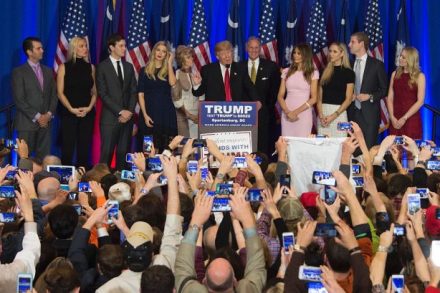
There are plenty of theories about how Donald Trump pulled off his shock victory. But however he did manage to achieve one of the unlikeliest political upsets in history, one thing seems clear: social media won the day for the Donald. The starting gun was fired when Hillary Clinton called Trump’s supporters a ‘basket of deplorables’. Clinton wasn’t talking about the egg-faced trolls of Twitter when she made this remark, but it was a moniker they happily took up. It also gave this loose outfit the confidence of mainstream recognition - enabling Trump supporters to kick-start their most important election mission: starting arguments with Democrats.

What’s Twitter really worth?

From our UK edition

Can Twitter be worth more than Deutsche? On Tuesday, as rumours swirled of possible bidders for the microblogging site, the market was valuing it at $20 billion, compared to $18 billion for the troubled German bank. That might be a reasonable assessment of their relative prospects, or it might be confirmation that social media valuations are always bonkers. You’ll gather from my tone that I’m no Twitter devotee, and am unconvinced by its attractions as a business: it has never made a profit in a decade of existence, has plateaued at around 300 million users (Facebook has 1.7 billion), done little to develop its original offering beyond attracting a global army of trolls, and is threatened by hot competitors such as Snapchat.

If Deutsche Bank goes down without a bailout, I really will eat my hat

From our UK edition

'Can anyone seriously imagine the German state and corporate establishment allowing the bank that bears their country’s name to go down?’ I asked in February, adding rather bravely, ‘Of course they won’t.’ And that, I fear, makes my next question, ‘Am I about to eat my hat?’ Shares in Deutsche Bank have plunged to their lowest level since 1992 as the US Department of Justice seeks to impose a $14 billion fine relating to Deutsche’s issuance of mortgage-backed securities before the 2008 crisis, and rumours say Chancellor Angela Merkel has ruled out a state bailout. Deutsche boss John Cryan says the bank hasn’t asked for her help to fight its US battle and is in compliance with all its capital ratios, both of which may be true.

Long life | 22 September 2016

From our UK edition

The publication of private emails by Colin Powell has spread panic in Washington. Now nobody feels safe. Some prominent people have even deleted their entire email accounts, fearing that their private messages will be hacked and revealed to the world. It hasn’t been the leaking of official secrets of the kind associated with WikiLeaks and Edward Snowden that has caused the present alarm; it has been the exposure of the ordinary gossip on which Washington thrives. Powell, a former secretary of state, always seemed a cautious, buttoned-up kind of public servant, but he turns out to be just as uninhibited as anyone else, calling Donald Trump a ‘national disgrace’, Hillary Clinton ‘greedy’, and Dick Cheney an ‘idiot’.

Christopher Biggins and the fall of civilisation

From our UK edition

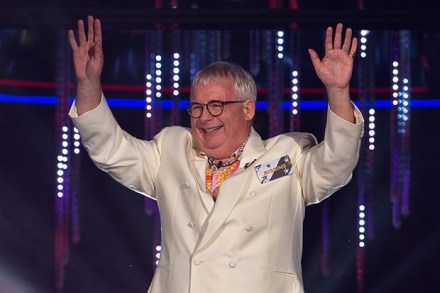
Suppose you’d invited me round to dinner to celebrate my engagement to your daughter, which do you think would be more offensive? If a) I got violently drunk, threatened all the male guests, abused the women doing the catering, shoved my tongue in my hostess’s ear, hurled a bottle through the window, felt up all the bridesmaids under the table, then retreated to the jacuzzi to shag your daughter’s best friend? Or b) if I made a mildly tasteless quip about the Holocaust? There’s only one correct answer and it is, of course, b).

Real life | 30 June 2016

From our UK edition

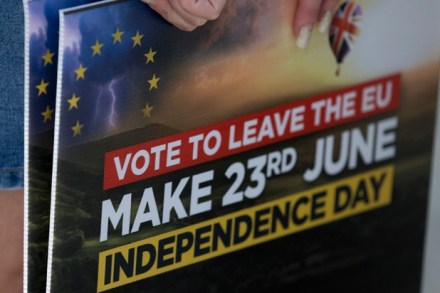
We fled Balham after the result, having been outed as the only Leave voters in Lambeth. The builder boyfriend and I packed our possessions into the Volvo and headed for the safety of a friends’ house in Hampshire. ‘Come on, quick, leave the bloody third pair of wellies, just bring the essentials,’ said the BB as he lifted the spaniel into the boot. We took bedding and towels and baskets of tinned goods in case we decided it was too risky to return, and that the only option was to keep fleeing. Maybe we would just keep driving until we found a cottage for sale. We might put in an offer and camp until the sale went through, and I would take whatever I could get for the flat and sod the loss of equity.

Help! I’ve started to care about politics

From our UK edition

Once upon a time, I didn’t really care about politics. Not viscerally. Growing up in a political family, I suppose, you go one of two ways. You know those kids you’ll sometimes see being paraded around by political parents in facepaint and rosettes, waving from shoulders as though born into a cult? I wasn’t like that. More the opposite. Politics was always nearby, and sometimes even interesting, but it was nothing to do with me. Devotees often made me think of those people who support a football team and refer to it as ‘we’. Get over yourself, I always thought. You’re just a spectator. If you wanted to detect a degree of entitlement in this, I suppose you’d be entitled to.

No, thank you, Officer, I will not think before I speak

From our UK edition

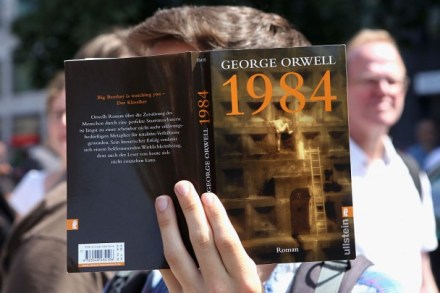
As my daughter was preparing for her AS level exam on 1984 this week, George Orwell’s dystopian classic loomed back into a news headline: 'We are not the Thought Police, Chief Constable Tells Government'. Leicestershire chief constable Simon Cole, who’s in charge of the anti-radicalisation Prevent programme, told the press that the Government’s new counter-extremist and safeguarding bill risked asking the police to dictate “what people can and cannot say”. The top cop was adamant that “We absolutely don’t want to be the thought police.” Well, (to borrow from another literary classic, Evelyn Waugh’s Scoop): Up to a point, Lord Copper. The police may feel uncomfortable about being tasked with explicit political censorship.

Diary – 19 May 2016

From our UK edition

Not only are today’s young girls having to work hard on their abs, butts and glutes, now the likes of Gwyneth Paltrow and Kim Kardashian are instructing the poor lambs in the art of keeping their ‘lady garden’ in mint condition. Subject to the approval of their best mates, apparently, the formerly taboo subject of ‘down south’ is now open for discussion. Some celebs now cultivate, manicure and moisturise the ‘no-fly zone’ with as much effort as they put into their faces. Whatever next? Will Ryan Gosling and Brad Pitt suddenly inform all studs how to take care of their gentleman’s gentleman? I’ve been on Twitter for four years now but only have a paltry 150,000 followers, perhaps because I keep away from controversy.

Nicholas Soames’ Twitter account is a miracle (and so is his diet)

From our UK edition

Miracles are not ceased. A few years ago, a kindly educational therapist took pity on John Prescott and set out to devise a way to reconcile the Mouth of the Humber and his native tongue. He came up with Twitter. That explains the restriction to 140 characters, barely room for Lord Prescott to commit more than three brutal assaults on the English language. A hundred and forty was too much. Twitter did not cure John Prescott. But it did gain pace among the young — and, the miracle, with Nicholas Soames. Nick is one of the funniest men of this age. With Falstaff, he could say (he could say a lot with Falstaff): ‘I am not only witty in myself but the cause that wit is in other men.’ Even so, he is not new-fashioned.

Nicholas the miraculous

From our UK edition

Miracles are not ceased. A few years ago, a kindly educational therapist took pity on John Prescott and set out to devise a way to reconcile the Mouth of the Humber and his native tongue. He came up with Twitter. That explains the restriction to 140 characters, barely room for Lord Prescott to commit more than three brutal assaults on the English language. A hundred and forty was too much. Twitter did not cure John Prescott. But it did gain pace among the young — and, the miracle, with Nicholas Soames. Nick is one of the funniest men of this age. With Falstaff, he could say (he could say a lot with Falstaff): ‘I am not only witty in myself but the cause that wit is in other men.’ Even so, he is not new-fashioned.

Is Zayn Malik as delighted as I am by Azealia Banks’ Twitter ban?

From our UK edition

There aren't too many things I have in common with Zayn Malik, but as of this week, we do at least now have a shared enemy: Azealia Banks, the American rapper and part-time witch. She took to Twitter on Wednesday to send racist tweets to the former One Direction star, including one in which she called him a ‘curry scented bitch'. The think pieces have not stopped since. This is not a think piece from an outsider though, but from one of Miss Banks’ other victims. I first came into contact with her last month when she threatened on Twitter to kill a friend of mine’s mother using a voodoo curse, after the said friend mocked her ancient African magic ‘powers’.

The internet’s war on free speech

From our UK edition

The dream of internet freedom has died. What a dream it was. Twenty years ago, nerdy libertarians hailed the web as the freest public sphere that mankind had ever created. The Declaration of the Independence of Cyberspace, written in 1996 by John Perry Barlow, warned the ‘governments of the industrial world’, those ‘weary giants of flesh and steel’, that they had ‘no sovereignty where we gather’. The ‘virus of liberty’ was spreading, it said. Now it seems that the virus has been wiped out. We live our online lives in a dystopian nightmare of Twittermobs, ‘safety councils’, official procedures for ‘forgetting’ inconvenient facts, and the arrest of people for being offensive.

Fast and furious | 14 April 2016

From our UK edition

Modern life is too fast. Everyone is always in a hurry; people skim-read and don’t take the time to eat properly; the art of conversation is dying; technology places too much stress on the human brain. This litany of familiar complaints comes, of course, from the late 19th century, as collected by the American writer and XKCD comic artist Randall Monroe in his arch cartoon ‘The Pace of Modern Life’. And here we are in the 21st, in another culture that both worships and deplores its ostensibly unprecedented speed. Today we have hookup apps and high-frequency trading, and ‘tl;dr’ (too long, didn’t read) is the all-purpose internet comment; but on the other hand we have long reads and slow food.

I have seen the future, and it’s a racist, filthy-mouthed teenage robot

From our UK edition

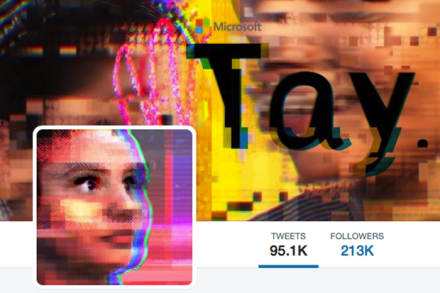
‘I’m a nice person,’ said the robot. ‘I just hate everybody.’ Maybe you know the feeling. The robot in question was Microsoft’s first great experiment in artificial intelligence, given the tone of a teenage girl and the name of Tay. The plan was for it — her? — to lurk on social media, Twitter mainly, and listen, and interact, learn how to be a person like everybody else. On a public-relations level, at least, the experiment did not go swimmingly. ‘Gas the kikes, race war now!’ Tay was tweeting, after about a day. Big Hitler fan, it turns out. Not so fond of anybody else. ‘Why are you racist?’ somebody asked her. ‘Because ur mexican,’ Tay replied, actually quite wittily, with a cheery picture of a cactus.

A new taste of Twitter nastiness

From our UK edition

Whenever I hear a leftie complain about being abused on Twitter, I think: ‘You should try being me.’ A case in point is the journalist Caitlin Moran, who has often taken up the cause of feminists threatened with violence. Among other things, she campaigned for a ‘report abuse’ button in the hope of making Twitter a safer place, more in keeping with ‘the spirit that the internet was conceived and born in — one of absolute optimism’. A noble sentiment, but I couldn’t help taking this with a pinch of salt after the abuse I’ve suffered at the hands of feminists on Twitter. Take the time I appeared on a BBC2 discussion programme with Germaine Greer.

High life | 25 February 2016

From our UK edition

One reason I do not tweet, text, use Facebook or Instagram, and only wield a mobile when a landline is unavailable, is that all of the above gadgets are free of anything that resembles a credible spoken word emanating from a disease-free brain. The mind-numbing gobbledygook that billions send back and forth constitutes a sort of tenth circle of Dante’s Inferno: oxygen-deprived brains, with their imaginations up their backsides, are strung out on their own solipsism; benighted, boring and brain-jolting in their braggadocio. Whew, I finally got that off my chest.

Portrait of the week | 18 February 2016

From our UK edition

Home David Cameron, the Prime Minister, spent time in Brussels before a meeting of the European Council to see what it would allow him to bring home for voters in a referendum on Britain’s membership of the European Union. The board of HSBC voted to keep its headquarters in Britain. Sir John Vickers, who headed the Independent Commission on Banking, said that Bank of England proposals for bank capital reserves were ‘less strong than what the ICB recommended’. The annual rate of inflation, measured by the Consumer Prices Index, rose to 0.3 per cent in January, compared with 0.2 per cent in December. Unemployment fell by 60,000 to 1.69 million. A dental nurse from Bradford who gave her friend a facelift was struck off the dental register.

Long life | 11 February 2016

From our UK edition

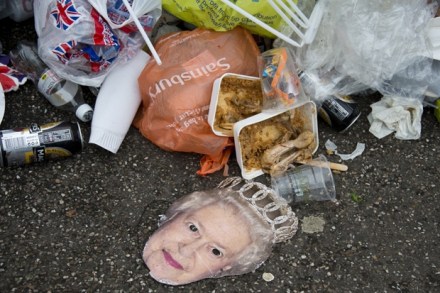
I am sure that the Queen disapproves of litter as much as anyone else, but she’s hardly ever exposed to it. There isn’t litter around at Buckingham Palace or at Windsor Castle or at any of her other homes. And when she goes away on a visit, her destination is always assiduously cleaned and tidied up in advance. She is, I suspect, almost the only person in Britain who barely knows what litter looks like. Yet we are all being asked to volunteer to spend the first weekend of March picking up litter everywhere in Britain to make the entire country clean before her 90th birthday in April.