Twitter

How far should we go to defend free speech?

From our UK edition

This week sees the official launch of the Free Speech Union — an organisation that stands up for the speech rights of its members. It’s my baby, but a number of people have come on board as directors, including Douglas Murray and Professor Nigel Biggar. I’ve also had a lot of help behind the scenes from people who got in touch after reading about it in this column. I was on the Today programme on Monday to talk about it and have done a number of interviews since. By the time you read this, I’ll be recovering from the launch party, scheduled for Wednesday night. So far, it’s going pretty well.
You can’t cancel the truth

This article is in The Spectator’s February 2020 US edition. Subscribe here. Those who want me canceled should probably admit that their efforts have been mostly unsuccessful. I have been banned from Twitter for speaking about the impact of gender-identity legislation on women’s rights, but I haven’t been silenced. Long before I began on trans issues, I’d already fallen into disfavor among those who claim progress as their own, on account of my opposition to the sex trade. The New New Left, for those not in the know, believes the invisible hand of the market will regulate the global sex trade, mysteriously transforming one of the most dangerous and exploitative industries in the world into something ethical, despite all evidence to the contrary.

canceled

How to beat Twitter cellar-dwellers at their own game

For an ordinary girl from Florida whose Twitter presence is largely focused on her rescue pets (shout out to Jolene, Dixie Belle and Mean Cat) and her love of pop culture, I get trolled a lot. Perhaps people don’t enjoy my hot takes on J.Lo’s Oscar snub as much as I’d hoped. Or maybe the internet has lost its appetite for cute pictures of dogs — a sign of the apocalypse if ever there was one. But it’s probably because this Florida Man is my older brother. For the record, I wouldn’t have it any other way. Though, like most siblings, we don’t agree on everything, I love him and am deeply proud of him.

twitter internet

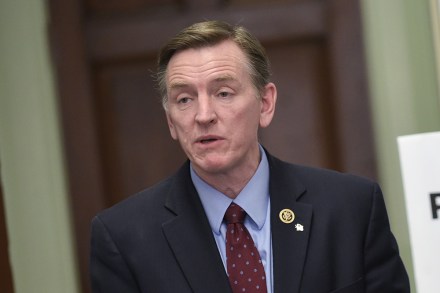
Paul Gosar’s painstaking Epstein Twitter thread

What was the most entertaining part of the first day of Donald Trump's impeachment hearings? Was it George Kent's twee but tragic bowtie? Ambassador Taylor's podcast-worthy tone? Adam Schiff claiming he didn't know who the whistleblower was? Frankly, there weren't too many moments to choose from. Which is perhaps why Rep. Paul Gosar of Arizona decided to make his own fun. Read the first letter of each of his tweets from the proceedings... https://twitter.com/RepGosar/status/1194708768149430272 https://twitter.com/RepGosar/status/1194698583922098177 https://twitter.com/RepGosar/status/1194693002872184837 https://twitter.com/RepGosar/status/1194689552004321287 https://twitter.com/RepGosar/status/1194676222300696576 https://twitter.

paul gosar

Misreading the Twitter presidency

It was a season of complete insanity and boredom. At least that’s how Virginia Woolf recorded the year 1932 in her diary. Her friends kept dying. Europe stared into the abyss and the abyss marched past its windows wearing brown shirts. ‘All England’, she wrote, was ‘spoiled.’She recorded her husband Leonard, as he tended to the flowers in their Sussex garden, muttering: ‘Things have gone wrong somehow.’For liberals today, as they did for Mrs and Mr Woolf many decades ago, things have gone wrong.

donald trump twitter

Trump uses provocative terms because he wants to provoke

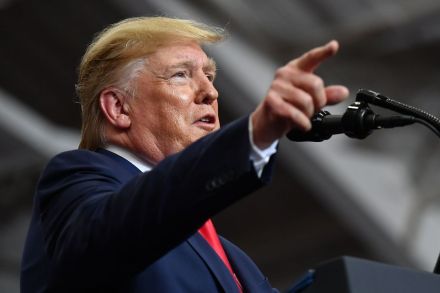
We should be bored by now — perhaps we are. Certainly, the anger against Donald Trump’s tweets isn’t quite as vociferous as before. We are used to @realdonaldtrump now. Three years in, who cares if he sounds presidential? But the media outrage machine still limbers up, on demand, at every provocation. Today’s doozy: Trump compared the Democratic attempts to impeach him over Ukraine to a ‘lynching’. Sure enough, the media explainers did their job. Lynching, we are told by every wired copy monkey who has to file 600 words to their line editor, is a ‘racially charged/loaded term’ that refers to — here I quote the BBC — ‘historic extrajudicial executions by white mobs mainly against African Americans.

provocative

Pierre Delecto 2020?

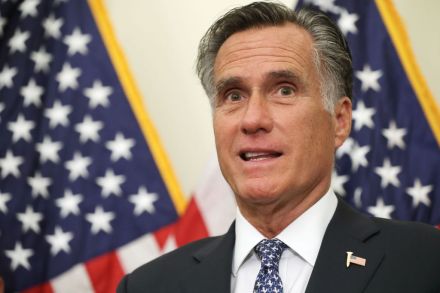
So Mitt Romney is good for a surprise other than strapping the family dog, Seamus, to the roof of his station wagon on a vacation trip to Canada in 1983. The revelation that Romney has been operating a secret Twitter account under the cognomen Pierre Delecto should come as delectable news to his fans and detractors alike. The hifalutin moniker is sure to confirm President Trump’s belief that Romney, as he put it in an earlier tweet, is a pompous “ass” who has been fighting me from the beginning.’ Not to mention Romney’s resort to French to confirm his hidden identity: ‘C’est moi.

mitt romney pierre delecto

Joe Biden versus the internet

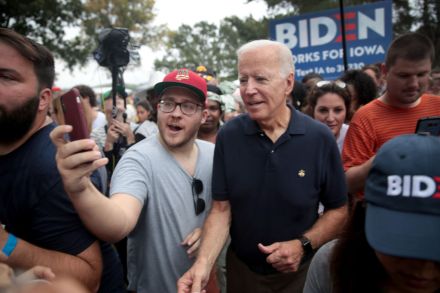
The paradox of Joe Biden is well known. How does the experienced, effective, formidable politician turn into such a fiasco-stalked jellyfish every time he goes for the presidency? Given his advanced state of decomposition, there has been something almost moving about watching Biden being wheeled around another campaign this year. Every Biden event, every meet ’n’ greet, every New Hampshire stroll has generated a micro-gaffe or viral mini-controversy. And each word, each gesture is combed for evidence of sexism or racism. Biden’s most laudable, nay, heroic effort so far to live up to this reputation came during the third debate in Houston.

joe biden iowa

Why is Jessica Yaniv still on Twitter and not in jail?

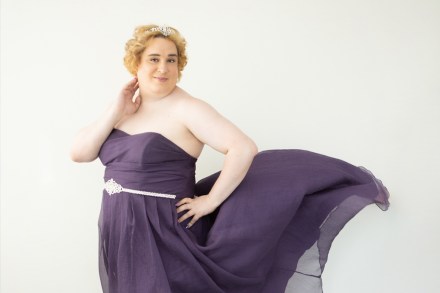
Dramatic accusations of ‘doxxing’ online annoy me no end. It may seem like a petty complaint to rail on about, but as a devoted fan of communicating in coherent ways, I continually insist that words mean things and that we use said words as accurately as possible. Today’s postmodern youth claim that disagreement is violence, men who enjoy femininity are literal females, and the reading of words that challenge their preferred narrative causes PTSD. But our dictionaries have not yet been burned, and so many of us know better.

jessica yaniv

Like Twitter, but with food: Market Hall Victoria reviewed

From our UK edition

The Market Hall Victoria is an international food shed opposite the station terminus. I have long hated Victoria, thinking it the most provincial part of central London. It longs for the provinces, it impersonates them, it summons them. It is odd because the station itself is beautiful: a grimy Edwardian fantasy with tall grimy chimneys and a fantastical clock. But the rest of it is painful: the ugly road to parliament; the immense new blocks with their hideous restaurants; the sad and stripy Roman Catholic cathedral, which searches for grandeur but just looks weird; the Queen’s back wall, which I marvel at, because it tells so much. Victoria is a disappointment to itself. It sags and gasps. It is a stage with the scenery removed; a road out of town.

Ben Sasse kind of sucks now

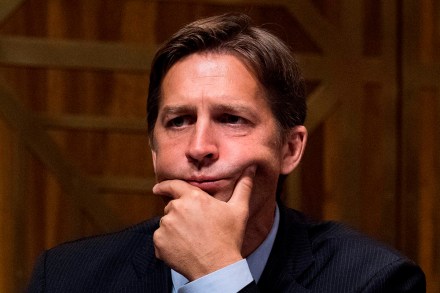
In the summer before an election year, a Midwestern Republican announcing he’s running for reelection to the Senate shouldn’t be particularly newsworthy. But then there’s Nebraska senator Ben Sasse. A sample Twitter reaction to his reelection announcement this week: ‘In the annals of absolute uselessness, whole chapters will be devoted to the political career of Ben Sasse.’ Indeed, the Harvard-educated Sasse had become a sort of folk hero for the Acela corridor. He was the one member of the Senate who wouldn’t just respond to your tweets, he’d clap back. He wrote books that weren’t about politics.

ben sasse

Antisocial media

From our UK edition

Two considerable injustices were undone this week. The first was the reinstatement of Sir Roger Scruton to the government’s ‘Building better, building beautiful’ commission. The second was the prosecution of Carl Beech for fraud and perverting the course of justice. The cases may be very far apart in their details, but their origins lie in precisely the same contemporary malady. Scruton was sacked from his unpaid position in April. The root cause was a doctored and false interview carried out by George Eaton. The New Statesman subsequently apologised for misleading its readers.

‘Doubling down’ is Donald Trump’s greatest triumph

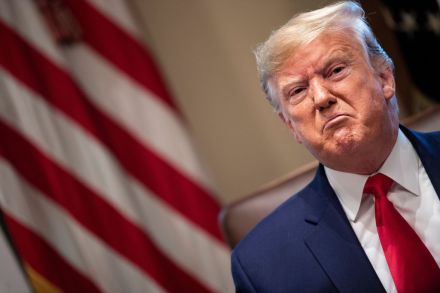
For three years, we have been told what Donald Trump is. We have been told that he is a racist, a xenophobe, a misogynist, a white supremacist, a demagogue, a Russian spy. The charges vary from extreme, unproven and serious to the bizarrely particular and trivial. We have for instance been repeatedly told that it is important that he has tiny hands, or silly hair, or eats McDonald's. Whether or not you agree with the many criticisms of Trump, there is one charge that supporters and detractors admit the truth of: Trump is divisive. But what does that mean? It does not necessarily mean, as the mainstream media always tell us, that he should be hated or considered dangerous. It could just mean that he reveals the deep faultlines in contemporary politics.

doubling down

10 things I’d like to see in ‘a whole new Twitter’

Yesterday Twitter announced it was making some big changes, promising us a ‘whole new Twitter’. They put out the following statement on everyone’s timeline:'New features and a new look are launching soon. Bookmarks, account switching, dark mode, and so much more — before long, you’ll be able to see what’s happening even faster.'I must say after reading their proposed ‘changes’, I’m not terribly excited by this rather moribund list of ‘new features’ and so I have taken the liberty of proposing some changes that will actually benefit its user base.

twitter

Diary – 11 July 2019

From our UK edition

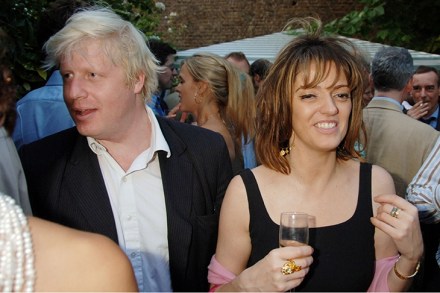
I am beginning to feel like a sort of fairground curiosity: one of those pickled things in jars that Victorians stared at. It is Boris’s fault. Because I once had a close friendship — all right, all right, a tendresse — with Mr Johnson, I am pointed at, photographed, and harried in the aisles of shops. Soon members of the public will be tearing off bits of my clothes — something Russian peasants used to do with anyone who had met the Tsar, as if this would bestow some of Batiushka’s divine status. Tabloid journalists doorstep me, believing I have the answers. I am a female Zoltan Kapathy; not so much an imposterologist as a Borisologist. My present policy is to pretend that I am insane.

When did calorie counting become offensive?

From our UK edition

An author of spoofy, light-hearted mysteries, my friend Ruth Dudley Edwards has had unusual difficulty completing her new novel, Death of a Snowflake. The trouble isn’t lack of material —she’s spoilt for choice — but real life outpacing satire. As we now live in a world of ‘you could not make this stuff up’, readers looking for a laugh are spurning fiction in droves in preference for the newspaper. To wit, exam administrators rather than students are now tested. Stirring widespread consternation this month, a GCSE English exam cited a passage from H.E. Bates’s short story ‘The Mill’, which in due course —not in the passage itself — portrays a rape.

Twitter: no country for old men

From our UK edition

As I write these words, I regret to inform you, John Cleese is on his way to being cancelled. Now there’s a sentence that straddles a generation gap. Many people very familiar with John Cleese will have only the dimmest idea of what ‘cancelled’ means; while people who are all about cancelling celebrities will tend not to know what ‘John Cleese’ means. If anything saves him from cancellation, it will be the hope that he can snuggle down and hide in that gap until it’s all over.

Steven Crowder and the folly of the internet playground

Steven Crowder is a buffoon with a YouTube channel who churns out simplistic, reactionary political takes every day. This might be passably acceptable if he were funny – but he is not. He’s just annoying and obnoxious. Still, annoying and obnoxious people have populated the internet since it first became available to the masses: bitter insults were hurled at the dawn of the online bulletin board.

steven crowder carlos maza

A thought experiment with John McAfee

Knowledge, which is known information, has become the number one commodity in the world. It doesn’t matter how large and important or how small and insignificant a piece of information may be: there is still value in it. Knowledge of a person’s shoe style preference, for example, is valuable to shoe manufacturers or sales organizations which may place targeted ads on social media. Knowledge is king. Given the massive effort placed in collecting, analyzing, cross referencing and disseminating this near infinite body of valuable knowledge, it is odd that no one has yet attempted to exploit the far larger collection of knowledge’s mirror image – the world of ignorance.

john mcafee

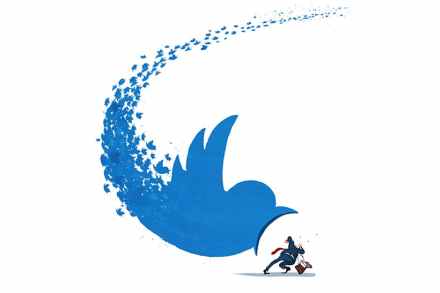
Twitter is a virus of the mind

Society seems to be growing steadily crazier. And maybe it doesn’t just seem to be. Maybe it actually is growing crazier. In the 1930s, science-fiction writer Robert Heinlein dubbed the early 21st century ‘the Crazy Years’, a time when rapid technological and social change would leave people psychologically unmoored and, frankly, crazy. Today’s society seems to be living up to that prediction. But why? I recently read James C. Scott’s Against the Grain: A Deep History of the Earliest States. One of the interesting aspects of the earliest agricultural civilizations is how fragile they were. A bunch of people and their animals would crowd together in a newly formed city.

twitter jack dorsey