Tv

We need to talk about Kevin

From our UK edition

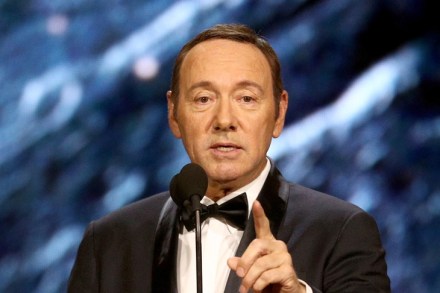
The sixth and final season of House of Cards has begun without Kevin Spacey, who played the murderous Democratic American president Frank Underwood. Netflix fired Spacey when he was accused of multiple sexual assaults last year, although he is not yet charged with any crime. The longed-for dénouement of Frank Underwood — the moment when he realises his crimes have been in vain — never came. Instead his wife Claire, so lovely in looks, is now president. (It’s TV.) When the trailer for the final season appeared, Underwood was already in his grave, with Claire, played by Robin Wright, standing over it. Wright gave an interview saying that she had never known Kevin Spacey, which made me smile, because it is exactly what Claire would have said.

Bad blood

From our UK edition

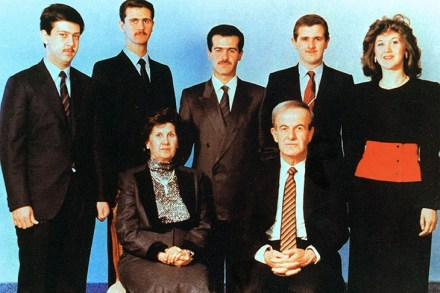
‘How did this mild-mannered eye doctor end up killing hundreds of thousands of people?’ someone wondered about Bashar al-Assad in BBC2’s extraordinary three-part documentary A Dangerous Dynasty: House of Assad (BBC2, Saturday). It’s a question we’ve all occasionally pondered as the Syrian body count rose — 500,000 thus far — and as six million refugees fled the country. The answer is so lurid and complex that it could have come from one of Shakespeare’s tragedies. Chinless, studious, polite Bashar was never meant to become president of Syria. His thuggish military officer father Hafez, who seized power in 1970, had earmarked the job for his dashing equestrian soldier son Bassel.

Melania stays true to herself

From our UK edition

I am not sure that Melania Trump had the introduction of Henry IV Part 2 in mind when she sat down for her free and frank discussion with the jackals of the — er, with a respected ABC correspondent during her recent trip to Africa. But time and again she dilated upon the ‘unpleasant’, erring and intrusive ‘speculation’ of the media. In Shakespeare’s play, the action starts with a warning: ‘Rumour is a pipe/ Blown by surmises, jealousies, conjectures/ And of so easy and so plain a stop/ That the blunt monster with uncounted heads,/ The still--discordant wavering multitude,/ Can play upon it.’ There are a lot of chattering, still discordant heads on view in Tom Llamas’s sit-down with the First Lady.

Novel gazing

From our UK edition

At the beginning of Barneys, Books and Bust Ups: 50 Years of the Booker Prize (BBC4), Kirsty Wark’s voiceover promised us ‘a tale of fierce rivalries, bruised egos and, most importantly of all, countless brilliant books’. In the event, though — as the title perhaps suggested — those countless brilliant books proved rather less important to the programme than Kirsty’s edifying words had led us to believe. At one point, it noted in passing that Midnight’s Children is a very good novel. At another, it lamented the melancholy fact that Booker ‘voting intrigue and judges’ fallings-out’ have sometimes overshadowed ‘the books themselves’.

The new Doctor Who Jodie Whittaker is a delight – but the script isn’t

You won’t be aware of this because the BBC has been keeping it very quiet. But the new Doctor Who is — wait for it — a woman! Let me say straight away that Jodie Whittaker is a delight. Opening as the new Doctor is never easy — all that tiresome establishing rigmarole you have to go through along the lines of ‘I’m feeling all funny. Almost like I’m a completely different actor but in the same body. What can it be? Who am I? Has anyone watching at home worked it out yet?’ But already we like her. Yes, at the moment she’s still a bit of a mishmash of previous Doctors but this will change as she grows into the role.

Doctor Who Jodie Whittaker

Get woke, go broke

From our UK edition

You won’t be aware of this because the BBC has been keeping it very quiet. But the new Doctor Who is — wait for it — a woman! Let me say straight away that Jodie Whittaker is a delight. Opening as the new Doctor is never easy — all that tiresome establishing rigmarole you have to go through along the lines of ‘I’m feeling all funny. Almost like I’m a completely different actor but in the same body. What can it be? Who am I? Has anyone watching at home worked it out yet?’ But already we like her. Yes, at the moment she’s still a bit of a mishmash of previous Doctors but this will change as she grows into the role.

Mother’s ruin

From our UK edition

It’s a radical thought I know, but I sometimes wonder what it would be like if a new TV thriller began by carefully introducing the characters and basic situation, before proceeding chronologically from there. In the meantime, though, there’s BBC1’s The Cry, which didn’t just start with the traditional blizzard of time-shifts, but continued like that for the next hour. In one of the more prolonged of Sunday’s many opening scenes — it lasted at least 60 seconds — main character Joanna (Jenna Coleman) explained to an unseen listener that ‘that’s when this began, with two faces’.

Football focus | 27 September 2018

From our UK edition

‘Football holds a mirror to ourselves,’ Michael Calvin asserts in State of Play. Modern football is angrier, more brutal, more unequal and simply more relentless than ever before. The sense of a football club being rooted to its locality has been shattered. Globalisation, and hyper-commercialisation, means that local owners have been replaced by ‘speculators and savants’ from abroad. Locally reared players, victims of football’s global free market in talent, have become rare.

Let’s talk about sex | 6 September 2018

From our UK edition

This week was bad news for fans of good television drama series — mainly because there’s now three more of the things to keep up with if you don’t want to feel left out of office conversations. The one that stirred up the most advance media excitement was Wanderlust (BBC1, Tuesday), on the traditional grounds that it promised to be unusually explicit about sex. And in that, it certainly didn’t disappoint. The first episode began with a flurry of masturbation (not a phrase I can remember using in a TV column before). First, Joy, a middle-aged therapist, slipped a hand beneath the morning bedclothes — until her teenage son came in to ask where his shoes were.

Shark treatment

From our UK edition

All the good non-fiction things that were ever on TV — from Kenneth Clark’s Civilisation to David Attenborough’s Planet Earth (the bits where he’s not proselytising about climate doom, I mean), from Andrew Graham-Dixon’s arty jaunts to Italy to Jonathan Meades’s bizarro forays into architecture, from The World at War to all those more recent war porn documentaries narrated by Sam West, from Werner Herzog’s Little Dieter Needs To Fly to Louis Theroux doing a number on Jimmy Savile — have one thing in common: they were all made by middle-aged men. Middle-aged men are the business.

Medical examination

From our UK edition

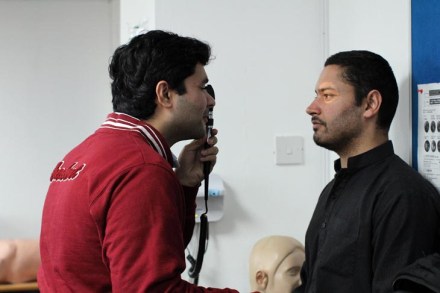
Surprising I know, but judging from The Foreign Doctors Are Coming (Channel 4, Tuesday), Britain mightn’t be such a bad place after all. The programme followed a group of medics from non-EU countries whose dream is to work for the NHS, but who first had to pass a practical exam in Manchester known, for reasons left unexplained, as PLAB 2. ‘When I landed in Britain it felt like a breath of freedom,’ said a young Pakistani woman. ‘People here are helpful,’ declared Ahmed from Egypt as he walked the Manchester streets. ‘I see you have no problem with other cultures.

Did Ed Balls mean to make a documentary on the joys of Trump’s America?

Ed Balls has become the left’s Michael Portillo, reviled as a politician, now a game, well-loved, almost cuddly TV personality. I met him once on This Week and I was instantly struck by how easy, funny and genuinely likeable he was: as engaging in person as he was totally bloody awful as chancellor. Happily it was the gentle man rather than the leftist bruiser who dominated Travels in Trumpland (BBC2, Sun). One fatuous previewer I read in the papers grumbled that he hadn’t challenged Trumpism enough. Tosh.

Top Trump

From our UK edition

The thing I most regret having failed ever to ask brave, haunted, wise Sean O’Callaghan when I last saw him at a friend’s book launch was ‘So tell me about Shergar.’ It has long been known, of course, that the legendary racehorse — one of the five greatest in the last century, according to Lester Piggott who rode him to victory in the Irish Derby — was kidnapped in 1983 by the IRA and never seen thereafter. What I didn’t realise, till after O’Callaghan died last year, was that the ex-IRA man is the only insider ever to have gone on the record as to his fate. Turns out that poor Shergar was executed within hours.

Sacha Baron Cohen isn’t funny – especially when he’s mocking the powerless

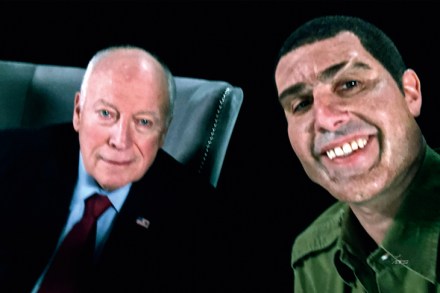
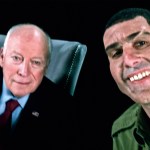
Sacha Baron Cohen’s latest series Who Is America? isn’t funny. But then, nor was his terrible 2016 movie The Brothers Grimsby. Nor was his rubbish 2012 film The Dictator. Nor, let’s be honest, were his classic original characters Borat, Brüno or even Ali G. Obviously, they had their moments: the ‘mankini’ — that bizarre, electric green, giant-thong-like swim wear worn by Borat; the classic late-Nineties catchphrase ‘Is it because I is black?’ And sure it must have taken some nerve — even in character — to explain to a clearly impatient and unimpressed Donald Trump his business plan for some anti-drip ice-cream gloves. But how often, even at his best, does Baron Cohen ever make you laugh?

Full circle

From our UK edition

After just one episode, The Bletchley Circle: San Francisco (ITV, Wednesday) seems certain to stand out from the crowd. In an age when most television dramas range from the perfectly fine to the extremely good, it already looks like a proper old-fashioned stinker. Admittedly, one of its more obvious problems is bang up-to-date: by adhering so spinelessly to the mantra of ‘women and black people good, white men bad’, the programme not only creates an overwhelmingly dreary sense of déjà vu, it also deprives itself of any possibility of genuine dramatic tension. But there are plenty of more traditional flaws too, including such classics as wooden dialogue, leaden humour and a plot of impressively po-faced preposterousness.

Sacha Baron Cohen

Sacha Baron Cohen’s latest series Who Is America? isn’t funny. But then, nor was his terrible 2016 movie The Brothers Grimsby. Nor was his rubbish 2012 film The Dictator. Nor, let’s be honest, were his classic original characters Borat, Brüno or even Ali G. Obviously, they had their moments: the ‘mankini’ — that bizarre, electric green, giant-thong-like swim wear worn by Borat; the classic late-Nineties catchphrase ‘Is it because I is black?’ And sure it must have taken some nerve — even in character — to explain to a clearly impatient and unimpressed Donald Trump his business plan for some anti-drip ice-cream gloves. But how often, even at his best, does Baron Cohen ever make you laugh?

Channel 4 doesn’t do ‘news’ in any meaningful sense of the word – it’s pure propaganda

When President Trump refused to take a question from a CNN reporter at the Chequers press conference last week, I imagine a lot of British viewers thought —as Theresa May clearly did — that he was being graceless, capricious and anti-freedom of speech. But I think we’re in danger of underestimating the extent to which the media landscape has changed in the past few years. Gone are the days — if they ever existed — when political interviewers were dispassionate seekers-after-truth on a mission to get the best out of their subjects. Now, it’s mostly activism-driven, the aim being to advance your preferred narrative while showing up your ideological opponents in as unflattering a light as possible.

Bearers of bad news

When President Trump refused to take a question from a CNN reporter at the Chequers press conference last week, I imagine a lot of British viewers thought —as Theresa May clearly did — that he was being graceless, capricious and anti-freedom of speech. But I think we’re in danger of underestimating the extent to which the media landscape has changed in the past few years. Gone are the days — if they ever existed — when political interviewers were dispassionate seekers-after-truth on a mission to get the best out of their subjects. Now, it’s mostly activism-driven, the aim being to advance your preferred narrative while showing up your ideological opponents in as unflattering a light as possible.

Grim and glorious

From our UK edition

Tick, tock. Tick, tock. Stay too long in the Lee Miller exhibition at the Hepworth Wakefield and the metronome might drive you mad. Considerate curators will only set it swinging in stints to spare the gallery guards. Man Ray, who made the metronome ‘Object of Destruction’ (1923), meant it to infuriate. His assembled sculpture came with instructions. ‘Cut the eye from a photograph of one who has been loved but is seen no more. Attach the eye to the pendulum of a metronome and regulate the weight to suit the tempo desired. Keep going to the limit of endurance. With a hammer well-aimed, try to destroy the whole at a single blow.’ Tick, tock. Tick, tock. Smash. The eye on Man Ray’s metronome was Lee Miller’s, beautiful, blue, bewitching.

Too much information | 12 July 2018

From our UK edition

When Kasper Holten’s production of Don Giovanni was first staged at the Royal Opera in 2014, I disliked it intensely, even more than I have disliked most of his other productions, or for that matter most productions of Don Giovanni. I missed the first revival, but when I saw it this time round my reactions were more complex, though I still think there is a lot wrong with it. In the meantime, I have watched the 2014 production on Blu-ray. Holten and Es Devlin the set designer give a commentary throughout, which at least helped me to understand what was intended, even if it didn’t convince me that most of the producer’s ideas are helpful or even realisable.