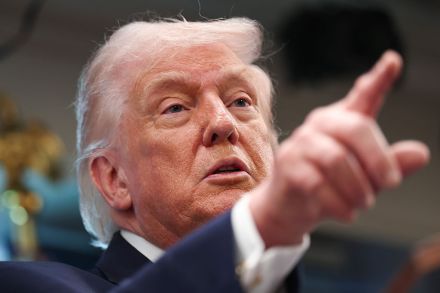
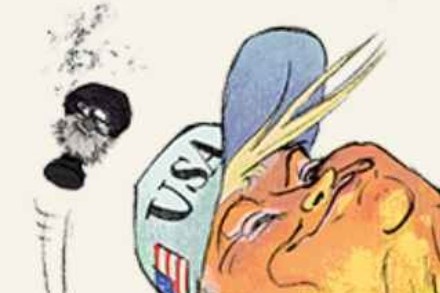
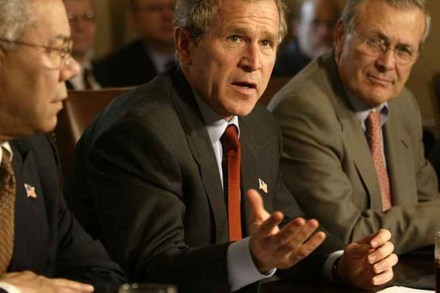
Trump

Can the King handle Trump?

From our UK edition

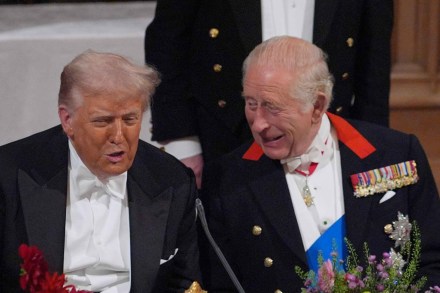
King Charles is about to travel to Washington to visit President Trump. The brief? Fix the strained relationship. No pressure! Can royal diplomacy steady relations? Will the trip be awkward given Trump's recent words on Starmer, Chagos, The Falklands, and Canada? Does the King have what it takes to navigate such a diplomatic minefield? Elsewhere, Morgan McSweeney will appear before MPs tomorrow to explain his actions relating to the appointment of Lord Mandelson as ambassador to the United States. Given he's already said he doesn't recognise portrayals of himself in the media, is he going to come out swinging? Tim Shipman and James Heale discuss.
Can the King handle Trump?

What I heard inside the White House Correspondents’ Dinner

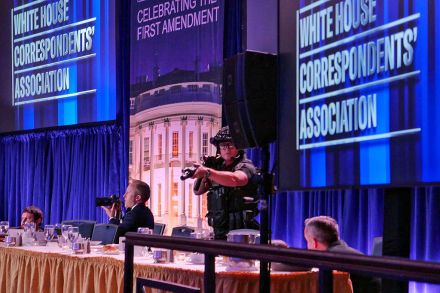
The evening had started pleasantly enough. The most alarming thing about the party I was attending in the Hilton Hotel where the Washington Correspondents’ Dinner was being held were the $18 martinis. Those, and the woman in the nice black dress screaming “criminals” at the police as they dragged her out the door as I arrived. Protesters had gathered outside. They chanted indiscriminately at guests filing through the entrance, calling for an end to the war in Iran and to free Palestine. I was one floor above the main dinner at a party hosted by ABC, engaged in the kind of self-congratulatory socializing this weekend was designed for, when heavily armed police officers started moving through the room. First one, then several – and they wouldn't explain why.

Correspondents

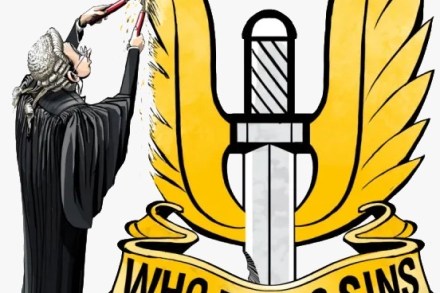
Trump believes Britain has betrayed the SAS

The Special Air Service, Special Boat Service and other elements of UK Special Forces are held in the highest regard by the Pentagon and by US special operators. British and American special forces have forged a bond of trust over decades with joint high-risk operations and combined training. A recent visit to Washington made clear that the American leadership on both sides of the political divide, and within the military and intelligence services, believe the current British government has broken that alliance. America views the SAS and SBS as equal to its own tier one special forces operators in Delta Force and SEAL Team Six. The eight saber squadrons of the SAS and SBS contribute a significant amount of the special forces’ manpower relied upon by both countries.

SAS

Why has Trump picked a fight with the Pope?

From our UK edition

25 min listen

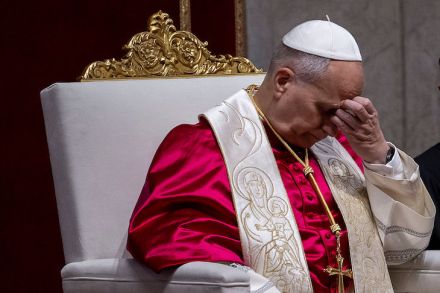
Donald Trump’s latest clash with the Pope has stunned even the more hardened of America-watchers. According to the President of the United States Chicago-born Pope Leo XIV, the spiritual leader of 1.3 billion people, is 'WEAK on crime and terrible on foreign policy.' He also claimed that, 'If I wasn’t in the White House, Leo wouldn’t be in the Vatican.' Is the war in Iran the only reason the Pope and the President have clashed? And what does it tell us about religious relations in the US today? In a special podcast collaboration, the host of Holy Smoke Damian Thompson and the host of Americano Freddy Gray discuss the dispute. Produced by Patrick Gibbons and Natasha Feroze.

Why has Trump picked a fight with the Pope?
Trump vs the Pope: Rowan Williams on America's 'demonic' political climate

Trump vs the Pope: Rowan Williams on America’s ‘demonic’ political climate

From our UK edition

50 min listen

The Pope is 'WEAK on crime and terrible on foreign policy' – this was the verdict of the President of the United States this week, as he appeared to deepen his row with the leader of the Catholic Church. In the magazine this week, Damian Thompson reports on why the President appears to have engaged in his own Holy War with the leader of 1.3 billion Catholics around the world. For this week's Edition, host William Moore is joined by deputy editor Freddy Gray, commissioning editor Lara Brown – and the former Archbishop of Canterbury, Rowan Williams. Baron Williams, now retired from the Lords, fears there is something 'demonic' in the political culture of the United States right now, as people appear to twist Christian teaching to justify their own causes.

The best response to Trump is to pray for him

Imagine that Martin Luther had scrawled his 95 Theses on the back of a Denny’s menu and nailed it to the doors of the nearest church and you get the picture of Donald Trump’s polemic against Pope Leo XIV. The faithful should be careful not to overreact to the President’s provocation, which is objectively hilarious The President’s TruthSocial rant against the Holy Father is highly offensive, of course. Show some respect for the Vicar of Christ. That’s not to mention the follow-up post in which he shared an AI-generated image of himself mocked up as Jesus Christ healing the sick. Given the condition of his second term in office, Trump might focus on trying to raise the dead. Although a man of peace, the Pope has several options for retaliation.

If only TACO were true

A useful rule, when trying to understand current affairs, is AAL: Acronyms Always Lie.A case in point would be the acronym of the year so far: TACO (Trump Always Chickens Out). It means that Donald Trump is always bluffing and, when push finally comes to shove, he folds.TACO has caught on since Liberation Day and the onset of Trump 2.0’s tariff agenda, and is now deployed again and again to describe the President’s latest ceasefire with Iran. Over free trade, Greenland, and the Middle East, he’s shown himself to be a playground bully who loves to intimidate adversaries only to cave whenever the going gets tough.

Taco

Trump’s threat to destroy Iran is detailed and credible

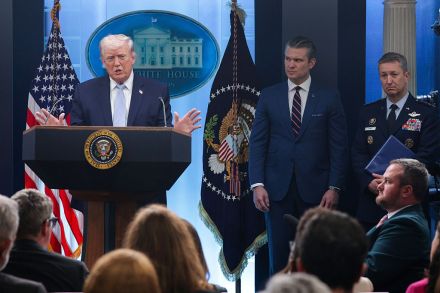
Monday’s White House press conference came in two distinct parts. The first was an extraordinary tale of heroism in the rescue of two downed pilots. America’s military and intelligence leaders provided details that were new to the public. The danger of a daytime rescue mission in the face of enemy fire. The harrowing climb by one officer to a crevice in the mountains. The technical sophistication needed to find him. And the misdirection executed to confound Iranian forces in the area, determined to capture the American serviceman before help arrived.  It was impossible to listen to that tale of bravery and professional excellence without an overwhelming sense of patriotic emotion, suffused with gratitude for the men and women who have pledged their lives to keep America safe.

Trump

Will Trump really obliterate Iran on Tuesday?

Was Donald Trump’s profane and threatening tweet, which included an F-bomb and an allusion to Iran’s leaders as "crazy bastards," on Easter Sunday itself a bunch of BS? Trump is riding high after the daring rescue of an American airman from Iran, but its leadership doesn’t appear to be overly impressed by his tweet threatening a major attack on Tuesday if the Strait of Hormuz is not reopened. On Saturday, Iran’s military leadership indicated that it had no intention of complying with Trump’s demands, dismissing his vow to destroy its infrastructure as a "helpless, nervous, unbalanced and stupid action.

Trump

Operation Epic Fury is costing Trump his coalition

As US troops flock to danger, Donald Trump seeks ways to disentangle himself from the war on Iran. “We are on track to complete all of America’s military objectives shortly, very shortly,” he said in a 19-minute address at the start of the month. “It’s very important that we keep this conflict in perspective.” What’s increasingly clear is that, despite its tactical successes, Operation Epic Fury is turning into a strategic quagmire and a political miscalculation. The President’s approval rating has sunk to -18 percent, the lowest in his second term. Among independents, Trump is on -45 percent, the worst recorded score of any second-term president. That is the perspective concerning the White House.

epic fury

Will Trump pull the US out of NATO?

From our UK edition

15 min listen

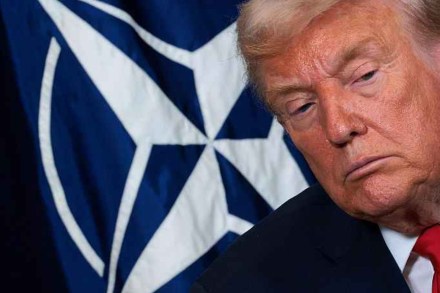
Donald Trump has said he is 'strongly considering' pulling the US out of NATO, in comments made to the Telegraph – and it doesn't appear to be an April Fool. This isn't the first time he has rallied against the Alliance so should the UK take him seriously? Plus – what is Keir Starmer's strategy? – as he tries to balance a testing transatlantic relationship with pursuing closer relations with the EU. Patrick Gibbons speaks to Tim Shipman and James Heale. Produced by Patrick Gibbons.

Will Trump pull the US out of NATO?

Who would trust Stephen Colbert with Lord of the Rings?

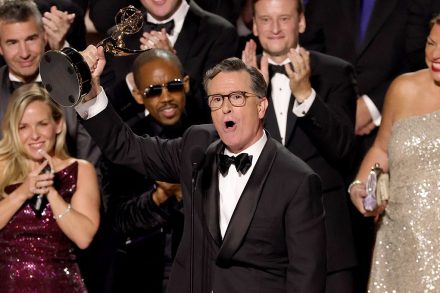
Stephen Colbert is many things – late-night host, perpetual thorn in the side of President Trump and, some would suggest, a comedian – but few have hitherto described him as a Hollywood screenwriter. Which is why it was some of the most jaw-dropping news that the entertainment industry has seen in recent months that it has been announced that Colbert will be co-writing the latest Lord of the Rings film, currently subtitled Shadows of the Past, and that his co-screenwriter will be none other than his son Peter McGee, along with regular Rings writer Philippa Boyens. Everything about the story is, to put it mildly, perplexing.

Colbert

Does Nigel Farage really want to be Prime Minister?

From our UK edition

45 min listen

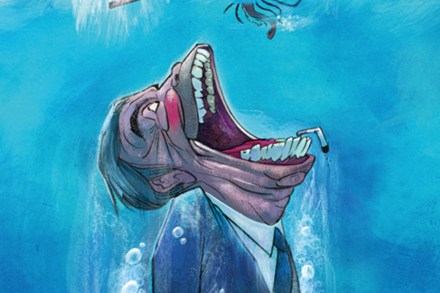
Nigel Farage is a shark – hell bent on devouring Britain's political class, as illustrated with the Spectator's cover story this week, co-authored by James Heale and Tim Shipman. Yet, from rows over the pension triple lock to stagnation in the polls, it isn't clear that Farage has a strategy for power. Reform may win the battle of the Right, but does its leader really want to be Prime Minister? For this week's Edition, host Lara Prendergast is joined by the Spectator's Chairman Charles Moore, deputy political editor James Heale and Times Radio broadcaster Jo Coburn. The panel ponder the idea that Farage may crave power without responsibility. As James puts it, Farage is akin to a southern revivalist – but is momentum waning?

Does Nigel Farage really want to be Prime Minister?

Joe Kent’s resignation was an act of political positioning

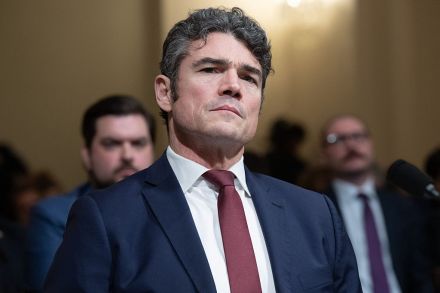
Reflecting on the resignation of Cyrus Vance, James Thomson, the American historian and journalist, wrote in the Washington Post that the former secretary of state “has done us all a great public service.” In doing so, Thomson argued, Vance gave “new life and spine to a somewhat rare and weak convention in our nation: resignation in protest of an issue of principle.” The year was 1980. Vance had resigned in protest over the Carter administration’s decision to authorize Operation Eagle Claw, the ill-fated mission to rescue American hostages held in Iran after the Islamic revolution. The mission ended ignominiously. President Carter pulled the plug after equipment failures and a deadly helicopter collision killed eight service members. Vance was vindicated.

Joe Kent

Iran and the crisis in the European mind

The politics of the Iranian war feature an observable gap between interest and action for nearly all parties. The Americans possessed overwhelming casus belli versus Iran for nearly half a century, and did not act upon it until three weeks past. The Iranians possessed none against America for just as long, but exerted themselves with religious fanaticism to bring this war upon themselves. The Arab autocracies of the Persian-Gulf region find themselves under direct attack from the Iranians, but do not respond in kind. The Chinese observe a core strategic proxy and key commodities supplier taken off the chessboard – for the second time in under 90 days – and refrain from direct engagement.

Europe

How Iran could end the AI boom

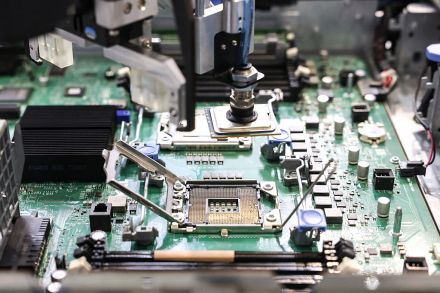
While Americans anxiously watch the price of gasoline tick higher as the war in the Middle East squeezes the global oil supply, the conflict has highlighted another energy vulnerability that could prove just as costly: Taiwan’s dependency on foreign natural gas. At first blush, energy issues an ocean away seem peripheral to American interests. They are anything but. Though the effect on the American economy won’t be immediate, energy insecurity in Taiwan is a looming disaster. Qatar, the source of 30 percent of Taiwan’s natural gas, has been effectively bottled up The reason is that AI – in fact, virtually all modern computing – is highly reliant upon the steady production of semiconductors in the world’s only true hub, Taiwan.

Semiconductors

I spent 25 years fighting neocons. Then Trump became one

Like everyone, I’m glued to the news coming out of Iran. I’m experiencing some depression, as one might, upon realizing that much of what one has worked on for 25 years has suddenly gone up in smoke, destroyed when Donald Trump discovered he was pretty much a neocon after all. Like everyone else, I have no idea what will happen in Iran, whether Trump’s bombing and perhaps breaking apart a very unpopular regime will lead to something better, or just chaos, a failed state spitting out a cohort of embittered men.

neocon

Geoffrey Cain, Justin Marozzi, Alex Diggins & Sam France

From our UK edition

30 min listen

On this week’s Spectator Out Loud: Geoffrey Cain explains why Trump’s real target with Iran is China; Justin Marozzi argues ancient history might be on the side of Ayatollah Khamenei’s supporters; Alex Diggins warns about the catastrophic consequences that may befall the Palace of Westminster; and finally, Sam France celebrates the 50p coin. Produced and presented by Patrick Gibbons.

Geoffrey Cain, Justin Marozzi, Alex Diggins & Sam France

Iran: Why Trump’s ultimate target in this war is China – with Maurice Glasman

From our UK edition

50 min listen

As the conflict in the Middle East escalates, what is Trump’s game plan? The Spectator’s cover piece this week, by Geoffrey Cain, argues that Trump’s ultimate target in this war is China; every dictator gone, weakens the Chinese regime. As Freddy Gray explains further on the podcast, Trump’s worldview is shaped by the events he grew up with – including then President Nixon’s visit to China in the 1970s. As well as making sense of Trump’s plan, the Spectator team take us through the dramatic events of the past week, including how Starmer appears to have alienated Britain’s allies over Iran. Plus – Lord Glasman makes the case for Reza Pahlavi, the Crown Prince of Iran, declaring he is 'devoted to the restoration of the Shah’.

China is next – Trump’s Iran strategy explained with Maurice Glasman

Why Iran marks the end of neoconservatism

45 min listen

Spectator World columnist – and Heritage Foundation fellow – Daniel McCarthy joins Freddy Gray to explain how Trump's war with Iran could mark the end of an era, that of neoconservatism. For Daniel, there is no contradiction between Trump's 'America First' policy and its overseas interventions: Trump is pursuing a version of hegemony that will reduce the need for future interventions. If all goes to plan, this could mark an ideological watershed that stretches back to the first Gulf War in the early 1990s – but it's a big 'if'. What if the conflict spirals out of control? To what extent was this driven by Trump, or by Netanyahu? And what are the dynamics at play between the leadership figures in Maga? Produced by Patrick Gibbons.

Why Iran marks the end of neoconservatism