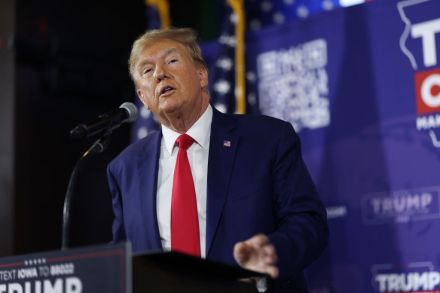
Trump

Modern-day slavery in Mauritania

In April 1864, the US Senate passed a bill that set in motion what would become the Thirteenth Amendment to the Constitution. Slavery was to be abolished. Seven months later, Union forces would burn Atlanta to the ground, a year after Lincoln’s address at Gettysburg marked the battle that began the South’s collapse and the April 1865 surrender of General Robert E. Lee and his Confederate army. The Civil War remains the bloodiest and most divisive conflict in American history with at least a million dead, including soldiers and civilians from both sides. You might think that given American history, if slavery had an in-your-face visibility anywhere on the planet, Congress would call for intervention by the UN, perhaps threaten to send in the Marines. Think again.

Mauritania

Will abortion decide the 2024 election?

From our UK edition

34 min listen

This week, the Arizona Supreme Court reinstated a law from 1864 that bans nearly all abortions in the state. But where do Trump and Biden stand on abortion, and will it be a deciding factor in the 2024 election?  Freddy's joined by Inez Stepman, Fellow at the Claremont Institute, and Daniel McCarthy, Editor of Modern Age Journal.  Produced by Megan McElroy.

Will Biden support Ukraine’s attacks on Russia?

From our UK edition

46 min listen

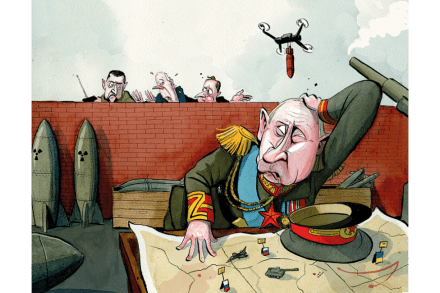
This week: will Biden support Ukraine’s attacks on Russia? Owen Matthews writes the cover piece in light of the Zelensky drone offensive. Ukraine’s most successful strategy to date has been its ingenious use of homemade, long-range drones, which it has used to strike military targets as well as oil refineries and petrol storage facilities in Russia. The strikes are working but have alienated the US, who draw a red line when it comes to attacks on Russian soil. Owen joins the podcast alongside Svitlana Morenets, author of The Spectator’s Ukraine in Focus newsletter to debate what comes next.

X and the return of the social-media sandbox

Elon Musk’s X, the social media site once known as Twitter, is a wasteland. It consists of uncontrolled pornography, crypto spambots, broken “mentions,” unpaid invoices for subscriptions, a useless search algorithm and unverified accounts spreading baseless conspiracy theories and being financially rewarded for juicing controversial or untrue content. It has become practically unusable as a functioning social media platform. But old Twitter, after what it had become, had to be absolutely and unequivocally destroyed for the sake of the future of open online discourse. The Jack Dorsey-Parag Agrawal iteration of Twitter had become part of an intelligence and corporate media censorship apparatus, which would spring into action against any user it viewed as an ideological opponent.

X

Trump vs luxury beliefs

From our UK edition

29 min listen

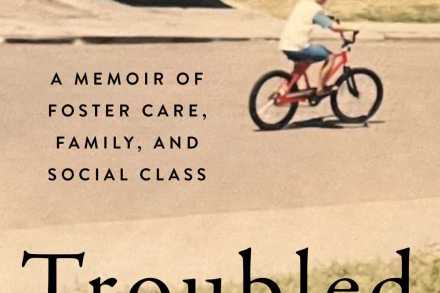
Freddy speaks to Rob Henderson, author of Troubled: A Memoir of Foster Care, Family, and Social Class, in which he coins the term 'luxury beliefs'. These are certain beliefs held by a section of the elite which confirm and elevate the status of those who hold them. As a consequence, they can cause harm to those lower down the social strata. Is Donald Trump the antidote to America’s ‘luxury beliefs’ complex?

Kangaroo courts and bills of attainder

I want to talk about two things in this column: bills of attainder and kangaroo courts. The two often go together. What is a “bill of attainder?” We get the term from English law. A person or persons whom the people in charge don’t like is “attainted.” Forget about due process, presumption of innocence, or any such quaint ideas. Bills of attainder worked through the untrammeled deployment of state power. To be accused was tantamount to being found guilty; common penalties included the abrogation of the right to own property, and, not infrequently, the right to life itself.

attainder
foreign policy

Where is the clarity in modern center-right foreign policy?

When Ohio senator J.D. Vance arrived at the Munich Security Conference in February, he had a clear message meant for the world: the Republican Party was no longer the party of Ronald Reagan. Standing outside the Hotel Bayerischer Hof, he informed reporters that he did not believe American support for combat against authoritarian regimes should extend to Ukraine — and that he would continue to oppose efforts to “increase the supply of weapons in Ukraine because we’ve already expended so many of our munitions and resources” to achieve a victory that he does not foresee. Vance’s bootstrap story is well-known — he’s a Marine veteran turned Yale Law grad turned venture capitalist made prominent by his bestselling Appalachia memoir Hillbilly Elegy.

butler

Who’s afraid of Judith Butler?

Gay icon Judy Garland. Folk queen Judy Collins. Now, we have the lesbian saint Judith Butler (as of 2020, they/them saint Judith Butler.) Once resigned to recognition on college campuses for their unreadable 1990 tome Gender Trouble, which posited that gender is a performance, the queer theorist and Berkeley professor took off as a mainstream hero in the past decade. Tumblr kids reposted quotes from their lengthy, poorly written academic work. New York magazine declared Butler a “pop celebrity.” In March, Farrar, Straus and Giroux published Butler’s first commercial book, Who’s Afraid of Gender? Its prolonged roll-out aims to credit Butler for “birthing” the nonbinary and trans identities of the twenty-first century. It’s as much a publicity stunt as a book.

Trump II: Back with a Vengeance

From our UK edition

47 min listen

On the podcast: what would Trump’s second term look like?  Vengeance is a lifelong theme of Donald Trump’s, writes Freddy Gray in this week’s cover story – and this year’s presidential election could provide his most delectable payback of all. Meanwhile, Kate Andrews writes that Nikki Haley’s campaign is over – and with it went the hopes of the Never Trump movement. Where did it all go wrong? They both join the podcast to discuss what to expect from Trump’s second coming. (03:11) Then: Will and Gus take us through some of their favourite pieces from the magazine, including Michael Hann’s Pop review and Cosmo Landesman’s City Life column. (16:38) Next: Flora Watkins writes in The Spectator about on private schools.

How Covid amnesia spread through the right and left

In August 2020, the US Centers for Disease Control released new Covid testing guidelines, which called for increased vigilance in nursing homes and other hotbeds, while leaving hypochondriacs free to sodomize their noses to their hearts’ delight. The document sought to move away from mass testing for its own sake, which served the dual purpose of, first, generating panic-inducing headlines that could be used to justify lockdowns and drive cable TV ratings and, second, not doing a thing to protect the elderly. The Coronavirus Task Force led by Vice President Mike Pence had signed off on the change a week before in a situation room meeting without any objection from National Institute of Allergy and Infectious Diseases lead Anthony Fauci, as White House advisor Dr.

covid
trump

What will the new Trump foreign policy look like?

A month after the election shock of 2016, CBS’s John Dickerson sat down with the ninety-three-year-old Henry Kissinger to get his assessment of the incoming president. “Donald Trump is a phenomenon that foreign countries haven’t seen,” Kissinger pronounced, noting that many nations would have to weigh “their perception that [Barack Obama] basically withdrew America from international politics, so that they had to make their own assessment of their necessities,” along with “a new president who is asking a lot of unfamiliar questions.” Given “the combination of the partial vacuum and the new questions, one could imagine that something remarkable and new emerges out of it,” Kissinger added. “I’m not saying it will. I’m saying it’s an extraordinary opportunity.

How did the internet become so horrific?

From our UK edition

I can dimly remember the internet getting going, gradually staking its claims on our attention with hardly anyone except tech nerds – and famously David Bowie – realising what was going on. In our defence it was the 1990s and we had a lot else to think about: Britpop, The End of History, lads’ mags, guacamole, supermodels, Tony Blair, Monica Lewinsky, etc. But here we all are now, in a world where I can do my banking from bed, America is fragmenting like papier-mâché in the rain, and primary school children can get porn on their smartphones. Can anyone recall the incremental steps that brought us here?

Does Trump have evangelical Christians to thank for his second coming?

From our UK edition

23 min listen

Donald Trump now seems certain to be the Republican presidential candidate in this year's US presidential elections. That's a prospect that horrifies liberal America and quite a few other Americans besides. The former president secured overwhelming support from evangelical Christians in Iowa and New Hampshire and some commentators are speculating that we're seeing a resurgence of the so-called 'religious right'. Does he have born-again Christians to thank for his astonishing progress so far? In this episode of Holy Smoke my guest is Ryan Burge, the American political scientist whose Graphs on Religion substack is an authoritative guide to religious allegiance and voting patterns. You may be surprised by what he has to say.

The 2024 campaign cage fight

The modern political observer has moved on from the idea that “all politics is local.” In our interconnected world, politics now comes down to sophisticated data analytics, nationwide donor networks and money that’s used to drive the narratives that take hold on 24/7 cable news or social media. “All politics is local” is the type of Rockwell-esque trope that wasn’t necessarily true even when the phrase debuted in 1932, let alone when former House speaker Tip O’Neill made it popular. But last year showed us that even old clichés are subject to a gritty reboot.

2024
haley

The fall of Nikki Haley’s comet

In the waning days of 2023, the last weeks of the before-time — the moments before the Republican Party would inevitably crown the once and future king who rules upon high from Mar-a-Lago — the billionaire donor class of the Republican Party decided en masse that it would endorse a candidate in a final desperate attempt to block Donald Trump. They settled on Nikki Haley, the erstwhile South Carolina governor turned United Nations ambassador, whose star had risen oh-so-very slightly in early state polling, if you squinted hard enough. She would be their choice for a last stand against The Donald Redux, whose return they publicly claimed to fear and loathe as a threat to democracy while privately admitting they would unanimously support him. The question is: why?

president

How to jail a president

Of all the strange political things that may occur in what will be one of the stranger political years in history, one possibility stands out as the strangest. Donald Trump, who will almost certainly be the Republican presidential nominee, is also facing the possibility of a racketeering conviction that could send him to prison. So, how exactly do you jail a president? Trump’s most fervent opponents may find themselves disappointed. No one’s going to toss the Donald into some American equivalent of the Black Hole of Calcutta. And as much as people might want to shut him up, no one is going to hold him captive in a bare, dark cell with a Hannibal Lecter mask over his face. On the other hand, Trump’s most fervent supporters could find themselves disappointed as well.

Gallagher china ccp confucius institutes china

How will the 2024 election impact US-China relations?

There was a time when the relationship between the United States and China had a bright future. While bilateral relations have never been particularly rosy since the two countries formally established diplomatic ties on January 1, 1979, US and Chinese leaders have long worked on the assumption that they had much to gain by deepening their cooperation and, if possible, expanding it to new heights. This was a widespread sentiment in Washington, reflected in speeches given by presidents from both parties. “I know there are those in China and the United States who question whether closer relations between our countries is a good thing,” President Bill Clinton told students at Beijing University in June 1998.

The fight ahead in 2024

Are you desperate for a deal? Usually the start of a new year provides the patient ones among us the chance to snag a bargain in the January sales. Good things come to those who wait, the old adage goes. Yet 2024 seems set to offer us more of the same. The usual stalls are at the market — all of them trying to hawk shoddy wares to Americans. Take the primary process for our presidential elections, which kicks off in Iowa and New Hampshire this month. If the prognosticators are to be trusted, we are set for a rematch between President Biden and former President Trump. Biden’s approval rating doesn’t seem to be improving and the cries for him to drop out and let a younger candidate step in are still sounding — and they come from more and more prominent people every day.

2024
regime

The 2024 regime referendum

The 2024 election will be a referendum on Joe Biden, but it’s also a referendum on a regime. This is how both sides see it. Liberal democracy itself is at stake according to progressives. For Trump supporters, the question at issue is legitimacy of the Deep State. These are different names for the same thing: a leadership caste and its ideology of government. In practice, liberal democracy means a democracy in which liberals never lose power.