Treasury

The quiet man barks

Almost exactly a year ago, Tony Blair’s memoirs wafted into bookshops to cause a stir ahead of conference season. Now it it seems that Alistair Darling’s, due out next Wednesday, will do exactly the same. Judging by the extracts published over at Labour Uncut, the quiet man of the last Labour government will splash his simmering frustrations and enmities right across the page. Gordon Brown, he will say, became increasingly “brutal and volcanic”. Mervyn King was “amazingly stubborn and exasperating”. And Ed Balls and Shriti Vadhera will be accused of “running what amounted to a shadow treasury operation within government”. But the most eyecatching revelation, and perhaps the one with

Treasury agrees Swiss bank tax

First came the Germans and then came the Brits. The UK Treasury has secured an agreement with authorities in Zurich to tax the assets of UK citizens held in Swiss banks to reduce on tax avoidance and stamp out evasion. The deal will follow the lines of that which Switzerland made with Germany last month. The FT has details: ‘Taxes on future income will be withheld at a rate of 48 per cent, corresponding to the top 50 per cent rate that now applies to Britain’s highest earners. A one-off levy of between 19 and 34 per cent will be applied to all Swiss accounts held by UK residents, with the

Government expected to renew growth strategy

The word flying around Westminster this evening is that the government is going to announce a fresh package to stimulate growth tomorrow. In line with recent reports, the expectation is that new enterprise zones will be unveiled. Enterprise zones are, of course, the linchpin of the chancellor’s current strategy, offering generous tax breaks for start-up industries, relaxed planning regulations and investment in state-of-the-art broadband, so this would not be a novel move. But an announcement would be timely nonetheless. Lamentable inflation figures released today are set to be joined by poor employment figures tomorrow, suggesting that economic and business confidence may be becoming even more tentative, especially in deprived areas. The grim continental situation is also a matter of grave

Would the Darling Plan have satisfied the credit rating agencies?

Why have we retained our AAA credit rating despite, by S&P’s figures, suffering a larger debt-GDP ratio than America? The Taxpayers’ Alliance’s Matthew Sinclair answers the question in some detail here, but one passage from S&P’s own analysis stands out. They explain that: “When comparing the U.S. to sovereigns with ‘AAA’ long-term ratings that we view as relevant peers–Canada, France, Germany, and the U.K.–we also observe, based on our base case scenarios for each, that the trajectory of the U.S.’s net public debt is diverging from the others. Including the U.S., we estimate that these five sovereigns will have net general government debt to GDP ratios this year ranging from

Brown still hovers over the 50p tax debate

A number of papers report today that George Osborne is minded to replace the 50p tax with Gordon Brown’s original proposal: a 45p tax. How the ex-PM will be laughing. As he knows, even the 45p tax will lose money — that’s why Labour didn’t raise the top rate until the final four weeks of its 13 years. But the Tories haven’t worked that out yet, and the Treasury is still working on the false assumptions he programmed into it. In short, the amount of money that either tax rate will raise depends on what’s called the “taxable income elasticity,” or TIE — a figure suggesting how responsive various taxpayers

Moving slowly towards the future

Yesterday’s leak of Vince Cable’s response to the Hargreaves report into the Digital Economy Act (DEA) set tongues wagging. The headline was as expected: ‘web-blocking’, the practice whereby copyright infringers are barred from internet access, will be dropped because it is unworkable. In line with Hargreaves’ recommendations, Cable also plans to remove restrictions on using copyright material to create parodies, which is excellent news for Downfall enthusiasts. And he will rationalise copyright law to legalise supposedly forbidden practices like copying CDs onto an i-Pod. Finally, Cable has permitted an exception from copyright for data mining for research purposes. The Business Department and the Treasury believe that these reforms will net the economy an extra

Alexander rallies behind the 50p rate

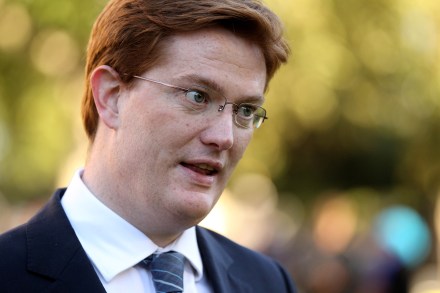
Danny Alexander is usually the very model of collective responsibility: sober, unfussy and diligent, he sets about the coalition’s work without ever causing a scene. Which is what makes his televised comments about the 50p tax rate earlier all the more striking. When pressed on the subject by interviewer Sophie Rayworth, the Chief Secretary to the Treasury was forceful in response. The government doesn’t necessarily want to cut the rate, he suggested, and those who thought it would are inhabitants of “cloud cuckoo land”. He went on: “We set out in the Coalition agreement, and it’s something that we as Liberal Democrats pushed very hard for, that the Government’s first

Rengotiating the loan with Ireland

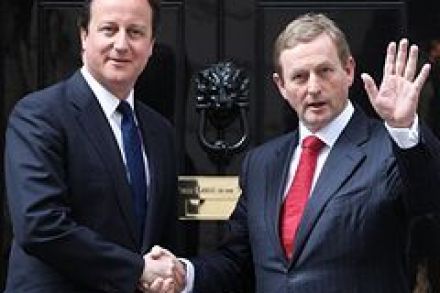
All eyes were on Greece at last week’s crisis summit in Brussels, but other indebted countries took advantage of Angela Merkel’s generous mood. In line with concessions made to Greece, the Irish secured a substantial cut in interest repayments on its bailout loan: the rate has fallen from 6 per cent to somewhere between 3.5 per cent and 4 per cent, and the loan period has been extended from seven to 15 years. This was a long-term goal of Enda Kenny’s government and the renegotiations are being heralded as a major victory. But the matter does not end there. When Kenny first tried to renegotiate the terms of its Eurozone loan in

How to get from Plan A to Plan A+

Terrible events in Norway and the ongoing phone hacking scandal have kept the economy out of the media in the last couple of weeks. Coverage of the latest bail-out of Greece last week was comparatively muted, especially considering how important it is for the eurozone and, by implication, the UK. However, if the soothsayers are correct, it is unlikely that the release of the Q2 GDP figures tomorrow will fail to hit the headlines. When the Office for Budget Responsibility published their forecast for the UK economy in April they had forecast growth of 1.7 per cent this year, but signs are that tomorrow’s Q2 data will raise stark questions

What you need to know ahead of tomorrow's growth figures

By now, George Osborne will have seen tomorrow’s GDP figures and I suspect will be having a mid-afternoon whisky. Ed Balls will be warming up for his demands for a Plan B. “Austerity isn’t working,” he’ll say — and will doubtless tour TV studios with his usual bunch of dodgy assumptions which he hopes broadcasters won’t challenge. Here, as a counterweight, are a few facts and figures about austerity, how harsh it is, etc. — and the case for a Plan A+. 1. Where are the “deep, harsh” cuts? The Q2 GDP data will complete the economic picture for the first year of George Osborne’s time in the Treasury. But

Osborne's summer of pain starts here

It has mostly been a weekend of terrible and grisly news, especially with the details emerging from Norway about Anders Behring Breivik and his murderous brand of politics. But there was also, behind it all, a slight rebalancing of the British political debate. After weeks of grandmaster-like focus on the phone hacking scandal, our politicians have started talking about the economy again. With the GDP growth figures for the second quarter of this year due out tomorrow, they’re all trying to get their spin in early. There were a number of intriguing interventions, not least George Osborne’s hint that he will cut “very high tax rates” in his Pre-Budget Report

The OBR warns of a fiscal storm

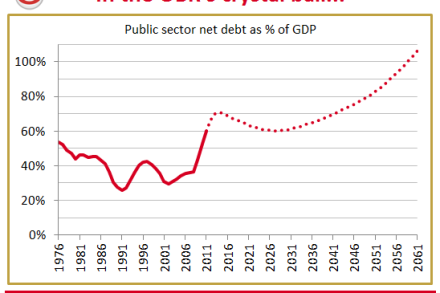
The Office for Budget Responsibility’s 126-page Fiscal Sustainability Report really oughtn’t make for electrifying reading. But it does. What Robert Chote and his gang of number-crunchers have done is to gaze into our fiscal abyss, and summon up forecasts so that the abyss can gaze back into us. I mean, look at the graph above. On the OBR’s account, our country’s debt burden could well rise from around 70 per cent of GDP now to over 100 per cent in 50 years time. It is a perturbing trajectory, to say the least. But, before we go any further, we should slap all kinds of health warnings across this. Long-term forecasting

Personality and politics

One of the things about the press that politicians frequently complain about is that papers concentrate more on personalities than policies. But reading the latest extracts from Alastair Campbell’s diaries you see just how much personality matters. Indeed, according to Campbell, Tony Blair excluded Gordon Brown from a discussion about what to do after 9/11 not because of any difference about how to respond but because he had become fed up with how difficult Brown was to deal with on a personal level. Now, there are nowhere near the personal tensions at the top of this government that there were in the last one. But because politicians are humans and

To see whether the coalition will last, watch how the Lib Dems respond to Dilnot

The approach that the Liberal Democrats take to social care over the next few weeks and months will be the best guide we have to how they now view the future of the coalition. If, in the coming all party talks, they effectively ally with Labour and try to score points off the Tories by suggesting that their coalition partners are ‘too mean’ to fund a solution to the problem then it will be apparent that they have moved fully into distancing mode and are preparing to position themselves as the party who restrained the Tories. This would imply a Lib Dem exit from the coalition sometime well before the

The trouble with today's social care report

Uncertainty reigns. Or at least when it comes to today’s Dilnot Report into social care it does. We largely know what measures will be contained within its pages: a higher threshhold for council-funded care, but a cap (of around £35,000) on how much individuals ought to be liable for. What’s less clear is how the government will respond. Far from welcoming the report wholeheartedly – as has been the recent form with these things – there are signs that the government is set to resist some of its recommendations. Andrew Lansley spoke cagily of it yesterday, hinting that the cap was proving particularly difficult in Coalition Land. George Osborne is

Treasury notes reveal Osborne’s position on euro bailouts

There has been much talk about what George Osborne told Alistair Darling about the EU bailout mechanism during those days in May between the election and the coalition being formed. But notes of a conversation between Osborne and Darling released today show that Osborne did urge Darling not to commit to anything that would have a lasting effect on the public finances. Osborne also suggested that the UK government might abstain due to the fact that the country was between governments. To which Darling’s reply was that the Cabinet Secretary’s advice was that the government was the government until a new one actually took office. It remains to be seen

A nation of shareholders?

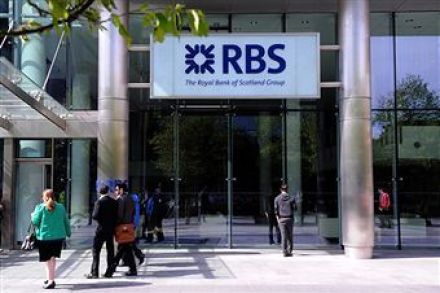
The great sleeper issue in British politics at the moment is what to do with the state owned bank shares. The money that could be generated by a sale of these bank shares is massive. The state’s stake in RBS is bigger than all the privatizations of the 1980s combined. Nick Clegg’s proposal (£) that everyone in the country be given shares in the banks is one option. But I suspect that would overly depress the value of the shares and would reduce the amount of money that the government would have in its pre-election war-chest. A more likely option is still a scheme where these shares are sold at

Subsidy Junkies!

Meanwhile in happier news for Alex Salmond and his merry throng, the latest GERS figures are out and you can expect to see the Natiionalists trumpet them to all who care to listen: Government and Expenditure Revenue Scotland 2009-10 figures show that, including a geographical share of UK North Sea oil and gas revenues, Scotland contributed 9.4% of UK public sector revenue and received 9.3% of total UK public sector expenditure, including a per capita share of UK debt interest payments. Including a geographical share of North Sea revenues, Scotland’s estimated current budget balance in 2009-10 was a deficit of £9bn, or 6.8% of GDP – stronger than the UK-wide

It's not just about public sector pensions

The bustle around public sector pensions has obscured an equally significant, pensions-related story today: the Sunday Telegraph’s claim that George Osborne is considering sucking £7 billion from the pensions of higher earners. The way it would be achieved, reports Patrick Hennessey, would be to terminate the tax relief on pension contributions made by those in the 40 and 50 per cent income tax brackets. He adds that the Exchequer could spend the resulting funds on deficit reduction, or on notching up the basic state pension. At the moment, it sounds as though this is just one of those on-the-table type deals: an idea being passed around the Treasury, but not

Your three-point guide to today's Ed Balls files

Less soap opera, and more policy grit, in today’s batch of Ed Balls files. There is, for instance, a lot on Gordon Brown’s proposed Bill of Rights (here, here, here and here), which is as ambrosia for future political historians, but is fairly turgid reading even for today’s political anoraks. Likewise the charts and doodlings related to the structure of Brown’s Downing Street. Yet some things do stand out. Here are a few of them: i) What the Treasury says, Brown didn’t do. You’ve got to admire the Treasury’s attempt to inject some realism into the fiscal calculus back in 2006. “Flat real” spending — i.e. public spending that rises