Travel

Heroes of the Ice Age

From our UK edition

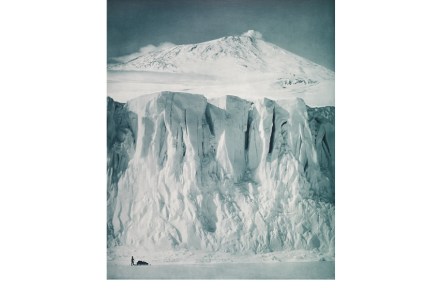
In the early 20th century, explorers were goaded and galvanised by the blanks on the maps — the North and South Poles, and the mist-draped floes and glaciers around them. Ernest Shackleton, Robert Scott, Robert Peary and Roald Amundsen set off with one prevailing purpose: to reach the extremities of the earth. Hardy, maniacal, even at times suicidal, they scattered ‘firsts’ and ‘furthests’ across the ice: the furthest south of Scott’s expedition of 1901-04, Shackleton’s furthest south of 1909, Amundsen’s arrival at the South Pole in 1911.

A well-told lie

From our UK edition

Autobiography provides a sound foundation for a work mainly of fiction. A voyage in an ocean liner provides a sound framework of time and place. Michael Ondaatje was born in Ceylon in 1943 and migrated to Canada at the age of 19. The Cat’s Table is an entirely believable, warmly empathetic novel about an 11-year-old boy’s journey, alone among 600 passengers in an Orient Line ship, from Colombo to London in 1954 by way of Aden, Port Said and Gibraltar. The boy’s first name is the same as the author’s, and the circumstances are depicted so realistically one feels as though the two Michaels’ points of view are identical.

Junk, day and night

From our UK edition

Travelling the 400 miles from Glasgow to London recently, Theodore Dalrymple noticed that the roadside was littered with food and drink packaging, flapping in the wind like Buddhist prayer flags. Roads didn’t look like that in the boyhood of Dr Dalrymple (b. 1949). Nor are they like that on the Continent. Littering, he concludes, is an unusually British disease. And the reason goes beyond mere national hygiene habits into familiar Dalrymple territory — the fall of man or, more particularly, the fall of British man, and woman. Behind the increase in littering lies a decrease in civilisation: 36 per cent of British children never eat meals at a dining table with other members of the family.

Don’t blur the lines

From our UK edition

Did you know that on the Central Line’s maiden journey to Shepherd’s Bush, one of the passengers was Mark Twain? Or that The Picture of Dorian Gray and The Sign of Four were both commissioned by the same publisher at the same London dinner? Or that Harrods dropped the apostrophe from its name in 1921, a full 19 years before Selfridges followed suit? My guess is that you probably didn’t — which is where Walk the Lines comes in. Did you know that on the Central Line’s maiden journey to Shepherd’s Bush, one of the passengers was Mark Twain? Or that The Picture of Dorian Gray and The Sign of Four were both commissioned by the same publisher at the same London dinner?

Talking about regeneration

From our UK edition

Iain Sinclair, the London novelist and poet, is always on the move. From the industrial sumplands of Woolwich to the jagged riversides of Gravesend, he rakes unfrequented zones for literary signs and symbols, locations of forgotten films and other arcana. His previous book, Hackney, That Rose-Red Empire, revealed that Joseph Conrad had been a patient in the German Hospital in Dalston. Whenever I drive past that hospital (now converted into private flats), it resonates with the presence of the Congo-sick Polish author. Typically, Sinclair explores London on foot, gathering all kinds of off-piste detail as he does so.

The last place on earth

From our UK edition

Colin Thubron has called Siberia ‘the ultimate unearthly abroad’, the ‘place from which you will not return’. Colin Thubron has called Siberia ‘the ultimate unearthly abroad’, the ‘place from which you will not return’. Many millions have not — Dostoevsky and Solzhenitsyn were lucky — but these days quite a few do, and most of them seem to write books about it. The latest is Jacek Hugo-Bader, a Polish journalist who, as a 50th birthday present to himself, travelled from Moscow to Vladivostok in an old lazhi (‘tramp’, a Soviet jeep), driving 12,968 kilometres in 55 days, at an average speed of 43.8 kmph.

Good companions

From our UK edition

‘Choose your companions’, says an early Arab proverb, ‘thereafter your road.’ In the 1970s, Hugh Leach’s companion on his travels to Northern Yemen was Freya Stark, and she has become his companion again, in this affectionate hommage of photographs and short, scholarly texts. ‘Choose your companions’, says an early Arab proverb, ‘thereafter your road.’ In the 1970s, Hugh Leach’s companion on his travels to Northern Yemen was Freya Stark, and she has become his companion again, in this affectionate hommage of photographs and short, scholarly texts.

Wool of bat and lizard leg

From our UK edition

When Julia Blackburn and her Dutch husband Herman move into an old village house perched on a cliff high above the Italian Ligurian Riviera they become part of a dwindling community in a landscape of forests and deserted villages with roofless ruins almost swallowed up by the riotous undergrowth. Seven hundred peasants once occupied this mountainous terrain, scraping a pitiful living; shepherds, chestnut farmers, cheese-makers — mezzadri, ‘half-people’, handing over half of everything, down to their last kilo of olives, to the padrone who was virtually their feudal lord; also sharing, when required, their women. They got by on a diet mainly of chestnuts — eaten raw, boiled, roasted, ground into flour, supplemented by an occasional thrush or dormouse.

Bella vistas

From our UK edition

Many moons ago when I went to Sissinghurst to ask Nigel Nicolson (late of this parish) if I could write about his mother, Vita Sackville-West, he raised his hands, and eyebrows, in horror, ‘Oh! Not another book about my mother!’ These two titles on Italian gardens may provoke a similar reaction, for there has been a recent run of revisiting via Charles Latham’s vintage Country Life photographs, Edith Wharton’s Edwardian musings and Georgina Masson’s 1961 classic, now revived. Many moons ago when I went to Sissinghurst to ask Nigel Nicolson (late of this parish) if I could write about his mother, Vita Sackville-West, he raised his hands, and eyebrows, in horror, ‘Oh! Not another book about my mother!

Ways of escape

From our UK edition

When I compiled a list of the top dozen travel writers of the past century for an American magazine the other day, it required some effort not to come up with an entirely British cast. Freya Stark, Norman Lewis, Patrick Leigh Fermor and Jan Morris were musts. So too were V. S. Naipaul and Colin Thubron, still writing up a storm, and the Ibn-Battutah-mad Tim Mackintosh-Smith for a younger generation. Although there was no space for Byron, Bell, Thesiger or Chatwin, no great legerdemain was needed to squeeze in the brilliant Dutchman Cees Nooteboom, Ryszard Kapuscinski, the Polish master of literary reportage, the Irishwoman Dervla Murphy and Martha Gellhorn from across the Atlantic. That left one space.

The other man’s grass . . .

From our UK edition

Hundreds of thousands of hardy souls are preparing for a few nights under canvas this summer, often facing sunburn or trench foot while giddily jumping up and down in a muddy field as bands maul their better-known hits. And yet, for most of these people, camping is something that they wouldn’t dream of doing except at music festivals, despite its convenience, lack of cost, green credentials and genuine sense of excitement and adventure. This dichotomy, among many others, is explored with intelligence and wit in Matthew de Abaitua’s treatise on the values and social impact of camping.

City of miracles

From our UK edition

In the autumn of 1984, after an unexplained fall, I found myself in a hospital in Rome acutely head-injured and disorientated. I had been found sprawled on the floor of my flat on Via Salaria; the police suspected an intruder, yet nothing apparently was stolen. Bloody handprints covered the walls where I had tried to steady myself. I was 23 and newly arrived in Rome to work as a journalist and teach. Later, I regained consciousness outside a latrine on the sixth floor of San Giovanni hospital. A group of nuns with elaborate bird-like coifs swished past, each bearing a carafe of white wine. So I was in paradise — or perhaps a Fellini movie. (The carafes turned out to contain urine samples.) The nuns acted as paramedics, owing to a shortage of trained nurses.

Relics of old Castile

From our UK edition

Christopher Howse describes Spain as ‘the strangest place with which Westerners can easily identify’. Christopher Howse describes Spain as ‘the strangest place with which Westerners can easily identify’. He has certainly written one of the strangest books on the country in recent years. His approach is gloriously and provocatively unfashionable. Whereas other authors on Spain today might dwell on its innovative new chefs, the modernity of Barcelona and Bilbao, the tawdry Costa del Sol, and such persistent Andalucían-based stereotypes as duende, bullfighting and Moorish sensuality, Howse has concentrated on an aspect of the country that was once no less integral to its image — its austere and spiritual side.

Deep, dark mysteries

From our UK edition

For Peter Ackroyd, the subterranean world holds a potent allure. London Under, his brief account of the capital’s catacombs and other murky zones, manages to radiate a dark mystery and sulphur reek. ‘There is no darkness like the darkness under the ground’, Ackroyd announces, like a Victorian raree-show merchant. This is an entertaining if slightly daft book, that reveals what a weird world lies beneath our feet. Whether Ackroyd has actually been to all the places he describes is uncertain. Journalists have contorted themselves through narrow, stinking cave-galleries and risked leptospirosis from rat urine in their quest for London subterranea. But the stately Ackroyd? The London sewers are vividly described here.

Elegy for wild Wales

From our UK edition

If you drive West out of Carmarthen on the A40, you pass through a landscape of dimpled hills and lonely chapels and little rivers full of salmon trout. This is Byron’s Country, the place where Byron Rogers was brought up in the late Forties, not knowing a word of English, until at the age of five he made the momentous journey a few miles east into Carmarthen town. It is a very odd place. In the graveyard at Cana, just beside the road, you will find the grave of Group Captain Ira Jones DSO, MC, DFC and bar, MM, one of Wales’s greatest war heroes. He was famous for killing Germans who had baled out and were dangling from their parachutes.

Very drôle

From our UK edition

It’s nice to know that the trees lining the roads in Paris have microchips embedded in their trunks, that the city council is controlling the pigeon population by shaking the eggs to make them infertile and that the Café Voisin served elephant consommé during the 1870 siege. It’s nice to know that the trees lining the roads in Paris have microchips embedded in their trunks, that the city council is controlling the pigeon population by shaking the eggs to make them infertile and that the Café Voisin served elephant consommé during the 1870 siege. But the pleasure of this learning comes at great personal cost. Where an innuendo can be inserted, Stephen Clarke will insert it.

Wheels of fortune

From our UK edition

There are among us a churlish few who consider the term ‘sports personality’ to be an oxymoron. There are among us a churlish few who consider the term ‘sports personality’ to be an oxymoron. John Foot’s sparkling study of Italian cycling is a welcome corrective, alive with terrific characters: Toti, a heroic one-legged cyclist who was killed in the trenches; Coppi, a barrel-chested adulterer who became the nation’s darling; a blind coach who could divine victory or defeat in the feel of a cyclist’s muscles; and, more recently, a champion who died of a cocaine overdose in a seaside hotel. Many of the greats follow a satisfying rags-to-riches trajectory, starting off as impoverished delivery boys from peasant families.

Enchanting waters

From our UK edition

This is a book which is sometimes so private that reading it seems very nearly like an act of invasiveness. There is nothing salacious or rude in it, but its tone of voice is whispered, intimate, as though the reader were an interloper, a clumsy stumbler into the most secret thoughts of the author. Its occasion is a walk down the River Ouse in Sussex, from its source in the High Weald to the sea at Newhaven, but its substance is only marginally to do with that simple and very ordinary bit of geography. The river becomes the thinnest of wire coat-hangers on which almost anything can be hung. The result is a meditation, a drifting sequence of thoughts on time and change, on loss, love and meaning, on hell and happiness, geology and evolution, science and poetry.

The trail goes cold

From our UK edition

For centuries, the history of the far North was a tapestry of controversies and mis- understandings, misspellings, dubious arrivals and equally dubious departures. Pytheas the Greek sailed north from Britain in the 4th century BC, found a place where the sea, land and sky seemed to merge, and was trounced by later scholars as a terrible charlatan. The Vikings mingled cartographical details with stories of trolls and hauntings. During the reign of Elizabeth I, Martin Frobisher went north and (mistakenly) thought he’d found gold. Undeterred, successive explorers and treasure hunters ventured into the Arctic wastes, many of them vanishing among the floes. Frederick Cook claimed to have reached the North Pole in 1908; his claim was promptly dismissed.

Glutton for punishment

From our UK edition

With its vast areas of barely explored wilderness, and its heady mix of the sublime, the bizarre and the lushly seductive, South America would appear to have all the ingredients to attract the travel writer. Yet the recent travel literature on the continent has been surprisingly scant and taken up by lightweight, gung-ho tales of not especially remarkable adventures. Fortunately there is John Gimlette, whose first South American travel book, At the Tomb of the Inflatable Pig, captured with great wit and learning the quirkiness of Paraguay. He has now produced a no less remarkable portrait of the highly idiosyncratic countries known collectively as Guiana, the ‘Land of Many Waters’.