Travel

Airport wars: why I’m betting on Gatwick

From our UK edition

Easter is a good time to talk about airports — or perhaps a bad time, if you bought your Spectator in the shopping labyrinth that impedes your path to the departure gate after a maddening wait in the security queue, where only a quarter of the scanners are working. I’m with you, and not just in spirit: in fact, that’s me being led away by men with machine guns, after an altercation over the contents of my wash-bag. It’s a curious fact that no one has ever succeeded in imbuing airport terminals with the romance, dignity and passenger satisfaction quotient of 19th-century railway stations. At best they are soulless, at worst a stress-filled vision of hell.

Rise early to see the Vatican at its best

From our UK edition

The sun has only just risen in Rome and we are standing bleary-eyed in a short queue outside the Vatican. Our guide, Tonia, takes us through security, and within minutes we are in a nearly empty Sistine Chapel. In an hour it will be crammed with tourists — sweating, gawping, getting in each other’s way. Vatican officials will be shushing and clapping to quieten the chatter. Now, though, we are free to contemplate Michelangelo’s swirl of naked bodies in peace. Michelangelo claimed that he painted the ceiling entirely on his own. In fact, Tonia explains, he started off with 15 helpers, though he got rid of them all along the way. He ‘fought everyone’, she says. ‘On the one hand he was amazing but in human relationships, no.

Lesley Blanch: a true original on the wilder shores of exoticism

From our UK edition

Lesley Blanch (1904–2007) will be remembered chiefly for her gloriously extravagant The Wilder Shores of Love, the story of four upper-class European ladies who abandoned their natural habitat to seek and find romance in the Middle East. If one had to pick only one of Blanch’s books to read there could be no better choice than this; but, as this exotic potpourri reminds one, she was incapable of writing boringly or badly. The most substantial part of Lesley Blanch: On the Wilder Shores of Love (a title which seems designed to deceive putative readers into thinking that they have read it all before) is Blanch’s record of her youth — the opening chapters of a book which she did not live to complete.

Jeffrey Archer’s diary: a pirate at the traffic lights, and other Indian wonders

From our UK edition

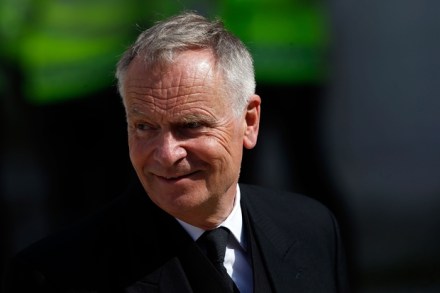
This last week, in India, I visited six cities in seven days: Mumbai, Pune, Bangalore, Hyderabad, Calcutta and New Delhi. This is my 11th trip to India and from the very beginning the signs were good. For a start, the temperature on arrival in Mumbai was a cool 22 degrees and I was told it had rained for the past two days, though I’ve actually never seen rain in Mumbai before. Because of a new eight-lane highway, we got from the airport to the Taj Hotel in the city centre in just 40 minutes, despite a minor hold-up. As the car was idling in a traffic jam, a young boy who couldn’t have been more than six or seven tapped on my car window. He was holding a pile of books. I wound the window down, and he asked: ‘Would you like the latest Jeffrey Archer?

Seeing Paris through Impressionist eyes

From our UK edition

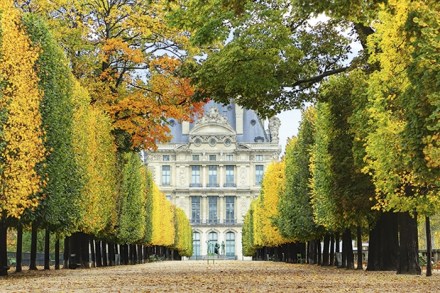
The spectre of the Charlie Hebdo killings still hangs over Paris. Outside the École Nationale Supérieure des Beaux-Arts, opposite the Louvre, there’s a big poster of Cabu, one of the murdered cartoonists. The poster is peppered with fake bullet holes; underneath, the caption reads, ‘It doesn’t hurt at all.’ I didn’t realise, until I talked to the curator of the new Impressionist show at the National Gallery in London, that Cabu was a popular figure on French children’s TV in the 1970s. His death particularly haunts the middle-aged, who grew up on his cartoons. The Charlie Hebdo posters across Paris still bring you up short.

Grim, generous, decaying and hip: the paradoxical charms of Athens

From our UK edition

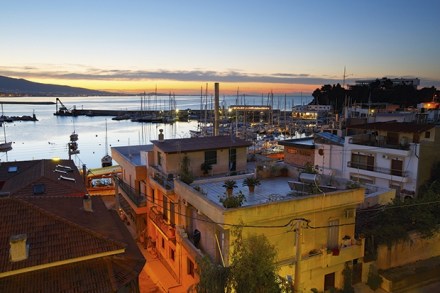
My first visit to Athens as a student gave me a set of impressions that the present crisis has only validated. The man designated to meet us at the airport did not turn up. I will never forget his name. It was Nic Katsoudis. So we got in a taxi anyway. It crashed twice on the way to our apartment in the Vouliagmeni resort south of the city. Once inside, the plumbing was Periclean in age if not in grandeur. That was when local colonels and not German bankers were the devil. Since then I have been back often, en route to my sister-in-law’s house on lovely, neglected Skopelos — an island not so much unspoilt as unimproved in the first place. Athens is where you change planes, get on a bus or find a boat.

Five more MPs making Malcolm Rifkind’s day rate

From our UK edition

Golden league Some MPs who earn Sir Malcolm Rifkind’s rate of £5,000 a day: — Sir Tony Baldry (Banbury): £3,333 for four hours work as deputy chairman of Woburn Energy. — Greg Barker (Bexhill and Battle): £20,000 for 30 hours providing advice to Ras Al Khaimah Development LLC. — Henry Bellingham (NW Norfolk): £7,500 for 12 hours’ work as non-executive director, Developing Markets Association. — Tim Loughton (East Worthing and Shoreham): £15–£20,000 for ‘about 20 hours a year’ as adviser to National Fostering Agency. — John Redwood (Wokingham): £27,941 for 40 hours’ work as chairman of Investment Committee of CS Pan Asset Capital Management Ltd.

A cruise around Cleopatra’s wedding present

From our UK edition

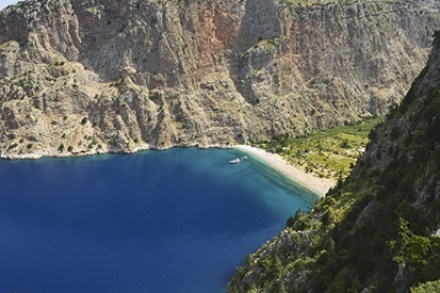
Legend has it that Mark Antony considered Turkey’s Turquoise Coast so beautiful that, in about 32 bc, he gave it to Cleopatra as a wedding present. The country’s southernmost shore stretches for nearly a thousand miles and combined incredible scenery, clear azure waters and a warm Mediterranean climate. Its strategic location means it has been occupied by various empires over the course of its history, including the Lycians and Ottomans. Two thousand years on, it is still breathtaking. The Taurus mountains provide a dramatic backdrop to the ancient ruins and beautiful beaches. With no road access to many of these hidden gems, the best way to explore them is by boat, preferably a wooden gulet.

An earthquake with a Baroque legacy in Sicily

From our UK edition

Syracuse is a handsome place, steeped in a rich historical broth. At the tip sits Ortygia, an island offshoot, which has been the backdrop to many Mediterranean sagas: Hellenic, Christian, Medieval, Renaissance, Baroque — take your pick. By day, Via de Benedictis is filled with local men selling sea urchins, milky balls of ricotta and bunches of mint. At night, we went to the Piazza Duoma for aperitifs. The cathedral’s broken pediments and exuberant sculpture cast strange shadows on to the square and a zephyr blew. It was November and the place was empty, aside from a small boy on rollerskates and a dog. In summer it must swarm with people. An earthquake destroyed much of southern and eastern Sicily in 1693, and many of the towns were rebuilt in a Baroque style.

A walk through Fez is the closest thing to visiting ancient Rome

From our UK edition

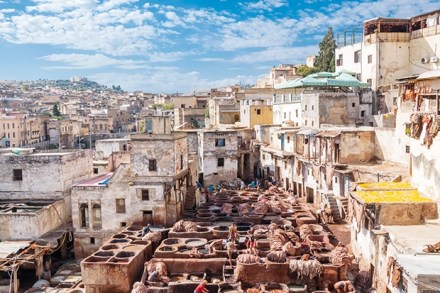
Fez is one of the seven medieval wonders of the world. An intact Islamic city defined by its circuit of battlemented walls, it is riven by alleyways. You pass doorways that look into a 10th-century mosque, then a workshop courtyard, before coming through a teeming covered market and twisting past the high walls of a reclusive garden palace. The aesthetic highlight of any visit will be the teaching colleges built in the 14th century by the Merenid Sultans, and nothing can quite prepare you for the colours and odours of the open-air tanneries or the drama of listening to the dusk call to prayer from the ruins of the Merenid tombs. To the north of the city rise the slopes of Jebel Zalagh, dotted with olive orchards.

How to walk along canals in Venice without feeling like a tourist

From our UK edition

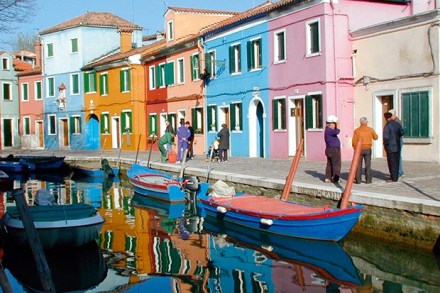
I arrived in Venice believing it would reek of sewage. It didn’t. The walk into the centre went through cobbled alleys packed with loud Americans in sandals and Italian ladies tottering in kitten heels. But it was when crossing the Rialto bridge that I first felt as though I was truly in Venice, with tacky gold gondola models for sale at extortionate prices, and tourists jostling for prime photo spots. How else are you supposed to know you’re on holiday? The canals are wonderfully chaotic; smaller boats have to dart out of the way of the Vaporettos as perilously overcrowded gondolas bob in their wakes. Gondoliers nap in the afternoon shade, pretending not to see the half a dozen tourists who turn up hoping to squeeze in to one boat and make their guide earn his money.

Dear Mary: How can I stop friends staying after a 21st?

From our UK edition

Q. A neighbour is hosting a party for his daughter’s 21st birthday. Adequate provision has been made for anyone who wants to sleep over but I won’t be taking up the option myself since I don’t drink and I can easily drive home. Unfortunately I am coming under pressure from some acquaintances at university that they should stay overnight with me. My parents would welcome them but it doesn’t make sense for me to have to round everyone up and lead them in convoy through winding roads to my house when they are all welcome to stay where they are. I have now discovered that their enthusiasm has been fuelled by the rumour that my parents’ historic house is ‘like Downton Abbey’.

On the Yeats trail in Galway

From our UK edition

The Go Galway bus from Dublin sounds an unlikely pleasure, but it is both comfortable and punctual. There is free Wi-Fi if you want it, but it would be criminal to do anything other than gawp at the view. Two and a half hours pass quickly when you are travelling at sunset, passing between rain clouds with rainbows falling out of the sky. While my trip was, as they say, for ‘the craic’ (a good friend’s 40th), I couldn’t come to Galway without making time for a W.B. Yeats pilgrimage. His patron Lady Augusta Gregory had her home near Gort, in the south of the county: Galway is saturated in his poetry; or perhaps I mean his poetry is saturated in Galway. But in the county today, there is both chaotic reverence and wilful disregard.

A museum of dirty postcards and Britain’s coolest bulldog: visit the strange side of the Isle of Wight

From our UK edition

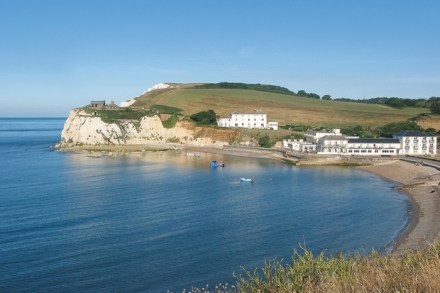
Every day the Isle of Wight becomes England’s smallest county: when-ever the tide comes in, the island steals the crown from Rutland, if only for a few hours. Taking the Wightlink ferry reminds you that the isle gave us the hovercraft, Christopher Cockerell’s early experiments there involving a hairdryer and some empty cat-food tins. Less successful as a seafarer was Lord Lucan, who once sank a powerboat off the Needles. It never surfaced, leading some to believe that when the time came to disappear he returned to the area and drowned himself. Current exports include most of the signage for the London Underground (A.J. Wells and Sons, vitreous enamellers of Newport), and all manner of garlic from the Garlic Farm in Newchurch (fresh, black, smoked, elephant).

The charming little airport that ruins thousands of holidays

From our UK edition

Horror films occasionally use the device of the deceptive idyll. An apparently restful place — a clearing in the woods, a pretty cottage — is the site of a fiendish atrocity. A goodie escapes and breathlessly reports the matter to the police. Next morning the authorities race to the scene, and find nothing. Wickedness has been concealed. The deceptive idyll has returned. Such a place is Chambéry airport in south-east France. Framed by mountains and fringed by Lake Bourget, it was founded in 1938 and has not grown much. On weekdays little disturbs the airfield daisies save the tinkle of distant cow bells and a cooling Savoyard breeze. You can imagine the Milka girl dating the guy with the ping-pong bats. Yet on winter Saturdays, Chambéry’s mask drops.

The eurozone is strong enough to kick out Greece if Syriza wins

From our UK edition

Ever since European Central Bank president Mario Draghi declared himself ready, in July 2012, ‘to do whatever it takes to preserve the euro’, the likely disintegration of the single currency — as predicted by pundits such as yours truly over the preceding years — has all but disappeared from the comment agenda. The combination of a persuasive ECB leader with reform in some bailed-out eurozone states (notably Ireland and Spain) and an easing of bond market pressures, plus the iron will of Germany to see the euro survive, drove the break-up argument into retreat.

If you want a real safari, head to Botswana

From our UK edition

As a boy camping with my father on safaris deep in the African bush, there were no tents involved; we just slept by the fire like cowboys in the open under the constellations. Supper was sweet tea and biltong and we used a tin bucket for a shower. When it rained we simply moved underneath our parked Land Rover. One morning we woke to find tracks circling us, where a big lion had come close enough to blow on our toes as we slept. That old Africa rubbed off on me and I still like safaris to be the real thing — under canvas, by the campfire, gin, tall tales, fresh air, and carpet-creeping between tents. Safari is an art and it’s for real people, not celebrities climbing Kilimanjaro.

My perfect island – and the posher one next door

From our UK edition

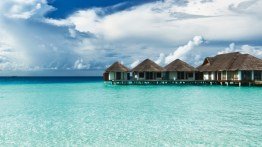
The Republic of Maldives is the lowest country in the world and has the highest divorce rate. Is there correlation between altitude and fidelity, I wonder? Male, the capital, is 370 miles south-west of the southern tip of India. From the air it looks like Tower Hamlets. From Male we flew first by DHC-6 Twin Otter seaplane to the tiny coral island of Moofushi — about 20 thrilling minutes — and checked in at the Constance Moofushi island resort. I was allocated a thatched wooden bungalow (number 35) with sundeck, loungers, and wooden steps leading down directly into the warm, shallow sea. I could look down from the balcony rail of number 35 and see baby sharks and fishes up to two feet long cruising around at the foot of my stairs.

Dallas, city of culture

From our UK edition

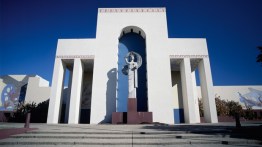
When George W. Bush was outed as an artist, after a computer hacker uncovered his nude self-portraits, jaws dropped around the world. Could Cowboy George, a man whom even Kim Jong-il’s cronies dubbed a philistine, actually be a closet aesthete? This spring, at the first exhibition of his works in Dallas, he confessed: ‘There’s a Rembrandt trapped in this body.’ It shouldn’t come as such a surprise. Bush’s hometown of Dallas may be stereotyped as a cultural wasteland, synonymous with big oil, big hair and Wild West machismo, but it, too, has an artistic side the world is only now discovering. Take the 50th anniversary of the JFK assassination.

Low life’s Limpopo legend

From our UK edition

‘You’ve got a lot to live up to,’ said the ranger. ‘The last Spectator journalist who stayed here was Jeremy Clarke. He made quite the impression.’ Like some sort of Zulu legend, our ‘Low life’ columnist’s time at Shambala game reserve is now talked about around the campfire — or braai as it is known in South Africa. ‘I heard he commandeered a safari vehicle and set off to find a drinking hole,’ said one of the camp staff. ‘He held a wet T-shirt competition,’ said another. ‘All the local women were very impressed.’ Apparently even Douw Steyn, who owns the reserve, still reminisces about Jeremy’s time there. You might not have heard of Steyn, but you will know his work.