Transport

Do you have the patience to own an EV?

There’s a distinctive glow of virtue that emanates from people recharging their electric cars in public places. I call it the Light of the Charge Brigade. In the run-up to Easter, I spent two hours observing the phenomenon at Fleet Services on the M3. It was mostly men doing the charging. They’ve cracked the EV way of life, and are very pleased with themselves. A sparklingly fulfilled man called Paul was driving from Colchester to Seaton in Devon in his Skoda Enyaq with a carload of friends. He’d planned this stop for a first charge and Pret elevenses. Later he was planning to stop at Montacute House in Somerset for a late lunch and a second charge on one of the National Trust’s chargers.

The meaning of life is a bus journey away

From our UK edition

Loelia Lindsay, socialite and former wife of the 2nd Duke of Westminster, is said to have remarked: ‘Anybody seen in a bus over the age of 30 has been a failure in life.’ Well, I’m turning 59 soon and I still use buses. So, by that reckoning, success has so far not only eluded me but given me the widest possible berth.  In my defence, I live in Bristol, which has the worst congestion outside London. Driving here during rush hour is a kind of psychological torture. It’s also a war of attrition between the local council and motorists, with roadworks popping up overnight like molehills. Almost anything is preferable: walking, cycling or the bus. Admittedly, bus travel isn’t glamorous. There’s no bus equivalent of the Orient Express that I’m aware of.

All aboard the last bus out of Mousehole

From our UK edition

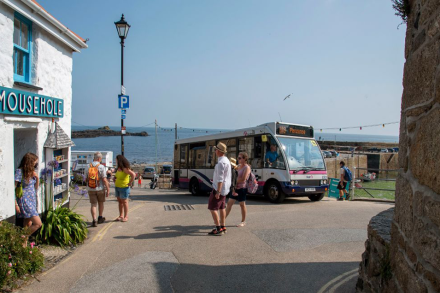
It was lucky that the bus was behind schedule – mainly because the driver had stepped out to take his own photograph for social media (#endofanera) – otherwise the young lad in the hoodie might have missed it. ‘Is this the last bus?’ he asked as he fumbled for change. ‘It’s the last bus from Mousehole Harbour, ever,’ the driver replied, before waving him on without paying. People rarely get as nostalgic about buses as they do about trains. Flanders and Swann wrote a song about the 1960s Beeching cuts. It pretty much consists of Michael Flanders reciting the names of closed rail stations to music – and it is an elegiac masterpiece. The only time I ever saw my father cry was when someone sang it at a village hall concert.

‘Invalid’ has become invalid

“They should ask me. I’m a complete cripple,” said my husband, heaving himself from his chair with great determination to reach the whisky. Britain’s Department for Transport is asking disabled people whether the term invalid carriage in legislation should be changed and what term they might prefer was used instead. “Language has moved on and changed,” the UK government says, since 1970, when the legislation was first drafted. One problem is having to keep changing terminology. No one, even my husband, should be called a cripple. No one should be called handicapped. Now it has been decreed that no one should be called disabled, but rather a person with a disability. These changes are paralleled in the languages across Europe.

invalid

‘Invalid’ has become invalid

‘They should ask me. I’m a complete cripple,’ said my husband, heaving himself from his chair with great determination to reach the whisky. The Department for Transport is asking disabled people whether the term invalid carriage in legislation should be changed and what term they might prefer. ‘Language has moved on and changed,’ the government says, since 1970, when legislation was drafted. One problem is having to keep changing terminology. No one, even my husband, should be called a cripple. No one should be called handicapped. Now no one should be called disabled, but rather a person with a disability. These changes are paralleled in the languages of our neighbours. The Paris Métro had seats reserved for mutilés de guerre. The term was replaced by personnes handicapées.

invalid

Happy 200th birthday to our railway

From our UK edition

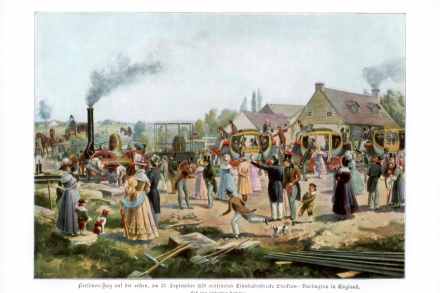
You might have missed this because it hasn’t exactly been saturated with media coverage, but this week is the 200th birthday of Britain’s railway. In fact, it’s the 200th birthday of all railways, since we invented them. It was on 27 September 1825 that service began on the Stockton and Darlington Railway. Travelling a distance of just eight-and-a-half miles at about 15mph, the world’s first public commercial rail service arrived to a crowd of 10,000 and – as would become a characteristic feature of future British rail travel – was delayed by half an hour due to engineering problems. Yes, the worldwide rail revolution began in the north-east of England – the Silicon Valley of rail. I know, not since H.G.

My Kafkaesque clash with TfL

From our UK edition

When is a journey not a journey? The answer to this pseudo-Zen riddle, at least according to Sadiq Khan’s Transport for London, is: when the journey is one that the passenger intends to make but is unable to complete. Have I lost you? Allow me to explain. Recently I experienced yet again one of the regular service failures that haunt the London Underground generally, and its dire Circle line in particular. This saw me forced to abort my train journey at Notting Hill Gate to make the final leg of my intended trip to High Street Kensington on foot. Admittedly this can be a quite pleasant stroll, passing, as it does, the spectacular wisteria on Bedford Gardens, and the lovely Churchill Arms.

Inside London’s transport time warp

From our UK edition

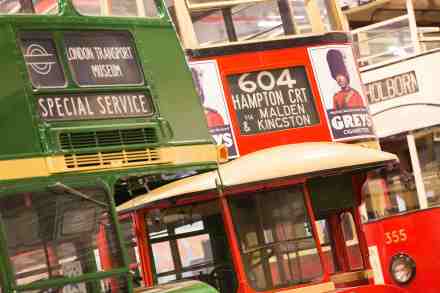
The illustration shows a smiling couple on a yacht, the wind ruffling their hair and the coastline receding into the distance behind them. Above it are the words: ‘Work out of London – get more out of life.’ Something from the post-Covid work-from-home era, perhaps, or Boris Johnson’s 2019 ‘levelling up’ election campaign? No – this is the work of ‘The Location of Offices Bureau’, set up by the Tory government in 1963 and abolished by Margaret Thatcher. The advert appears on the wall of a decommissioned Tube carriage that’s one of many frozen in time in a warehouse in west London. In the latest issue of The Spectator, Richard Morris writes that museums often have a ‘wealth of treasures… hidden away in storage’ and argues that more should open their vaults.

The unsayable case for cars

From our UK edition

Rob Henderson is justly famous for coining the phrase ‘luxury beliefs’. These are opinions which are unshakeably held irrespective of any countervailing evidence, either because the display of such opinions confers status on the holder, or else because adherence to them is an article of faith among some social or professional group in which you need to be seen to belong. The only approved vision of the future involves extracting people from their cars and cramming them into mass transit Such beliefs are hence closer to religious creeds than to any conventionally formed opinion. Consequently, any contradiction of such accepted beliefs in public, however intelligent, is treated as heretical: a social gaffe at best, a career-ender at worst.

Who first classified ‘working people’?

From our UK edition

Working people Government ministers may have had trouble defining what was meant by ‘working people’ in the Labour manifesto, but where did the idea of classifying people who earn their living as a distinct group come from? – According to the OED,the term ‘working class’ has been traced back to the 1757 edition of the Universal Dictionary of Trade and Commerce written by Malachy Postlethwayt, a former adviser to Horace Walpole. Postlethwayt was born the son of a wine merchant in Limehouse, east London, in 1707. He certainly fitted Starmer’s definition of a working person in that he appears to have died, in 1767, owning no assets.

How much do we spend on workwear?

From our UK edition

The first nimby Who coined the term ‘nimby’?  — The expression, from ‘Not In My Backyard’, entered the political sphere in Britain in 1989 when it was used by the then environment secretary Nicholas Ridley to describe people who were in favour of house-building in general, just not near where they lived. He was later ridiculed when it emerged that he had objected to a development next door to his own Gloucestershire home.  — But the term originated around a decade earlier in the United States, when it was applied to people who were opposed to the dumping of nuclear waste near their homes.

Why being anti-car is a luxury belief

From our UK edition

It happened six years ago on a flight back from the United States. ‘Sir, I’m pleased to say you’ve been upgraded to first class.’ ‘Wonderful! Where would you like me to sit?’ ‘Anywhere you like, you’re the only passenger.’ The anti-car movement is idiotic – a luxury belief shared by deluded metropolitans For the next few hours I dined on fine food brought to me at any time I chose and drank the finest wines known to humanity. I had a staff of three to myself. At one point they brought me a silver tray with magazines on it, one of which was The Spectator. ‘Would you like anything to read, sir?’ ‘Yes, I’d like to read something written by, let me see… oh, I know – me!’ I didn’t actually say that, you understand, but I thought it all the same.

The case for driverless cars

From our UK edition

I can’t remember the name of the comedian, but he had a wonderful ambition, one which will sadly now never be realised. He wanted to interview Neil Armstrong for an hour on live television without mentioning the moon landings once. I wish he’d succeeded. In fact Armstrong might have leapt at the opportunity to pontificate about baseball or gardening, rather than the Apollo missions. It must be maddening when every conversation with a stranger turns to one brief event in your life: rather like being in the Eagles and knowing that, in a two-hour concert, 90 per cent of the crowd is only there for ‘Hotel California’. Following in this vein, I have a secret retirement project where I interview the world’s leading minds on trivial and tangential topics.

Train wreck: HS2 destroyed the countryside I love

From our UK edition

When I drive to see my parents in the once-peaceful farming country where I grew up, it is a strange, bittersweet experience. The car journey takes me through places I ought to recognise but I don’t any more, because the green fields of Warwickshire, the villages and the farms, are scarred by the tortuous works of HS2. The distinctive red earth is laid bare for mile upon mile as the bulldozers do their worst. Rows of cottages and entire villages lie deserted, testimony to the billions already spent. As I drive along the main Banbury to Coventry road, I see mountains of earth piled high as flyovers take shape. I stare at this curiously outdated project – old hat both in terms of the controversy and the purpose it was meant to have.

Just stop HS2!

From our UK edition

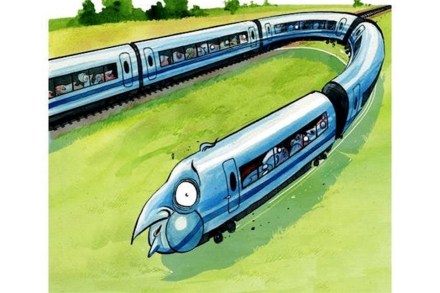
I have two suggestions for HS2. Either stop it or make it stop. The spiralling cost and delays are reason enough to rethink the project, never mind the changes to patterns of rail use since 2021. Any economic case based on pre--pandemic projections needs to be revisited. So one option would be to stop the project completely. But what if the project goes ahead in a reduced form to save face? Well, in this case, the need for speed is questionable. The value of speed to passengers is far from linear. For instance, cutting a journey time from four hours to two, as the TGV did between Paris and Lyon, is a game-changer. Reducing a journey from 80 minutes to 40, on the other hand, isn’t that big a deal.

Why your summer holidays might be doomed

From our UK edition

The first LNER train I booked on Sunday from Durham to London was cancelled due to ‘action short of a strike’. I hadn’t heard the phrase before, but I instantly admired it. It’s so impressively confusing. With a strike, you know whose side you’re on. You can look up the salary of a train driver, for instance, discover that it’s £70,000 after only a few years of training, and become icily indifferent to their plight. But action short of a strike? What is it? ‘Action short of a strike’ turns out to be an ingenious way of screwing your boss while still getting paid Action short of a strike, ASOS, turns out  to be an ingenious way of screwing your boss while still getting paid.

The architecture of the Elizabeth Line

From our UK edition

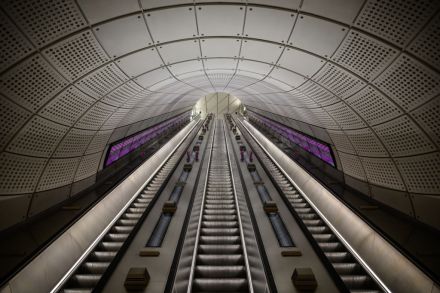
There was much to celebrate last year on the architecture front – the end of the pandemic brought the opening of long-delayed projects ranging from the Academy Museum of Motion Pictures in Hollywood to the Taipei Performing Arts Centre in Taiwan. But there was one construction project that stood head and shoulders above the rest in size and ambition, and that was the transport link formerly known as Crossrail.  The Taipei Centre may have been seven years late and the Academy Museum (now home to Judy Garland’s red slippers and R2D2, among other artefacts) more than a couple of decades in gestation, but that is nothing compared with London’s Elizabeth Line, which was first proposed in the 1940s.

As seductive as Chagall: Sarah Sze’s The Waiting Room reviewed

From our UK edition

Exiting Peckham Rye station, you’re not aware of it, but standing on the platform you can see a mansard roof with ornamental railings silhouetted against the sky like a French chateau. Designed in the 1860s by Charles Henry Driver, architect of Sao Paolo’s Estacao da Luz, it once covered a vaulted waiting room which, after an intermediate existence as a billiard hall, was closed to the public in 1962. In short, it is just the sort of hidden space to tickle the fancies of impresarios-at-large Artangel, who have made it the site of the first UK installation by American artist Sarah Sze.

It’s the end of the Buttigieg world as we know it

Out of Politico last week came news that the global village's Mayor Pete isn't happy with the heat he's been taking over the train derailment in East Palestine, Ohio. “Pete Buttigieg has taken a lot of bullets for the president on this,” an anonymous senior Democrat grumbled of the transportation secretary. That quote came in an article bearing the headline: "Buttigieg world frustrated at GOP attacks over train wreck." All of which raises a question: Buttigieg world? Is there a Buttigieg world now? I understand the use of the term Clinton world, given that the Clintons have accumulated so many clients and hangers-on as to constitute their own Central American-style cartel economy. Likewise Trump world, which is currently on a planetary collision course with DeSantis world.

buttigieg world

Mayor Pete’s planes, trains and automobiles

Almost a year ago, the Federal Aviation Authority, under the helm of transportation secretary Pete Buttigieg, announced that the aviation briefing known as NOTAM, or Notice to Airmen, would undergo a name change. NOTAMs are unclassified notices distributed from an aviation authority to all pilots that contain essential information regarding conditions, hazards, system concerns, or other flight operations. NOTAM, Mayor Pete’s Department of Transportation declared, wasn’t gender inclusive and, as of December 2, 2021, it should henceforth be referred to Notice to Air Missions, not Airmen.

pete buttigieg faa