Transgender

The iceberg cometh

From our UK edition

Every second novel is fated to be measured against its predecessor; and that comparison is particularly hard when the debut in question was acclaimed (Jenni Fagan’s The Panopticon was shortlisted for the Desmond Elliott Prize) or held to exemplify some modish literary sub-genre. Fagan’s style was tagged as ‘gritty Scottish realism’, and ill-served by comparisons to Irvine Welsh, which made much of her use of profanity and dialect. But where Welsh’s style has long since descended into shtick, Fagan’s coarseness of language was never more than surface detail. It was clearly in the service of authenticity of voice, and Anais Hendricks, the disturbed but resilient protagonist of The Panopticon, is memorable for much more than her readiness with swear-words.

In defence of gender

From our UK edition

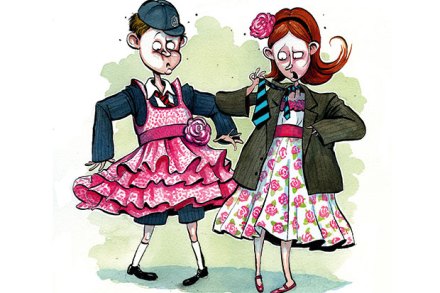
[audioplayer src="http://rss.acast.com/viewfrom22/whysexmatters-thedeathofsportandistheeusinkingwhetherbrexithappensornot-/media.mp3" title="Melanie Phillips and Jacqui Gavin, a trans activist and civil servant, discuss gender"] Listen [/audioplayer]Once upon a time, ‘binary’ was a mathematical term. Now it is an insult on a par with ‘racist’, ‘sexist’ or ‘homophobic’, to be deployed as a weapon in our culture wars. The enemy on this particular battleground is anyone who maintains that there are men and there are women, and that the difference between them is fundamental. This ‘binary’ distinction is accepted as a given by the vast majority of the human race. No matter. It is now being categorised as a form of bigotry.

It’s dangerous and wrong to tell all children they’re ‘gender fluid’

From our UK edition

This is the cover piece of this week's Spectator, out tomorrow: Once upon a time, ‘binary’ was a mathematical term. Now it is an insult on a par with ‘racist’, ‘sexist’ or ‘homophobic’, to be deployed as a weapon in our culture wars. The enemy on this particular battleground is anyone who maintains that there are men and there are women, and that the difference between them is fundamental. This ‘binary’ distinction is accepted as a given by the vast majority of the human race. No matter. It is now being categorised as a form of bigotry. Utterly bizarre? Scoff at your peril. It’s fast becoming an enforceable orthodoxy, with children and young people particularly in the frame for attitude reassignment.

Public trans sport

From our UK edition

I had just sat down on the top deck of a number 38 London bus when I saw him looking at me. He was black and wore a fake-fur coat and orange leggings. There were glittering rings on his fingers, fake diamonds around his neck and bright red lipstick on his lips. In his large hands, a mauve purse. He looked like the kind of Andy Warhol drag-queen who wiggled on the wild side of life back in the 1970s. He made strange chirping sounds and he batted his heavy eyelashes my way. I couldn’t tell if he was a touch crazy or just over-the-top camp. Then he smiled at me. Uh-oh, I thought. But I decided to be brave, so I gave him one of my big, anxious chimp smiles back. He then came over and plopped himself next to me. ‘Hi,’ he said, with a soft, low American purr.

Bad manners | 31 December 2015

From our UK edition

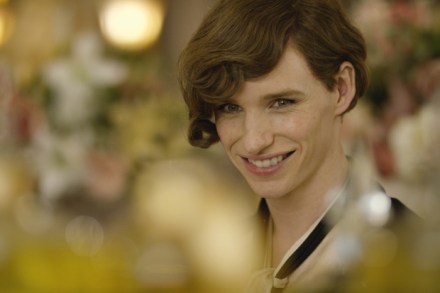
The Danish Girl is based on the true (if heavily revised and simplified) story of Lili Elbe, one of the first people ever to undergo sex reassignment surgery, but while the timing of this is right — transgender issues are surely the next equality frontier — the film itself somehow isn’t. It’s OK. It’s probably passable, if you’ve got two hours to kill. But it’s repetitive, excessively polite and also, given the subject matter, surprisingly dull. It opens when Lili is still Einar, married to Gerda, and if the two ever came round for dinner you’d be mouthing over their heads: ‘Who invited them?’ And: ‘Oh boy, do you think they are ever going to leave?

How we ended up ‘cisgender’

From our UK edition

‘That’s not how you spell “system”,’ said my husband triumphantly, pointing with his whisky glass at a placard inveighing against the ‘Cistem’, held up by a transgender protester on television. ‘No, darling,’ I said, not even assuming a patient tone. ‘It’s a play on words.’ Among people who like using the word gender outside its grammatical homeland, cis- as a prefix is tacked on, to make cisgender: ‘someone whose sense of personal identity corresponds to the sex and gender assigned to him or her at birth’, as the Oxford English Dictionary puts it carefully. Note that it is not held to be a question of being the same sex as you were born, but the sex and gender assigned to you.

Who isn’t genderfluid?

From our UK edition

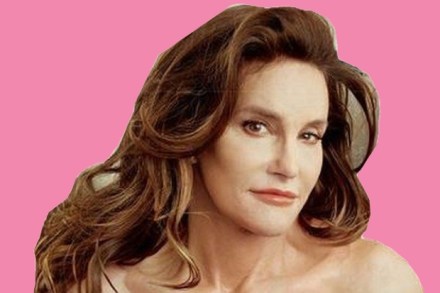
Even yew trees are at it. It seems the ancient Fortingall Yew in Perthshire, which everyone had assumed to be male, is bearing berries and is therefore, at least in part, female. Dr Max Coleman of the Royal Botanic Garden Edinburgh, observed: ‘The rest of the tree was clearly male. One small branch in the outer part of the crown has switched and now behaves as female.’ Which makes this not just the oldest but the most socially progressive tree in Britain, the Caitlyn Jenner of topiary. Or perhaps it was just one transgressive branch making a bid for attention, having been trapped in the wrong trunk all this time. You can’t go far this year without encountering someone in the process of transitioning between genders or who has already arrived at their gender of choice.

Vanity Fair editor calls Caitlyn Jenner ‘Bruce’

From our UK edition

After Bruce Jenner's transformation into Caitlyn Jenner was unveiled in Vanity Fair with a cover titled 'Call me Caitlyn', the Twitter mob went into overdrive with thousands rushing to tweet their congratulations. However, as Mr S's colleague Brendan O'Neill reported, not all tweets were well received. Drake Bell, a former American child star, became the subject of abuse after he tweeted ‘Sorry… still calling you Bruce’. A Twitter robot called @she_not_he has since been set up 'looking for anyone who uses the “he” pronoun in conjunction with Caitlyn Jenner’s name’. So Mr S has concerns for Vanity Fair's UK editor, Henry Porter.

What does it say about Owen Jones that he isn’t interested in scientific research?

From our UK edition

Owen Jones writes in the Guardian today on the subject of trans rights, making a revealing statement in the process. He says: ‘In truth, debates over the latest scientific research are of little interest to me: what matters is that the happiness, security and even lives of a minority are at stake, and all too little has been done about it.’ I’ve no desire to get involved in this particular debate, partly because I don’t know enough and I also don’t want to spend ten years getting harassed and threatened like Julie Bindel. One should never underestimate the threat of violence in shifting public debate, not just in religious matters.

Alexander McCall Smith’s notebook: America vs my diet

From our UK edition

The trouble with going on an American book tour is that I know it’s going to play havoc with my diet. People on diets can very quickly become diet bores, but I am unrepentant: I know the calorie content of most things and, for instance, how long it takes to burn off a croissant. Not that I eat croissants any more, of course. (We dieters can be tremendously smug.) America is a challenge, though, because all their food is injected with corn syrup. In Denver I was once served an omelette that had been dusted, in cold sobriety, with icing sugar. But it’s not just icing sugar that is a problem: the intrusive strawberry is a difficult issue too. Any breakfast, it seems, must include a strawberry or two, placed alongside the eggs.

My tax avoidance tip – win literary prizes!

From our UK edition

David Cameron is said to want a woman to be chairman of the BBC Trust, now that Chris Patten has had to retire early because of ill health. Perhaps he has a bad conscience about what happened last time. By far the best candidate then was the runner-up, Patricia Hodgson, a distinguished BBC veteran who is committed to its virtues and has always understood its vices. She would have led a return to the BBC’s core strengths, and saved licence fee money in the process. But the government did not know what it wanted, so it chose the nearest chum, Lord Patten, who accepted in that casual and complacent spirit and found himself plunged into crisis.