Trains

The joy of commuting

From our UK edition

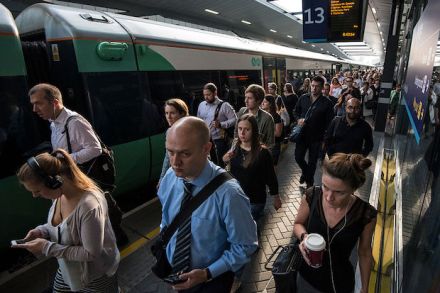
I was on a train from Sussex to London, my first since lockdown, when I realised I like my commute. The thought worried me a little. What kind of weirdo have I become? A commute is a psychological hurdle, something to be endured, not enjoyed. What’s next? The giddy thrill of waiting in a queue? A root-canal fan club? There are some aspects to commuting I don’t enjoy — the expense of a season ticket, of course, and frustrating delays — but overall, yes, I do like it. And during lockdown I actually missed it. What makes my enjoyment even weirder is that I have no interest in trains.

Don’t tell me model railways aren’t art. My little engine is a thing of spirit and beauty

From our UK edition

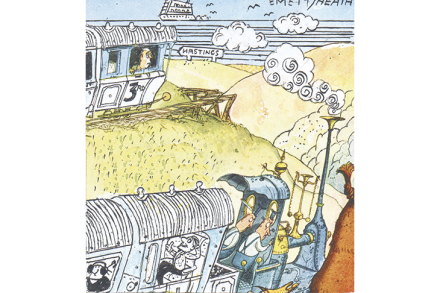
It’s a summer day at Llangenydd station, and the afternoon train is already late, not that anyone seems to mind. A smartly dressed man has leaned his bicycle against the station’s water tower, and his terrier jumps up as he unwraps his sandwich. A commercial traveller, perhaps, or a professor from Liverpool University on a cycling tour of Snowdonia. Even though we’ve never been here before, we can guess where we are. The colour of the stone, the yellow gorse on the embankments, and the distant glimpse of the sea all tell us that we’re in the top left-hand corner of Wales.

Letters | 25 April 2019

From our UK edition

Not an island Sir: I and those with whom I live and work are all within coughing distance of Sam Leith’s ‘threshold of death’ and we need no reminders that your body is your own, because we wish to God it wasn’t (‘Last rights’, 20 April). But as it is, we owe it to that body to see the process through. My ‘going hence’ is not a private matter. I am not an island but a piece of the continent and that connection is the key to the human genius of social literacy. We demented dodderers are an eighth age, a new demographic, practically a new species, and we bring with us new ethical dilemmas.

Travellers won’t mourn the passing of Virgin trains

From our UK edition

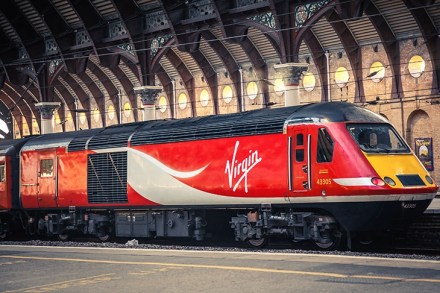
‘Virgin trains could be gone from the UK in November,’ blogged Sir Richard Branson from his billionaire hideaway after the Department for Transport barred Stagecoach, Virgin’s 49 per cent joint-venture partner, from bidding for new passenger rail franchises. This followed a row over Stagecoach’s reluctance to help fill a £6 billion black hole in the Railways Pension Scheme – and affects Stagecoach’s bids for the East Midlands and South Eastern franchises as well as the renewal of Virgin’s West Coast Main Line service. Branson is always a sore loser on the rare occasions the dice don’t roll his way, but I doubt many travellers will mourn the passing of his trains.

The wrong track | 7 February 2019

From our UK edition

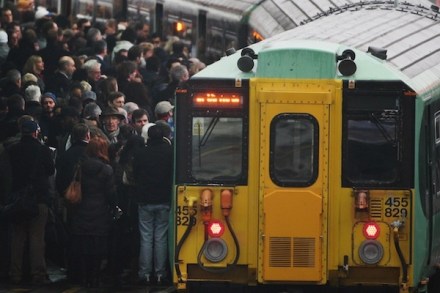
No one is in any doubt about the problem facing Britain’s railways. Over the past decade, rail fares have risen twice as fast as salaries. Yet across the national network, overcrowding is at record levels, cancellations are spiralling and passenger dissatisfaction is at a ten-year high. Yet ministers are about to start pouring £4.5 billion a year, every year for a decade, into building a single new railway route: HS2. To put this into perspective, the amount annually maintaining and upgrading the rest of the rail network is £6 billion. It’s a trap that we can, even now, avoid. Much has changed since the scheme was launched in 2010. Official cost estimates have almost doubled — from £33 billion to £56 billion.

Clever websites only make the market dumber

From our UK edition

A month ago I wanted to travel to Bath for a 60th birthday party. From Kent, this either involves a Tube journey to Paddington or traversing the south-western stretch of the M25, where — in the rare moments you are not in stationary traffic — you have the even worse experience of driving over 10,000 misaligned slabs of ribbed concrete. But deep in my hippocampus, I remembered seeing a train to Bath on the departures board at Waterloo. This would let me travel from Seven-oaks to Waterloo East, avoiding the Tube. I looked online, but the website denied all knowledge of such trains. It told me to take the Underground to Paddington and board there. Following a hunch, I searched Waterloo to Bath via Salisbury.

Adventures with robots

From our UK edition

Imagine a world where we’re all hooked to our individual electronic devices, which feed us our music, communicate with our friends and know our needs; imagine a tech company that dominates an entire city, where your social pecking order is reflected in the devices you possess. Actually, you don’t have to imagine. It’s all there already… Apple, Google, Facebook. So Jinxed, by the young Canadian Amy McCulloch (Simon & Schuster, £7.99), is very much of the moment. It’s set in a city in Canada dominated by a tech corporation: ‘The final goal of Moncha Corp is to make life better... And to make people happier.’ Its academy is where every bright teenager wants to go.

Letters | 19 April 2018

From our UK edition

Sit the snowflakes down Sir: I was surprised to read Theo Hobson’s article about ‘snowflake’ Christians in the C of E (‘Holy snowflakes’, 14 April). What most struck me was the timidity of the clergy, who instead of explaining Christian teaching to their gay and other ‘snowflake’ parishioners, merely kowtowed to them by removing a collage depicting an exorcism. Clergy need to teach those who are easily offended that nowhere in the Christian Gospels — as my many readings tell me — does Jesus condemn gays. (That condemnation belongs to the Old Testament, where God commissioned Abraham and the Patriarchs to breed abundantly and build a nation.

Real life | 12 April 2018

From our UK edition

‘How could you forget to get on the train?’ asked the keeper. ‘I can understand how you forgot to get off the train, but how were you standing on the platform waiting for another train to go back the other way, and the train came but you forgot to get on it?’ I had been on my way from Victoria to Clapham Junction. The keeper had rung to say he was popping in to let the dogs out and did I want them fed? I was telling him no thanks, as I would be on the train to Guildford in a few minutes. But as I was sitting in my seat saying this, the train was pulling into Clapham Junction, the doors were opening to let passengers off, and then the train was moving away again.

Why I’m not on board with quiet carriages

From our UK edition

Every now and then I try to invent a new scientific unit. I’ll never come up with anything as good as the millihelen — a unit of beauty sufficient to launch one ship — or the Sheppey, which is a distance of approximately seven-eighths of a mile defined as ‘the minimum distance at which sheep remain picturesque’. But I do have hopes for the tedion, which measures the half-life of boredom: it denotes the time you must spend in a location to enjoy a 50 per cent chance of overhearing someone say something interesting or funny. On a train to Cardiff or Manchester, a tedion is probably around five to ten minutes. On a Home Counties commuter train it runs into days — or in London, the conversational nadir of the UK, weeks.

Barometer | 15 February 2018

From our UK edition

Museums of curiosity The former culture secretary Ed Vaizey suggested that there are quite enough museums in Britain, and that they should attempt to display their treasures in more visited places like shopping centres. Some suggestions for an educational day out. — British Lawnmower Museum, Southport. — British in India Museum, Nelson, Lancashire. (Received 109 visitors in 2016, according to VisitEngland.) — Dog Collar Museum, Leeds Castle, Kent. — Derwent Pencil Museum, Cumbria. — Teapot Island, Yalding, Kent. ‘The largest teapot exhibition in England with more than 8,200 teapots to be seen.

Keep the peace

From our UK edition

Virgin East Coast, reneging on its franchise, is not in anyone’s good books at the moment, but since it is the only direct service available from Newcastle upon Tyne to London, many in the north-east have no option but to use it. The service in my experience is pretty good, and even better when it is possible to book well ahead and thereby, with use of the Old Gits’ railcard, treat oneself to a seriously cheap first-class advanced ticket. This offers excellent value for money, the food and drink far better than that on the West Coast equivalent. But the icing on the cherry is the quiet coach.

The free market is the key to fixing Britain’s railways

From our UK edition

As the political argument over the East Coast railway franchise continues, it’s easy to lose sight of the passenger interest. Last year, the Campaign for Better Transport found that nationally over 50 per cent of trains were late or cancelled. This is despite fares and costs that have risen sharply for the last 14 years. Chris Grayling, confirmed last week as the Secretary of State for Transport, is right to be reforming the franchises, such as re-integrating track and train, to address the confused responsibility for poor service that characterises the current system. But tweaks to the status quo will only get us so far.

The Spectator’s Notes | 2 November 2017

From our UK edition

Poor Gordon Brown. He embodies the problem traditionally associated with being male, which is that our sex finds it difficult to understand human feelings. Mr Brown recognises, he says in his forthcoming autobiography, that he was not suited to a touchy-feely age. Perhaps it was just as well, because once men, particularly Members of Parliament, start touching and feeling they get into even more trouble, and discover — often too late — that not everyone they touch and feel welcomes it. They are, you might say, groping in the dark. Once upon a time, a high percentage of women understood this defect and usually forgave the opposite sex. But now the quality of mercy is strained by the age of equality. This trend is understandable, but also sad.

Trains in Spain

From our UK edition

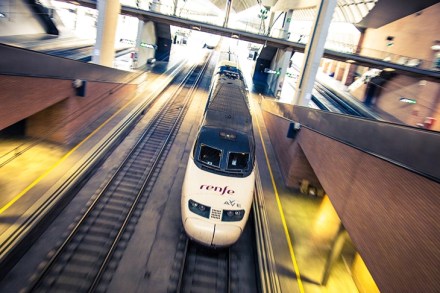
The first railway line in Spain, from Barcelona to Mataro a few miles up the coast towards the French border, was built in 1848 by British workers and with British expertise. I was reflecting on this, and the huge difference today between the services provided by our two countries’ railways, as the train passed through Mataro on the way to Girona. The 90-minute journey, for those of us of a certain age with a tarjeta dorada, cost five euros. The return journey to Barcelona by express train took 38 minutes and cost less than ten euros. Train travel in Spain is not only amazingly cheap; it is comfortable, efficient and almost always punctual.

Why the Tories must smash the railopolies

From our UK edition

Britain’s railways provide a striking example of how a half-baked privatisation goes wrong. The Centre for Policy Studies today introduces a new word to the political and economic lexicon: Railopoly; noun, the exclusive possession or control of train services by a single company (public or private) which faces no competition or threat of. The private train monopolies which have been allowed to replace the old nationalised British Rail have become entrenched in the safe knowledge that ministers will not object and regulators will keep preventing competition. But how and why? Quite apart from allowing bad policies, can’t Conservatives realise that preserving the current unsatisfactory system gives credibility to Jeremy Corbyn’s plans to renationalise?

Corbynista MP sends his colleagues into a spin over women-only train carriages

From our UK edition

Well, that lasted long. Since Jeremy Corbyn's better-than-expected election result, Labour politicians have done their best to heal old wounds and put on a united front. However, in a sign that the party remains fractious, a row has broken out over an idea many MPs thought to be in the dustbin. During the Labour leadership campaign, Jeremy Corbyn proposed the idea of introducing women-only train carriages. However, the idea was given short shrift by his colleagues, who saw it as a step backwards and it was subsequently dropped. Now shadow fire minister Chris Williamson has brought it back to the fray.

Sutherland’s Law of Bad Maths

From our UK edition

Imagine for a moment a parallel universe in which shops had mostly not yet been invented, and that all commerce took place online. This may seem like a fantastical notion, but it more or less describes rural America 100 years ago. In 1919 the catalogues produced by Sears, Roebuck & Company and Montgomery Ward were, for the 52 per cent of Americans who then lived in rural areas, the principal means of buying anything remotely exotic. In that year, Americans spent over $500 million dollars on mail order purchases, half through the two Chicago companies. Yet in 1925, Sears opened its first bricks and mortar shop. By 1929, the pair had opened a further 800. So Amazon’s purchase of Whole Foods Market may be history repeating itself.

Dear Mary | 15 June 2017

From our UK edition

Q. Having retired, my husband is now an enthusiastic observer of the goldfinches, greenfinches and bullfinches in our garden. Their numbers have increased dramatically since he planted ornamental thistles and teasels, and put out feeders with nyger seed. Our kitchen has French windows which offer a commanding view over the large garden. My problem is that my husband, who has a very keen eye while I do not, keeps spotting some sort of bird activity and urgently requiring me to look at what he is seeing. ‘Look! Just on that shrub in front of you — that thin tree where I’m pointing!’ The instructions are imprecise and I always miss the sighting, which causes him immense frustration. Any suggestions? —W.A., Knutsford, Cheshire A.

What would Darwin make of trainspotters?

From our UK edition

Why are men so much more likely to be interested in trains than women? I believe this to be a question of profound importance. It has implications for the debate about whether behavioural gender differences are inborn or learned. And implications for our understanding of male thinking. When at a dinner party did you ever hear an intense conversation between two women about railway timetables? How many teenage girls have you ever noticed among groups of trainspotters? Do small girls ask for a train set as a birthday present? Doesn’t this stark disparity between genders on a matter which touches equally the lives of both, and in which both are equally competent to take an interest, deserve attention? Women use trains just as men do, because they are a convenient means of transport.