Trains

Treasure Britain’s last railway dining car while you still can

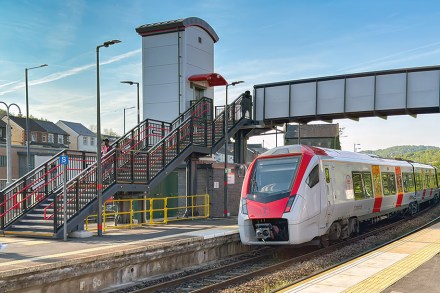
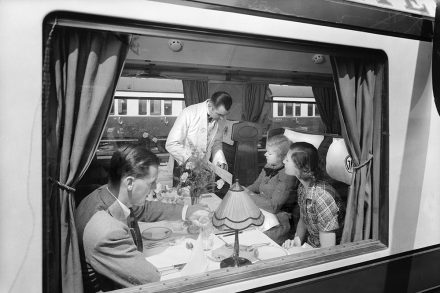
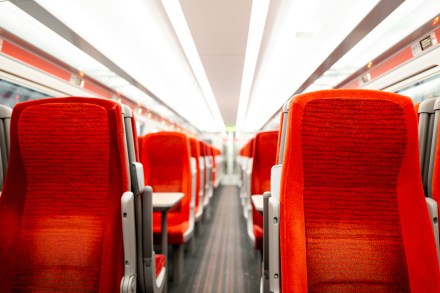
The 17:48 from Paddington does not, on first sight, seem exceptional. Overhard seats, overbright lights and a scramble for the ticket barriers: none of these are special. The modern Hitachi trains are solid but dull. Only Isambard Kingdom Brunel’s great arching iron roof adds splendor to the scene. But pause by coach L on the daily London to Carmarthen express and you might notice a small miracle. This train is one of the very last in Britain to carry a proper dining car. To its immense credit, GWR, the route’s operator, cooks and serves decent meals on six services a day: three at lunchtime and three in the evening, on its lines from London to Wales and the West Country.

railway car

Uzbekistan by high-speed rail

I am in Tashkent, the capital of Uzbekistan. I am standing in a historic complex of madrasas and mosques, courtyards and dusty roses and I am staring at the “oldest Quran in the world.” It is a strange and enormous thing: written in bold Kufic script on deerskin parchment; it was supposedly compiled by Uthman ibn Affan, the third Caliph of Islam, who was murdered while reading it. And so it is, as I linger here and reverently regard the Book, while scrolling my phone for more fascinating info, that I discover the world’s oldest Quran is actually in Birmingham. Yes, that’s right, Birmingham, England. It’s probably in some obscure library, lodged between a thesis on post-colonial emojis and a flyer for Falafel Night.

The $130 billion train that couldn’t

In the annals of stupid and poorly run schemes, the California High-Speed Rail project ranks among the worst. Its future, even a dramatically scaled down one, has become ever more precarious since the Trump administration’s Department of Transportation rescinded $4 billion in funds already granted the project. Governor Newsom has already filed a suit to reverse the action, but he can’t legislate away the reality that this project is an abject embarrassment. When voters approved $9 billion for the plan in 2008, the California High-Speed Rail Authority estimated that it would cost $33 billion and start running by 2020 – and that was just for the San Joaquin Valley portion. The cost has since ballooned to $130 billion, and no stretch is operational.

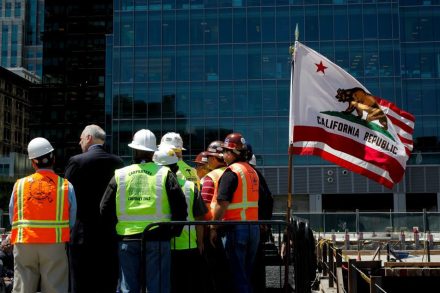
High-speed rail construction site in San Francisco, California

Taking the fast train back to imperialism

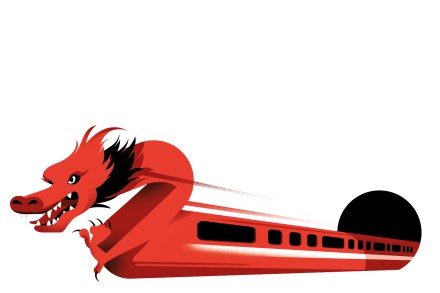
I’m on a high-speed train. Forty years ago, such a statement would have been notable and specific: essentially, it meant you were in Japan or France. Nowadays, being on a high-speed train is barely a geographical indicator at all. Most of Europe has them, from Spain to Italy to Poland. Morocco has high-speed trains. Uzbekistan has high-speed trains. Even Egypt, Vietnam, Turkey, Thailand and the USA either have high-speed railways, or will have them in the next year or two. Just about the only country not powering ahead with high-speed rail is the birthplace of the railway — the United Kingdom — a fact that can either make you sob, or despair, or perform a kind of double sob etched with despair. What makes my experience unusual is that my high-speed journey is happening in Laos.

train

The Europe of American imaginations no longer exists

Since the United Kingdom left the European Union five years ago, the pair have been in battle to prove who has performed better. But the real story of the past five years is not a stagnant UK falling behind a buoyant EU, but of Britain and Europe being trapped in the same cycle of relative decline. It’s America that has quietly raced ahead of Europe this century. Following the pandemic it has become impossible to ignore the gulf in economic vitality between the US and Europe, the former growing by 16.3 percent per capita since 2008. There are very good reasons for America’s success, or rather, Europe’s decline. The EU and the UK increasingly treat their industries as pieces of heritage which must be preserved against disruptors and foreign competition.

Europe

Why we should be more thankful for America’s rail system

In recent months, the train track that was bustling during my small Pennsylvania town’s heyday has been back in use, hauling coal to ports that ship it overseas. The train blares its whistle around 7 a.m., waking our sleepy town with a bygone sound of enterprise. The whistle blows again around 5 p.m., and people rush to watch the train chug on through. Real train buffs, with expensive cameras in tow, line the tracks at dawn. It’s novel, old-timey, and thrilling. But otherwise most of us never think about trains. Most Americans, for that matter, never think about trains.

London to Amsterdam via Brussels: taking the long way

Brexit, the gift that keeps on giving: from June 14, 2024 to January 2025, a reduced Eurostar service will run between London and Amsterdam. Why? Part-closure of Amsterdam Centraal leaves no space for the extra bureaucracy now necessary. Passengers returning to London will change at Brussels to go through security and passport checks, adding up to almost two hours of extra journey time. Global travel booking platforms such as OMIO have reported a surge in train travel in recent years. Cheaper prices (compared to flying) and environmental concerns are cited as the main drivers. But Eurostar’s capped passenger numbers and indirect routes will surely increase air travel in 2024, literally flying in the face of Dutch sustainability policies.

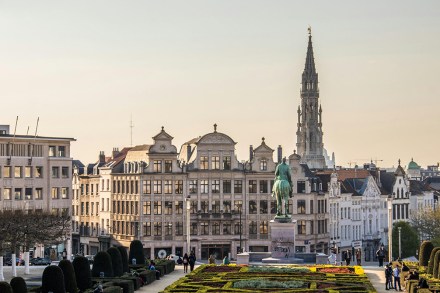
brussels

Thirty-five years of crying to Planes, Trains and Automobiles

No piece of art has ever affected me quite like John Candy’s face in Planes, Trains and Automobiles. It has made me cry for thirty-five years, rivulets of tears. It has shown me that nothing evokes loneliness like a face. John Candy's face simultaneously reveals warmth and fatalism (it's the face of a man who always feared he'd die young — and did). His unibrow is childlike and genuine. His smile is never fake. But Candy’s shower curtain ring peddler Del Griffith is smiling through pain. He’s hiding behind the mask of a gregarious family man and "best in the world" salesman (with a bowtie and bristly mustache). His smile hides a secret: Del Griffith is a grieving widower, and his home is inside an old trunk he carries around like luggage.