Tories

The Tories need a positive vision for Britain after Brexit

From our UK edition

Political Cabinet on Tuesday was a fascinating occasion, as I say in The Sun, and not just because Andrea Leadsom took the opportunity to tell Theresa May she had a wonderful smile.  The Cabinet were given a detailed presentation on the state of public opinion—and bits of it made for grim reading for them. David Mundell, the Scottish Secretary, summed up the mood of the meeting when he told Theresa May, to chuckles, that his first impression from all the data was that she shouldn’t call an election anytime soon. The problem for the Tories is that the voters are wary of their values and fed up with austerity.
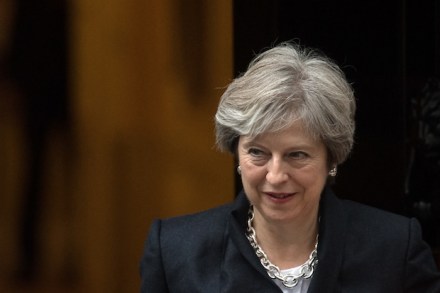
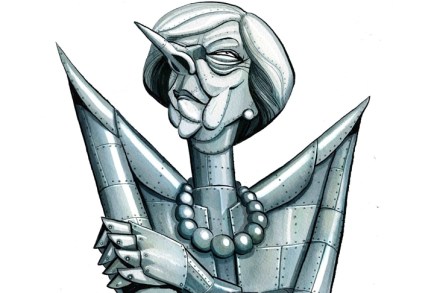
Why May must stay | 12 October 2017

From our UK edition

As from the Manchester conference hall I watched Theresa May’s big moment falling apart, as I buried my head in my hands while her agonies multiplied, I suppose I thought this could spell the end for her premiership. But even as I thought that, then reminded myself that the same failure of the larynx has afflicted me in front of a big audience and could strike anyone and is in itself meaningless, I knew such an outcome would be unjust. There may be reasons why the Tories should find a new leader, but the triple-whammy of a frog in the throat, some joker’s idiotic stunt, and the failure of two magnetic letters to stick to a board, can hardly count among them.

Letters | 5 October 2017

From our UK edition

What do the Tories offer? Sir: I have been hoping that someone more eloquent than me would respond to your contributors’ rants about Jeremy Corbyn, but as they have not, I thought I’d chip in (‘Corbyn’s big chance’, 30 September). As someone who is reasonably financially secure, the Tories would probably consider me a shoo-in voter. But what do they offer? Tax cuts, while paying for them by cutting services and benefits to those less fortunate, and in effect, pulling up the ladder behind me. ‘Capitalism’ to many in this country is really only a description of how Thatcher sold, or destroyed, the country’s wealth-creation industries, and a few years later the government of the day gave the proceeds to the banks as a bailout.

Can anyone unite the Tory tribes?

From our UK edition

One of the reasons that coalition governments are so unusual in Britain is that both main parties are coalitions themselves. The Tories have long been a party of both social conservatives and libertarians, Eurosceptics and Europhiles, buccaneering free traders and economic nationalists. Labour has always brought together Methodists and Marxists, middle-class liberals and working-class trade unionists, hawks and doves. These internal alliances mean the parties mostly avoid the need for an external one. But the Labour and Conservative coalitions are nearing breaking point. Labour’s problem is that its far left now dominates, making the party unbalanced. The two years since Jeremy Corbyn won the leadership have seen his wing gain ever more control.

The Tories need houses, not memes, to win over the young

From our UK edition

The Tory party has a new youth wing called Activate to try to win over the kids with 'memes' - I believe they're called - similar to the way that Momentum has built a sort of cult around Jeremy Corbyn. This is in response to the dismal recent Conservative youth vote, which bodes ill for the party. As a party member rather optimistically put it, ‘we’ll only be fine when a Conservative politician can go to Glastonbury and not be booed’. https://twitter.com/Activate_uk_net/status/902284187687780353 Yeah, I wouldn't be too hopeful on that one to be honest.

The many sides of satire

From our UK edition

Brexit the Musical is a peppy satire written by Chris Bryant (not the MP, he’s a lawyer). Musically the show is excellent and the impressions of Boris and Dave are amusing enough, but the storyline doesn’t work and the script moves in for the kill with blunted weapons. Everyone is forgiven as soon as they enter. Boris swans around Bunterishly, Dave oozes charm, Theresa May frowns and pouts in her leather trousers, and nice Michael Gove tries terribly hard to be terribly friendly. Andrea Leadsom, known to the public as a furtive and calculating blonde, is played by a sensational actress who belts out soul numbers while tap-dancing in high heels and a pencil skirt. Was there ever a kinder portrait of a cabinet minister?

Ireland’s Taoiseach talks tough on Brexit

From our UK edition

There are three areas on which the EU insists that the Brexit negotiations must make progress on, before proper trade talks can start: the so-called divorce bill, the rights of EU citizens in the UK and the Irish border. Today, the Irish PM said that no progress had been made on this issue, that the Brexiteers had had 14 months to devise a plan and hadn’t come up with anything adequate. Implicit in the Taoiseach’s speech is a threat to block the start of trade talks this autumn. If Dublin doesn’t think any progress had been made on the border question, the European Commission is highly unlikely to recommend to the Council that the EU moves on to the next stage of the negotiations.

Who will be the next Tory leader?

From our UK edition

Who will be the next Tory leader? I keep asking the senior contenders over breakfast after the show or at those now notorious summer parties. And they all say the same thing: she will stay for a couple of years and then it will be somebody we haven’t thought of yet. It’s already too late, they say, for MPs in their 50s and 60s. Predicting politics these days is like juggling greased goldfish… but I pass this on for what it’s worth.

Will May dare slap down any of those angling for the top job?

From our UK edition

There are so many people angling for the Tory leadership now that it really is easier to list those who haven’t yet written an attention-seeking op ed or been spotted plotting in a shady spot in Westminster. It’s not just the ones who fancy the job for themselves, or the little nascent campaign teams that are springing up around them. It is also those who plan to run in order to guarantee themselves a top job in the Cabinet when the new leader carries out a unity-focused reshuffle.

We should welcome Nicky Morgan’s election as Treasury Select Committee chair

From our UK edition

Nicky Morgan's election as chair of the Treasury Select Committee will doubtless be written into a narrative of Remainers taking key parliamentary positions overseeing Brexit. There's also a story to be told about the power of the Tory moderates: as well as Morgan, Rob Halfon took the education chair, and Tom Tugendhat got foreign affairs.   But what interests me here is another aspect of Morgan's arrival at the TSC. Perhaps the most important parliamentary committee is now run by someone who takes a gloriously sensible view of immigration.

Why do gay lefties hate Tories but ignore Corbyn’s ugly record?

From our UK edition

Gay lefties have hated gay Tories ever since learning of their existence. The concept baffles them, like pro-life women or alcohol-free wine. Those with long memories are aware of the Conservative Party's ugly record on gay equality. This is the party of Section 28, of differential consent laws, of fretting about children 'being taught that they have an inalienable right to be gay'. But gay Tories, having largely rehabilitated their party and with many of the major gay rights battles settled favourably, hoped the rainbow flag might finally have space for a stripe of blue.

Damian Green calls for a new ‘grown-up way of doing politics’. Will it work?

From our UK edition

Even before the election delivered a hammer blow to the Tories, their ‘strong and stable’ mantra was coming back to bite. Now, their warning of a Labour-led ‘coalition of chaos’ is also rearing its head once again. Fresh from wrapping up their deal with the DUP, the Government is calling on the opposition to come together on Brexit and lend a helping hand. Theresa May will say the other parties should offer up their ideas and be prepared to ‘debate and discuss’ with the Government - not only on leaving the EU but on a host of other areas of policy as well. Damian Green used his Today interview this morning to make it clear that this offer isn’t just reserved for those on the Labour benches.

Theresa May is slowly steadying the Tory ship

From our UK edition

It was better from Theresa May today. She was combative, prickly and forceful at PMQs. The ship is moving on a steadier course. And two toxic enemies have returned to the fold. In the days following the election, both Anna Soubry and Nicky Morgan were ‘helpfully’ suggesting a possible timetable for Mrs May’s departure. Today they both asked supportive questions. And Mrs May read out the answers, tight-lipped. Only those within a yard of her could hear her molars grinding. The Labour leader got a rather glum cheer from his party. He suggested that the PM should fund a pay-rise for nurses because ‘she seems to have found a billion pounds to save her own job.’ As usual, he had a missive of woe to delight us with.

Why are some on the Left claiming a ‘bonfire on red tape’ led to Grenfell Tower?

From our UK edition

Now that Labour councils have been shown to be as much up to their eyeballs in the tower block cladding scandal as Conservatives ones the Left has subtly shifted onto a different target: the ‘neoliberalist’ war on red tape. Writing in the Guardian today, George Monbiot accuses the Government’s Red Tape Initiative - set up to consider which regulations might be reformed once Britain is freed from having to abide by EU directives - of plotting to downgrade building regulations, so as to put the poor at risk while big business increases profits. ‘Red tape,’ he asserts for good measure, is a ‘disparaging term for public protections’.

What the papers say: The Tories must start acting like a Government again

From our UK edition

‘Spare a thought for Philip Hammond,’ says the Times. The Chancellor once looked certain to lose his job - and yet while he might now be safe in his position, his role is only getting tougher. His Cabinet colleagues are queuing up to tell him that now is the time to lift the cap on public sector pay. In response, ‘the Chancellor is expected to fight a rearguard action’, says the Times, which says Hammond is ‘right’ to take this approach. This response also won't be in ‘in vain’ if he is able to make the point that a pay rise must come with ‘a commensurate increase in productivity’.

The government’s fragility is good news for Parliament

From our UK edition

This first week back in Parliament has proved quite how fragile the government’s power is. It may be able to govern in a technical sense - announcing bills, occupying Downing Street, and so on - but it cannot guarantee that it will get what it wants in the Commons. Having to accept the Stella Creasy amendment on free abortions for women from Northern Ireland shows that, but this is just the start of a legislative free-for-all in which MPs from all parties are able to propose changes to any bill ministers put forward, and know that they stand an unusual chance of success. It just takes a handful of Tory MPs to sympathise with these changes, and then the government must either accept the amendment or face humiliation and defeat in a successful rebellion.

The DUP deal is a vulnerability for the Tories

From our UK edition

The DUP deal is a vulnerability for the Tories. Whatever justifications ministers come up with for the extra money for Northern Ireland, there’s no getting around the fact that it wouldn’t be going there if Theresa May didn’t need the DUP’s support to be PM. But in the House today, Labour failed to land any blows on the arrangement. Damian Green’s debating points were effective and neither Emily Thornberry nor the SNP were nimble enough to trip him up. Nigel Dodds, the DUP’s Westminster leader, joked that in the interests of transparency he might publish the DUP’s correspondence with Labour and the SNP at the start of the 2010 hung parliament, which rather took the wind out of the opposition benches sails.

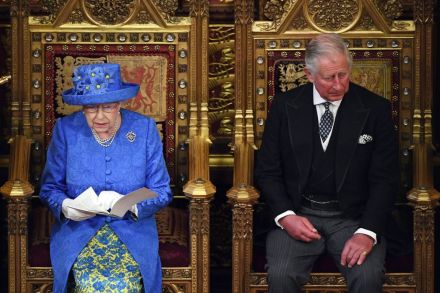
A threadbare Queen’s Speech isn’t such a bad thing

From our UK edition

Can you remember what was in this week’s Queen’s Speech? Boris Johnson couldn’t on the day it was unveiled, making a total mess of trying to sell it on Radio 4’s PM programme. But as the week draws to an end, the main question about the Speech is whether it will pass unamended, not whether the legislation it includes will make much of a difference.  But is a ‘threadbare speech’ really such a bad thing? Governments of all hues suffer from a compulsive disorder that leads them to legislate merely for the sake of it.

Corbyn overtakes May on question of who would make the best PM

From our UK edition

Would Jeremy Corbyn or Theresa May make a better Prime Minister? In April, when Theresa May called the election, that question was barely worth asking: 54 per cent backed May compared to just 15 per cent who opted for Corbyn. Now that’s all changed. For the first time, Jeremy Corbyn has overtaken Theresa May on the question of who would do the best job running the country. A YouGov poll in the Times today puts Corbyn on 35 per cent; just 34 per cent picked the PM. We don’t necessarily need a YouGov survey to tell us but this demonstrates the utter collapse in Theresa May’s popularity. More troublingly for the Tory party, it also shows exactly why the party should be so worried about the prospect of a fresh general election.

How many other blocks like Grenfell Tower are there in Britain?

From our UK edition

Theresa May was rightly criticised for her response to the Grenfell Tower blaze. The Prime Minister’s decision not to initially meet survivors or relatives of those killed looked dreadful, and in the days after the fire there was a real risk that what happened was being pinned squarely on the Tories. While it was right to criticise May for her initial failings though, it also seems fair to say that the Prime Minister’s statement this morning was faultless - at least in terms of helping those on the ground in Kensington. Yet her remarks now raise troubling questions about how many other blocks like Grenfell Tower there are across Britain. For those affected by the Grenfell Tower fire, it is clear the Government is determined to make up for lost time.