Tony blair

Blair wants to tell Iranian tales

From our UK edition

Iran. That’s the news story which poor Mr Blair is trying to spin to the panel – but they don’t pick up on his hints. It would have all been all right in Basra – he’d like to say - if it hadn't been for those pesky Iranians. As Prime Minister, if he blamed Iran in public then that would have had implications. He’d have had to follow up on it. But now he wants to tell us, or he would if those chaps on the panel would kindly probe him on it. When he was talking to Baroness Prashar he tried to start: “If what you’d ended up having was an indigenous violence or insurgency, or criminality and looting and so on…” She wasn’t interested “We’ll come to that later…” and handed over to Chilcot.

Blair on the rack

From our UK edition

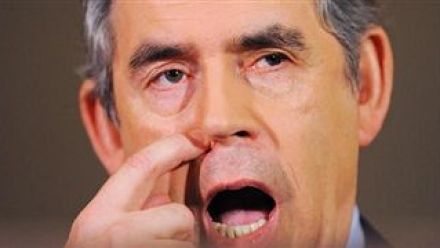
Not so good for John Rentoul: it’s WMD time and Blair’s body language spoke volumes. His movements were almost involuntary. The glasses were on and off, the brow furrowed, the head wagged and jagged in the manner of an amphetamine junky going cold turkey, and the hands were more intrusive than Andrew Marr’s. In round one, Blair was as languid as Dirk Bogarde; he was more like Daniel Day-Lewis second time round. That said, the line holds. As Iain Martin notes, it is extraordinary that Blair “didn’t focus a great deal” on the intelligence he received.

Blair, the Special Relationship and the Clash of Civilisations

From our UK edition

So far so good for John Rentoul: Blair’s walking it, but there have been intriguing moments. The suggestion that Blair’s foreign policy was motivated solely by vanity is false. The former Prime Minister’s thinking is extremely coherent. That is not to say that he is right nor to deny his obvious vanity, or to overlook that this may simply be Blair in matinee idol mode. But he subscribes to an ideology. He stated, once again, that he saw 9/11 as an attack on “us”, not just America. The language is redolent of Samuel P. Huntingdon’s Clash of Civilisations. Blair perceives a band of religious fanatics and a crucible of oppresive rogue states which desire the West’s destruction.

A composed and calculated Blair takes round one

From our UK edition

So, what do we make of round one? Blair looks younger, in a strange way. A shorter haircut. But all those thespian mannerisms that I had forgotten about are still there - and are being used to full effect. A complete mastery of his facial expressions – which, for Blair, do the communicating. He can torn on anxiety, bemusement etc on tap.The quizzical look, the mock concern. The pause, as he thinks about something (or pretends to). It wouldn’t surprise me if he was faking the slight shaking of the hands which Joey Jones at Sky has just picked up.   We have seen the usual Blair lawyerly hair-splitting habit: “regime change” is not the same as wanting to “remove” Saddam – etc. Blair will, today, throw up something for a headline.

There were real, human costs to containment

From our UK edition

On Today this morning, Nick Robinson said that Tony Blair would point to improvements in infant mortality and the like. Today then cut back to the studio where a reporter analysed this claim. The reporter disputed the validity of this claim and said that sanctions had ‘skewed’ the numbers. But the sanctions were a consequence of Saddam being in power. As long as he was there, there were going to have to be sanctions to contain his ambitions. Dennis Halliday, a UN official who resigned over sanctions, said that four to five thousand children a month were dying because of sanctions. There are intellectually respectable arguments on both the pro and anti-war sides. But to claim that the containment status quo was cost free is simply not accurate.

Blair’s real crime

From our UK edition

As Tony Blair prepares to sit in the dock tomorrow, I suspect he knows he’ll walk it. The focus is on the case for war and how it was spun – which will be his Mastermind specialist subject. Nor will anything new be uncovered. As one of the journalists whose summer holiday was eaten up by the Hutton Inquiry, I have been getting a sense of deja lu throuhout the Chilcot Inquiry – and Hutton was more informative because he exposed emails written at the time. They had more meaning and impact that the hazy recollections we hear now. The real story is one that Chilcot has unearthed almost accidentally: the betrayal of Basra.

Goldsmith’s advice strikes at the heart of all that is wrong with cronyism

From our UK edition

Yesterday, I wrote that Jack Straw’s savagery in response to Goldsmith’s original advice bespoke of personal animosity. That may well be so, but Goldsmith’s testimony reveals that he was long convinced of his initial advice’s validity. Blair was exasperated with his friend’s stubbornness: “your advice is your advice,” he said pointedly. Yet eventually Goldsmith changed his mind. Why? Well plainly the government wanted him to because they thought he was wrong. Chronology is important here. Goldsmith wrote a note to Blair dated 12 January 2003 (three months before the invasion) reiterating his objections. Later in the month and at someone else’s suggestion, Goldsmith met Greenstock, who wanted to put the Attorney General right.

An unequal contest

From our UK edition

Hague for prime minister? According to one of the wilder Tory theories, a hung parliament could force a humiliated Cameron from office and put the trusted Hague into Number 10 at the head of a coalition government. On today’s showing Hague has lost his hunger for power. With Brown in Northern Ireland on Superman duty, Hague was pressed into service against Harriet Harman. The leader of the house arrived in a stiff tunic of imperial purple decorated with a butterfly brooch whose winged shape divided opinion. To some it suggested a phoenix-from-the-flames, to others a W-shaped recession. Hague had no trouble dominating her at PMQs. And because he knew he’d have no trouble, he took no trouble either. He was relaxed and fluent.

Stimulating social mobility will take decades

From our UK edition

Another pallid dawn brings more statistics proving that Britain is riven by inequality – ‘from the cradle to the grave’, concludes the Hills report. Unless the offspring of professionals pursue a peculiar urge to be writers or enter Holy Orders, they will bequeath ever greater advantages to their children. For those in converse circumstances, Larkin’s line about inherited misery comes to mind, albeit in a slightly different context. 50 years of unparalleled prosperity, and social mobility has stagnated. Before the wailing and navel gazing begins, it must be asserted that the continued aspirations of the privileged and the fulfilment of their opportunities are not to blame.

The demographics of power-sharing

From our UK edition

The union of irreconcilables was unlikely to last: power-sharing in Northern Ireland is on the verge of collapse. Where once Blair and Ahern would descend on Stormont as a couple of charismatics, today Gordon Brown and Brian Cowan face an enormous and unenviable task. They deserve support: both governments have been courageous in their approach to Northern Ireland, and the Tories were right to offer unconditional support. In which case, why did the umbrella of unionists, including the Tories’ Northern Ireland spokesman Owen Paterson, convene at the Marquis of Salisbury’s house in secret? A mixture of the furtive and the preposterous, one expected reports of Richard Hannay emerging from behind a curtain and fixing his Colt on Peter Robinson.

Geoff Hoon, silent assassin

From our UK edition

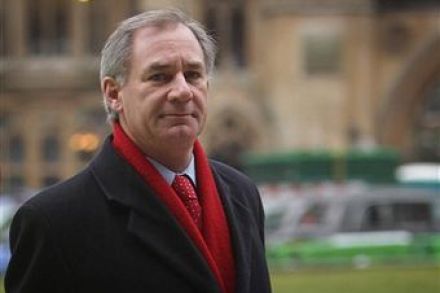
And so it came to pass that nothing came to pass. Geoff Hoon gave evidence to the Chilcot Inquiry on the same day as a convention of anaesthetists visited the QE Conference Centre. Perhaps their presence contributed to the somnolent proceedings. Beneath the apparent narcolepsy, Hoon made two important points. First, he was convinced that the intelligence contained in the two dossiers established the threat of WMD “beyond doubt”, which will assist Blair when he gives evidence, especially after Alastair Campbell’s recent ‘clarification’.

Jack Straw: The Ultimate New Labour Politician

From our UK edition

He's the man who managed to be the campaign manager to Tony Blair and then Gordon Brown. Just after the election-that-never-was in 2007 he let it be known that he had counselled against a snap election. Now the Sunday Times publishes the memo he sent to Tony Blair suggesting that the war might turn out to be a bad idea. Jack Straw: the man who always covers his back. In fact, Straw let the existence of this memo be known shortly after the war turned nasty. I considered it common knowledge when I wrote about it in 2007 and I'm pretty sure John Kampfner talked about it in his book Blair's Wars. The point is that Straw expressed serious doubts a year before the outbreak of war, but still continued to support the intervention.

The insiders bite back

From our UK edition

Another weekend, another set of embarrassing revelations for Gordon Brown.  The Mail on Sunday continues its serialisation of Peter Watt's Inside Out; this time focusing on what Watt wryly describes as Labour's "plans ... for swapping the most electorally successful Labour Prime Minister in our history for Gordon Brown."   Ok, so the Blairite-Brownite wars are nothing new, but this alleged Brown quote, made at the time of the cash-for-honours scandal, deserves adding to the notebook: "Later, rumours swirled in No10 of a furious bust-up between the Chancellor and the Prime Minister. ‘I’ll bring you down with sleaze,’ the Chancellor was said to have yelled.

What a difference 13 years make

From our UK edition

Hearing Cameron joke, in PMQs, that Labour would airbrush Gordon Brown out of their election campaign, I couldn't help but think of Labour's 1997 manifesto.  As you can see to the left, it proudly featured Tony Blair's face (and not much else) on its cover.  So: what chances that Labour use Brown's face on the front of this year's manifesto?  And, more importantly, how long before someone makes a spoof version of the 1997 cover with an image of the current Labour leader?

Just like old times

From our UK edition

As Paul Waugh notes, it was just like old times. Alastair Campbell told us all to grow up and trust in Tony. Naturally, controversy about the dossier was the product of over imaginative hacks, and Campbell asserted that the caveats of experts are nothing compared to a PM’s need to take major decisions. It was a sensational spin operation. Inspired by Uriah Heep, Campbell cast himself as the humblest of functionaries amid grand events. In doing so he was unremittingly arrogant, almost to the point of delusion.

The Iraq Inquiry should call Gordon Brown now

From our UK edition

Alastair Campbell is before the Iraq Inquiry. As one of Blair’s closest aides, Campbell’s role in the run-up to the Iraq war was key. But I suspect the spinner-in-chief will be doing what he was originally hired to do: namely, protect his master by attracting the incoming fire. In this case, though, he will be helping Gordon Brown, not Tony Blair.   Because it is Brown’s role in the Iraq War, not that of Blair, that is the most obscure part of Britain’s modern history. As chancellor, Brown was the second most powerful man in government. He held the purse strings. If he had opposed the Iraq War, it is hard to see Tony Blair succeeding in persuading Cabinet, the Parliamentary Labour party or the House of Commons.

Hoon may strike again

From our UK edition

David Miliband lacks the gumption to play Brutus, but does Geoff Hoon? The Sunday Times has obtained correspondence between Hoon, Brown and Blair illustrating that the then Chancellor overturned Treasury assurances that the MoD would receive additional funds for helicopters in Iraq and Afghanistan. Brown wrote: “I must disallow immediately any flexibility for the Ministry of Defence to move resources between cash and non-cash.” Once again we see the (supposedly) miserly Chancellor holding Blair to ransom at any opportunity, regardless of the consequences. Whilst Brown is a spectre of a Prime Minister, he was anything but as Chancellor.

Identifying Brown’s culpability in Iraq

From our UK edition

The Tories have missed a trick in responding to the predictable news that Gordon Brown won’t be giving evidence to the Iraq Inquiry until after the election. William Hague has just said that it stinks. He should have followed up by listing the questions Brown should be asked – highlighting the extent of his personal culpability in our defeat in Basra and treatment of the troops: 1) Did you ever ask yourself why Britain came to be fighting two wars on a peacetime budget? 2) During the 2007 Tory Patrty conference you went to Iraq and said that 500 troops would be home by Christmas. This decision stunned the Ministry of Defence, and turned out to have been – how can we put this, Prime Minister – untrue.

Blair admits to misleading the British public over Iraq

From our UK edition

It has taken eight years, but Tony Blair has finally leveled with the British public and admitted that the WMD thing didn’t really matter: he wanted to depose Saddam Hussein anyway. That's what he has said in a BBC interview, presumably to pre-empt his appearance before the Chilcot inquiry. His chosen confessor: Fern Britton. His medium: BBC1 on Sunday. It has been trailed to the newspapers, including tomorrow’s Times. As it says: "He said it was the 'threat' that Saddam presented to the region that was uppermost in his mind. The development of weapons of mass destruction was one aspect of that threat. Mr Blair said that there had been 12 years of the United Nations going 'to and fro' on the subject, and he noted that Saddam had used chemical weapons on his own people.