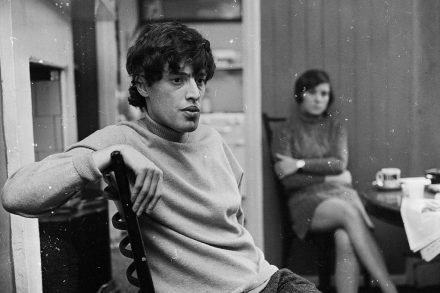
Tom stoppard

Am I allowed to find Tom Stoppard boring?

From our UK edition

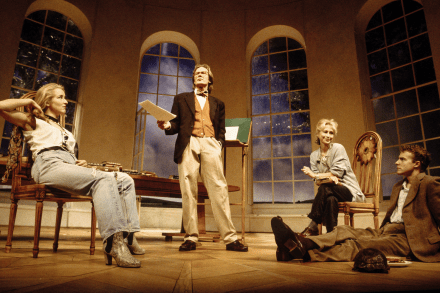
I didn’t breathe a word of my true reaction while filing into the top-floor bar of the Old Vic theatre last week after the three-hour production of Tom Stoppard’s Arcadia was over. It would have been mortifying to be overheard muttering any adverse comments, when swaths of intellectual Stoppard-lovers from all over London and the Home Counties were crowding on to the staircase. Stoppard is a national treasure and to say anything rude about his work, especially in the three months after his death, would be heresy.   It was only on the pavement walking towards Waterloo that I dared to say to my husband: ‘I must say, I wasn’t moved by it.
What drama gets right and wrong about science

From our UK edition

A few days after Tom Stoppard’s death last month, Michael Baum, a distinguished surgeon, wrote a letter to the Times. He explained how Stoppard’s discussion of chaos theory in Arcadia had inspired him to discover a new and far more effective chemotherapy to treat breast cancer. ‘Stoppard never learnt how many lives he saved by writing Arcadia,’ wrote Baum. I’ve long been fascinated by the relationship between science and drama. I knew Tom Stoppard and when I was professor of history and philosophy of science at UCL, we had several illuminating conversations about art, science and theatre, which he recalled in a 1994 article entitled ‘Playing with Science’ for the journal Engineering and Science. ‘Science and art are nowadays beyond being like each other.

One for hardcore Stoppard fans: Indian Ink reviewed

From our UK edition

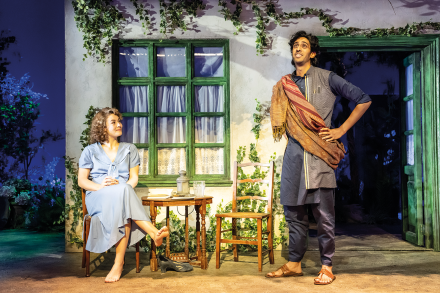
Unusual. After the press night of Indian Ink by Tom Stoppard, no one leapt up and cheered. The crowd applauded politely at the amusing dialogue and the marvellous acting in Jonathan Kent’s handsome three-hour production but there was no standing ovation. The script feels like a literary novel overstuffed with detail. Flora Crewe is a ravishingly beautiful but utterly sexless poet who floats around India in the 1930s provoking the adoration of lustful men. But she doesn’t evolve or change during the action. And she’s maddeningly indifferent to the romantic attention she excites. A maharajah tries to impress her with his fleet of Rolls-Royces. A dashing English captain proposes marriage and she laughs in his face.

Stoppard, Sappho and me

Many years ago, and well retired, I was working in my study at home when the phone rang and a voice said, “This is Tom Stoppard. David West put me onto you.” David was the professor of Latin at Newcastle University and it emerged that Tom used him when he had queries about Latin, but now had a question about the ancient Greeks. When he couldn’t answer it, David suggested that Tom should call me. I felt a vast chasm of ignorance opening in front of me and have no memory of what the question was – but my reply must have satisfied him because he continued to throw the odd leg-break my way. To give some idea of his range of interests, on one occasion he became interested in the Greek perfect tense. Don’t ask me why, but that was at least something I could do.

tom stoppard

How I bonded with Tom Stoppard over the classics

From our UK edition

Many years ago, and well retired, I was working in my study when the phone rang and a voice said: ‘This is Tom Stoppard. David West put me on to you.’ West was professor of Latin at Newcastle University and Tom called him when he had queries about Latin. But he had a question about the ancient Greeks which David could not answer, so he suggested Tom try me. I have no memory of what the question was, but my answer must at least have satisfied him because he continued to throw the odd leg-break my way. To give some idea of his range of interests, on one occasion he became interested in the Greek perfect tense. He had done Latin and some Greek at his school in Yorkshire.

The conservatism of Tom Stoppard

From our UK edition

Sir Tom Stoppard, who died last week, never wrote a memoir, but he did sort of speak one. Just over ten years ago, he told me that he and his new wife, Sabrina Guinness, had become tenants of an old rectory in Dorset. I asked him if he would therefore speak as guest of honour at the AGM of the Rectory Society, a fan club for existing and former clergy houses which I invented in 2005. The AGM always takes place in a central London church, and in 2015, the year I invited Tom, it was held in the Queen’s Chapel beside St James’s Palace. Beyond expressing a tepid wish that speakers make some small reference to the society and its purposes, I never specify their subject.

The wit of Tom Stoppard

From our UK edition

The playwright Peter Nichols created a character based on Tom Stoppard. Miles Whittier. On a car journey across London, I once asked Peter why he was so irked by Stoppard. Thelma, his wife, answered for him: ‘He uses all the oxygen.’ But Stoppard was miles wittier. Asked by a punter, after the New York first night of Rosencrantz and Guildenstern are Dead, what his play was about, he replied: ‘It’s about to earn me a great deal of money.’ Think about it: the only person capable of preserving that bon mot was the playwright himself. He knew how funny he was. Later, he was more careful.

Tom Stoppard was himself to the end

"Tom Stoppard is dead." For anyone who cares for the theater, the English language, and especially for those of us who knew him, these words are as unthinkable as they are hard to bear. How can such a force of nature, such a generosity of spirit, such a voice of sanity, have fallen silent? And yet he has gone. To the end, his body emaciated by cancer, he was still the old Tom: self-deprecating but full of ideas and plans. He might have one more play inside him, he told me, but his fingers could no longer physically write and dictation somehow stopped the words from flowing. He was cared for by his magnificent wife Sabrina, who entertained us tirelessly.

Exquisite: Tom Stoppard’s The Invention of Love, at Hampstead Theatre, reviewed

From our UK edition

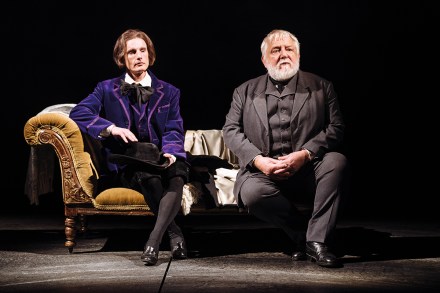
The Invention of Love opens with death. Tom Stoppard’s play about A.E. Housman starts on the banks of the Styx, where the recently deceased poet is waiting for Charon, the boatman, to ferry him across the water. Charon has been told to pick up ‘a scholar and a poet’ and he’s expecting two souls, not one. Houseman explains that he pursued both careers and is therefore a solo passenger. The play’s storyline emerges slowly and with immaculate taste. Stoppard is not one for cheap tricks This takes place in 1936, the year of Housman’s death, and we then flip back to Oxford in the 1870s. The river Styx becomes the Cherwell, where Housman and two chums are paddling upstream while discussing a flamboyant young intellectual, Oscar Wilde.

The ups and downs of making Chaplin

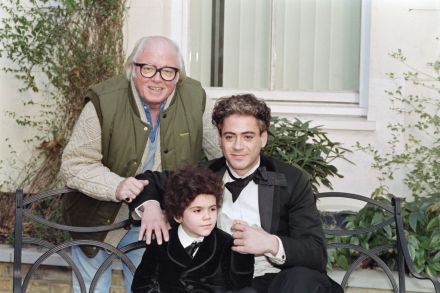
The commission Thirty-four years ago, in the summer of 1990, I had a call from my Hollywood agent, Geoffrey Sanford. Lord Richard Attenborough, the film director, would like to meet me to discuss a project. I said “Yes, please,” instantly. The timing was good — I had delivered my fifth novel Brazzaville Beach to my publishers and was awaiting its autumn publication. I met Dickie, as everyone called him, with his co-producer and right-hand woman, Diana Carter, in Blake’s Hotel in west London. The subject of the meeting was a proposed film of the life of Charlie Chaplin, a passion project of Dickie’s. But there was a complication. A script had already been written by Dickie’s old friend, the actor-director-producer Bryan Forbes.

Chaplin

The mystery of Huw Edwards’s missing phone

From our UK edition

The best thing about being a playwright? The satisfaction of creativity. The worst? Press-night parties attended by friends, industry people and celebs. Playwright Terry Johnson says he knows writers who find such occasions so hellish they’ve been put off writing plays altogether. The problem is the corrosive, deeply unsettling belief that everyone is lying to you. Everyone knows the rules: on press night, say something nice, even if it was a giant turkey. No negatives. That’s the critic’s job. But writers know this, so never believe any compliment, ever, even if the person paying it is telling the truth. The only time a writer can be sure of something is when they hear the dreaded words ‘You did it again!’ or ‘What an achievement!

Dazzling: Stoppard’s The Real Thing, at the Old Vic, reviewed

From our UK edition

The Real Thing at the Old Vic is a puzzling beast. And well worth seeing. Director Max Webster sets the action in a vast sitting room painted electric blue with a white sofa in the centre. A lovely use of empty space. But the preview trailer on the theatre’s website shows the actors seated in a scruffy bomb site where they discuss similarities between Tom Stoppard’s 1982 play and the lyrics of Taylor Swift. Perhaps the Old Vic hopes to attract a younger audience, but this show will appeal most to Stoppard’s lifelong fans. The play marks a major shift in his development. The exuberant and frothy cleverness of his earlier work has acquired emotional weight and a tougher outer shell. There’s a lot of jealousy and anger smouldering beneath the surface.

Is this Tom Stoppard’s last act?

The London premiere of Leopoldstadt in 2020 made this decade the seventh in which a new Tom Stoppard play has been delivered unto the world, and since the playwright has suggested it may be his last, some words about his legacy seem to be in order. Stoppard is often regarded as the greatest English playwright of the later twentieth century. Harold Pinter is the other popular choice. Both men picked up where Pirandello, Beckett and the absurdists left off. Their respective approaches form two sides of the same post-existentialist coin. Stoppard made his name with the expanded footnote: plays in which a sidelight takes center stage, often bristling with comedy, like the metatheatrical Rosencrantz and Guildenstern Are Dead (1966) or The Real Inspector Hound (1968).

Leopoldstadt

Was Penelope really a ‘silenced’ woman?

From our UK edition

Problems about the misuse of history, especially on subjects such as race and colonialism, have been running for a long time. But when it comes to the ancient world, there are also problems about the misuse of literature. Dame Mary Beard’s ‘manifesto’ Women and Power (2018) contains an example of the problem. Her thesis is that women’s voices in the public sphere (my emphasis) have been ‘silenced’ by men ever since the West’s first literature (Homer’s Iliad and Odyssey) gave us our first access to ‘western’ thoughts, deeds, beliefs, hopes and fears (c. 700 BC). The problem exists in the first example of her thesis, to which she returns four times — Penelope, the wife of Odysseus.

Why wealth matters in the free speech debate

From our UK edition

The divide between the rich and the poor is obvious in Britain today. Whether in terms of income, geography or political outlook, the cleavage between the haves and have-nots widens conspicuously. It has become a source of much snobbery and resentment. But there is another field in which this division can be witnessed, yet all too often goes ignored: free speech. Increasingly, the freedom to express your political opinions has become the privilege of the rich, while the poor – or even those on middle incomes – now fear to say what they like. This is especially the case when it comes to talking about gender, race and Brexit.

Playwright at play

Gilbert in Oscar Wilde’s dialogue ‘The Critic as Artist’: ‘Every great man nowadays has his disciples, and it is always Judas who writes the biography.’ Not here. Hermione Lee’s immensely long Tom Stoppard: A Life is expert, engrossing, entertaining and sympathetic to its subject. At its heart is a writer steely in his determination to entertain, an inexhaustible mine of mots, a nonstop genius of jokes, capable of winning the Nobel Prize for the interview as an art form. It comprehensively replaces Ira Nadel’s Double Act (2002), a biography which Stoppard hoped would be ‘as inaccurate as possible’. (Indian Ink and Arcadia are both explicitly hostile to biography and its hubris.

stoppard

The show must go on: theatre to look forward to this year

From our UK edition

With the vaccine rollout underway, the theatre world is betting on a triumphant return in the spring - and this time for good. If, like me, you can't wait to get back to the West End, here are eight shows to book ahead for (whilst keeping your fingers firmly crossed for the vaccine rollout). Good Harold Pinter Theatre, 21 April - 17 July David Tennant stars in Good David Tennant returns to theatreland to take on the leading role in CP Taylor’s seminal play about a liberal-minded professor and dutiful husband who finds himself seduced by the rise of National Socialism in 1930s Germany.

How Tom Stoppard foretold what we’re living through

From our UK edition

A TV play by Tom Stoppard, A Separate Peace, was broadcast live on Zoom last Saturday. I watched as my screen divided itself into four cubes in which appeared the actors, performing from home. The play was written in 1964 and it’s well suited to the split-split screen format because no physical contact occurs between the characters. Director Sam Yates added some rudimentary music and a bit of wobbly background scenery. Mr Brown (David Morrissey) is a mysterious Englishman who asks to be admitted to a private hospital in the middle of the night. Though he has no symptoms he’s given a bed, and he pays his bills in cash. ‘There’s nothing wrong with you,’ complain the medics. ‘That’s why I’m here,’ he says.