Tom stoppard

Stoppard, Sappho and me

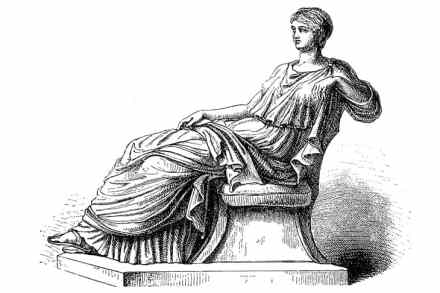
Many years ago, and well retired, I was working in my study at home when the phone rang and a voice said, “This is Tom Stoppard. David West put me onto you.” David was the professor of Latin at Newcastle University and it emerged that Tom used him when he had queries about Latin, but now had a question about the ancient Greeks. When he couldn’t answer it, David suggested that Tom should call me. I felt a vast chasm of ignorance opening in front of me and have no memory of what the question was – but my reply must have satisfied him because he continued to throw the odd leg-break my way. To give some idea of his range of interests, on one occasion he became interested in the Greek perfect tense. Don’t ask me why, but that was at least something I could do.

tom stoppard

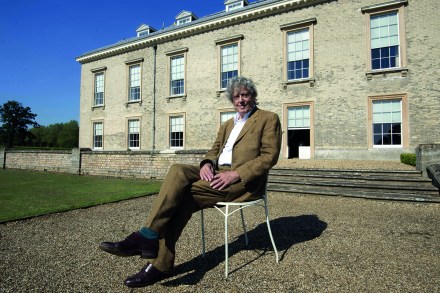
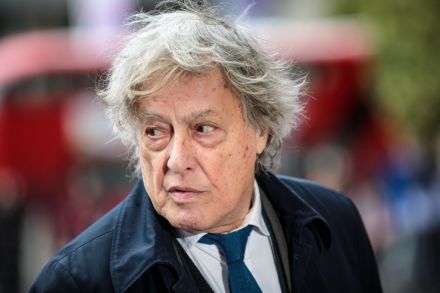
Tom Stoppard was himself to the end

"Tom Stoppard is dead." For anyone who cares for the theater, the English language, and especially for those of us who knew him, these words are as unthinkable as they are hard to bear. How can such a force of nature, such a generosity of spirit, such a voice of sanity, have fallen silent? And yet he has gone. To the end, his body emaciated by cancer, he was still the old Tom: self-deprecating but full of ideas and plans. He might have one more play inside him, he told me, but his fingers could no longer physically write and dictation somehow stopped the words from flowing. He was cared for by his magnificent wife Sabrina, who entertained us tirelessly.

The ups and downs of making Chaplin

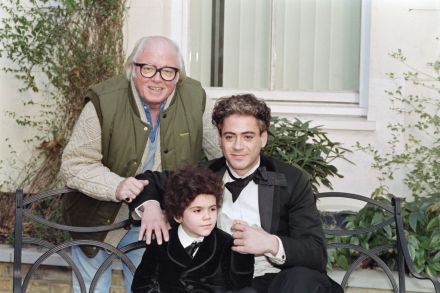
The commission Thirty-four years ago, in the summer of 1990, I had a call from my Hollywood agent, Geoffrey Sanford. Lord Richard Attenborough, the film director, would like to meet me to discuss a project. I said “Yes, please,” instantly. The timing was good — I had delivered my fifth novel Brazzaville Beach to my publishers and was awaiting its autumn publication. I met Dickie, as everyone called him, with his co-producer and right-hand woman, Diana Carter, in Blake’s Hotel in west London. The subject of the meeting was a proposed film of the life of Charlie Chaplin, a passion project of Dickie’s. But there was a complication. A script had already been written by Dickie’s old friend, the actor-director-producer Bryan Forbes.

Chaplin

Is this Tom Stoppard’s last act?

The London premiere of Leopoldstadt in 2020 made this decade the seventh in which a new Tom Stoppard play has been delivered unto the world, and since the playwright has suggested it may be his last, some words about his legacy seem to be in order. Stoppard is often regarded as the greatest English playwright of the later twentieth century. Harold Pinter is the other popular choice. Both men picked up where Pirandello, Beckett and the absurdists left off. Their respective approaches form two sides of the same post-existentialist coin. Stoppard made his name with the expanded footnote: plays in which a sidelight takes center stage, often bristling with comedy, like the metatheatrical Rosencrantz and Guildenstern Are Dead (1966) or The Real Inspector Hound (1968).

Leopoldstadt

Playwright at play

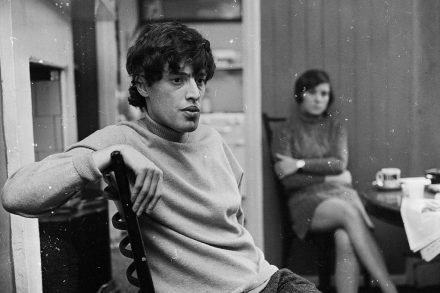
Gilbert in Oscar Wilde’s dialogue ‘The Critic as Artist’: ‘Every great man nowadays has his disciples, and it is always Judas who writes the biography.’ Not here. Hermione Lee’s immensely long Tom Stoppard: A Life is expert, engrossing, entertaining and sympathetic to its subject. At its heart is a writer steely in his determination to entertain, an inexhaustible mine of mots, a nonstop genius of jokes, capable of winning the Nobel Prize for the interview as an art form. It comprehensively replaces Ira Nadel’s Double Act (2002), a biography which Stoppard hoped would be ‘as inaccurate as possible’. (Indian Ink and Arcadia are both explicitly hostile to biography and its hubris.

stoppard