Tokyo

Japan Olympic chief resigns over sexism. But did he have to go?

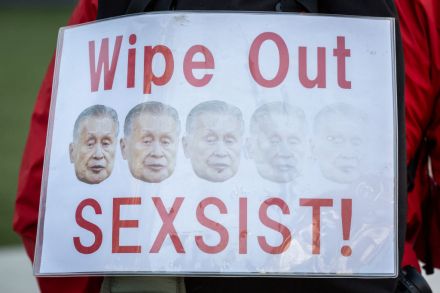
Yoshiro Mori the 83-year-old former Japanese prime minister has resigned from his position as president of the Tokyo Olympic Organising Committee less than 6 months before the games are due to start. Mori’s crime? Making spectacularly unwise comments during a discussion of how to increase women’s representation on the committee. ‘When you increase the number of female executive members, if their speaking time isn’t restricted to a certain extent, they have difficulty finishing, which is annoying,’ he was reported as saying. Along with a litany of other problems and embarrassments, Mori is the second senior Olympic official to quit due to a scandal.

Is it all over for the Tokyo Olympics?

Any long-term resident of Japan will know that ‘reading the air’, as the locals put it, is an essential skill for understanding what is really being communicated behind the glossy lacquer box patina of courtesy and understatement of Japanese discourse. Bad news is never expressed directly and you need to decode the subtle hints embedded in seemingly anodyne comments to get to the truth. For example, if a Japanese doctor ever tells you ‘it’s hard to say’ when you ask about your test results, it might be time to start getting your affairs in order.

An unquiet life: There’s No Such Thing as an Easy Job, by Kikuko Tsumura, reviewed

Kikuko Tsumura is a multi-prizewinning Japanese author whose mischievously deceptive new novel takes us into what purports to be the office world of Tokyo. The routine at first seems familiar, but intriguing disparities emerge: the present is also a foreign country. There’s No Such Thing as an Easy Job gives us the minutiae of everyday working life — but not as we know it. Think Diary of a Nobody without the Pooterish self-regard. Or Nicholson Baker’s Mezzanine, freed from lunchtime restrictions. A burnt-out young woman wants a job without responsibility — no stress, no demands. First up: a surveillance assignment observing a novelist suspected of receiving contraband goods.

Is Yuriko Koike the Nicola Sturgeon of Tokyo?

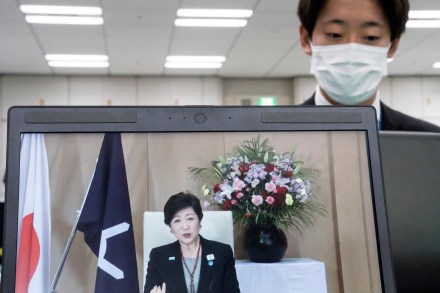
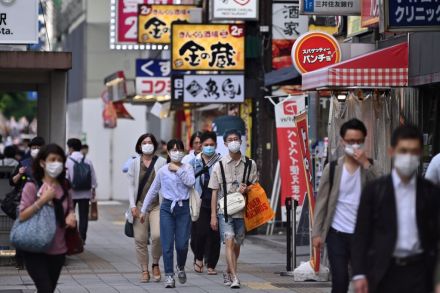
Few politicians have come out of the corona crisis as well as Tokyo Governor Yuriko Koike. As the face of the metropolitan area’s official response to the pandemic, the 68-year-old former cabinet minister has won plaudits for her nightly face-masked updates and guidance briefings. For her efforts, she was rewarded with a landslide in last week’s gubernatorial election. But with a recent surge in cases in the Tokyo area, Governor Koike has become embroiled in a war of words with the national government that could have long-term implications. The latest infection figures in Tokyo (which have risen to around 150 cases a day) have alarmed many, but as ever with corona stats, context is everything.

Japan’s Covid success is a mystery

Japan’s Covid ‘State of Emergency’ is now officially over. Tokyo, the last of Japan’s 47 prefectures to be officially released from restrictions, was declared safe(ish) on Monday, meaning its cautious three-step programme of reopening all commercial premises and entertainment venues can begin. The war over Corona may have been won here, but with a host of competing theories and interested parties hoping to claim credit, the battle to decide how it happened is just beginning. Japan’s official death toll from Covid-19 has not yet reached 1,000. This is in a country of 126 million people with densely packed cities, where people live a cheek-by-jowl existence on public transport, in compact offices, snug bars and restaurants, and tiny living spaces.

The haunting beauty of empty cities

From our US edition

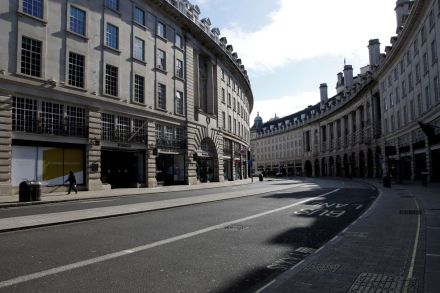
COVID-19 has a horrid ability to turn fiction into fact. Deserted modern cities are usually the realm of post-apocalyptic sci-fi movies. Now, many of us live in them. The world's greatest streets are dramatically empty; suspended suddenly in a dream-like quiet. It's eerie and also very beautiful. We usually often don't notice how remarkable our cities are the commotion. We are distracted by the crowds, the commotion and the congestion. Now it is hard for urbanites to notice anything else. The Spectator has looked around the world, and asked various writers in various places to describe where they live in lockdown.

empty cities london

A brief history of selling bath water

From our US edition

Instagram model Belle Delphine made waves in the news this month after she decided to sell tubs of her own bath water for $30 a pop. The ‘product’ sold out in just three days, and led to a bountiful trove of online content, including my own review for Spectator USA. But Delphine isn’t the first person to sell bath water to her followers. Shoko Asahara, founder of the Japanese doomsday cult Aum Shinrikyo and the man behind the Tokyo subway sarin gas terrorist attack in 1995, which killed 12 people and injured over 1,000 more, also sold his own bath water to devotees who drank it during rituals.

belle delphine bath water