Theresa may

Will Theresa May now become the Gordon Brown of this government?

From our UK edition

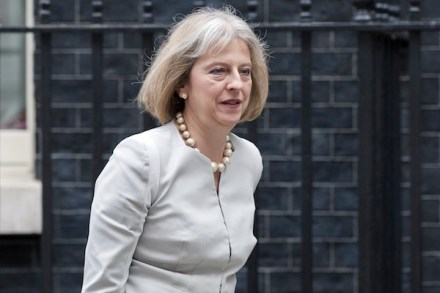
You can judge a minister by their special advisers. Ambitious ministers surround themselves with aides who view their primary loyalty as being to the minister rather than the Prime Minister or the government as a whole. But those who are just happy to be in Cabinet accept the advisers they are sent by Downing Street and CCHQ. Theresa May was, without a doubt, in the former category. Her aides are ferocious defenders and promoters of her. Indeed, May is, in many ways, the Gordon Brown of this government. Anyone who her team thought was interfering in her domain got their head bitten off. Even on relatively minor issues like visas for Chinese tourists, they fought like tigers. No quarter is given to those who disagreed with the Home Office line, no matter how minor the subject.

Cameron should stop the Tory wars – or send for the man who can

From our UK edition

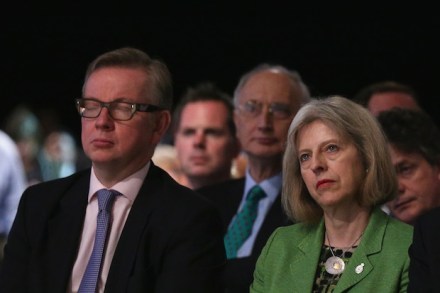
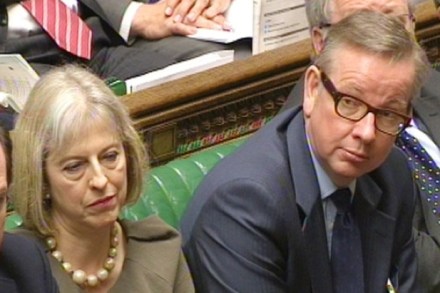
Modern Conservatives seem to be allergic to success. Every time things are going right, the party spasms. Sir John Major’s government nurtured a remarkable economic recovery, yet was beaten after its infighting appalled voters. In opposition, David Cameron acquired a habit of blowing opinion poll leads — a habit he did not, alas, shake off in time for the general election. And now, just as a Conservative victory at the next election looks likely, war has broken out again. What should have been a day of success for Michael Gove has ended in his being forced to apologise for briefing against officials in Theresa May’s department. And the Home Secretary, for her part, has lost a valued and highly effective special adviser: Fiona Cunningham.

May adviser resigns as Cameron takes control of extremism row

From our UK edition

Theresa May's adviser Fiona Cunningham has resigned as part of the fallout from the Cabinet row over extremism as David Cameron seeks to regain control of his ministers. The Prime Minister today received the results of Sir Jeremy Heywood's investigation into the row, which exploded onto the front page of the Times and spread like wildfire through other media as the Gove and May camps briefed against one another. Both have been set tasks by the PM to demonstrate that this row is over. Gove has written to Charles Farr and Cameron apologising for his briefing over lunch to the Times which sparked the row. As for the furious response from May's advisers, that has cost Cunningham, in a relationship with Farr and the source of those explosive briefings to the newspaper, her job.

Michael Gove’s moral mission

From our UK edition

Few modern-day political speeches need to be read in full, but Michael Gove’s today does. The speech to Policy Exchange's Education Conference contains what must be the moral core of modern-day Conservatism, that disadvantage must not be destiny. Though, the speech does take a very Blairite approach to means. Gove declares that ‘what’s right is what works’. The headlines have been grabbed by Gove’s argument that illiteracy can be ended in a generation. This is a noble aim and there’s no reason why this country should be so accepting of educational failure as it is.

Now it’s Gove vs May – will Tory wars ever stop?

From our UK edition

[audioplayer src="http://traffic.libsyn.com/spectator/TheViewFrom22_5_June_2014_v4.mp3" title="Zac Goldsmith, Chris Skidmore and Fraser Nelson discuss the latest Tory wars" startat=40] Listen [/audioplayer]Modern Conservatives seem to be allergic to success. Every time things are going right, the party spasms. Sir John Major’s government nurtured a remarkable economic recovery, yet was beaten after its infighting appalled voters. In opposition, David Cameron acquired a habit of blowing opinion poll leads — a habit he did not, alas, shake off in time for the general election. And now, just as a Conservative victory at the next election looks likely, the party has decided to lose its head again.

Gove and May ensured the Queen’s Speech wasn’t the day’s main story

From our UK edition

Downing Street must be hopping mad with Theresa May and Michael Gove for pursuing their own row on the day of a Queen's Speech that was carefully crafted so as not to rock the boat. This morning, a 'spokesperson for Michael Gove and Theresa May' - a role which hitherto has never existed - issued a statement saying 'the Department for Education and the Home Office take the problems in Birmingham schools and all issues relating to extremism very seriously. Michael Gove and Theresa May are working together to ensure we get to the bottom of what has happened in Birmingham and take the necessary steps to fix it.

David Cameron’s inaction has fuelled the row between Michael Gove and Theresa May over extremism in schools

From our UK edition

The row between Michael Gove and Theresa May over how best to tackle Islamist extremism in schools is typical of how tense things get between these two whenever the subject of Islamist extremism arises. Gove wants to wage intellectual war on Islamist extremism, taking on the argument wherever it raises its head. May, heavily influenced by the civil servant Charles Farr, who is very much part of her circle, thinks that a distinction has to be drawn between extremism and violent extremism. But this problem would never have arisen if Number 10 had made the Prime Minister's writ run on this subject. Cameron in his 2011 Munich speech made clear that he wanted even non-violent extremism tackled: ‘Now, you might say, as long as they're not hurting anyone, what is the problem with all this?

Tories, Tories everywhere

From our UK edition

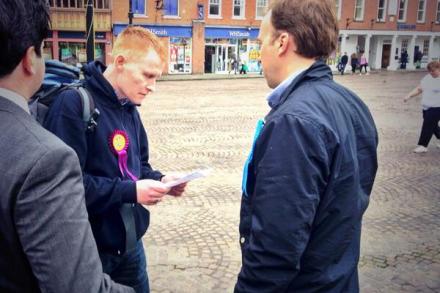
If you are a lobbyist looking to access a government minister but want to circumvent the tedious checks enforced by civil servants, then Newark-on-Trent is the town for you. This corner of Nottinghamshire is packed with reshuffle hopefuls and Tory big-wigs ‘doing their bit’ for the by-election bid. Education minister Liz Truss had taken her mum and kids along. George Osborne was milling about while wearing his favourite high-viz jacket. And Theresa May brought her characteristic sparkle to the stump: the Home Secretary told assembled arm-chewing hacks that the Tories’ “excellent candidate” would secure the future for the hardworking people of Newark, you will be glad to hear.

Theresa May vs Police Federation – the showdown as it happened

From our UK edition

Theresa May's speech to the Police Federation yesterday will go down as one of the most significant moments in this parliament (writes Fraser Nelson). Below is the best account I've seen of it, from the RSA's Anthony Painter. He has kindly agreed for us to cross-post it here.  The Police Federation's conference yesterday didn’t go according to plan. The Independent Review, represented by Sir David Normington and myself, was due to address the Police Federation conference in Bournemouth. A big concern was that the Conference would pick and choose between the 36 recommendations of the Review’s final report and pass one or two amendments that would alter the substance of the recommendations.

One member of Team Gove is a Theresa May fan

From our UK edition

Sarah Vine is famed for using her column in the Daily Mail to share embarrassing personal anecdotes about Michael Gove (often involving his underpants) and to offer deeply unhelpful advice to the Tory government. Today’s article is a case in point; it says that David Cameron's women problem is 'the biggest hurdle the Tories face'. The wife of the Education Secretary adds: 'as my husband is fond of saying, "Happy wife, happy life". And Mrs Electorate isn’t happy.' And Vine laid it on thick for Theresa May; suggesting that the Home Secretary 'looks more and more like the true heir to Margaret Thatcher.... whose tractor beam glare makes Anna Wintour’s seem positively Bambi-esque'.

Theresa May wins battle with Number 10 over stop-and-search reform

From our UK edition

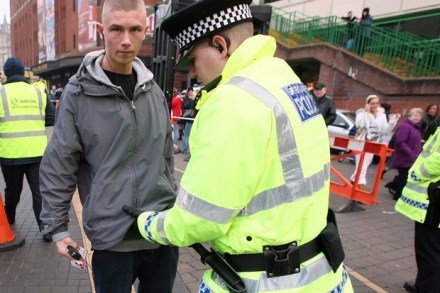
So Theresa May has won her battle with Number 10 on stop-and-search reform, sort of. She announced a number of changes this afternoon to the power for police - but they're all voluntary. That the Home Secretary has managed to get any of these changes into a state where she can announce them is a victory - but the initial voluntary nature of the reforms was the compromise necessary to make this announcement happen. The changes are as follows: The Police and Criminal Evidence Act Code of Practice A will clarify what constitutes the 'reasonably grounds for suspicion' on which the police carry out the vast majority of stop-and-searches. If officers do not use their powers properly, they will be disciplined.

What does new Number 10 hire mean for stop-and-search reform?

From our UK edition

As James revealed on Coffee House earlier, Max Chambers will take over from Patrick Rock on the home affairs brief in the Number 10 policy unit. One thing that will be particularly interesting to watch is whether Chambers' appointment leads to a shift in Number 10's stance on stop-and-search. Rock had been one of the key figures blocking Theresa May's reforms to the power for the police, for fear that it would make the Tories appear soft on crime. So will the new adviser be more amenable to change? I am told that Chambers is open to ideas on reform of stop-and-search and is keen to see more evidence of the need for changes.

Peers launch bid to neuter controversial ‘stateless’ plan in Immigration Bill

From our UK edition

Remember that rather curious change to the Immigration Bill that would render foreign-born terror suspects 'stateless' that ministers managed to sneak through while most MPs were in a tizz about Dominic Raab? Well, it's facing its first major battle in the House of Lords soon, with a group of peers tabling an amendment which would in effect neuter it or spark a row in the Commons. The new clause, tabled by crossbenchers Lord Pannick and Lord Brown, Lib Dem former Director of Public Prosecutions Lord Macdonald and Labour's Baroness Smith, proposes setting up a committee of MPs and peers to consider whether the stateless policy should go ahead.

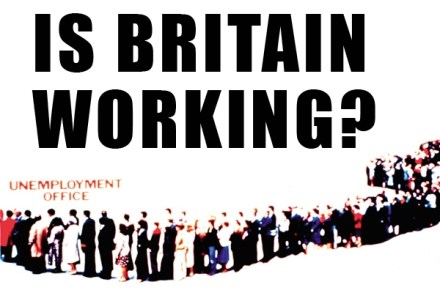
The British jobs miracle

From our UK edition

George Osborne rather glossed over the single most solid piece of good news in the Budget today: the Jobs Miracle. His pensions announcement means that tomorrow’s papers are likely to skip over it too. But it’s worth looking at – the government seems genuinely baffled as to why so many people are finding work. As I wrote in my last Telegraph column, the Treasury does not seem to recognise a supply-side, cross-departmental success when it bites them on the nose. I’m just back from the annual Spectator Budget presentation, sponsored by Aberdeen Asset Management. We spoke a lot about this - the below graph sums it up... As my earlier blog on the "six scary graphs" shows, almost all of George Osborne's initial forecasts have proven to be laughably optimistic.

Michael Gove, Boris Johnson and the return of Tory wars

From our UK edition

[audioplayer src="http://traffic.libsyn.com/spectator/TheViewFrom22_13_March_2014_v4.mp3" title="James Forsyth discusses Gove vs Boris" startat=722] Listen [/audioplayer]From the moment he took his job, Michael Gove knew that he would make energetic and determined enemies. The teachers’ unions, local councillors and even his own department all stood to lose from his reforms — and all could be expected to resist them. What the Education Secretary did not expect was hostile fire from those who should be his friends. At the start of the coalition, Gove and Nick Clegg were allies. With a moral passion rarely seen in British politics, they used to argue that social mobility should be the centrepiece of the government’s reform agenda.

Five things you need to know about the ‘suppressed’ immigration report

From our UK edition

With a mere whimper, the government has released its controversial report (pdf) on the effects of immigration on ‘native UK employment’. Following Newsnight’s revelations that the report was being ‘held back’, Labour demanded its release. 24 hours later, it was put online while Theresa May was informing MPs of an inquiry into undercover policing after revelations about the treatment of Stephen Lawrence's family. Here are the top five things you need to know from the paper: 1. There’s minimal evidence of migrants taking British jobs The Home Office report titled ‘Impacts of migration on UK native employment' reveals there is ‘relatively little evidence’ of British workers being displaced — i.e.

The BBC’s immigration scare story

From our UK edition

The BBC’s enthusiasm for anything that might undermine the Government’s immigration policy was demonstrated yet again by the excitable tone of last night’s Newsnight report (above). The thrust of the item was that a key element of the government’s case for restricting immigration had been undermined by a report written by Home Office officials but allegedly supressed by Number 10. As usual, the context was entirely absent. The original report quoted by the Home Secretary was by the Migration Advisory Committee who have a very high reputation in these matters.

Theresa May: it’s time to stamp out slavery. Again.

From our UK edition

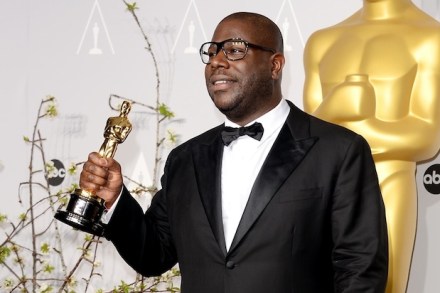
In his Oscars acceptance speech Steve McQueen declared he was dedicating the award for his film 12 Years A Slave to 'all the people who have endured slavery. And to the millions of people who still suffer slavery today'. His words will no doubt cause shock and surprise; to many it will seem scarcely credible that slavery can exist in our modern age. Modern slavery is an evil which is happening around the world today – including here in Britain. Across this country in restaurants, shops, brothels, nail bars and on illegal drugs farms are women, men and children, being held against their will, and forced into a life of slavery and abuse. This Government is determined to stamp out this appalling crime.

Cooper’s stop-and search intervention shows danger of giving ground

From our UK edition

David Cameron and his political aides are reportedly stalling over reform of stop-and-search powers because they fear it will dilute the Tories' tough-on-crime message. But this means that Labour, circling like vultures for any waft of political roadkill, have swooped. Yvette Cooper has written to Theresa May offering Labour's support in getting reform of the powers. Cooper says: 'I hope that you will not give in to the Prime Minister’s opposition to change. Everyone agrees that the police need to have powers to stop and search individuals suspected of crime or to prevent a serious threat. Intelligence-led targeting of suspected criminals helps to cut knife crime and youth killings. This is the problem with dithering.

Theresa May turns to deaths in custody after stop-and-search row

From our UK edition

One of the risks for Theresa May in her battle with Number 10 over reform of stop-and-search powers is that the Home Secretary loses some of the capital she has built up with BME voters over the plans. Last summer, black newspaper The Voice ran an edition suggesting that Labour could be losing the black vote and specifically pinpointed May's work on stop-and-search as a sign that the Tories were starting to appeal to groups they'd previously alienated. But this week May is back in The Voice with an op-ed on deaths in custody. You can click on the image to view the article in full. It is significant, though, that the Home Secretary is unable to mention her work on stop-and-search reforms.