Theresa may

Watch: Home Secretary Amber Rudd on Boris – ‘he isn’t the man you want driving you home’

From our UK edition

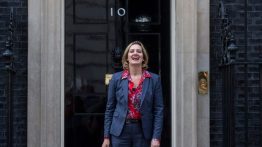
Amber Rudd didn't pull her punches during the referendum campaign when she aimed her fire at Boris Johnson. During a heated ITV debate, she said this about Boris: 'Boris? Well, he's the life and soul of the party but he's not the man you want driving you home at the end of the evening. This is a very serious choice you have to make.' Of course, when Rudd said those words it would be difficult to imagine the events that would play out over the next few weeks. And now, just a month later, Britain is heading out of the EU, Theresa May is our new PM and Rudd and Boris are Home Secretary and Foreign Secretary. These vicious comments during the ITV debate made many at the time wonder whether the Tory party would ever be able to put itself back together again.

Has Philip Hammond just blurted out Theresa May’s decision on Heathrow?

From our UK edition

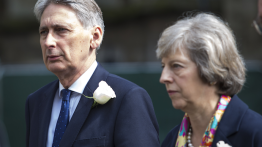
In his interview on the Today programme this morning, Philip Hammond said nothing memorable - which Mr S finds a relief. It's about time that this job went back to being that of a finance minister, not a poseur itching to move to No10. The Today programme is listened to by six million people; by the end, Hammond had probably sent at least two million back to sleep. Mishal Hussein decided to try some quick-fire questions, to see if that would solicit something more interesting. Her gambit worked. What will he do about runways? 'Well, on the decision about the location of London's third, arm, London's additional runway that will be a decision now for the new government to make and it will have to make a decision collectively. Obviously we haven't discussed it yet.

Watch: Angela Eagle’s terrible timing continues as she reacts to Boris’ appointment

From our UK edition

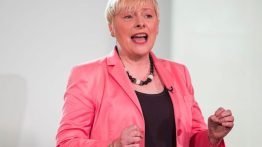
Angela Eagle's leadership launch has so far been characterised by one thing: her terrible timing. When she announced her bid to run against Jeremy Corbyn on Monday, journalists abandoned her speech after Andrea Leadsom dropped out of the Tory race at the same moment - leaving Eagle desperately trying to find anyone left in the audience who wanted to actually ask a question. And last night's attempt to try and drum up support in her flailing campaign also came to a halt when the news filtered through that Boris Johnson had been made Foreign Secretary. After taking some time to regain her composure, Eagle told the crowd that the news Boris was in the Foreign Office showed the importance of electing a Labour government.

May’s man of influence

From our UK edition

Civil servants in the Home Office, even the senior ones, always felt a little nervous when walking towards Theresa May’s office. It wasn’t so much the meeting with the Home Secretary that they dreaded as the characters who lurked in the room directly outside hers. One senior official describes a typical scene: Fiona Hill, one of May’s special advisers, ‘sitting back, getting ready to go out with her stockinged feet on the desk, giving a civil servant an absolute rollicking’. May’s two other special advisers, Nick Timothy and Stephen Parkinson, were also forces to be reckoned with. Now, it seems, this team is being reassembled — to help her run Britain. All three have taken a break from government in the past couple of years.

She’s another Chamberlain

From our UK edition

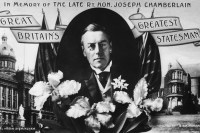
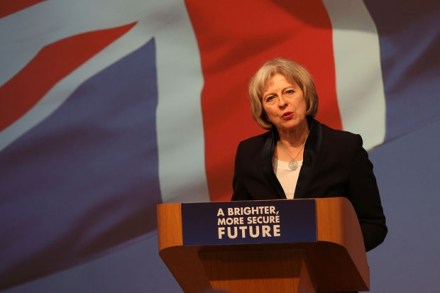
One name leapt off the text of Theresa May’s Birmingham speech, which began as the launch of her leadership campaign but morphed instantly into a programme for her government this week. It was that of Joseph Chamberlain, who was listed by the new Tory leader in her apostolic succession of great conservatives. It became clear as May developed the themes of her new Conservatism, moreover, that Chamberlain senior wasn’t being praised just because she happened to be speaking in Birmingham — the city he made into a worldwide symbol of great municipal government. She intended to follow in the footsteps of ‘Radical Joe’. And that could take her along very different paths from those trodden by both David Cameron and Margaret Thatcher.

‘She doesn’t do likes’

From our UK edition

As Tory MPs gathered at St Stephen’s entrance in Parliament to await their new leader on Monday afternoon, a choir in Westminster Hall began to sing. The hosannas spoke to the sense of relief among Tory MPs: they had been spared a long and divisive nine-week leadership contest. A period of political blood-letting brutal even by Tory standards was coming to an end. The United Kingdom would have a new Prime Minister. More than relief, there was hope for the bulk of MPs who had previously not been marked out for advancement. Theresa May’s accession shows that the narrow rules which were thought to govern modern British politics are not hard and fast. May is not one of the shiny people. She isn’t a member of a gilded political set.

Brexit won the battle. But now we’ve lost the war

From our UK edition

When Jonathan Swift wanted to mock the immeasurable superficiality of British politics, he imagined it as a contest between the Big--Endians and the Little-Endians. That is, between those who believed fervently that the only way to open a boiled egg is at the pointier end; and those certain that the only proper way to attack it was from the larger, more rounded end. But that was in the 1720s and Swift was joking.

The new PM is right to want boardroom reform, but how can she make it happen?

From our UK edition

I spent Sunday at the Sage Gateshead watching an epic performance of Götterdämmerung (I declare an interest, as a trustee of Opera North), so my head was full of it as I braced for more political backstabbing and immolation on Monday. That was very much the way it went as Andrea Leadsom fell, Theresa May rode her horse into the ring of flame that is the forthcoming Brexit negotiation, and Jeremy Corbyn, still clutching Labour’s tarnished ring, was dragged underwater by Angela Eagle, unlikeliest of Rhinemaidens. Enough of the Wagner mash-up: what really caught my ear during the brief moment between Mrs May’s campaign launch and coronation was her attack on the business elite.

Theresa May has just shown she really is serious about Brexit

From our UK edition

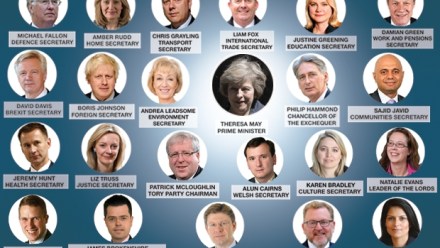
‘Brexit means Brexit’ has been Theresa May’s message since she started running for the Tory leadership. But Brexit could mean a whole variety of things. For example, a Norwegian-style deal with the EU would, technically, be ‘Brexit’. But now, Theresa May has shown real intent. She has demonstrated that she really is serious about this. She has appointed three leavers to the key Brexit-related jobs in government. David Davis will be Secretary of State for exiting the EU, Liam Fox gets the International Trade job and Boris Johnson the Foreign Office. The David Davis appointment is particularly striking. He resigned, unexpectedly, from David Cameron’s shadow Cabinet.

Theresa May’s first speech as Prime Minister: full text

From our UK edition

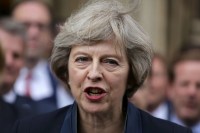
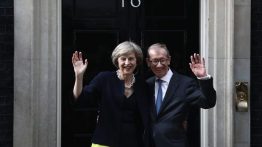
I have just been to Buckingham Palace, where Her Majesty the Queen has asked me to form a new government, and I accepted. In David Cameron, I follow in the footsteps of a great, modern Prime Minister. Under David’s leadership, the Government stabilised the economy, reduced the budget deficit, and helped more people into work than ever before. But David’s true legacy is not about the economy, but about social justice. From the introduction of same sex marriage, to taking people on low wages out of income tax altogether, David Cameron has led a one nation government, and it is in that spirit that I also plan to lead. Because not everybody knows this, but the full title of my party is the Conservative and Unionist Party. And that word unionist is very important to me.

David Cameron’s farewell speech: full text

From our UK edition

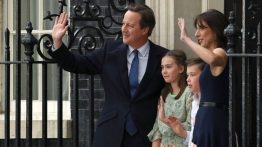
When I first stood here in Downing Street on that evening in May 2010, I said we would confront our problems as a country and lead people through difficult decisions, so that together we could reach better times. It has not been an easy journey, and of course we have not got every decision right, but I do believe that today our country is much stronger. Above all it was about turning around the economy. And with the deficit cut by two-thirds, two and a half million more people in work and one million more businesses, there can be no doubt that our economy is immeasurably stronger. Politicians like to talk about policies, but in the end it is about people’s lives. I think of the people doing jobs who were previously unemployed.

What to expect from Theresa May, and why she might surprise you

From our UK edition

As Tory MPs gathered at St Stephen’s entrance in Parliament to await their new leader on Monday afternoon, a choir in Westminster Hall began to sing. The hosannas spoke to the sense of relief among Tory MPs: they had been spared a long and divisive nine-week leadership contest. A period of political blood-letting brutal even by Tory standards was coming to an end. The United Kingdom would have a new Prime Minister. More than relief, there was hope for the bulk of MPs who had previously not been marked out for advancement. Theresa May’s accession shows that the narrow rules which were thought to govern modern British politics are not hard and fast. May is not one of the shiny people. She isn’t a member of a gilded political set.

David Cameron’s legacy: a stronger, fairer Britain

From our UK edition

Midway through his final cabinet meeting, David Cameron realised — with some horror — that it had turned into a political wake. Theresa May had just lavished praise upon him, and his eyes had moistened. Then it was George Osborne’s turn: the Chancellor was a bit more humorous, but no less affectionate: ‘Being English, David, you’ll hate all this praise,’ he said. ‘You’re quite right,’ Cameron replied. ‘I am English, and I don’t much like it.’ Fearing that every member of his government was about to deliver an elegy, he brought the meeting to an abrupt end. Defining Cameron’s legacy is an important task for the Conservatives if they are to build on it.

Is Theresa May Britain’s Angela Merkel? The German press thinks she might be

From our UK edition

As Britain's second female Prime Minister, Theresa May has inevitably been compared to Margaret Thatcher. But she's also been linked to a contemporaneous politician: Angela Merkel. Whilst some have dismissed the comparisons, it's not only British journalists drawing on the similarities between Theresa May and the ‘Iron Frau’ - German newspapers are now doing the same. The initial parallels are clear; two middle-aged women who have fought their ways to the top of the male-dominated world of politics. However, both Bild and Die Welt - two of Germany's biggest newspapers - believes there is much more which unites May and Merkel and has uncovered a surprising number of similarities to back up their argument.

Place your bets! Bookies reveal favourites for Theresa May’s Cabinet

From our UK edition

As Theresa May prepares to move into No.10 today, Britain's next Prime Minister has a united party behind her. Since Andrea Leadsom dropped out on Monday, Conservative MPs have done their best to put any differences behind them and rally behind their new leader. However with a Cabinet reshuffle looming, that could all change very quickly indeed. Given that there have been little to no leaks regarding the impending reshuffle, it's anyone's guess who May will pick for her front bench. Happily, the bookies are at least on hand to offer their list of politicians to watch. In a move that is likely to worry Out-ers, Paddy Power have Remain-er Philip Hammond -- who has claimed Brexit could take six years -- as the odds-on favourite (2/7) to be the next Chancellor.

The Conservative party has a remarkable instinct for survival

From our UK edition

So farewell, then, David Cameron. I suspect we'll miss him when's gone, but then he probably entered Downing Street 20 years too early, a product of a culture that fawns over youth and undervalues wisdom. At least Theresa May is a good decade older than him, although Kenneth Clarke, at 76, should have been considered for the role, entering as he is the prime of his political life. After coming up with the great slogan of 2016, 'Brits don't quit', Cameron then quit a few days later; his Tory arch-rival Boris Johnson then quit; Nigel Farage has quit, this time for good, followed by his deputy Paul Nuttall; Andrea Leadsom has quit; even Roy Hodgson and Chris Evans have quit.

The Fixed Term Parliaments Act has come back to haunt the Lib Dems

From our UK edition

The award for most pathetic remark of the week goes to Tim Farron who earlier released a press statement saying this: 'Just 13 months after the last election the Conservatives have plunged the UK into chaos. It is simply inconceivable that Theresa May should be crowned Prime Minister without even having won an election in her own party, let alone the country. There must be an election. The Conservatives must not be allowed to ignore the electorate, their mandate is shattered and lies in ruins.