Theresa may

In defence of Cameron’s posh boys

From our UK edition

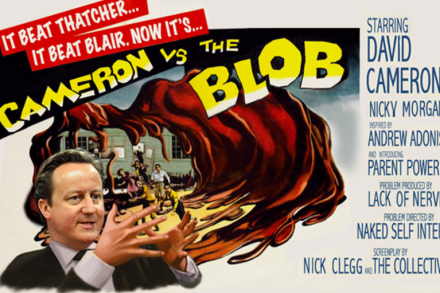
A few weeks ago, I wrote a Spectator cover story about David Cameron’s purge of the posh. My peg was a new wheeze from the Cameroons whereby prospective employees should be asked not just where they went to university, but about their childhood and parents’ assets etc. The idea was to make sure that too many posh people didn't make it to the top. Sinister, I argued, and not meritocratic. Judging people on their merits means not marking them down for being poor or posh. Inverted snobbery is still bigotry, and ought to be deplored as such. And yet the government was proposing rolling it out, first with the civil service and then.... ...

Theresa May takes control

From our UK edition

Theresa May has demonstrated this week that she isn’t interested in being continuity Cameron. Her reshuffle was, as I say in The Sun, a brutal change up from the previous Cabinet and she has shown that she is determined to take on the party of the rich tag in a way that David Cameron never could. In this reshuffle, May hasn’t bothered to disguise who her friends are and, just as importantly, who are her enemies. She was ‘wintery but courteous’ when she sacked people. Any Prime Minister who sacks more ministers than the size of her majority is taking a risk. Some of those who she sacked are already thinking about their next move. But others accept it had to be done. .

The era of political labels has ended

From our UK edition

I loathe labels but used to be described - indeed described myself - as a socialist. Perhaps as a result of having been conceived at a conference of sex-pest Gerry Healy's Socialist Labour League (SLL) in Morecambe, then christened (or rather, named - my family are atheist) Mark after Marx, I never had much doubt about which side I hung. My father's family were working class, Methodist, union-organising, tenant association-running, pro-Suffragette, anti-bomb. Many of my happiest childhood memories were being taken on marches against nukes, apartheid and vivisection. Even now my father struggles with the concept that not all Conservatives are fundamentally evil. My mother's family were more extreme: my nan was an Irish Republican, and even now my mum's father remains a Stalinist.

Is Theresa May rowing back on ‘Brexit means Brexit’?

From our UK edition

Theresa May has told us repeatedly that ‘Brexit means Brexit’ and Philip Hammond has been at it too: just in case you weren’t aware, Brexit really does mean Brexit. Whilst it’s a catchphrase which is meant to reassure those who want Britain to leave the EU (and those who don’t, but respect the outcome of the vote), it’s actually pretty vapid. And on her trip up to Scotland today, the PM may have shown how her phrase could easily unravel. Theresa May said she was ‘very clear’ about involving the Scottish government in the Brexit negotiations and that she was eager to ‘get the best possible deal for the entire United Kingdom’. So far, so good, you may think.

Theresa May reacts to Nice terror attack

From our UK edition

Theresa May has just given her reaction to the terrorist attack in Nice, saying that Britain would stand ‘shoulder-to-shoulder’ with the people of France as she condemned the ‘brutal murderers’ responsible. Here’s what she said: ‘I am shocked and saddened by the horrifying attack in Nice last night. Our hearts go out to the French people and to all those who’ve lost loved ones or been injured. While the full picture is still emerging, it seems that at least 80 people are feared dead and many others have been injured. These were innocent victims enjoying a national celebration with their friends and families. We are working urgently to establish whether any British nationals were caught up in the attack.

Theresa May’s record as Home Secretary is alarming, not reassuring

From our UK edition

Despite David Cameron’s experience as a marketing man, his skills at reputation management were feeble compared to those of Theresa May. May was not a terrible Home Secretary but she was not a good one, still less an outstanding one. Yes, she remained in office for six years. But longevity in office is hardly proof of success, even at the Home Office. Anyone who has worked in a large organisation has encountered long-serving, apparently unfireable incompetents, and one thing that the history of the Cameron administration surely proves is that being bad at your job rarely leads to losing that job. Some kind of strange magic has prompted pundits and analysts to forget all the misfortunes and scandals of her tenure.

Theresa May faces an impossible test over Scotland and Brexit

From our UK edition

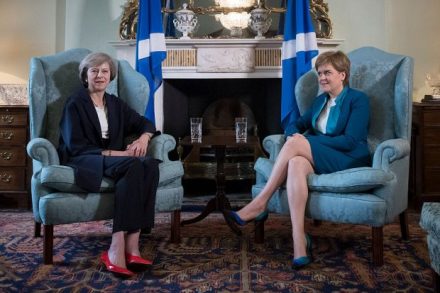
For some time now, and especially since September 2014, the SNP administration in Edinburgh has been inspired by a single, powerful, notion: govern as though you were enjoying the early days of a newly-independent state.  Of course, Scotland is not - or not yet - an independent state and, for the time being at least, still has two governments, one in Edinburgh and another in London. But in attitude and demeanour, the SNP behaves as though independence has already arrived in everything except the formal recognition of that fact. This is a matter of mood and framing, for sure, but it's also something which has consequences. It's why Theresa May's visit to Scotland and her meeting with Nicola Sturgeon today is a heavily symbolic matter.

Letters | 14 July 2016

From our UK edition

Lurid about Leavers Sir: Matthew Parris has spent much of the past few months denigrating those of us who want to leave the EU, but his latest article (‘For the first time, I feel ashamed to be British’, 9 July) really does go too far. It is simply untrue to claim that the leaders of the Leave campaign relied on hatred of immigration, and that this won it for Leave. As Brendan O’Neill pointed out (‘Not thick or racist: just poor’, 2 July), a majority of Leave voters (including me, for what it is worth) rejected the EU primarily for sovereignty reasons. But whatever Mr Parris may feel, there is nothing immoral about wanting to control (not stop) the number of immigrants who enter one’s country.

Long life | 14 July 2016

From our UK edition

When you are recovering from a stroke, you spend much of the time asleep. But when you are not sleeping, you are told that the most important thing you have to do is avoid stress. All doctors agree that stress is the main impediment to recovery. But how can you possibly protect yourself against it? The causes of stress can creep up on you from anywhere without warning, and there is nothing you can do about it; and lately I have been bombarded by shocks. I was one of the ignorant for whom the victory of Brexit in the referendum was itself a shock, but this also set in train a whole bunch of further assaults on the nervous system.

The Spectator’s Notes | 14 July 2016

From our UK edition

On Tuesday night in London, I spoke to Women2Win, a Conservative organisation dedicated to recruiting more women candidates. My title, suggested long ago, was ‘The Woman Who Won’. It referred to Margaret Thatcher. The day before my speech was delivered, another woman (and former chairman of Women2Win) won, so now there are two. Everyone seized the moment to compare and contrast them. There is a clear difference between Theresa May’s situation today and Mrs Thatcher’s in 1975. Mrs May, like Ted Heath in 1975, represents the side that just lost, Mrs Thatcher the side with a new idea about how to win. Mrs May is the establishment candidate: Mrs Thatcher was the insurgent.

Barometer | 14 July 2016

From our UK edition

Nuggets on May Some trivia about Theresa May — At 59, she is the oldest new prime minister since Jim Callaghan, 64, in 1976. — She has the shortest surname of any prime minister since Andrew Bonar Law, who held the post for 211 days in 1923. — She is the first childless PM since Edward Heath — She is one of three recent prime ministers whose fathers were preachers: Gordon Brown is the son of a Church of Scotland minister and Lady Thatcher’s father was a Methodist preacher as well as shopkeeper. In spite of her father being a Church of England vicar, Theresa May at one point attended a convent school — Like Lady Thatcher, May suffered a by-election failure before securing a safe Conservative seat.

Theresa May’s reshuffle defies any logic

From our UK edition

When I went to work at Foyle’s Bookshop as a student, when the owner Christina Foyle still ran the place, she would interview you and ask very kindly what your interests were: history, literature and cooking, you’d tell her. Then you’d find you’d been put at the cash till at some distance from all these departments. It was the same for everyone: economists ended up in fiction; pop fiends in natural science. It’s rather the impression you get from the reshuffle.

Theresa May’s purge of the posh

From our UK edition

It's not a great day to be an ambitious Tory who attended a private school -- let alone Eton. After Theresa May promised to work to build a society with a focus on helping the working class rather than the rich, she has started by implementing this approach in her Cabinet. George Osborne, Nicky Morgan, Theresa Villiers and Oliver Letwin are among the privately-educated politicians to face the axe today. Meanwhile, the majority of the high profile briefs have gone to state school educated politicians. Alongside May, the Chancellor -- Philip Hammond -- and the Justice Secretary -- Liz Truss  -- attended a state school. Meanwhile Justine Greening has made history by becoming the first ever Education Secretary to attend a comprehensive.

Why Brexit better mean Brexit

From our UK edition

'Brexit means Brexit’, says our new Prime Minister, but that does not tell us what she thinks Brexit would involve. Given the immense resourcefulness of the EU in perpetuating itself, one must guard against solutions which appear to satisfy Brexit conditions, but leave reality little changed. They might resemble how France withdrew from the military command of Nato in 1966. This assertion of French sovereignty by De Gaulle involved, among other things, the withdrawal of non-French Nato troops from French soil. In reality, however, the secret Lemnitzer-Ailleret accords between the United States and France ensured that France remained bound into participation in Cold War hostilities. Over time, French self-exclusion became less and less significant.

Was Michael Gove punished for being too soft on crime?

From our UK edition

Of today’s corpses piled up in Downing Street, none has caused more shock than that of Michael Gove. That Nicky Morgan, who signed Gove’s nomination papers to be leader, has also gone hints at some kind of personal animosity. But might the explanation be more straightforward than that – simply one of his policy and approach as justice secretary? Gove acquired a reputation as a great reformer during his time at the Department for Education, facing down huge opposition from teachers’ unions in the process. He incurred considerable personal cost for doing this, with David Cameron shifting him to the whips office before the last election on the instructions of Sir Lynton Crosby, who feared Gove to be electorally toxic.

Labour needs to rediscover its religious vision

From our UK edition

One of our main political parties is at an immense disadvantage. Labour is tied to a form of idealism. Socialism is a strong form of idealism. It can only gain and hold power by diluting this idealism, mixing it with realism. This is psychologically difficult, existentially unstable. When it finds a way of gaining power, it is not calmly at ease with itself, but divided. And this intensifies after a period of power: purists seek revenge on those behind the ‘successful’ compromise. Blair’s Iraq war adventure is incidental to why he is so hated by the left. He is really hated for winning all those elections. How has such a party survived thus far? How can the moderates bear to rub shoulders with the purists who so hate them?

Andrea Leadsom’s line about children? Thatcher did it first

From our UK edition

On Tuesday night in London, I spoke to Women2Win, a Conservative organisation dedicated to recruiting more women candidates. My title, suggested long ago, was ‘The Woman Who Won’. It referred to Margaret Thatcher. The day before my speech was delivered, another woman (and former chairman of Women2Win) won, so now there are two. Everyone seized the moment to compare and contrast them. There is a clear difference between Theresa May’s situation today and Mrs Thatcher’s in 1975. Mrs May, like Ted Heath in 1975, represents the side that just lost, Mrs Thatcher the side with a new idea about how to win. Mrs May is the establishment candidate: Mrs Thatcher was the insurgent.

Theresa May’s first day and Boris at the Foreign Office: How the foreign press reacted

From our UK edition

A new British Prime Minister is always big news on the continent and around the world. This time around, with Mrs May tasked with redefining Britain’s relationship with the EU, the foreign press has taken a special interest in recent events in Downing Street. One of the big stories aside from Britain's new Prime Minister taking up her role is Theresa May's decision to make Boris Johnson Foreign Secretary. Here's how the press around the world reacted to the news: France: With France bracing itself for a protracted period of arduous negotiations with the UK, Britain's new Prime Minister is big news across the Channel. Le Figaro goes as far as to brand Theresa May Britain’s new 'Iron Lady'.

The Spectator podcast: Theresa May’s new cabinet

From our UK edition

George Osborne has gone, Phillip Hammond is in No 11, David Davis and Liam Fox are back in the Cabinet - and Boris Johnson is the new Foreign Secretary. Theresa May’s reshuffle has made headlines around the world – and Boris' appointment in particular has been a big talking point. In this week’s Spectator podcast, Isabel Hardman talks to James Forsyth, Fraser Nelson, and Colleen Graffy, a former official in the US State Department. Here’s what she has to say about Boris: ‘He is a particularly attractive combination of being a politician who speaks both knowledgeably and eloquently, but different from any politician that’s in America.