Theresa may

Theresa May’s cheery Brexit threat to EU leaders

From our UK edition

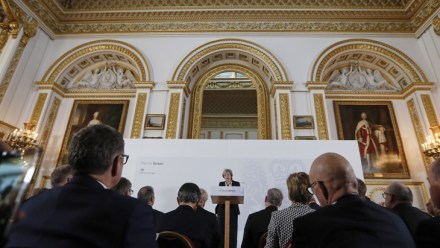
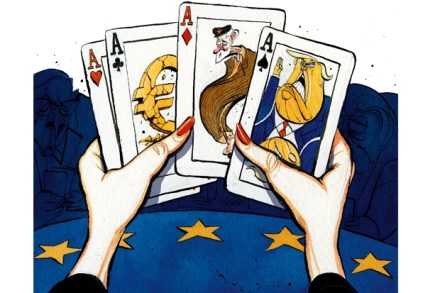
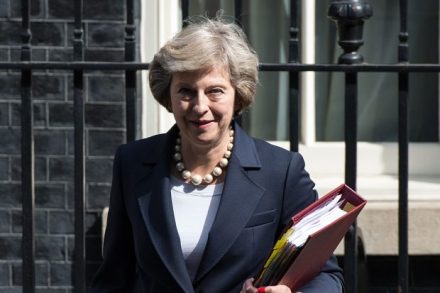
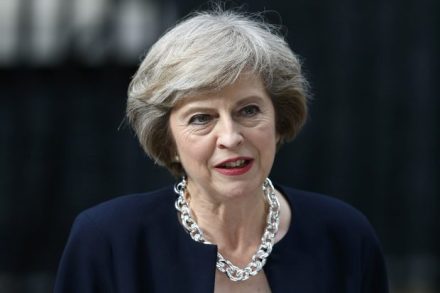
Theresa May was at pains in her Brexit speech and in the question-and-answer session from journalists afterwards to appear as friendly as possible to European leaders. She pointedly took questions from members of the European press who were present. She told the room that ‘we are leaving the European Union, but we are not leaving Europe’, and addressed ‘our friends across Europe directly’, promising that Britain would continue to be ‘reliable partners, willing allies and close friends’. But she also took a very strong negotiating line, threatening what David Cameron either couldn’t or wouldn’t, which was to walk away if the deal offered wasn’t good enough, particularly if EU leaders sought to punish Britain for its decision.

Theresa May’s Brexit speech: A Global Britain

From our UK edition

Listen to Isabel Hardman, Fraser Nelson and James Forsyth reviewing Theresa May's speech:   A little over six months ago, the British people voted for change. They voted to shape a brighter future for our country. They voted to leave the European Union and embrace the world. And they did so with their eyes open: accepting that the road ahead will be uncertain at times, but believing that it leads towards a brighter future for their children - and their grandchildren too. And it is the job of this Government to deliver it. That means more than negotiating our new relationship with the EU. It means taking the opportunity of this great moment of national change to step back and ask ourselves what kind of country we want to be. My answer is clear.

Theresa May’s Brexit speech – ten main points

From our UK edition

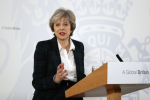
'A Global Britain' promised the slogan behind Theresa May as she delivered her big Brexit speech. It was robust and well-judged, very much in the tone of The Spectator's leading article endorsing Brexit – she even used the same 'Out, and into the world' language we put on our cover. The referendum, she said, was 'a vote to restore, as we see it, our parliamentary democracy, national self-determination and to and become even more global and internationalist in action and in spirit.' She spoke so persuasively about the case for Brexit that you almost forgot that she campaigned (or, at least, voted) against it. But after a decent period of reflection, her conversion to Brexistism is now complete.

Will Theresa May finally tell us what Brexit means?

From our UK edition

How much will Theresa May’s speech today surprise us? The Prime Minister’s promise to offer more detail on Brexit was made before Christmas, but Number 10 types seemed curiously relaxed about the prep for the speech over the holiday. And even though those briefing the speech over the weekend warned of a ‘market correction’, this is likely to have been as much to suggest that the speech was going to be big and revelatory as it was to actually warn about its content. Today we will get the 12 priorities for May’s negotiation of Britain’s exit, which will be guided by four key principles. Those are ‘certainty and clarity’, ‘a stronger Britain’, ‘a fairer Britain’ and a ‘truly global Britain’.

Theresa May can now drive a hard Brexit bargain – and she knows it

From our UK edition

The backdrop to Theresa May’s Brexit speech is almost as interesting as the speech itself promises to be. First, there’s the government's very deliberate decision to make clear—via a Philip Hammond interview in the German press—that Britain will play hardball if it can’t secure a decent deal with the EU. Hammond made clear to Welt am Sonntag that if the UK can’t negotiate a reasonable new trading arrangement with the EU then it is prepared to slash tax and regulation to make its economy more competitive. This is a deliberate attempt to play on European worries about having some kind of Singapore West on its doorstep.

Who’s afraid of a ‘hard’ Brexit?

From our UK edition

Pull yourselves together, you wusses. It’s a minor readjustment of our tariff arrangements we’re talking about, not an epidemic or a foreign invasion or an asteroid strike. Not that anyone would guess it from the apocalyptic vocabulary you’re using. 'A hard Brexit,' says Keir Starmer for Labour, 'would be catastrophic for our economy, living standards, jobs and future prosperity'. Tim Farron, the Lib Dem leader, agrees it would be 'economically disastrous'. The CBI calls it 'very negative'. Sound familiar? We became accustomed to such over-the-top language during the referendum campaign. The very act of voting Leave, we were told, would cause an immediate recession. Unemployment would surge and the stock exchange would collapse, destroying the value of our pensions.

Princess Diana understood what ‘global Britain’ meant. Does Theresa May?

From our UK edition

So, 'global Britain' eh? This, we are told, will be the leitmotif for Theresa May's Brexit speech tomorrow and, indeed, for her approach to international affairs more generally. And who could disagree with any of that? The argument will, of course, be couched in economic terms. The spirit of Britannia will be unleashed to sail the world's oceans. Britain is back, you know. We shall show the doubters what we're made of and by jove we'll make a success of Brexit. Well, let us hope so. There are many kinds of internationalism, however, and I'm not sure - at least not sure yet - the buccaneers really appreciate, far less admire, all of them. I always thought David Cameron's aspiration to spend 0.7 per cent of GDP on foreign aid a noble ambition.

The Brexiteers turn on the plebs

From our UK edition

The trouble with plebiscites is that they leave the plebs stranded. A complicated issue is reduced to one question: should we leave the EU, yes or no. Nowhere on the ballot does it ask whether we should leave the single market or currency union, crash into the WTO without trade agreements with the rest of the world, or tear up employment protections. There is just the deceptively simple question. It provides no guidance to which of the thousands of possible futures we could chose when it is answered. The Leavers might have interpreted the referendum result as meaning Britain should embrace the Norway model; and pay the price for staying in the single market by accepting free movement.

Why Theresa May isn’t the new Iron Lady

From our UK edition

Curbs on executive pay, restrictions on foreign takeovers and workers on boards. Not Jeremy Corbyn’s plan for Britain, but ideas raised by Theresa May and put forward for discussion at her cabinet committee on the economy and industrial strategy. Not for 40 years have the Tories had a Prime Minister so firmly on the left of the party. May joined the Tories before Margaret Thatcher became leader and in many ways she represents a bridge back to the pre-Thatcher era. That is why comparisons between Britain’s two female prime ministers don’t reveal much — they come from very different traditions. Since Thatcherism took over the party, many Tories have looked to the United States for intellectual inspiration. But May is more of a continental-style Christian Democrat.

The PM’s national security adviser is leaving

From our UK edition

  Mark Lyall Grant, the Prime Minister’s national security adviser, is leaving. As I report in The Sun today, the 60 year-old Lyall Grant is to retire later this year. The hot favourite to replace Lyall Grant is Mark Sedwill, the permanent secretary at the Home Office. Theresa May knows Sedwill well from her time as Home Secretary, they worked together for three years. Having him in Downing Street will mean that she has foreign policy advice from an official with whom she has developed a strong working relationship with. ‘She likes people we know and trust’, says one senior figure involved in discussions about the move. Sedwill, a former Foreign Office man, is well qualified for the job.

Leak suggests EU will seek ‘special’ deal to access the City post-Brexit

From our UK edition

The Guardian has a very significant story on its front page tomorrow. It has obtained notes of a meeting that Michel Barnier, the EU’s chief negotiator, had with senior MEPs this week. These notes show that Barnier told them that he wanted a ‘special’ deal that would guarantee access for the EU firms and countries to the City of London’s financial markets. Interestingly, Barnier also said—according to The Guardian’s account—that ‘There will need to be work outside of the negotiation box … in order to avoid financial instability.” This suggests that Barnier shares Mark Carney’s view that there are financial stability risks for Europe if the EU cuts itself off from the City of London.

May might not give much away in Brexit speech

From our UK edition

How much detail does Theresa May need to give in her much-anticipated Brexit speech on Tuesday? The Prime Minister will presumably have to say more than ‘Brexit means Brexit’, and odd phrases about what colour Brexit should be (red, white and blue) won’t pass muster either. But remember that the original big Brexit speech at the start of a year was the Bloomberg speech that David Cameron gave in 2013 - and he gave so much detail about what he wanted from a renegotiation of Britain’s relationship with the European Union that he was inevitably going to disappoint, which he then did, taking Britain out of the EU as a result. May will not want to fall into the same trap. Neither will she want to be the one who gets blamed for Britain not getting certain things.

Theresa May, left-wing Tory

From our UK edition

Curbs on executive pay, restrictions on foreign takeovers and workers on boards. Not Jeremy Corbyn’s plan for Britain, but ideas raised by Theresa May and put forward for discussion at her cabinet committee on the economy and industrial strategy. Not for 40 years have the Tories had a Prime Minister so firmly on the left of the party. May joined the Tories before Margaret Thatcher became leader and in many ways she represents a bridge back to the pre-Thatcher era. That is why comparisons between Britain’s two female prime ministers don’t reveal much — they come from very different traditions. Since Thatcherism took over the party, many Tories have looked to the United States for intellectual inspiration. But May is more of a continental-style Christian Democrat.

Jeremy Corbyn dodges disaster but fails to inspire at PMQs

From our UK edition

At PMQs today, Jeremy Corbyn didn’t have a disaster: there was no repeat of yesterday’s shambles. But he didn’t take full advantage of the opening he had. Yes, he went on the NHS—but he didn’t cause Theresa May as much trouble as he could have. There was no reference to the Times’ story this morning claiming that Downing Street is blaming Simon Stevens, the chief executive of the NHS. Nor did he manage to create any daylight between May and the Health Secretary over changes to the four-hour waiting target and Hunt’s warning that people turning up to A&E unnecessarily is a large part of the problem. This isn’t to deny that the NHS is a risk for the Tories.

Full text: Jeremy Corbyn’s Brexit speech

From our UK edition

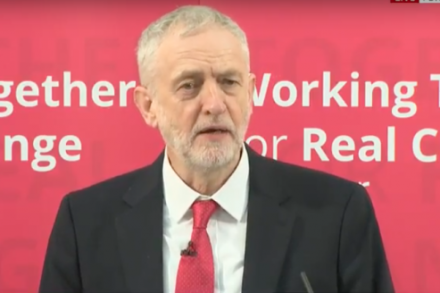
Listen to the whole speech here: Whether you voted to Leave or to Remain, you voted for a better future for Britain. One thing is clear, the Tories cannot deliver that. So today I want to set how Labour will deliver that vision of a better Britain. This government is in disarray over Brexit. As the Prime Minister made clear herself  they didn’t plan for it before the referendum and they still don’t have a plan now. I voted and campaigned to remain and reform as many of you may know I was not uncritical of the European Union. It has many failings. Some people argued that we should have a second referendum. That case was put to our party’s membership last summer and defeated. Britain is now leaving the European Union.

Why isn’t Labour focusing its efforts on the NHS crisis?

From our UK edition

Jeremy Corbyn will shortly give his speech on Labour’s position on freedom of movement, hopefully clarifying whether that is his pre-briefed position that the newspapers published this morning, or his position as set out in his Today programme interview. It was initially briefed that he was ‘not wedded’ to the idea of freedom of movement, but then said Labour would not stop any EU citizens from coming to the UK. To add to the confusion over this policy announcement which appeared to be moving the Labour party to the right on immigration, the Labour leader then did the equivalent of shouting ‘look at that massive left-wing squirrel over there!’ in order to distract everyone by suggesting a national salary cap.

Can Jeremy Corbyn reinvent himself as a Trot Trump?

From our UK edition

'Populism' is a useless word. By definition, anyone who wins an election is more popular than his or her opponents are. According to this logic, John Major and Barack Obama must have once been 'populists', which does not sound right at all. When we use 'populist' today, we should mean something more than popular. The label covers movements of the nationalist right, which claim to speak on behalf of 'the people' against immigrants, cosmopolitans, and multinational institutions. Their most distinctive feature is their contempt for the checks and balances of complicated democracies. From Law and Justice’s Poland to Trump’s America, they attack judges, journalists, opposition politicians and parties as 'enemies of the people' – a 'people,' of course, only they represent.

The ‘shared society’ seems to be a gloomier version of the ‘big society’

From our UK edition

Is Theresa May’s ‘shared society’ speech just a rather empty rebranding exercise, or something serious that will shift social policy in this country? The Prime Minister today set out more of her thinking on domestic reform and defined what her ‘shared society’ will look like. It's something we have only caught glimpses of up until now, because of the truncated leadership contest and the focus on Brexit. She painted a very gloomy picture of life in Britain today, focusing on all the things that are going very badly wrong for many people: ‘We live in a country where if you’re born poor, you will die on average 9 years earlier than others.

Full text: Theresa May’s ‘shared society’ speech

From our UK edition

Thank you for inviting me to be here this morning to deliver the prestigious Charity Commission Annual Lecture. I am delighted to have this opportunity to express my appreciation for all those who work in our charity sector and for those who freely give their time, money and expertise in the service of others. We are a country built on the bonds of family, community and citizenship and there is no greater example of the strength of those bonds than our great movement of charities and social enterprises. But the strength of that civil society – which I believe we should treasure deeply – does not just depend on the ingenuity, generosity and commitment of countless volunteers, social entrepreneurs and philanthropists.