Theresa may

Will Theresa May become Brexit’s scapegoat?

From our UK edition

Normally in the run-up to a Queen’s Speech, Westminster watchers wonder how radical the Prime Minister feels like being - and how much political capital they have available to spend. But of course this year’s Speech is rather different, because the Prime Minister has no political capital and the negotiations with the DUP haven’t concluded. Moreover, Theresa May has never given the impression that she wants to be particularly radical, even in her honeymoon days as the Prime Minister who gets things done. Her pitch in the election was to get a bigger majority so she could have a quiet life while carrying out the Brexit negotiations. She certainly hasn’t got a quiet life, and she will have to be even less radical than she’d initially planned.

The Tories desperately need new ideas to keep Corbyn out of power

From our UK edition

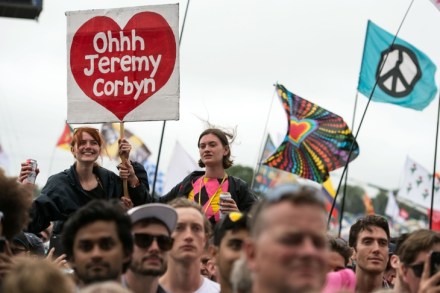
Every discussion with a Tory Minister or MP now ends up with a go through of the runners and riders for the leadership. But just as important as the personality is the policies. One of the major problems for the Tories at the last election was that they had almost no positive offer; what did they offer a thirty something on fifty thousand a year who didn’t stand to inherit anything? Tories can’t expect young people to be capitalists, when they have no capital. This makes the need for new ideas on the centre-right a matter of some urgency. Without them, Jeremy Corbyn—or someone very like him—will be Prime Minister at some point in the near future.

Please can the bullying of Theresa May stop?

From our UK edition

We all remember it from school, whether as perpetrator, or assistant of perpetrator, or victim: the moment when everyone turns against another pupil and it becomes legitimate to be vile to her. When she is ‘down’, it becomes more and more enjoyable to torture her and to find endless new aspects of her to be woundingly vicious about, every hour of every day. It has been like this for Theresa May in the last week. She’s the outcast in the playground, knowing that if she so much as opens her mouth to say something, she’ll receive a torrent of withering sarcasm. Please can it stop? It leaves a nasty taste in the mouth, whatever one’s politics.

Is the British government about to be held hostage by head-banging biblical fundamentalists?

From our UK edition

Forgive the inflammatory headline, but that's the conclusion that millions of Britons have drawn from media descriptions of the DUP. Mainland commentators seem unable to make any distinction between the Democratic Unionist Party, founded by the late Ian Paisley, and his small Free Presbyterian sect, which is indeed influenced by American fundamentalism. We know the DUP is against abortion and gay marriage. But are its members also creationists who think the world was created 6,000 years ago? In this week's Holy Smoke podcast, Cristina Odone and I talk to Jon Anderson, a Northern Irish writer specialising in religious and political sectarianism. He lays some myths to rest. For example, the DUP is not the main party of the Orange Order.

Sunday shows round-up: Hammond undermines May over Brexit ‘no deal’

From our UK edition

Philip Hammond - No deal would be 'a very, very bad outcome' One day before Brexit negotiations get underway, Philip Hammond took to the Andrew Marr Show and announced that if the UK achieved no deal with the EU it would be a 'very very bad outcome'. This appears to be somewhat at odds with Theresa May's repeated assertion that 'no deal is better than a bad deal'... Marr: Do you think no deal is better than a bad deal? Hammond: Let me be clear that no deal would be a very, very bad outcome for Britain. But there is a possible worse outcome, and that is a deal that is deliberately structured to punish us.

Theresa May’s problem is that she is far too British for her own good

From our UK edition

While I was rummaging through data on what Treasury officials had spent on their credit cards, back in George Osborne’s day, I came across a series of curious payments. The Treasury had been paying RADA for coaching sessions. Ministers – I presume it was them rather than civil servants – were being trained by actors. Maybe they should have done the same at the Home Office, because the failure of the then Home Secretary to perform in public could very rapidly turn out to be her undoing.   Her failure to express empathy during the election campaign was already being dragged up in election post-mortems.  But what has happened since the Grenfell Tower fire on Wednesday has compounded the problem a thousandfold.

Donald Trump’s White House needs Theresa May to save it

From our UK edition

If Theresa May is ousted, or simply tires of her job as Prime Minister, might she consider emigrating to the United States and joining the Trump administration? For my part, I very much hope she does contemplate it. As big a challenge as Brexit may be, it likely pales in comparison to instilling a sense of purpose in the Trump White House. So far, Donald Trump has been unable to find anyone capable of imposing order on his chaotic administration, let alone taming his recidivist twitter binges.

Yes, Grenfell is a scandal. No, Theresa May does not have blood on her hands

From our UK edition

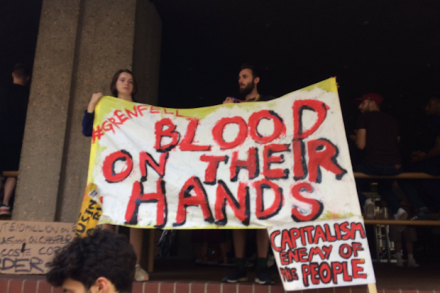
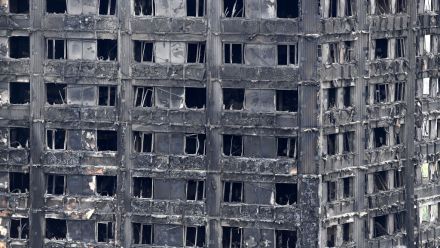
“Burn neoliberalism, not people” said Clive Lewis in a tweet showing the skeleton of Grenfell Tower. Odd words from a Labour MP. When asked just what he meant, he explained that his 'agenda' is to 'end not just the current government but Thatcherite economic dogma'. In this way the grief and anger after the Grenfell Tower disaster has been moulded into a march on No10 with chants of 'May must go' and 'blood, blood, blood on your hands'. Just a few days ago, John McDonnell was calling for a protest march in Westminster. Now, he has got one. https://twitter.

Independence is the SNP’s day job. Everything else is a distraction

From our UK edition

'Get back to the day job.' The six magic words that delivered the Scottish Tories their best election night in decades. Ruth Davidson recited this incantation endlessly during the campaign and Labour and the Liberal Democrats quickly joined in. As messages go, it was blunt but effective, capturing the public mood that Nicola Sturgeon has allowed herself to be distracted by the independence issue.  After the UK chose to leave the EU despite Scotland's Remain vote, the First Minister planned to parlay opposition to Brexit into support for independence. But her scheme went from no-brainer to harebrained in a breathtakingly short period of time. Like Theresa May's snap election gamble, the opportunism was too naked and overestimated Sturgeon's public support.

Those who died at Grenfell Tower were the victims of bad government

From our UK edition

Had the Grenfell Tower tragedy befallen one of the millionaire high-rises built along the Thames recently, it would still be a catastrophe that shocked the country and the world. But what makes this disaster so numbing and sickening is to see, in the faces of the dead, some of the most vulnerable people in our society. People who were, in effect, in the care of the state – that is to say, in our collective care. If we pay taxes and vote, we’re part of a system that’s supposed to devote the greatest attention to those in greatest need of government help. And on Tuesday night, dozens of them were killed – through, it seems, near-contemptuous neglect from various layers of government.

Theresa May is failing to learn from Gordon Brown’s mistakes

From our UK edition

One of the truisms that has emerged from this election is that maybe Gordon Brown was right to veer away from calling an early election after all. Pursuing a snap election turned out to be a grave error for Theresa May, and so perhaps the Labour Prime Minister was wiser than everyone gave him credit for at the time. But while this may seem obviously true, what has actually happened is that May has confirmed her similarity to Brown. The latest YouGov polling on May’s personal ratings reminds us that both reaped a severe punishment for going anywhere near an early poll, regardless of whether they followed through and held the election.

Grenfell Tower: Theresa May’s ‘Hurricane Katrina’ moment?

From our UK edition

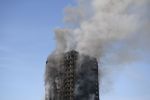
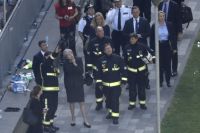
We don't yet know what caused the Grenfell Tower blaze. Yet already one thing is clear: this devastating fire, in which at least 17 people - and possibly many more - lost their lives, should never have happened. Grenfell Tower is turning into Theresa May’s ‘Hurricane Katrina’ moment, says the Guardian, which contrasts Jeremy Corbyn’s decision to meet those affected and his ‘promise to find the truth’ with the Prime Minister’s decision to make no ’contact with the shattered survivors’. May looks ‘off the pace, inarticulate, seemingly uncomprehending – a leader failing the great ordeal by disaster that is the ultimate test,’ the paper argues.

High life | 15 June 2017

From our UK edition

I was busy explaining to a 23-year-old American girl by the name of Jennifer why the election result was not a disaster. She is a Spectator reader and wants to work in England, preferably in politics. She called the result the worst news since her father had abandoned her mother. I begged to differ. Actually, it was a far better result than it would have been had the Conservatives won a majority of 100, I told her. She gasped in disbelief, but soon enough she was hooked. Do not be alarmed, dear readers. I have not taken LSD. Nor am I suffering from populist-nationalist rage at global elites and starting to hallucinate.

Barometer | 15 June 2017

From our UK edition

Keep walking George Osborne called Theresa May a ‘dead woman walking’. The expression ‘dead man walking’ was called out by US prison officers to clear the way for a condemned inmate on his way to execution. It fell into disuse in the 1960s but was rekindled in 1993, first by the publication of a book of that title about a death row inmate called Elmo Patrick Sonnier, then by a successful film version starring Sean Penn. Sonnier was convicted in 1978 of the murder of two teenage lovers and executed in 1984. If Theresa May spends that long on political ‘death row’, it will last beyond a five-year parliamentary term. Against the bias Britain’s electoral system used to favour the Conservatives, then Labour, and now it seems to favour the Tories again.

The Spectator’s Notes | 15 June 2017

From our UK edition

Before knowing the result of the election, I composed my Chairman’s message in the newsletter of the Rectory Society. In it, I noted that Theresa May was the third prime minister in a row to have been brought up in a parsonage house. The first was Gordon Brown, son of the Scottish manse. The second was David Cameron, inhabitant of an old rectory owned by his stockbroker father. And now there was Mrs May, only child of a High Anglican vicar in Oxfordshire. ‘Whatever our political views,’ I went on, ‘I feel we [in the Society] should be proud of the fact that the buildings we love continue to produce unusual people capable of leading our country’.

Diary – 15 June 2017

From our UK edition

Nobody inside CCHQ was prepared for election night’s 10 p.m. exit poll. Lynton Crosby’s last text to me predicted that we were going to ‘do well’, which according to our expectations would mean a Conservative majority of more than 60. A late projection, based on data from the ground and Jim Messina’s modelling, suggested we would win 371 seats, giving us a majority of 92. In the end, the Conservatives got their highest share of the vote since 1983, and more votes than Tony Blair managed in any of his elections, yet still we ended up with a hung parliament. Skilful leadership may deliver stability, but the absence of an overall majority means the nature of the Brexit deal the government negotiates is more uncertain.

Portrait of the week | 15 June 2017

From our UK edition

Home Theresa May, the Prime Minister, spent the week confronting the consequences of the general election that she had called to bring ‘stability and certainty for the future’. It had instead surprisingly left the Conservatives with no overall majority. They won 318 seats (a loss of 13) and Labour 262 (a gain of 30). The Scottish National Party won 35 (a loss of 21), with the Conservatives gaining 12 extra seats in Scotland, even capturing Stirling. Labour won an extra five seats in Scotland. Angus Robertson, the SNP leader at Westminster, lost his seat, as did Alex Salmond. Nick Clegg, the former Lib-Dem leader, lost his seat, but Sir Vince Cable won back Twickenham.

The Spectator Podcast: Rebooting the Maybot

From our UK edition

On this week’s episode, we examine the fallout from last week’s shock election result, and ask what’s next for both Theresa May and Jeremy Corbyn. And, to give you a brief respite from all the politics, we also speak to one of the world’s greatest living pianists. First up: In this week’s magazine, James Forsyth describes the repercussions of the hung parliament within the Conservative party, and the attempt being made to ‘reboot the Maybot’. But can the Prime Minister be patched back to health? Or is she so defective that she’s set to be junked? James joins the podcast, along with Andrew Rawnsley, Chief Political Commentator of The Observer.