Theatre

A decorative pageant that would appeal to civic grandees: The Secret River reviewed

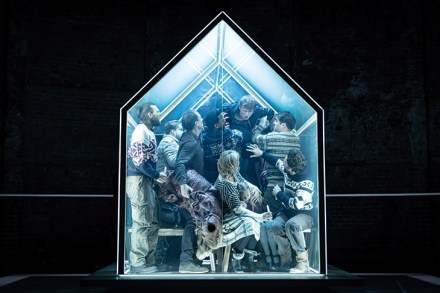
The Secret River opens in a fertile corner of New South Wales in the early 1800s. William, a cockney pauper transported to Australia for theft, receives a pardon from the governor and decides to plant a crop on 100 acres of Aboriginal land. His doting wife, Sal, begs him to take her and their young sons back to her beloved London. They make a deal. William must succeed as a farmer within five years or pay for their passage home. He clashes with a tribe of spear-waving Aboriginals who make it clear that they want him off their ancestral turf. Neither side speaks the other’s language. ‘This is mine now. You lot can have the rest,’ says William, pointing vaguely at Australia.

Watching Stephen Fry was like being in the presence of a god

Stephen Fry lies prone on an empty stage. A red ball rolls in from the wings and bashes him in the face. He stands up and introduces himself as Odysseus, stranded on an island-kingdom as he makes his way home after the Trojan War. The ball had escaped from the hands of a clumsy maidservant who was playing on the beach with a local princess. Now Fry, as Odysseus, begs her help and asks for a petticoat to cover his nakedness. This tale comes from Homer’s Odyssey, Book Six, but Fry doesn’t quote the reference he merely plunges on with the story. Odysseus shows up at the palace of the local warlord, King Alcinous, and tries to explain how he came to be wearing the princess’s undergarments.

Why this première felt important: James MacMillan’s Fifth Symphony reviewed

All symphonies were sacred symphonies, once. Haydn began each day’s composition with a prayer, and ended every score with the words ‘Laus Deo’. ‘These thoughts cheered me up,’ he told his biographer Albert Dies. Haydn, like Mozart, was a lifelong Catholic, and the Swiss theologian Hans Küng has suggested that the daring, exuberance and glorious wholeness that characterises even Mozart’s secular music comes from a specifically Catholic understanding of the universe: of salvation perceived not as an object of struggle, but as an unshakable, all-embracing certainty. Sir James MacMillan’s Fifth Symphony concerns itself with the Holy Spirit, but he struggled to find an English phrase that did the job, so its title is Le grand inconnu.

Tony Slattery is still a miraculously gifted comedian

Some of the marketing efforts by amateur impresarios up in Edinburgh are extraordinary. I was handed a leaflet for a poetry show called Don’t Bother. I didn’t. Tony Slattery appears in Slattery Will Get You Nowhere (a good pun that advertises the content), in which the ageing comic takes the audience back to the 1990s. In those days he was a handsome, clever, charismatic wag who suffered from an excess of self-regard. Now he’s a grizzled, ramshackle presence, jowly and ill-shaven, like a forgetful pensioner on his way to the day centre. He starts his show with a lot of banter about wine but he doesn’t drink on stage. Alongside him sits a friendly interviewer who guides him through the rougher bridleways of his anecdotes.

Best of the Fringe

Clive Anderson’s show about Macbeth, ‘the greatest drama ever written’, offers us an hour of polished comedy loosely themed around the Scottish play. Shakespeare’s material is still topical, he says, ‘a clever Scot with a rampantly ambitious wife, like Michael Gove and Sarah Vine’. He prefers Macbeth to Hamlet which is ‘about some bloke who can’t make up his mind, like a three-and-a-half-hour interview with Jeremy Corbyn’. The act’s centrepiece is Anderson’s memory of his infamous encounter with the Bee Gees who stormed out of his TV chat show in 1996. He’d been encouraged to mock pop stars by Sting who enjoyed being teased about his stage name. ‘Sting is a minor skin-wound,’ Anderson told him.

Classics of the future

Games for Lovers feels like a smart, sexy TV comedy. Martha is still in love with her old flame Logan whose new girlfriend has a huge libido which he can’t hope to satisfy. When Martha starts flat-hunting she answers an advert coincidentally posted by Logan’s best friend, Darren. Thus, perhaps too neatly, the two warring couples are set up for a massive falling out. Darren (played brilliantly by Billy Postlethwaite, with shades of Kevin Kline) is the beating heart of this story. He’s a former nerd who works as a City analyst and uses tricks learned from the internet to bed women. But all his techniques backfire and he becomes the victim of his botched seductions.

Animal magic | 25 July 2019

Equus is a psychological thriller from 1973 which opens with a revolting discovery. An unbalanced stable-lad, Alan, spends his evenings taking the horses out for an illicit gallop. Meanwhile, he’s busy seducing a hot young cowgirl at the farm but his awakening sexuality confuses him. The girl’s erotic nature brings out his closeted gay side and he tries to purge his homosexuality by stabbing six stallions in the eyes. A mopy shrink (Zubin Varla) takes on Alan’s case but finds himself investigating his own troubled psyche instead. Some of the details in Peter Shaffer’s play have dated badly. Alan’s parents are caricatures of nauseating suburban inanity.

Letters | 18 July 2019

Leave we must Sir: It is interesting that as the Brexit process drags, people become more distanced from what was a simple decision made at the referendum. The question was stay or leave, and the decision was leave. In last week’s letters, Mark Pender writes that it is a mystery to him why MPs continue to support the decision to leave despite knowing it is against the country’s interests. I would venture to say that it is most certainly not ‘known’ to be against the country’s best interests. Pender goes on to say that this decision flies in the face of advice ‘from the civil service and others who have a strong understanding of the subject’, which smacks of the same deference to so-called ‘experts’ that many have had enough of.

‘I merge into the background, me’

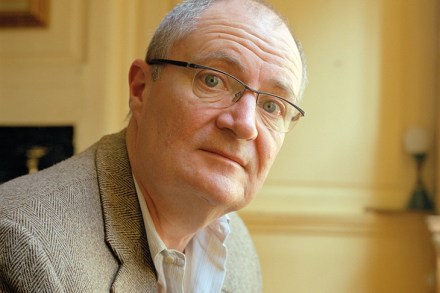
‘I live completely anonymously,’ whispers Jim Broadbent down the phone from Lincolnshire. Nonsense, I counter. You’re one of the most recognisable actors in this united luvviedom. ‘Am I?’ he asks gently. Oh come on. You’re Bridget Jones’s dad, Del Boy’s arch-enemy Roy Slater, Lord Longford campaigning for Myra Hindley’s parole, dotty antiques-shop owner Samuel Gruber in the Paddington films, Game of Thrones’s Archmaester Ebrose, testy but lovable W.S. Gilbert in Mike Leigh’s Topsy-Turvy, and the blackmailer who unacceptably shakes down Maggie Smith’s eponymous Lady in the Van.

Chilling out | 11 July 2019

Think of the children in opera. Not knowing sopranos and mezzos, pigtailed and pinafored or tightly trousered-up to look child-like, but actual children. There are Mozart’s Three Boys, Menotti’s Amahl, possibly Debussy’s Yniold and Handel’s Oberto and, if you stretch a point, Marie’s little son in Wozzeck. But that’s about it. Until, that is, you come to Benjamin Britten. It’s a rare Britten opera that doesn’t include a child. Whether it’s Grimes’s doomed apprentice, the chattering powder monkeys of HMS Indomitable, teenage vision Tadzio in Death in Venice, Tytania’s fairies or the watchful Miles and Flora, they are ever-present, but why?

Split decisions

Europe. Big word. Big theme. It was used by David Greig as the title of his 1994 play about frontiers in the age of mass migration. The setting is a railway station in eastern Europe and it opens like a kids’ TV show with each character entering and doing something ‘typical’. Everyone is either good or bad. The stationmaster is a bullying xenophobe. His deputy, Adele, is a meek, well-meaning housewife unhappily married to a dim, angry factory worker whose unemployed mates are as stupid as he is, apart from one who wants to go travelling and another who makes stacks of evil cash out of smuggling. Two migrants arrive, father and daughter. The father is a sublimely intelligent amateur philosopher with a fluffy grey beard and a habit of speaking in epigrams.

Tragedy and validity

Rufus Norris, the National Theatre’s artistic director, has revealed that all those tedious ancient plays will from now on be updated with a ‘modern twist’ to ‘bring in a fresh audience’. By way of example, he assures us that the forthcoming reworking of Sophocles’s Philoctetes (409 bc) will still be ‘a very valid Greek play’. Valid? What does he mean by that? The original was pretty ‘valid’, with its chorus and three masked male actors playing all the parts, speaking and singing in complex metrical forms in high linguistic register; and it was a serious, elevated medium, inhabited by high-status characters. Most tragedies were drawn from myth.

Mixed messages | 4 July 2019

Present Laughter introduces us to a chic, louche and highly successful theatrical globetrotter, Garry Essendine, whose riotous social life is centred on his swish London apartment. This is Noël Coward’s version of Noël Coward. In the script, from 1942, Coward alleges that his alter ego is being chased by three women. The in crowd would have laughed at the reference to Coward’s secret orientation but this version rather earnestly converts one of the females into a rugged Spanish male. What for? Few scripts from the wartime era remain in the theatrical canon and one of the pleasures of seeing a vintage play is to examine the habits and conventions of a half-forgotten age.

Sex pests and patriarchs

Bitter Wheat, David Mamet’s latest play, features a loathsome Hollywood hotshot, Barney Fein, who offers to turn an actress into a superstar provided she lets him rape her. The show’s gruesome storyline has flashes of bitter comedy. Fein boasts that the Writers Guild of America would ‘drink a beaker of my mucus’ if he forced them to. Although this is the ultimate #MeToo play it can’t prevent itself from taking a masculine point of view. Fein’s assistant, Sondra (Doon Mackichan), conveniently vanishes at the right moment and leaves the starlet at the monster’s mercy. But was Sondra complicit? We aren’t told. And we learn nothing about her attitude to her boss.

Bad science

Kill Climate Deniers is a provocative satire by Australian theatre-activist David Finnigan. The title sounds misanthropic and faintly deranged but the show is a comedy delivered with oodles of verve and fun. Finnigan is a skilful writer of dialogue, a gifted farceur and, at times, an astute analyst of power and its corrupting tendencies. Like most Aussies, he’s incapable of pomposity and his show takes a pop at every player in this game: the politicians, the shock jocks, the sainted Greens and the media. A TV journalist has the surname ‘Ile’ — an anagram of ‘lie’. Finnigan reminds us that the bulk of eco-warriors are white middle-class malcontents whose priority is not to save planet Earth but to get themselves noticed.

A whole lotta shakin’ goin’ on

Sometimes it’s hard to describe a play without appearing to defame the writer, the performer and the theatre responsible for the production. Here’s what I saw. A semi-naked woman lurks in a corner, with her back to the audience, shaking. Rap music pounds. The woman shakes and shakes. Then she shakes a bit more. And a bit more. As her weird spasms enter their 17th uninterrupted minute, the spectators glance anxiously at their watches. Finally the woman’s twitching ceases. Speaking in a New York accent, she recites a conversation between an inquisitive child and an older girl. The theme is explicit sex chat.

Poetic and profound

Kenneth Lonergan, who wrote the movie Manchester by the Sea, shapes his work from loss, disillusionment, small-mindedness, hesitation and superficiality, all the forgettable detritus of life. The Starry Messenger is about Mark, a disappointed astronomer aged 52, who gives public lectures at a city planetarium. He loves his subject even though it let him down and every week he tackles the daft questions of his pupils with superhuman patience. The same two pests always raise their hands. One is a burly misanthrope who disbelieves all experts, the other is a high-flying oddball who craves attention. Mark starts a slow-burn affair with Angela, a single mum who needs a role model for her nine-year old son: an expert on the stars and inter-planetary travel is just the ticket.

Blond ambition | 23 May 2019

The opening of Jonathan Maitland’s new play about Boris purports to be based on real events. Just before the referendum, the Tory maverick invited some chums over to help him decide whether to opt for Leave or Remain. Mrs Johnson was present along with Michael and Sarah Gove and the Evening Standard’s owner, Evgeny Lebedev. For a bit of fun, the writer adds spectral appearances from three ex-prime ministers, Blair, Thatcher and Churchill. This is amusing at first but it slows the play down because the fantasy figures can’t affect the real-life action. There are dazzling performances here. Tim Wallers plays Evgeny as a name-dropping simpleton with naked ankles and an ultra-camp gait. Wonderful.

One of the great whodunnits

It starts on a beautiful summer’s morning in the suburbs of America. A prosperous middle-aged dad is chatting with his neighbours in the garden of his comfortable home, but by nightfall his family has been destroyed. This is one of the most momentous convulsions in all drama. Arthur Miller’s masterful plotting, which he never again surpassed, is a match for the best. By the best I mean Oedipus. Jeremy Herrin’s production emphasises the lush fertility of America in the late 1940s. Trees in full leaf overlook the timber house that is perhaps a little too small for its millionaire owner. Joe Keller is a pioneering industrialist who served a brief jail term for supplying faulty components to the air force during the war. More than 20 pilots died.

Keeping it real | 25 April 2019

It starts at a secretarial college. The stage is occupied by a dignified elderly lady who recalls her pleasure at learning shorthand in the 1920s. She lived in Germany and she took a job at a firm headed by a man named Goldberg. He was Jewish. These unremarkable disclosures are spoken by Brunhilde Pomsel, a woman of high intellect and modest ambitions, who was born in 1911 and died two years ago, aged 106. Her life story was turned into a documentary film, which Christopher Hampton has adapted for the stage. Pomsel’s words are spoken by Dame Maggie Smith. What makes her fascinating is that she worked for Josef Goebbels and spent the entire war in the propaganda ministry in Berlin. Her acceptance of Nazism is gradual and semi-conscious.