The spectator

The Iran war has exacerbated the failure of European energy policies

The history of the global trading system is a story of narrow and vulnerable waterways: the Suez and Panama Canals, the St. Lawrence Seaway, the Straits of Dover and the Skagerrak, which defends the entrance to the Baltic. But none has the power to seize up the global economy as much as the Strait of Hormuz. Barely 30 miles wide at the narrowest point and bounded on one side by the state of Iran, this passage is used for a quarter of the world’s oil supplies and a fifth of its liquified natural gas (LNG).

energy

Why I’m in the Epstein Files

“Always knew you were a nonce.” That text, from a coworker in London, is how I learned my name appeared in the latest tranche of the Epstein Files. In the moments prior, I had been sweating profusely – unlike a certain former prince. I can explain. First off, “nonce” is British slang for “pedophile.” More important: at around noon today, the Department of Justice released a series of documents relating to the investigations into Jeffrey Epstein, the late sex trafficker and financier. Among the documents: an email I sent in June 2020 to a number of senior figures who worked in the US Attorney’s Office for the Southern District of New York, in pursuit of comment on a colleague’s story on Prince Andrew and his friendship with Epstein.

matt mcdonald epstein files

Michael Heath on 75 years at The Spectator

When I joined The Spectator in 2000, the office was in Bloomsbury, in a four-story Georgian house, and the further down the building you went, the more stylish, the more Spectator (I thought), everything became. On the top floor, blinds drawn, sitting in the half-dark, was Kimberly Fortier, the American publisher, often in long meetings with media alpha males. She would soon be married to the publisher Stephen Quinn and having an affair with former British home secretary David Blunkett, but was always looking to widen her portfolio. One floor down was former British prime minister Boris Johnson, then editor of the magazine, mostly immersed in meetings of his own with associate editor Petronella Wyatt. We’d sometimes find him on the landing, staring mistily into the middle distance.

michael heath

The end is AI: the August issue of The Spectator coming soon

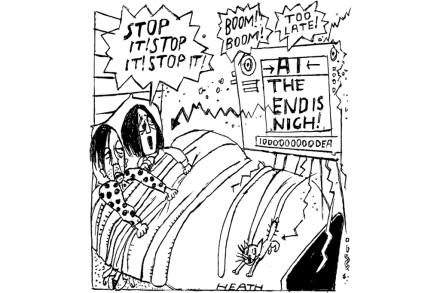
Artificial intelligence can be an elusive topic for good journalism. Everybody wants to talk about it; nobody has much to say. Yet it is the biggest – and potentially scariest – subject of our time. We are hurtling towards potentially the biggest technological shift in history and nobody knows quite what to do about it. That’s why we have decided to make AI the focus of our August edition. We believe it’s another gem. Inside, we have Marc Warner, CEO of the AI company Faculty, warning that we may be on the cusp of developing an alien intelligence far beyond our control. Rachel Tyrell (a pseudonym) looks at the furious race between tech moguls to reach the super-intelligence finish line.

AI

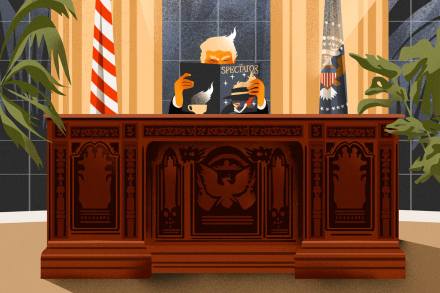
‘I had two jobs: to run the country and to survive’: an interview with President Trump

From the moment you enter Donald J. Trump’s Oval Office, you are surrounded, not by staff or Secret Service, but by presidents. In his second term, he has chosen to envelop himself in Americana to an unprecedented degree. He faces Franklin D. Roosevelt whenever he sits at his desk. Looking back are Teddy Roosevelt, Lincoln, McKinley, Polk, Jackson, Jefferson, and alone among them as a non-president, Franklin. Ronald Reagan looks over his shoulder for every decision he makes. “We took them out of the vaults. We have incredible vaults of things,” he tells me. “They have 3,900 paintings.” It’s a roster of the greatest American leaders assembled in an oval around him in their most sterling depictions. They serve as motivation.

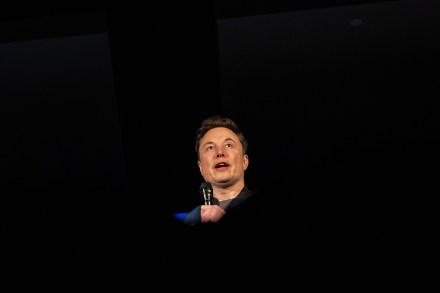
Spectator story debunking Elon Musk ‘alt account’ theory banned on X

A reporter has been restricted from posting on Elon Musk’s X for thirty days due to an article she wrote which The Spectator published over the weekend. The story itself has also been censored on X — you cannot post it on the site — with the reason given that it is “potentially harmful.” Here’s what happened. For months, there has been a social-media rumor that Elon Musk was operating an “alt account” under the pseudonym “Adrian Dittmann.” A number of users on the site were circulating it to make fun of Musk. Some media outlets — Newsweek, the New Republic, the Daily Mail — wrote up stories covering the rumor. None sought to examine its veracity.  Jacqueline Sweet, a contributor to The Spectator, began investigating the claims in late December.

AI

A new era for The Spectator in America

Astute readers might know of the sale process The Spectator has been going through for the past several months. At long last, The Spectator has found a new owner — Sir Paul Marshall, the proprietor of UnHerd in the UK. The sale price of $131 million is a testament to the value and importance of The Spectator brand and everything it stands for. The US edition of The Spectator was established in 2018, with our monthly print edition appearing in 2019 — and we've grown every year since. First edited by Freddy Gray, the publication has made an indelible mark on matters of politics, arts and culture. We're excited by what our new future holds and look forward to new investments across our entire operation.

democrats electoral college

Inside the May issue: technology

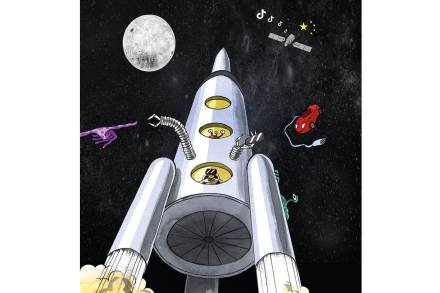
Western governments seem ill-prepared to grapple with rapidly advancing technology. Watch any congressional hearing where a crusty congressman tries to keep pace with Silicon Valley’s top “autists” if you need further evidence — and read Spencer A. Klavan’s analysis of the high-skill but low-status rejects uniting into a formidable social class. The Silent Generation and boomers simply cannot keep up. The Space Race is back on — and tycoons are eager to cash in on the final frontier. Shane Cashman dives into the new wild west of explorers and entrepreneurs commercializing the great unknown. Lionel Shriver brings us back to earth with a look at the electrical grid and our government’s push for green energy and electric vehicles.

technology

Inside the April issue: What happened to America’s capital?

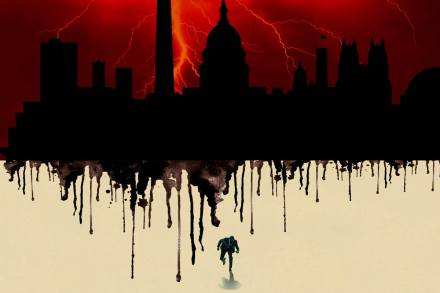
During lockdown, crime shot up around the country. Most cities have seen their numbers come down — most aside from our nation’s capital. Why? In our editorial, we ask what’s being done — it might not surprise you that the answer is “not much.” Matt McDonald, a resident of Navy Yard, one of the worst-hit areas, says that his neighborhood is a failed experiment in gentrification — and asks if help is on the way. And Tim Rice looks at why and how DC got to where it is right now. Elsewhere, Patrick Hauf does a ride-along with the Dallas Police Department, and finds an alternative approach to policing that could be a model for departments around the country.

dc safe

AI music is here and scarily easy to make

In December, I stumbled upon a new AI tool called Suno. The press release and a few fawning articles claimed that in under 30 seconds, it could a make a catchy, compelling song based on your prompt. It couldn’t.  Sure, it made songs, but they were uncomfortably awkward, the lyrics didn’t make any sense and you couldn’t listen to them without feeling deeply uncomfortable. I tried a country song about gay love, and it’s like a bad mirror of what a real song could be. I logged off Suno and didn’t think much about it again. But this month, Rolling Stone wrote a feature on the company and some of their sample songs using Suno’s new version 3 model sounded eerily real —  namely "Soul Of The Machine.

ai artificial intelligence

Out now: the September edition of The Spectator World

Twenty years ago, Americans watched as the world changed. Our September 2021 edition reflects on the two decades of defeat since September 11, 2001. Freddy Gray considers the Trumpian echoes in the Biden administration’s handling of the Afghanistan withdrawal. Daniel McCarthy explains why America would never have succeeded in democratizing Afghanistan, while Andrew Bacevich draws a comparison to Vietnam to demonstrate why ‘forever wars’ will always fail. Paul Wood sifts through the ashes of America’s moral authority in Iraq as Robert D. Kaplan shifts his gaze eastward to the geopolitical repercussions in Central Asia. Kelley Beaucar Vlahos looks at how the internal corruption of the US military made an expensive failure inevitable.

Out now: the August edition of The Spectator World

Hell hath no fury like the average American. As temperatures, tempers and crime stats rise, our August 2021 edition asks if Americans are angrier than they’ve ever been. Peter Wood examines the evolution of the right’s anger through the astute lyrics of country singer Toby Keith, from post-9/11 fury to the present despondency. Sohrab Ahmari considers the crime surge in American cities, which he claims is a consequence of anti-anti-crime policies pushed by progressives. Mary Eberstadt credits climbing crime rates to the floundering influence of fathers in American households.

august 2021 world cover

Out now: the June edition of The Spectator World

Sex sells, we’ve been told, and so — grubby hacks that we are — we have dedicated the June edition of The Spectator World to the subject. But this ain’t your average smut. On our cover, the brilliant Mary Harrington looks at how America’s young elites are turning against free love. Zoe Strimpel discusses her recent experiences on dating apps and wonders why young men seem to have lost interest in sex. Cosmo Landesman asks if women who claim to love pornography are faking it; Bridget Phetasy wonders why men’s magazines such as Playboy aren’t for men any more and Dominic Green takes a Freudian look at America’s race to the bottom. Beyond all the sex, the June edition features a variety of other subjects to arouse your curiosity.

june

Notice: The Spectator’s agreement with The American Spectator

The Spectator and The American Spectator are pleased to announce the settlement of the recent lawsuit between the parties. The Spectator and The American Spectator are independent publications and have been available in the United States for many decades. Historically, The Spectator has focused primarily on UK politics and affairs while The American Spectator has focused primarily on US politics and affairs. This arrangement has worked well and the publishers have even considered each other to be more friends than competitors. The Spectator has recently decided to launch new publications with a focus on US politics and affairs.

Hot off the press — what’s in the April issue

It’s perhaps no coincidence that America seems to have gone crazy right about the time that cannabis became legal. In our latest April edition, we cover Big Dope, or the alarming power of the cannabis industry. Madeleine Kearns looks at the disturbing health consequences of widespread marijuana consumption as well as the enormous profit-motives that cloud any serious discussion about the downsides. Why worry when the poor can get high and the rich can get richer? We may soon find out. Mary Eberstadt also asks if, given all the other crises plaguing American society, more drugs are what we need. That’s all strong stuff. And we have plenty more for you to put in your mental pipe and smoke. — Our lead editorial explains how the border crisis could define Biden’s presidency.

april

The Spectator, war and slavery: a note on our history

In her article about the point of protest, Tali Fraser mentions the support of Manchester in the 1860s for the North against the slave-owning South in the US civil war. At the time, this was an unpopular cause amongst the British elite. Of all the publications still around today, only one backed Abraham Lincoln then: The Spectator. The magazine almost went bust as a result. I remarked a few days ago that what sets us apart from other long-running magazines is that our values have not changed much since we were founded in 1828 – or, indeed, since the The Spectator appeared in its original form in 1711. That aroused some teasing: surely, some asked, a magazine needs to change with the times?

slavery

New York Times makes The Spectator part of the story

Cockburn was thrilled to see the New York Times take an interest in The Spectator last weekend, after the paper published an article about our London office’s ‘incestuous ties’ with the governing elite. Amazing that during a global pandemic and nationwide rioting, the NYT saw fit to dedicate few inches on page A8 to a political adviser on a northern European island. ‘Rogue Trip by Boris Johnson Aide Makes U.K.’s Spectator Part of the Story’, declared the headline. At least that was the revised headline — the first suggested, erroneously, that The Spectator was in ‘turmoil.’ The Spectator may be in many things, but turmoil isn’t one of them. The Gray Lady isn’t known for its fair-mindedness these days. But its coverage of the Speccie was surprisingly reasonable.

new york times spectator

How to buy The Spectator’s 10,000th UK edition in the US

The Spectator in London has this week done something no other magazine has done. We’ve just published our 10,000th edition. We’ve been producing a weekly magazine since 1828 — I’m proud to have been involved in the magazine for 10 of those 192 years. The key to our longevity is that The Spectator is unique; it dares to be different. We have pretty much stuck to the same simple editorial formula — news and comment first, book reviews after — because it works. We allow jokes and dissent. We encourage arguments. As Douglas Murray puts it in his column this week, The Spectator’s enemies are ‘Boredom. Predictability. Obviousness. Humorlessness. Dullness. Staleness.

mr spectator 10,000th

Why you should subscribe to The Spectator

Dear Reader, There isn’t much to be cheerful about in this world of plague anxiety. Yet one comfort is that, locked down as we all are, we may have more opportunities to read. That’s where The Spectator can help. We’ve got a flash sale on, and there are many reasons you'll want to take it up: We have now put our June edition to bed and it looks great. The subject — ‘how to tame the dragon’, ie China — couldn’t be more important. Get your copy here Each month we produce a similarly stunning print issue. As well as great essays on politics, we have brilliant arts, books and life sections, edited by Dominic Green, with reviews and essays by some of the best writers in the English language.

Amber Athey joins as The Spectator’s Washington editor

I’m delighted to announce that Amber Athey is The Spectator’s new Washington editor, joining us from the Daily Caller next month. We’re thrilled to have her on board. Amber is a highly talented and accomplished young journalist and a very gifted writer. She’s been an excellent White House Correspondent for the Caller, where she’s broken countless great stories and regularly questioned the president, Mike Pompeo, Steve Mnuchin and other officials. She has already written some excellent stuff for us and she’ll be invaluable in giving The Spectator a presence in DC. The Spectator’s US edition goes from strength to strength. We are already on to our fifth print edition of the monthly magazine and we feel we are getting better and better.

amber athey