The soviet union

Dull, duller and Dulles – was Churchill’s jibe about America’s Cold War icon unfair?

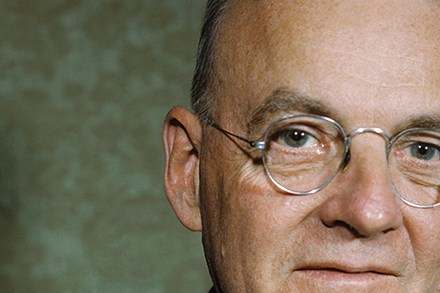
In the era of Trumpian foreign policy incoherence, a new intellectual biography of the American Cold War icon John Foster Dulles might seem welcome for hawks and doves alike. Indeed, Dulles’s tenure as secretary of state during the first six years of the Eisenhower administration could be viewed – even by the harshest left-wing critic of American imperialism – as a useful and reassuring point of reference, despite its narrow anti-communist dogma and too cavalier approach to the dangers of nuclear confrontation with the Soviet Union and China. After all, the Eisenhower administration extricated the United States from President Truman’s stalemated Korean War and started no major new wars before the end of Eisenhower’s second term in January 1961.

Who started the Cold War?

From our UK edition

Over a few short months after the defeat of Nazism in May 1945, the ‘valiant Russians’ who had fought alongside Britain and America had ‘transformed from gallant allies into barbarians at the gates of western civilisation’. So begins Vladislav Zubok’s thorough and timely study of the history of the Cold War – or, as he nearly entitled the book, the first Cold War. For the themes that underpinned and drove that decades-long global conflict – fear, honour and interest, in Thucydides’s formulation – are now very contemporary questions. ‘The world has become perilous again,’ writes Zubok, a Soviet-born historian who has spent three decades in the West: Diplomacy ceases to work; treaties are broken. International institutions, courts and norms cannot prevent conflicts.

Soviet America’s revolutionary wars

Niall Ferguson is far from the first intellectual to compare the United States today to the Soviet Union of old. But Ferguson’s Free Press essay “We’re All Soviets Now” stirred up more discussion, and outrage, than earlier forays by others on the same theme. (Ferguson himself credits the Princeton professor Harold James with originating the phrase “Late Soviet America.”) Joe Biden already seemed like America’s analogue to the superannuated Soviet premiers of the 1980s even before his disastrous June 27 debate with Donald Trump — who is himself older in 2024 than Brezhnev, Andropov or Chernenko were when they died.

Soviet

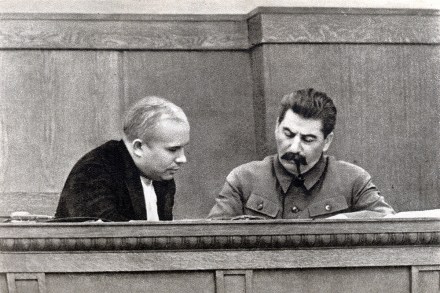
The Soviets were imperialists. Stalin’s architecture proves it

From our UK edition

The invasion of Ukraine by Russian forces has rendered what might otherwise have seemed a fairly niche study of a Soviet-era architect rather more resonant. Boris Iofan was born to a Russian-speaking Jewish family in Odessa in 1891. After initial studies in his home city and a brief period working with his older brother Dimitri in St Petersburg, he fled the war engulfing Tsarist Russia for Italy, where he trained at the Istituto Superiore di Belle Arti in Rome.

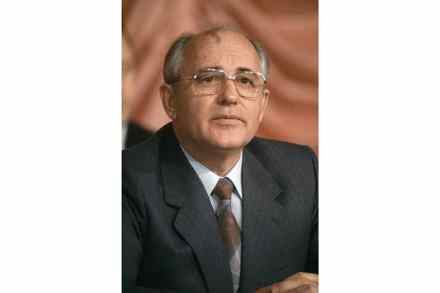
Glasnost merely confirmed Russia’s deep-seated suspicion of democracy

From our UK edition

Thirty years ago the Soviet Union was guttering to its close. Those of us who were there remember the exhilarating hope, the apprehension, the illusion. For everyone else it is a distant echo. Russia was always likely to lose the Cold War competition with America. It was unmanageably large, too poor and too reliant on too few products. Stalin’s bloody grip had enabled the Soviet Union to defeat the Germans at a terrible cost to his people. When he died in 1953 his system entered a protracted agony. Over the next decade Nikita Khrushchev tinkered with half-baked solutions. They misfired, and he was overthrown by the hard men in the party, the KGB, and the army. His more cautious successors managed to equal America’s military might.

Betrayal was a routine business for George Blake

From our UK edition

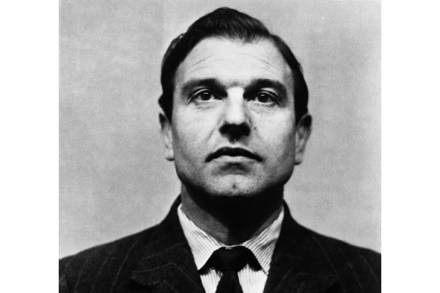
Kim Philby once remarked to the journalist Murray Sayle that ‘to betray, you must first belong. I never belonged’. Kim, as usual, was lying. Westminster and Cambridge, the Foreign Office and SIS: for all his attempts to pose as an outsider, Philby was a thorough-paced member of the British Establishment. George Blake — who is quoted using exactly the same phrase about himself in Simon Kuper’s wise, engaging biography The Happy Traitor — was telling the truth. Blake never belonged to a country, and communism was probably the closest thing he ever found to a spiritual home — even if he was deeply disillusioned by the reality of the workers’ paradise when his espionage career ended in exile in Moscow.