The roman empire

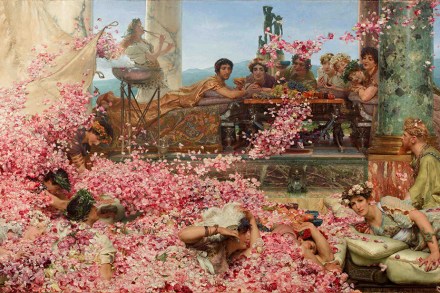
The horrors of dining with a Roman emperor

From our UK edition

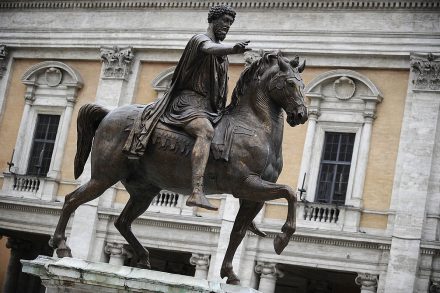
Emperor of Rome? Is there a typo in the title? Mary Beard’s latest book is about not one but 30 Roman emperors, from Julius Caesar (assassinated 44 BCE) to Alexander Severus (assassinated 235 CE), so why the singular? The answer is that Emperor of Rome is a study of autocracy and one autocrat, as Marcus Aurelius put it, is much the same as another: ‘Same play, different cast.’  Beard’s subject is emperors as a category, because it was the symbol of rule rather than the ruler himself that mattered to the 50 million imperial subjects between darkest Britannia and the Saharan desert in the first three centuries of the Christian era.
The perils of being pope

From our UK edition

Rome in the 1st century AD pulsated with religion. The knowledge that they lived in a sacred city, protected by the gods, permeated the daily lives of its citizens. They would see oxen being led down cobbled streets to be sacrificed on marble altars or offerings of incense and wine being made when the gods or the emperor demanded. There were constant religious festivals. At the Lupercalia, childless women were beaten with goatskin thongs that promised fertility; at the Saturnalia, Romans shed their togas, drank heavily and gambled. Even non-citizens and slaves were obliged to take part in these religious ceremonies.

The Roman roots of ‘colony’

The word “colony” meets with a sharp intake of breath these days, but “province” raises no eyebrows. How very odd. The ancient Greeks invented the western notion of the colony. But “colony” is the term the Romans applied to it and is of Latin derivation, from colo, “I cultivate, inhabit” and so colonia. The ancient Greek term was apoikia, literally “a home apart, away”, or perhaps a “home from home.” Greeks established these apoikiai widely around the Mediterranean, mainly from the 8th to 6th centuries BC, clustering along the coasts of Turkey, northern Greece, all around the Black Sea, southern Italy, the eastern Adriatic, Sicily, parts of southern France and Spain, and Cyrene, as Plato said, “like frogs around a pond.

colony

A single meal in Rome is a lesson in Italian history

From our UK edition

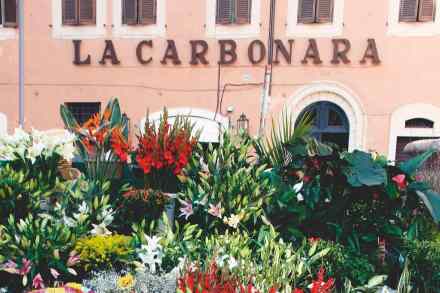
Farmer, restaurateur, critic, foodie activist, traveller (he’s worked in Zimbabwe as well as South Africa), cookery book writer, longtime TV presenter of New Scandinavian Cooking, food columnist for a couple of Norwegian papers as well as formerly for the Washington Post, Andreas Viestad’s belt has many notches. He lives between Oslo and Cape Town and for 25 years has been a regular visitor to Rome. His favourite restaurant there is La Carbonara, by the Campo de’ Fiori, and he has had the strikingly good idea of writing a foodie history of the world by examining a single meal eaten there. Early in the narrative we get a few lessons in geography, economic history and even contemporary mores.

What did the Romans ever do for us?

In 2006, as British Euroskepticism was gathering steam, Boris Johnson published a book called The Dream of Rome, in which he held up the Roman Empire as a successful model of European integration and as a foil to the unlovable European Union. That was a rather peculiar choice. You would hardly have expected the future Brexiteer to yearn for a time when Britain was but a marginal province of a ‘European super-state’, a label that Margaret Thatcher had once applied to the EU, yet which is a much better fit for imperial Rome. But Johnson also failed to realize that it had actually been the end of Roman power that launched Europe’s long, tortuous and unique journey toward modernity — a journey in which the sovereign United Kingdom came to play such an outsized role.

romans