The odyssey

The Odyssey to the next Dubai

From our UK edition

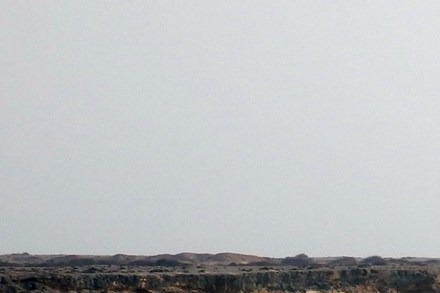
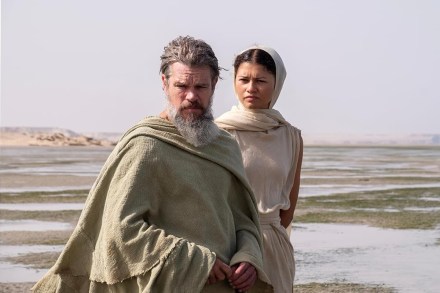
Christopher Nolan could not resist the spell of the White Dune. Tucked inside a lagoon, it rises out of the sand like a tower, glistening against the cloudless blue sky. The British filmmaker shot several scenes of his blockbuster The Odyssey (out today) at this otherworldly landmark, located near the city of Dakhla in the Western Sahara. Until now, much of the region – a former Spanish colony which has been under Moroccan control since the 1970s – has been largely untouched by tourists. Yet that is expected to change under King Mohammed VI, who is investing billions in metamorphosing the area into a hub for business and tourism. Think of it as tomorrow’s Dubai. The Gulf metropolis, after all, was a fishing village not that long ago.
The Odyssey will take audiences by storm

The Odyssey famously begins “Tell me, O Muse, of the man of many talents,” or similar depending on which translation you prefer. There is an irony that Homer himself might have enjoyed in the way his literary work – itself about the malleability of truth, fame and reputation – has been translated into a Christopher Nolan’s film that is being pilloried for being woke, excessively revisionist, in love with color-blind and trans-blind casting, etc. This came as something of a surprise to us who had Sir Christopher down as a small-c conservative, whose films affirm the sanctity of the heteronormative nuclear family and, in The Dark Knight Rises, positively rejects the idea of left-wing insurgency.

the odyssey

Christopher Nolan’s Odyssey is a triumph

Incredible stories, otherworldly creatures, false identities, a cavalcade of trickery: the original Odyssey is packed with everything you could want from a big-screen blockbuster. And like all great stories, it’s more than just a fantasy adventure. It’s about survival, marriage, truth, what it means to be a man and much more. It’s also roughly 2,700 years old, and by picking it for his latest movie, Sir Christopher Nolan has definitively proved that the old ones are the best. But why, really, has he decided to go Greek? Screenwriters have always been suckers for a good ‘coming home’ story. It was such a popular genre in ancient times that the Greeks even coined a name for it: ‘nostos’.

The Odyssey is shallow and tiring

From our UK edition

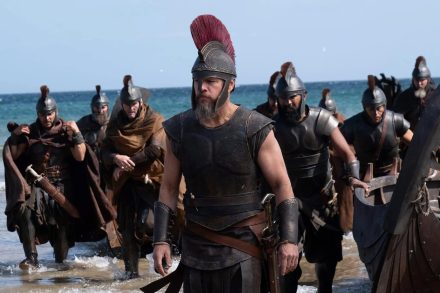
The Odyssey is Christopher Nolan’s relentless, deafening three-hour take on Homer’s epic poem, and while it is technically impressive filmmaking – Imax cameras; massive mechanical puppets, minimally pimped up by CGI; thousands of extras – it is set piece after set piece which becomes rather tiring. Even if weariness is part of the point of the Odyssey, it’s no excuse for the film being tiring. Even if weariness is part of the point of the Odyssey, it’s no excuse for the film being tiring What we get is an action blockbuster, without significant depth, although there is some heft to the final act – everybody’s favourite act, surely. Who doesn’t love it when Odysseus finally makes it back to Ithaca disguised as a beggar and no one recognises him?

Bringing Homer into the home: how the Iliad and Odyssey became widely available

From our UK edition

Homer’s ghost is particularly busy, popping up in the dreams of pretty much every poet going. In fact if you are a poet and haven’t been visited by Homer, you may find yourself wondering why you’ve been left out. The cultural reach of the two major poems that appear under Homer’s name – the Iliad and the Odyssey – is undeniable. I teach my creative writing students that there are only two stories: the siege and the journey, and there they are, right at the beginning of literary history. They’ve been read continuously for centuries. On my shelves is an edition of Alexander Pope’s Iliad which belonged to my great-great-great-grandfather, in which are still bits of paper put in by subsequent family members.

What Odysseus taught me about spying

Homer’s Odyssey is a sweeping, layered epic. It reflects the legacy of an oral tradition of singers and storytellers from across the Greek-speaking world, who weaved together elements of myth and half-remembered idealized histories. Its hero, Odysseus, is among the most enduring and complicated figures in literature. Retellings of his journey home to Ithaca after the fall of Troy cast him both as noble hero and manipulative anti-hero. His latest incarnation will soon journey across the screen in Christopher Nolan’s film version, which is released Friday. To navigate this world, 'cunning' Odysseus displays the characteristics of a good intelligence officer I feel a connection to Odysseus. Like him, I have lied, deceived, and manipulated.

odysseus

Does The Odyssey confirm that Christopher Nolan is camp?

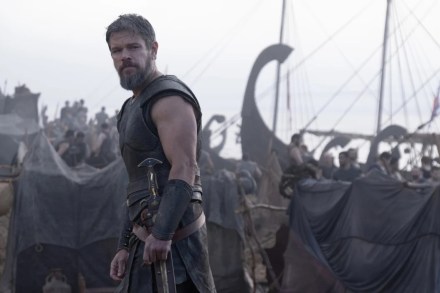
Sir Christopher Nolan is many things. The Spielberg/Lucas/Cameron manqué of our time. A double Oscar-winner for Oppenheimer, a picture that is nowhere near his best work. The most acclaimed director of film bros, who somehow ignore his standing as a white, British privately educated filmmaker. But what nobody has ever seriously asked before is “Is Sir Christopher camp?” I hesitate to say that. The (relatively) newly knighted director is as serious a figure as has ever been seen in the film industry. But after watching the new trailer for his magnum opus, The Odyssey, it is a question that I must ask. We have Good Will Hunting himself, Matt Damon, as Nolan’s conception of Odysseus. All good there; I myself would have cast Michael Fassbender, but hey-ho.

odyssey

What is Travis Scott doing in The Odyssey?

As far as teaser trailers for summer blockbusters go, it takes quite a lot to make jaded audiences – or cynical critics – sit up and say, “What the hell?” But what’s exactly what the latest trailer for Christopher Nolan’s eagerly awaited The Odyssey has done. Not because it has featured a couple of new shots of Tom Holland’s Telemachus squaring off with Robert Pattinson’s villainous Antinous, or Matt Damon’s Odysseus participating in the bloody sack of Troy with his fellow Greeks, but because it introduces the most unexpected cameo of the year, possibly of the decade. Ladies and gentlemen, enter the latest feature of Nolan’s all-star cast: the hip-hop artiste Travis Scott, appearing in the somewhat unlikely role of a staff-beating herald.

travis scott

The pleasure in not knowing

A few years ago, the podcaster Lex Fridman published a list of books that he was hoping to read in the year ahead. It included works by George Orwell, Fyodor Dostoyevsky, Hermann Hesse and others. If he had published this in the world of print media he might have got back some encouraging noises. But because he put the list online – worse, on the platform then still known as Twitter – he received mostly mockery. “Who hasn’t read Animal Farm?” was the general tenor of the blowback, as though a man who had been a researcher at MIT was next to being a Neanderthal.

douglas knowing

From the Odyssey to The Wizard of Oz: Praiseworthy, by Alexis Wright, reviewed

From our UK edition

Among many other prizes for her stunningly original work, Alexis Wright has won Australia’s greatest literary honour, the Miles Franklin Award, for a novel of the highest literary merit representing Australian life. It is ironic, but sadly apt, that her epic Praiseworthy should be published in the year that Australians, offered a chance to give greater political rights to their indigenous peoples, have voted not to. Everything blends together: dream and reality, donkeys and butterflies, the Odyssey and The Wizard of Oz Wright is an Aboriginal activist as well as a writer. Praiseworthy, which has already won the Queensland Literary Award for Fiction, is an impassioned environmental Ulysses of the Northern Territory, and not an easy read. It does not care to be.

Was Penelope really a ‘silenced’ woman?

Problems about the misuse of history, especially on subjects such as race and colonialism, have been running for a long time. But when it comes to the ancient world, there are also problems about the misuse of literature. Dame Mary Beard’s “manifesto” Women and Power (2018) contains an example of the problem. Her thesis is that women’s voices in the public sphere (my emphasis) have been “silenced” by men ever since the West’s first literature (Homer’s Iliad and Odyssey) gave us our first access to “Western” thoughts, deeds, beliefs, hopes and fears (c. 700 BC). The problem exists in the first example of her thesis, to which she returns four times — Penelope, the wife of Odysseus.

Penelope

Singing to the gods: a millennium’s span of ancient Greek hymns, gloriously portrayed

From our UK edition

We are experiencing a boom of popular books on Greek mythology: Stephen Fry’s Mythos; Natalie Haynes’s Pandora’s Jar; Liv Albert’s Greek Mythology: The Gods, Goddesses, and Heroes Handbook, to name a few. Admittedly, Greek mythology has it all: love, sex, murder, incest, cannibalism, magical transformations, pirates, monsters, miracles. Surely some readers, though, will want to go even deeper, to tap into the ancient sources, incorrigibly plural and various. These sources include Homer’s Iliad and Odyssey and Hesiod’s genesis and who-begat-whom of the gods, the Theogony. (Plus a chunk of ‘Greek’ mythology which we actually get via the Roman poet Ovid.