The Industrial Revolution

China today is following Victorian Britain’s industrial pattern

From our UK edition

On a damp Derbyshire day in 1771, Richard Arkwright watched the world’s first water-powered mill begin to turn, setting in motion a force that would remake the world. The tailor’s son from Preston had become one of Britain’s first industrialists, his spinning frames driven by water and his workers by hunger. Within those mill walls, as Edmond Smith argues in Ruthless, the modern economy took its first breath. Yet the real invention was not mechanical but social. Arkwright had helped pioneer the system that would propel Britain into the lead in the first Industrial Revolution – web of investors, miners, shippers and merchants, bound by credit, trust and the push for profit. In Smith’s phrase, it was ‘networked capital’, the invisible machine behind the visible one.

You are what you don’t eat

From our UK edition

If asked to think about food preservation for a moment you might picture an aproned woman boiling oranges for marmalade in a large copper maslin pan; or vegetable scraps being turned into stock; or those recipes from wartime rationing using root veg in place of sugar; or even, with an eye to the modern, you might imagine a trendy chef preparing offal in a gleaming chrome kitchen to ensure the nose-to-tail credentials of his restaurant. Some of the attempts in the past to spin out the life of fresh produce sound positively disgusting But there is more to the history of preservation than preserves, and the obvious enemy, when we talk about preservation, is waste – the two engaged in a constant battle.

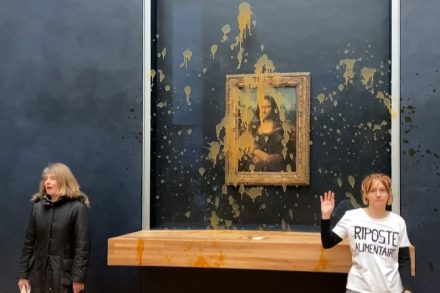
Environmentalism: from concern about clean air to throwing soup at the Mona Lisa

Garrett Hardin was a professor of biology and environmental studies at UC Santa Barbara. His “commons” was a metaphor drawn from the traditional English practice of shared grazing and agricultural land to which all members of a community had access. Commons were inherently prone to abuse, Hardin argued, because every user of the commons will exploit it to maximize personal benefit without regard to the other users, leading ultimately to the collapse of the commons as a useful resource. Hardin extended the metaphor of the commons to include all natural resources, including the air, water, other species, even the entire Earth. The tragedy of Hardin’s expansive commons was the inexorable march to environmental doom, driven by the folly of human freedom.

tragedy commons

Dark days in Wales: Of Talons and Teeth, by Niall Griffiths, reviewed

From our UK edition

This book has taken me far too long to read, and not for the usual reasons (that it’s too long, it’s rubbish, idleness, I lost it, etc.) but because I could only manage ten pages a day before getting a kind of mental nosebleed. And that is because it is so good, so different. There is a note at the back from the publishers, of whom I had not heard: ‘Repeater Books is dedicated to the creation of a new reality.’ There follows some invective about capitalist realism in historical fiction and ends: ‘We are alive and we don’t agree.’ I would say that this book fulfils their brief admirably. We are in Wales at the dawn of the Industrial Revolution.

The wealth explosion

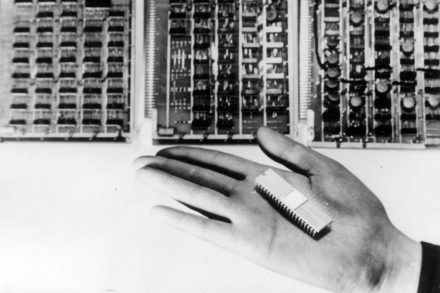
Not all inventions change the world. But some do — and they do it by greatly lowering the cost of a fundamental economic input. This inevitably causes an economic revolution that brings about a new political and social order by opening previously impossible economic opportunities,  creating vast new wealth in the process. We are in the middle of such a revolution today, thanks to the microprocessor, which first came to market in 1972 and really took off with the introduction of the personal computer in the early 1980s. The microprocessor, a dirt-cheap computer on a chip, hugely reduced the cost of storing, retrieving and manipulating information. Computing power that cost $1,000 in the 1950s today costs a fraction of a cent.

microprocessor