Terrorism

A day that re-opens old wounds

From our UK edition

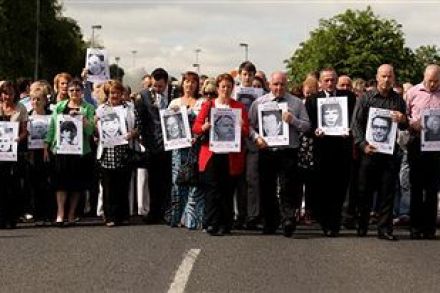
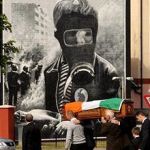
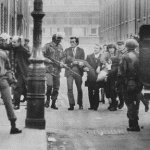
Building on a peace process of compromises, Tony Blair called the Bloody Sunday inquiry to placate nationalists in Northern Ireland. But I wonder if he ever intended its findings to be published? The Saville Report was only ever going to re-open old wounds. With the greatest respect to Lord Saville, who is a distinguished lawyer, this report cannot dispense justice. Establishing the facts is impossible 30 years after the tragedy, and the punishment can only be collective. Yet the political dictates of peace mean that the British army must be blackened. The soldiers who beat both sets of paramilitaries to the negotiating table will be branded as criminals. Whatever their impulse, British officers took a disastrous decision to disobey orders and open fire.

Pakistan: friend or foe?

From our UK edition

One of the biggest obstacles for NATO in Afghanistan has been the role of Pakistan and its intelligence apparatus in supporting the Taliban insurgency. Officially, the Pakistani government deny backing the Taliban insurgency, but even Admiral Mike Mullen, chairman of the U.S. Joint Chiefs of Staff, and General David Petraeus, head of U.S. Central Command, have said they suspect Pakistan's Inter-Services Intelligence service of being engaged in anti-NATO activities. Now, a new report by the Harvard-based analyst and former head of OXFAM in Kabul, Matt Waldman, takes the accusations to a new level.

Taliban talks

From our UK edition

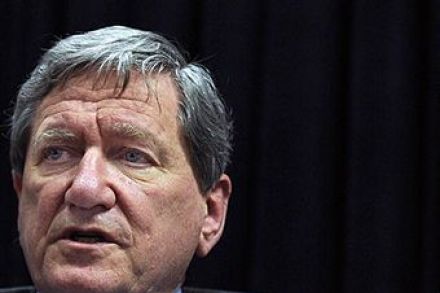
Richard Holbrooke, the U.S. diplomat in charge of Afghanistan and Pakistan affairs said Washington has now publicly made clear the US government is serious about negotiating with the Taliban. Speaking at a conference in Madrid, the US envoy said: ‘Let me be clear on one thing, everybody understands that this war will not end in a clear-cut military victory. It's not going to end on the deck of a battleship like World War Two, or Dayton, Ohio, like the Bosnian war It's going to have some different ending from that, some form of political settlements are necessary ... you can't have a settlement with al Qaeda, you can't talk to them, you can't negotiate with them, it's out of the question. But it is possible to talk to Taliban leaders.

The Department for Fragile States?

From our UK edition

The Department for International Development (DFID) should forsake peaceful but poor countries and instead turn into “a world leader in tackling the problems of fragile states.” That’s what a new Chatham House report by Alex Evans, who used to be an adviser to Hilary Benn, and his colleague, David Steven, argue: 'If the UK wants to deepen its commitment to backing the challenges posed by fragile states, it needs to remodel DFID extensively, with the department concentrating on developing a coherent preventive agenda for fragile states.

A PR disaster for Israel

From our UK edition

Prematurely, the world’s press has condemned Israel. As I wrote yesterday, the facts have to be established before Israel can be adjudged to have acted disproportionately. At the moment, the facts seem to support Israel. Video footage shows commandoes descending into a maelstrom of baseball bats and knives, armed with items that resemble paintball guns. The latest pictures released show a hoard of improvised explosives, machetes, bats, crowbars etc. Those sources’ veracity should be scrutinised, but there is nothing else to go on at the moment. Iain Martin has debunked Jon Snow’s absurd genuflection that this is our fault. Being British I apologise for everything, but not this time.

A new Afghanistan strategy

From our UK edition

In opposition, the Conservatives pursued an AfPak policy that can best be described as loyal criticism - while they supported the mission they criticised the means and methods employed to achieve it. It was an effective line of attack. But now that they have the internal documents and can call for further intelligence assessments, they should instead undertake a zero-based review of the current strategy focusing on: 1) the viability of the current US approach; 2) the likely timing and manner of a US shift; and 3) the best role for the UK in the next six months, in the next 2 years and in the next five years. In this discussion nothing – absolutely nothing – must be off the table.

Blood relatives

From our UK edition

The last time I saw Benazir Bhutto was at Oxford, over champagne outside the Examination Schools, when she inquired piercingly of a subfusc linguist, ‘Racine? What is Racine?’ Older and richer than most undergraduates, and as a Harvard graduate presumably better educated, she was already world famous, and was obviously not at Oxford to learn about classical tragedy. The last time I saw Benazir Bhutto was at Oxford, over champagne outside the Examination Schools, when she inquired piercingly of a subfusc linguist, ‘Racine? What is Racine?’ Older and richer than most undergraduates, and as a Harvard graduate presumably better educated, she was already world famous, and was obviously not at Oxford to learn about classical tragedy.

Crying in the wilderness

From our UK edition

For 30 years Alastair Crooke was ostensibly a British diplomat working in Northern Ireland, South Africa, Columbia and Pakistan. Ten years ago he became Middle East adviser to Javier Solana, playing an important role in negotiating ceasefires between Israel and Hamas, as well as helping to end the siege of the Church of the Nativity in Bethlehem in May 2002. In the summer of that year an Israeli newspaper named Crooke as an agent for the Secret Intelligence Service, and shortly after he was recalled to London. It has been reported that his sympathy with the Palestine cause caused embarrassment to Tony Blair’s government.

Annals of war

From our UK edition

‘I was not an enthusiast about getting US forces and going into Iraq,’ Dick Cheney said in 1997, looking back on the First Gulf War. ‘I was not an enthusiast about getting US forces and going into Iraq,’ Dick Cheney said in 1997, looking back on the First Gulf War. ‘I felt there was a real danger that you would get bogged down in a long drawn-out conflict, that this was a dangerous, difficult part of the world.’ How, half a decade later, was that prescience brushed aside by governments on both sides of the Atlantic in the rush for regime change? The Chilcot Inquiry, whose committee of the great and the good has teased out much about the musings of politicians and mandarins in once smoke-filled rooms, may or may not find the answer.

Almost all against all

From our UK edition

Early one morning in September 1986 three gunmen patrolling Beirut’s scarred Green Line came across what they believed would be easy pickings. Early one morning in September 1986 three gunmen patrolling Beirut’s scarred Green Line came across what they believed would be easy pickings. David Hirst the diminutive, silver-haired and donnish veteran correspondent was stranded by the side of the road in one of the most notorious areas of the city. Scores of Westerners had already been seized by militant groups allied to Iran and Hirst was pushed at gunpoint into the back of a BMW for what should have been the start of several miserable years handcuffed to a radiator in Beirut’s southern suburbs.

The philosophy of war

From our UK edition

Every war takes its time to produce a good film or even a piece of journalistic analysis that goes beyond running commentary. Apocalypse Now came years after the end of the Vietnam War and it took seven years before this year's Oscar winner, The Hurt Locker, could be produced. The newspapers are full of excellent reporting from Kabul, with The Times Anthony Loyd, The Guardian's Jon Boone and the NYT's Dexter Filkens matching anything that came out of the Saigon. But sit-back-and-think-hard reporting has been rare.   Nine years after the ousting of the Taliban, author Robert D. Kaplan's piece "Man versus Afghanistan" in the April issue of The Atlantic is the exception.

Waterboarding for Slow Learners

From our UK edition

Astonishingly there remain some people who don't think that waterboarding prisoners rises to the level of torture. In Dick Cheney's off-hand formulation it's merely "dunking in water" - as though the process was some kind of ride at the funfair or comparable to having a bucket of gloop tipped over you in a TV game show. Helpfully, Mark Benjamin has a piece at Salon explaining how it really works: Interrogators pumped detainees full of so much water that the CIA turned to a special saline solution to minimize the risk of death, the documents show.

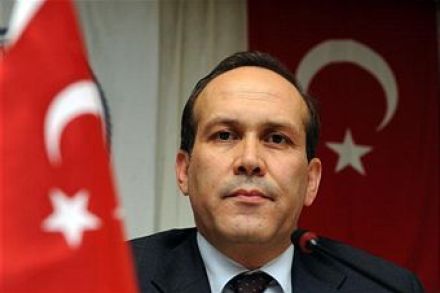
Will we lose Turkey?

From our UK edition

Earlier this year, Transatlantic Trends, an annual survey of public opinion on both sides of the Atlantic, was published. Key highlights from the survey included a quadrupling of European support for President Obama's handling of foreign policy. But what really caught my eye was how badly the relationship between the West and Turkey had frayed. 65 percent of Turks do not think it is likely their country will join the EU. Nearly half of Turks polled think Turkey is not really part of the West, while 43 percent think Turkey should not partner with the EU, the US or Russia in solving global problems.

Bravo Iceland!

From our UK edition

Our plucky friends in the north have done the right thing: Icelanders have overwhelmingly rejected a plan to repay Britain and the Netherlands billions of pounds lost when Reykjavik's banks collapsed in 2008 Partial referendum results from around a third of the cast votes showed 93% opposed the deal and less than 2% supported it. The rest cast invalid votes. Good for them. Quite why the Icelandic government should be liable for the UK's entirely voluntary decision to bail out Icesave customers is a mystery. Still, it was the use of anti-terrorism laws to seize and freeze Icelandic assets in the UK that was especially disgraceful and, of course, a reminder of how draconian and open to abuse such laws are.

Even the Pakistanis are “Soft” on Torture…

From our UK edition

Meanwhile, today's missive from the Party of Torture is written by Dana Perino and Bill Burck, Press Secretary and Special Counsel to George W Bush respectively.  The Obama administration is working with Pakistani intelligence to interrogate Mullah Baradar, reportedly the Taliban’s number-two man. We’ve been a little underwhelmed by the Left’s reaction to this news. [...] The Left’s silence on Mullah Baradar is convenient. Gone are the hysterical cries of torture. Missing in action are the opponents of rendition. One searches in vain for impassioned denunciations of Obama’s outsourcing of interrogations to countries with long histories of torture.

The Torture Party’s Desperate, Flawed Logic

From our UK edition

I'll say this for the Torture Advocates: they're increasingly creative in their justifications for torturing prisoners and in their attempts to suggest that anyone with any qualms about any of this secretly wants the Bad Guys to win. Granted, this leads them to some strange positions. Here, for instance, is Victor Davis Hanson: It is time critics made the case that targeted assassinations fall within the legitimate bounds of a war in which we are properly engaged, while the water-boarding of three confessed terrorists was morally unacceptable torture of no utility and contrary to any of our own past protocols concerning apprehended and non-uniformed belligerents.

Mossad’s suspected actions in Dubai may be a crime, but will they help Israel?

From our UK edition

One of Israel's most potent weapons has been the mixture of awe and fear with which its spy services are held. Now that Mossad is suspected of killing Mahmoud al-Mabhouh in Dubai, and using fraudulent British passports in the process, newspapers will dredge up stories about the Entebbe Raid, the killing of Black September by Mossad agents and other daring-do acts. The other reaction to the suspected assasination of the arm-smuggling Hamas official will be indignation about the extra-judicial nature of Israel's action. But these made-for-Hollywood stories and the West's moral indignation mask some uncomfortable truths. That Mossad, its domestic equivalent Shin Bet and Israeli commandoes are bureaucratic organisations. Like all public bodies, sometimes they succeed, sometimes they fail.

The new AfPak strategy in action – decapitation, reintegration and reconciliation (DRR)

From our UK edition

It’s not quite the “we got him” moment, as when US soldiers unearthed the fugitive Iraqi dictator. But the capture of Mullah Abdul Ghani Baradar, a top militant commander who is said to be second in command to elusive Afghan Taliban chief Mullah Mohhamad Omar, may be even more significant. By the time Saddam Hussein had been caught, the US was fighting a different enemy, though the Pentagon leadership had not realised yet. Baradar, who was in charge of the insurgency’s day-to-day operations on behalf of the so-called Quetta Shura, the Taliban’s leadership council, is very much today’s enemy - and his seizure should not be underestimated.

The End of Charlie Wilson’s War

From our UK edition

Rarely are obituaries so full of parties, history-changing events and personal contradictions as those of ex-Congressman and rebel-armer Charlie Wilson, who died last night aged 76. War will mix with cocaine. Burqa-clad women will mingle with strippers. "Good Time" Charlie's life was genuinely remarkable. Described as "one the most distinctive" congressmen, he spent most of his time partying until he found the cause of a lifetime: ejecting the Soviets from Afghanistan. As detailed in the book and film "Charlie Wilson's War", the Texan politician used his contacts and seat on a powerful Congress committee to arm the Afghan rebels. And he did it in style - all buttoned-down, white-collared shirts, college ties and striped suits that would make Gordon Gekko envious.

The White House is bluffing

From our UK edition

The Atlantic reports that the White House is considering altering intelligence sharing agreements with Britain in the light of the Binyam Mohamed case. White House spokesman Ben LaBolt briefed: "The United States government made its strongly held views known throughout this process. We appreciate that the UK Government stood by the principle of protecting foreign government intelligence in its court filings. We're deeply disappointed with the court's judgment today, because we shared this information in confidence and with certain expectations." I detect a bluff. Britain and the US share information on an hourly basis, providing an essential understanding in the combined operation against al Qaeda.