Terrorism

Beware Yeminitis 

From our UK edition

Yesterday saw an outbreak of Yeminitis, with Westminster focused on Osama Bin Laden’s ancestral home after the foiled bomb plot. To CoffeeHouse readers, this will come as no surprise. Last year, the Spectator prophesised that Yemen would be the “sleeper issue” of 2010. And so it has proved. But what have successive British governments been doing since the threat began to grow? UK policy towards Yemen is an exemplary case of cross-government cooperation. Rarely do the FCO, DFID and the MoD collaborate as closely as they do over Yemen. Alan Duncan, now a Minister for International Development, has taken a personal interest in the country, flying to Sana'a earlier in the year and drawing on his network in the Gulf to engage Yemen’s leadership.

So you think civil liberties are important, eh? That’s why you’re a terrorist.

From our UK edition

Alas so, even though on the great Toner Cartridge Plot, Dan Drezner gets it right: Al Qaeda failed… again. Seriously, if al Qaeda is ostensibly the New York Yankees of terrorism, the Steinbrenners would have fired the GM and coach years ago. Quite so. International terrorism is hard and these guys are finding it difficult to match past "glories". It's a long way from 9/11 to stuffing explosives inside a couple of toner cartridges. That doesn't mean there isn't a threat but it is posssible to be both wary of the security lobby and recognise that the security services have a tough but vital job. Contrary to what Melanie Phillips suggests, I don't know many libertarians who think there's no terrorist threat.

In defence of Control Orders

From our UK edition

David Cameron currently thinks the coalition is heading for a ‘f***ing car crash’ on Control Orders. While the Home Secretary Teresa May is now convinced of their necessity, many Liberal Democrats and some Conservatives disagree. Everyone would prefer potential terrorists be prosecuted, but sensitive counter-terrorism evidence cannot always be used in a criminal court. In addition, the European Convention on Human Rights decrees that terror threats cannot be deported to states where they could be tortured. Hoping to circumvent these problems, the previous government attempted detention without trial. When this was struck out in the courts, Control Orders were the best viable option left.

Out of Control Orders

From our UK edition

The government’s developing a tension headache over Control Orders, and there have been two noteworthy interventions. First, Theresa May lambasted Ken Macdonald. The former Director of Public Prosecutions, who is a now a Lib Dem peer overseeing an independent inquiry into counter-terror legislation, has made clear that he ‘will go ballistic’ if the Home Office retains Control Orders, which it is expected to recommend, in line with the advice of another Lib Dem peer, Lord Carlile. Second, David Davis has described Control Orders as ‘Kafka-esque’, the term used by Chris Huhne on the Politics Show yesterday, and has also said that he will vote against the government if Control Orders are to be maintained.

Confronting terror at home

From our UK edition

As Julian Glover notes, Jack Straw let the cat out of the bag. ‘Never, ever, downplay the possible consequences,’ he says. The coverage of the recent bomb plot has largely ignored that it was foiled. That, by any definition, is a success, a vindication of our security services. Independent inspector Lord Carlile is right that improvements can be made to the bomb detection apparatus in airports and targeting security at the source of a threat – i.e. packages from the Yemen rather than package holidays. The previous government would have used this plot to introduce another wave of invasive legislation – never, ever, downplay the possible consequences to justify I.D. cards, deeper control orders and further suspension of Habeas Corpus.

The fault-line at the heart of Liberal Conservativism

From our UK edition

Andrew Rawnsley has done well to identify the problems the coalition is having deciding its line on national security. His column today is a colourful evocation of the deadlock David Cameron and Nick Clegg face over  control orders and 28-day detention without charge. He calls it "alarmed semi-paralysis", which is about right. Now they have seen the secret evidence and had the briefings from the intelligence services they somehow don't feel so liberal any more. It is the sign of a mature democracy that it favours the liberty of its citizens over the control of them. But it also a lot easier to say you would be prepared to take risks with the lives of those citizens when you are in opposition.

Are the coalition in control on Control Orders?

From our UK edition

Friday's foiled bomb plot is a reminder, if one were needed, that the terrorist threat has not gone away. Inevitably, given the volatile state of the argument about the balance between liberty and security, this incident has become part of the political debate on the issue. Ben Brogan is using it to argue that given the level of threat to this country, David Cameron should call off all the inquiries into whether or not the security services acquiesced in torture. This plot has also come at a time when the coalition is trying to come to a mutually acceptable position on control orders and how long suspects can be detained without charge.

Barack Obama: suspicious packages contained explosives

From our UK edition

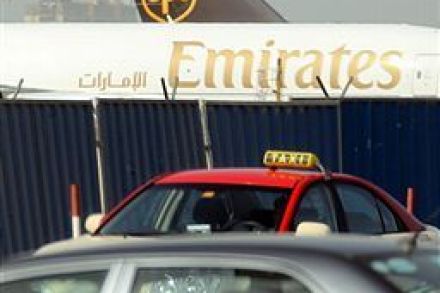
The terror scare surrounding two planes in the UK's East Midlands Airport and Dubai is now, officially, serious. In a statement this evening, Barack Obama has confirmed that packages on both aircraft contained explosive devices. The packages were sent from Yemen, and were headed for synagogues in Chicago. As Obama put it, this is a "credible terrorist threat" against the US. There is little detail yet, although the Yemeni connection suggests that this is an al-Qaeda plot. And the White House is not ruling out the grim possibility that there are more packages out there. Sadly, Islamist terror is casting its shadow across the West once again.

To the victor the spoils

From our UK edition

The government must be doing something right with its aid policy: several NGOs absolutely hate it. Talking to the Guardian, Patrick Watt, Director of Save the Children and sleeping disciple of the Moral Compass of Kirkcaldy, has criticised the government’s decision to direct aid funding to conflict resolution. He says: ‘What is the real driver of aid allocation? Is it poverty, is it need and the ability to use money effectively or is it the agenda of the National Security Council? We do need to have a balanced approach to aid allocation that reflects the principles of the 2002 International Development Act which stipulates that all aid should be for poverty reduction.’ Put simply, Watt doesn’t get it.

The coalition outlines its national security concerns

From our UK edition

What a curious creature this National Security Strategy is. For some reason, I expected something more than a 39-page document in the same mushy pea colour scheme as the coalition agreement. But that is what we've got – and it doesn't really tell us much. The centrepiece of the document comes on page 27 (reproduced below), with a neat, three-tier guide to the security risks facing this country. At the highest priority level are atrocities such as "chemical, biological, radiological or nuclear attack by terrorists," and "hostile attacks upon UK cyberspace". Further down, there are mentions for "organised crime" and "disruption to oil or gas supplies," among others. But, before we get there, there is – as Nicholas Watt notes – a good deal of waffle.

What about the Home Office?

From our UK edition

The less we hear from Theresa May, the more I worry about the Home Office budget. I’m hearing rumours of her taking a 30 percent cut, which I first dismissed as a piece of expectations management. But now I’m beginning to wonder. We know that defence is settled - about an 8 percent real-terms cut. The NHS, which absorbs a quarter of government spending, will have real-terms increases (something even the left-leaning IPPR doesn’t back). The schools budget has escaped relatively unscathed, we read. So what’s left? Again, there’s so much deliberate misinformation out there that I hesitate to give a rumour round-up. But here goes.   One major victim is expected to be Transport.

Fox to the rescue

From our UK edition

The best form of defence is attack. Liam Fox distracted conference from the various rows that have afflcited it by castigating Labour’s abysmal record on defence. He was helped enormously by the terrorist outrage in Sanaa, the Yemen – a cowardly atrocity that reinforces his observation that ‘the country's finances are wrecked and the world is more dangerous than at any other time in recent memory.’ He recited the refrain that cuts are regrettable but necessary, before adding that, thanks to Labour, Britain has to fight on with less.

Andrew Mitchell: the answer to global terrorism

From our UK edition

Al Shabaab and al Qeada are brothers in arms – Somalia is a hothouse for terror. Jonathan Evans, director general of MI5, has openly expressed his view that it is ‘just a matter of time’ until Somalia and the Yemen export terrorism to Britain’s streets. That striking statement contains one oversight: they do already. Umar Farouk Abdulmutallab, the Christmas Day bomber, was trained in the Yemen and two of the 7/7 bombers were Somali. How to eradicate this threat? The legacies of Iraq and financial retrenchment have made armed intervention an absolute last resort. Counter-terrorism is essential, but well targeted aid is the easiest remedy for chaos. In a speech yesterday, Andrew Mitchell described why aid should be directed to benighted regions.

Faisal Abdul Rauf: Neoconservative?

From our UK edition

I continue to be impressed by how thin the case against Faisal Abdul Rauf is. You'd have thought that by now the staunch defenders of liberty crazies would have found either a smoking gun or a ticking bomb. To be fair, Pamela Geller* certainly thinks she has found evidence that he's just as bad as his critics would have us believe. Or maybe even - and this may make your (my!) weak dhimmi-flesh creep - worse... But, actually, all she has unearthed from a 2005 talk Rauf gave to, of all places, the Bob Hawke Prime Ministerial Centre, is evidence that Faisal Abdul Rauf could be considered a neoconservative. That is, he shares a central neoconservative insight: How many of you have seen the documentary: Fahrenheit 911? The vast majority - at least half here.

The worrying opposition to the ‘Ground Zero Mosque’

From our UK edition

I’m a neo-conservative, a hawk in the war against Islamist extremism, which is why I’m so worried by the opposition to the building of a mosque near Ground Zero. A new poll shows that 61 percent of Americans oppose its construction and Howard Dean, the tribune of the Democratic wing of the Democratic party, and Harry Reid, the Democratic Senate Majority Leader, have joined many leading Republicans in arguing that the mosque should not be built there, several blocks from Ground Zero.   If the war on terror becomes a war on Islam, it is a war that we lose: George W. Bush may have had his faults but this is something that he understood.

The Terrorist Fetus Plot that Threatens America

From our UK edition

Sure, if you were running a terrorist network you might think it worthwhile to smuggle pregnant women into the United States to ensure that their offspring, thanks to the 14th Amendment, could have American passports and be sent back to the US 20 years down the line to carry out their terrorist mission. But you might also think there are easier ways of recruiting...

Progress in Afghanistan?

From our UK edition

The Times (£) is reporting that ISAF has made a significant progress in pacifying the death circle around Sangin. The key, it seems, is driving a wedge between the tribal insurgents and religious insurgents foreign to Helmand: ‘British commanders believe that they are close to achieving a significant tribal uprising against the Taleban that could lead to the reintegration of hundreds of insurgents fighting around Sangin, the most dangerous place in Afghanistan. The number of violent incidents in Sangin has fallen by about 80 per cent in the past month. British commanders believe that this is partly the result of tribal leaders delivering on a promise to restrain tribal elements aligned with the Taleban and to expel the insurgents.

The FCO’s dubious Prevent grants

From our UK edition

A few weeks ago I wrote for Coffee House welcoming the Government’s decision to scrap Prevent grants administered by local authorities. In that article, I cautioned that scrapping something should actually mean scrapping it, not just moving resources around. Today, the TaxPayers’ Alliance has released research showing that the Foreign and Commonwealth Office (FCO) also distribute funds through Prevent. Again, money has gone to projects of questionable value in the fight against extremism, violent or non-violent.   One of the more dubious projects was a “mobile cinema for justice”. What’s worse is that it was administered by an American charity called the International Research and Exchanges Board. Why is that bad?

Ground Zero Mosque: Another Moment of Truth for the Open Society

From our UK edition

A good number of readers  - or those readers who left comments* - didn't much care for my post on the so-called "Ground Zero Mosque". Revolting [and] symptomatic of the imbecilic scramble to dhimmitude widespread in liberal circles... The Muslim colonists push and the gutless West meekly gives way, as usual... It will be seen in the world for the symbol of what it really is; a victory for resurgent Islam and a defeat for the Christian West...Hopefully this symbol of Islamic supremacism will be strangled at birth. You get the idea. There's a cultural war wrapped inside a psychodrama here. Or perhaps it's the other way round.