Terrorism

A Qualified Defence of Security Theatre

From our UK edition

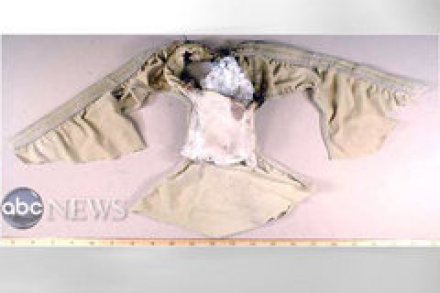
What is the point of airport security? It's most important job, it seems to me, is not to deter or even prevent terrorism but to remind the public that there is a terrorist threat. If this was true before the Knicker-Bomber it's even more clearly the case now. That's not just because Mr Abdulmutallab was able to board his flight to Detroit but because it's apparent, if this was ever in doubt, that just three things have improved airline security since 9/11: reinforced cockpit doors, the increased vigilance of other passengers and the incompetence shown by at least some of the would-be bombers. The rest is just security theatre. (See Bruce Schneier for more on this.) Tedious and dispiriting and muddle-headed as it is, however, this security theatre does serve a purpose.

The NYT: The Detroit bomber was radicalised in London

From our UK edition

It is a depressing fact that the Detroit bomber appears to have been radicalised in London. Today, the New York Times takes an extensive look at the bomber’s radicalisation in London. As the paper, which is not prone to hyperbole, says: “Investigators are now, in fact, turning a sharper and retrospective eye to the passage in Mr. Abdulmutallab’s life that began immediately after his summer in Sana, Yemen, in 2005, when he enrolled as a $25,000-a-year mechanical engineering student at University College London. In recent days, officials in Washington and London have said they are focusing on the possibility that his London years, including his possible contacts with radical Muslim groups in Britain, were decisive in turning him toward Islamic extremism.

2010: my predictions and yours

From our UK edition

It’s that time of year – TV and radio are packed with special editions of Dr Who, news reviews and numerous best-ofs. So let me add to the cacophony with a look ahead to next year. Here are thirteen (and a bit) predictions for 2010: 1. The Taliban will mount a Tet-like attack on an Afghan town centre, such as Laskar Gar, prompting the Lib Dems to call for a British withdrawal from Afghanistan. 2. Iran’s regime will arrest and condemn to death one of the contenders in the 2009 presidential election. 3. Brazil will win the World Cup in South Africa. 4. The Pakistani president will be forced from office to be replaced by Nawaz Sharif. 5. Marwan Barghouti is exchanged for Gilad Shalit and subsequently elected Palestinian president. 6.

What you won’t read about terrorism in Britain

From our UK edition

I have some advice for CoffeeHousers hungry for the latest evidence about the guy who tried to blow up the Amsterdam-to-Detroit flight: go to the American press and their websites.  They are 100% free to pursue these stories: the press in Britain isn’t. Not any more. The suspect suffering second degree burns in hospital, named by the US authorities as a Nigerian called Farouk Abdul Mutallab, may have been living in London. This is, alas, no surprise. It fits with Britain’s reputation as Europe’s no1 incubator of terrorists  - let’s remember that the 7/7 bombers were home-grown. And it raises huge questions which a free press should be pursuing. But this is a subject where the British press are not free.

Rediscovering Paul Berman

From our UK edition

Six years ago I wrote a review for the Observer about Paul Berman's Terror and Liberalism, a quite brilliant polemic about the way the legitimate liberal desire to overturn the conventional or the bourgeois can so often turn to murderous terror. I recognised at the time that it was an extraordinary book, but I couldn't quite accept his final conclusions, which seemed to elide different forms of barbarism so that Palestinian suicide bombers became equated with the genocide of the Nazi death camps. I still think it is important to make distinctions between the geographical, cultural and historical specifics of individual patterns of atrocity. This is not to say there is a hierarchy of such things.

The Iraq inquiry we should be having

From our UK edition

Do we still have the will to win in Afghanistan? If so, the question the Iraq inquiry should be asking is not “how did we get into this war” - we have had a number of separate inquiries into that already – but “why were the military defeated on the ground in Basra?”. If the Chilcot Inquiry were to focus on that, it might actually serve a purpose: not just in unearthing new information (which it has signally failed to do so far) but drawing lessons that just might help the troops in Afghanistan. I make this point in my News of the World column today. I am in a tiny minority of people who a) supported the war in Iraq, and b) still admits it. People like me feel every bit as angry as the anti-war people about what happened next.

The case for 40,000

From our UK edition

As President Obama continues to consider his options on Afghanistan, The New York Times has a good primer on what the military could do with the various levels of reinforcements being considered. This is what the military believes it could do with an extra 40,000 troops: "Should President Obama decide to send 40,000 additional American troops to Afghanistan, the most ambitious plan under consideration at the White House, the military would have enormous flexibility to deploy as many as 15,000 troops to the Taliban center of gravity in the south, 5,000 to the critical eastern border with Pakistan and 10,000 as trainers for the Afghan security forces.

Money talks in Afghanistan

From our UK edition

Afghan politics stinks; we all know it.  But it's still shocking to read how the former governor of Helmand, Sher Mohammed Akhundzada, encouraged his supporters to join the Taliban after he lost his position, in 2005, under a cloud of drug-running allegations.  Here's what he tells today's Telegraph:   "When I was no longer governor the government stopped paying for the people who supported me ....  I sent 3,000 of them off to the Taliban because I could not afford to support them but the Taliban was making payments. Lots of people, including my family members, went back to the Taliban because they had lost respect for the government.

Trying KSM in NYC

From our UK edition

On the whole I'm sympathetic to the Obama administration's desire to try Khalid Sheikh Mohammed in a civilian court in New York City. That is, dealing with this kind of terrorism is a matter of law-enforcement as well as, in other respects, a military matter. And yet, despite all the talk about how putting KSM on trial is an affirmation of superior, civilised values and all the rest of it, I'm not sure that the trial will be quite the propaganda victory some think it may be.  Ruth Marcus happily spares one the job of dealing with a typically atrocious Michael Gerson column which alleges, ludicrously, that the ACLU is now running the Justice Department and that the Attorney-General's interpretation of the Constitution is, amazingly, some kind of "suicide pact".

The March of the Surveillance State

From our UK edition

Good grief: All telecoms companies and internet service providers will be required by law to keep a record of every customer's personal communications, showing who they are contacting, when, where and which websites they are visiting. Despite widespread opposition over Britain's growing surveillance society, 653 public bodies will be given access to the confidential information, including police, local councils, the Financial Services Authority, the Ambulance Service, fire authorities and even prison governors. They will not require the permission of a judge or a magistrate to access the information, but simply the authorisation of a senior police officer or the equivalent of a deputy head of department at a local authority.

Freedom of expression is Rose’s war

From our UK edition

Last week, Denmark discovered that two US-based men were plotting a terrorist attack against Jyllands-Posten, the Danish newspaper that outraged hard-line Muslims by publishing the infamous Muhammad cartoons in 2005. Allegedly, the two men planned to target cultural editor Flemming Rose and cartoonist Kurt Westergaard.  The mild-mannered Flemming Rose is back in the spotlight. Asked if he regretted publishing the cartoons, Rose insisted that bowing to such pressure would not yield less extremism, but more. He went further - the cartoons have not been re-issued, which amounts to the sort of self-censorship that moved him to commission the cartoons originally. Rose's target was neither Islam nor Muslims.

Evidence relating to the incarceration of Binyam Mohamed will be published

From our UK edition

The High Court has ruled that a summary of US intelligence, relating to Binyam Mohamed’s allegations that he was tortured, will be made public. David Miliband expressed his “deep disappointment” at the ruling and issued the following statement: ‘The Government is deeply disappointed by the judgment handed down today by the High Court which concludes that a summary of US intelligence material should be put into the public domain against their wishes. We will be appealing in the strongest possible terms. The issues at stake are simple, but profound. They go to the heart of the efforts made to defend the security of the citizens of this country.

A glimpse of Home Secretary Grayling?

From our UK edition

Chris Grayling’s reputation as a one-dimensional attack-dog was accentuated by his ill-judged comparison of Britain with Baltimore. The argument laid against Grayling is that he shouts about the government but provides no more than a whisper about policy. However, Grayling shows deep and nuanced consideration of policy when interviewed by Martin Bright in the Jewish Chronicle. Grayling’s subject is extremism and failing multi-culturalism. I apologise for its length, but here is the key section: ‘“I think the government has to make it absolutely clear that anyone in our country who espouses violence is not going to be able to do business with the government of the day and in many circumstances will be putting themselves in danger of prosecution.

Lockerbie & the Scotland Act

From our UK edition

Could government ministers in London have stepped-in to prevent the release of Abdelbaset Ali al-Megrahi? A report in Scotland on Sunday yesterday says yes they could: Scottish Secretary Jim Murphy could have overruled Scottish justice secretary Kenny MacAskill and stopped the release of Abdelbaset Ali Mohmed al-Megrahi if the case was deemed to have breached "international obligations". Senior diplomats have insisted there was a "clear understanding" between the UK and the US that Megrahi would serve out his sentence in Scotland. The US Justice and State departments have also insisted they had been given assurances in the 1990s that Megrahi would remain imprisoned under Scottish jurisdiction. [...

The government needs to get a grip on its CRB craziness

From our UK edition

That the news that the government wants everyone who gives children a lift anywhere to be CRB checked broke on the same day that it emerged that Haringey council had sent a child to live with the ringleader of the airline bomb plotters is beyond satire. How have we got to a state where parents can’t team up to do a run to Cubs together without the state vetting them while simultaneously a council is sending a child off to be fostered by terrorists? As Mary has argued, CRB checks are one of the big obstacles to volunteering. If the Conservatives really do want to roll forward society, then they are going to have to deal with this CRB craziness and instead apply a bit of a common sense.

8 years on

From our UK edition

Last night's "tribute in light" for the victims of the World Trade Center attack on September 11th, 2001.

Complacency & Terrorism

From our UK edition

David Aaronovitch's column in the Times today is a curious beast indeed. Some sub-editor has given it the headline Complacency has crept up on us (yet again) which seems curious since the partially-successful prosecution of the men accused  - and guilty - of plotting to use "liquid bombs" to blow up transatlantic airliners would seem to suggest that complacency has not in fact crept up on us and that, quite rightly, the security services are doing the job they're charged with. Now Aaronovitch is not responsible for the headline, nor for the sub-deck arguing that No amount of handwringing about civil liberties should distract us from the very clear and present danger of terrorism.  Nonetheless, this doesn't seem an unfair summary of his column.

The government contradicts itself on Megrahi

From our UK edition

David Miliband on the Today Programme on September 2nd: “We did not want him [Megrahi] to die in prison.” Ed Balls on the Today Programme on September 7th: “None of us wanted to see the release of al-Megrahi” Considering that Megrahi was sentenced to life imprison for his role in the Lockerbie bombing, I cannot see how both of these statements of the government’s view can be correct. If the government did not want him to die in prison, it wanted him to be released.

Gadaffi was the magnet that sent the government’s moral compass awry

From our UK edition

The al-Megrahi story has rolled on for two weeks, and CoffeeHousers have probably had more than their fill; but every morning brings new revelations that undermine the government’s position further. Today, the Sunday Times reports that Gordon Brown, having been in favour of such a deal initially, vetoed the proposal that Libya pay compensation to IRA victims who were killed with arms supplied by Gadaffi. In a letter to the victims’ lawyer, dated 7 October 2008 (around the time Alex Salmond urged Jack Straw to take advantage of the fact that the PTA had stalled by renegotiating the agreement to exclude the Lockerbie bomber), Brown wrote: “The UK government does not consider it appropriate to enter into bilateral discussion with Libya on this matter.

Lockerbie Fallout: A (Fake) American Backlash

From our UK edition

So, via Iain Dale, the News of the World has a story claiming that: Britain was facing the likelihood of an increased terror threat last night — after America’s CIA chiefs threatened to stop sharing vital intelligence with us following the Lockerbie bomber’s release.   The Americans have already warned British intelligence services that sending cancer-stricken Abdelbaset al-Megrahi home to Libya has destroyed our “special relationship”.   But the fallout following the bomber’s release has now worsened with the CIA threat to stop sharing information on terrorists gathered by their agents.   They have also warned they may not pass on vital information picked up by their sophisticated eavesdropping satellites.