Terrorism

Why we need to talk about theocracy

From our UK edition

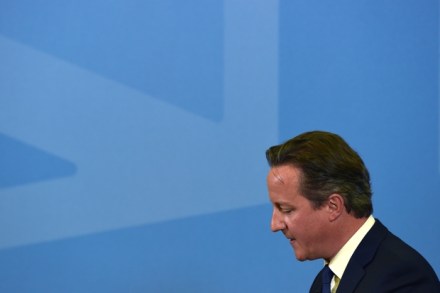
David Cameron is right to speak against religious extremism, even if it claims not to support violence. But what exactly is religious extremism? He defined it in opposition to British values, meaning democracy and the rule of law and so on. Maybe this is clear enough. But I think the matter can be clarified further. I think it should be defined in this way. Religious extremism idealises religious unity as the basis of good politics, and denigrates pluralism, liberal values, ‘secularism’ (in the political sense). In other words, it is theocratic religion. ‘Theocracy’ is an old-fashioned word, but I think we need to use it a lot more. It gets to the heart of the matter.

David Cameron must ally himself with moderate Muslims

From our UK edition

Those who have been involved in counter-extremism in recent years would be forgiven for thinking that there is little new in the Prime Minister’s speech today. However, we need to remember two key things. First, that this government aims to increase the counter-extremism duties of frontline workers like teachers, so the target audience is wider UK civil society. Secondly, and this is evidenced by the Prime Minister speaking at a school in Birmingham, not at a security conference on the continent, we need to engage with the people who may be vulnerable to radicalisation in the first place.

The focus on terror has distorted the debate on encryption

From our UK edition

Surveillance has hit the headlines again. This morning, the Data Retention and Investigatory Powers Act, or DRIPA, which passed last year after just 24 hours debate, was ruled illegal by the High Court in a landmark case. DRIPA was an emergency measure to allow law enforcement agencies access to communications data, and its illegality puts even more pressure on Theresa May’s forthcoming Investigatory Powers Bill, announced in the Queen's Speech. Last week, David Cameron announced that WhatsApp, Snapchat, iMessage, indeed, any encrypted messaging system, could be banned under new laws. In the fight against terrorism, the security services’ ability to intercept communications by would-be violent extremists is said to be paramount.

Keep the cops away from the radical clerics, be they Christian or Muslim

From our UK edition

If you want to see our grievance-ridden, huckster-driven future, looks to Northern Ireland, which has always been a world leader in the fevered politics of religious victimhood and aggression. Just as the Tories and much of the politically-correct liberal centre think they can force us to be nice by allowing the cops to arrest those who 'spread hate but do not break laws' (in George Osborne’s sinister words) so Northern Ireland has all kinds of restrictions of 'hate speech' to police its rich and diverse tradition of religious bigotry. I suppose it was inevitable that they would catch 78-year-old Pastor James McConnell of the Whitewell Metropolitan Tabernacle in North Belfast. The pastor is a protestant of the fundamentalist kind.

Barometer | 9 July 2015

From our UK edition

Naming terror David Cameron and the BBC argued over what to call the terror group most papers refer to as Isis — with the PM preferring Isil and the BBC continuing to call it Islamic State. Two more terror groups whose names caused problems in Britain: — The Red Army Faction was a German terror group which existed between 1970 and 1998, when it declared itself dissolved. Faced with the acronym RAF, British media preferred to call the group by its nickname the Baader-Meinhof Gang. — In the 1970s Italy was terrorised by a group known as the Red Brigades, most notorious for kidnapping and murdering the former prime minister Aldo Moro in 1978.

Diary – 9 July 2015

From our UK edition

One strange consequence of my job as a foreign correspondent is discovering beautiful places when terrible things happen in them. So it was that I have been spending the past couple of weeks in Tunisia, a land of azure skies, whitewashed houses and apricot light which has inspired artists such as Paul Klee. That beauty — along with soft sandy beaches, local rosé and low prices — also attracted hundreds of thousands of British tourists. Not any more, after a young Tunisian took a gun from inside a beach umbrella at the resort of Sousse and slaughtered 38 holidaymakers, 30 of them British. Almost every Tunisian I met apologised on learning I was British: ‘Please don’t think Tunisians are like that — we are people of peace.

Barometer | 2 July 2015

From our UK edition

Bank job Should we buy shares in companies which print banknotes in expectation of one getting to print millions of drachma notes? — In May, according to the ECB, there were a total of 17.6bn euro notes in circulation. Given that Greece accounts for approximately 2.5% of the GDP of the eurozone, 441m of these were Greek, and might need replacing with drachma notes in the event the country leaves the euro. — However, there is already a good business in printing replacement euro notes. In May, 2.76bn notes were taken out of circulation and 2.88bn new ones were put into circulation.

You can’t take the Islam out of Islamic State

From our UK edition

At last, British politicians have been galvanised into action by the appalling events last weekend in the Tunisian resort of Sousse, in which 38 people were murdered by an Islamist terrorist. Yes, yes, about time, you might be muttering to yourself — but credit where it’s due, please. They may be a little late to the party but at least they have arrived. A convocation of 120 of our MPs, including Boris Johnson, have demanded strong and forthright action.

Anniversary fatigue

From our UK edition

There’s a part of me that thinks OK, we’ve heard enough now, one year on from the beginning of the centenary commemorations, about the first world war. Do we really need any more programmes (on radio or television) about Ypres, Gallipoli, Akaba, Versailles, and the Western Front? Or are we wallowing in history’s horror stories rather than trying to learn from them? There’s a danger that anniversary fatigue will set in and stop us pausing to think, to really contemplate, the reality of that terrible, catastrophic war and whether there is any way it can be prevented from happening again.

Toxic fun with Mum and Dad

From our UK edition

In 2008, when Taylor Wilson was 14, he created a working nuclear fusion reactor, ‘a miniature sun on earth’. At 17 he entered his home-made radiation detector for inspecting cargo at the Intel International Science and Engineering Fair; his project was entitled ‘Countering Nuclear Terrorism: Novel Active and Passive Techniques for Detecting Nuclear Threats’. In a field of 1,500 entries, it swept the board. Winning the war against terror isn’t Taylor’s only ambition. He plans to provide affordable, sustainable energy for the whole planet, not to mention beating cancer. Aged 11, he watched his beloved grandmother withering from lung cancer, and became convinced that it was up to him to do something about it.

We assume British Muslims support British values. Do they?

From our UK edition

Let’s put the question very bluntly: do British Muslims affirm British values, or are they outsiders to our way of life? Or, even more bluntly: can we trust them? It is important that we learn to answer this question with nuance, and not in a self-righteous and simplistic way. A week before the Tunisian carnage, David Cameron implicitly raised the question, when he said that too many mainstream Muslims were equivocating, seeming to condone Islamic State and to disparage the West –this 'paves the way for young people to turn simmering prejudice into murderous intent', he said. His comments, and his planned counter-extremism bill, were strongly condemned by commentators, and also by his former party chairperson Sayeeda Warsi.

British people need rescuing from North Africa. Where’s the Royal Navy now?

From our UK edition

Just a thought – but might now be a good time to revisit our policy of using the Royal Navy to ferry large numbers of people from the North African coast to Europe? At what point do we start to take our own security seriously, rather than playing to the gallery with a pointless 'humanitarian' gesture which will see more lives lost than are saved? I do not see the remotest inclination on the part of our politicians to either take the threat seriously, or to castigate the creed from which it springs. They act as if impotent. And yet the only thing hamstringing them is the usual political correctness and the same old, increasingly absurd, shibboleth: religion of peace.

‘Religion of peace’ is not a harmless platitude | 27 June 2015

From our UK edition

The West’s movement towards the truth is remarkably slow. We drag ourselves towards it painfully, inch by inch, after each bloody Islamist assault. In France, Britain, Germany, America and nearly every other country in the world it remains government policy to say that any and all attacks carried out in the name of Mohammed have ‘nothing to do with Islam’. It was said by George W. Bush after 9/11, Tony Blair after 7/7 and Tony Abbott after the Sydney attack.

Islamic State marks ‘caliphate anniversary’ with multiple attacks

From our UK edition

Today’s attacks in France, Tunisia and Kuwait appear to be Islamic State inspired and designed to mark the first anniversary of its declaration of a new caliphate. I suspect, though, that it is the news from France that will most alarm Western intelligence services. This does not appear to have been some mega-plot involving dozens of people but a small, self-starting operation. The latter kind of attack is far harder to stop. Although, it does appear that one of the suspects in this case was known to the security services. The attack in Tunisia on a hotel will hit that country’s tourism industry hard. It is also a reminder of the dire situation in North Africa which is contributing to the migrant crisis in the Mediterranean.

Spy if you must, but don’t give the game away

From our UK edition

The Snoopers’ Charter. I ought to care about this. I’m a sort of libertarian. I believe in personal freedom. I’m a trustee of Index on Censorship. The state as Big Brother is everything I’ve always fought in politics. So why can’t I quite summon the requisite indignation? Why do I find all this Edward Snowden stuff vaguely irritating? Why does the crusading column for the Times, railing against state surveillance, somehow keep failing me, though time and again I’ve opened my laptop and tried to make a start?

A British policeman shouldn’t take orders from a radical Islamist preacher

From our UK edition

Each year Anjem Choudary earns more in benefits than a soldier does starting off in our armed forces. This is a fact I never tire of pointing out – especially to Anjem’s face whenever we have the misfortune to meet. The follow-on point, which I think also worth continuing to make, is that there is something suicidal about a society that rewards its enemies better than it does its defenders. Choudary and his family rake in around £25,000 each year  and - as you can see from this newly-released video above  – we taxpayers now get even more for our money than we had previously thought.

Bilderberg security is stepped up to protect masters of the universe from journalists

From our UK edition

This weekend the masters of the universe will gather at the annual Bilderberg conference. The secretive summit, which is being held in Austria, sees heads of banks and company CEOs mix with political heavyweights including the former Secretary of State Henry Kissinger, US pollster Jim Messina, George Osborne and... Ed Balls. No notes are taken, no media are invited to cover the event, and the outcome is never revealed which has led conspiracy theorists to go into overdrive. Theories range from plans for a New World Order to world domination by lizards.

Diary – 4 June 2015

From our UK edition

For the first time since the terrorist attack on the Sri Lankan team six years ago, a Test match side has visited Pakistan. The Zimbabwe tourists, playing at the same Lahore stadium where the attack was mounted, were greeted with wild enthusiasm. Less well reported has been the fact that a team of English cricketers (including myself and Alex Massie of this parish) has been touring the Hindu Kush. We played in Chitral, Drosh, Ayun, Kalash and Booni. In these mountain areas many of our opponents were using pads, gloves and a hard ball for the first time. Still, we were overwhelmed, rarely losing by fewer than 200 runs in games which never exceeded 30 overs.