Terrorism

The Spectator’s Notes | 19 November 2015

From our UK edition

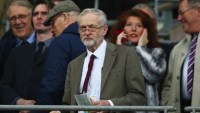
When Jeremy Corbyn says it is better to bring people to trial than to shoot them, he is right. So one might feel a little sorry for him as the critics attack his reaction to the Paris events. But in fact the critics are correct, for the wrong reason. It is not Mr Corbyn’s concern for restraint and due process which are the problem. It is the question of where his sympathies really lie, of what story he thinks all these things tell. Every single time that a terrorist act is committed (unless, of course, it be a right-wing one, like that of Anders Breivik), Mr Corbyn locates the ill as deriving from the behaviour of the West, especially the United States and Britain (and, where relevant, Israel).

News from Labour: Jeremy Corbyn’s email policy to tackle Euro-centric media bias

From our UK edition

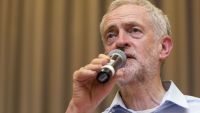
After the media reported in detail about both the Paris terrorist attacks and the aftermath over the weekend, several online users began to take to social media to complain that the same treatment hadn't been given to the terrorist attacks that recently occurred in Beirut and Ankara. Jeremy Corbyn was quick to join the cause, hitting out at the mainstream media in a television interview by accusing them of showing Euro-centric bias: 'Likewise, which didn’t unfortunately get hardly any publicity, was the bombing in Beirut last week or the killing in Turkey. I think our media needs be able to report things that happen outside of Europe as well as inside. A life is a life.' Happily, Corbyn is doing his best to remedy the situation.

Jeremy Corbyn is the political version of a creationist

From our UK edition

When Jeremy Corbyn says it is better to bring people to trial than to shoot them, he is right. So one might feel a little sorry for him as the critics attack his reaction to the Paris events. But in fact the critics are correct, for the wrong reason. It is not Mr Corbyn’s concern for restraint and due process which are the problem. It is the question of where his sympathies really lie, of what story he thinks all these things tell. Every single time that a terrorist act is committed (unless, of course, it be a right-wing one, like that of Anders Breivik), Mr Corbyn locates the ill as deriving from the behaviour of the West, especially the United States and Britain (and, where relevant, Israel).

France’s civil war…

From our UK edition

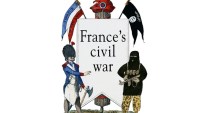
In the wake of the massacre in Paris, President François Hollande said that France was ‘at war’ — and that it must be fought both inside his country and outside in the Middle East. As the French air force began dropping bombs on Raqqa in Syria, another operation was under way in towns and cities across France: 168 raids in two days. A battle on two fronts has begun. Chartres cathedral is one of the great monuments of western civilisation, but Chartres was also home to one of the Bataclan theatre suicide bombers. A man from the same area died last summer in Syria, fighting for Isis. In Lyon, theraids turned up a rocket launcher. On Tuesday night, a large-scale counter-terror assault was launched in St Denis in Paris.

Jeremy Corbyn isn’t anti-war. He’s just anti-West

From our UK edition

[audioplayer src="http://rss.acast.com/viewfrom22/parisattacksaftermath/media.mp3" title="Nick Cohen and Freddy Gray discuss whether Jeremy Corbyn dislikes the West" startat=42] Listen [/audioplayer]Before the bodies in Paris’s restaurants were cold, Jeremy Corbyn’s Stop the War Coalition knew who the real villains were — and they were not the Islamists who massacred civilians. ‘Paris reaps whirlwind of western support for extremist violence in Middle East’ ran a headline on its site. The article went on to say that the consequence of the West’s ‘decades-long, bipartisan cultivation of religious extremism will certainly be more bloodshed, more repression and more violent intervention’.

Why I didn’t sing La Marseillaise last night

From our UK edition

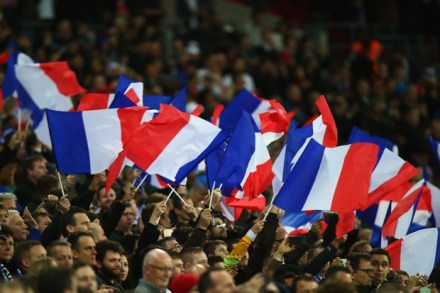
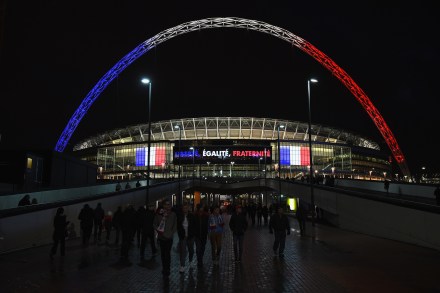
When Patrice Evra and the French national football team lined up at Wembley last night, it was a moment of poignant defiance which earned an instant place in sporting iconography. I shed a tear, but I didn’t sing La Marseillaise. When horrendous things like the attacks on Paris happen, our first instincts are to offer solidarity and what help we can. And, yes, to hit back. The night after the attack, France launched 20 separate air strikes on what it said were Isis strongholds in Syria. And at home, an extra 115,000 gendarmes were deployed across France, leading to hundreds of raids with dozens of arrests.  In the days following attacks on the West, there’s often a security snatch and grab, and this time was no different.

The England vs France match was a glorious response to terrorism

From our UK edition

Ain’t it rum? Last week sport was morally bankrupt, finished, no longer worthy of taking up an intelligent person’s time for a single minute. This week it’s shining out as one of the glories of the human spirit. And yet sport can cope with the contradiction quite effortlessly. It’s hard to know the worst thing in athletics right now, but it’s either the fact that Russia has been implicated in a state-run doping programme or the possibility that the former president of the sport’s world governing body is accused of taking bribes to cover it up. In football the acronym of Fifa, football’s world governing body, means corruption: nothing more, nothing less.

Theresa May: the Paris attacks ‘have nothing to do with Islam’

From our UK edition

On a day when Jeremy Corbyn has been making clear his concerns about both the government’s use of drones and any shoot-to-kill policy for terrorists on British streets, Theresa May’s statement on the Paris attacks was striking for the level of cross-party agreement. Andy Burnham paid generous tribute to the Home Secretary and pledged Labour’s support for her anti-terror crackdown. The only discordant note came on the question of police funding. Burnham aligned himself with Bernard Hogan-Howe’s warning that cuts of more than 10 percent to police funding would make it harder to keep the streets safe. May set out how the police here would ‘intensify’ their approach to big events in an attempt to prevent a Paris-style attack here.

The caliphate strikes back

From our UK edition

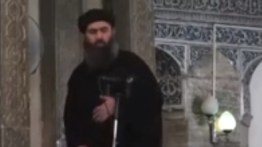
[audioplayer src="http://rss.acast.com/viewfrom22/jeremyhunt-scatastrophicmistake/media.mp3" title="Douglas Murray discusses what Isis might do next" startat=1814] Listen [/audioplayer]When the creation of a new caliphate was announced last year, who but the small band of his followers took seriously its leader’s prediction of imminent regional and eventual global dominance? It straddled the northern parts of Syria and Iraq, two countries already torn apart by civil war and sectarian hatreds. So the self-declared caliph, Abu Bakr al-Baghdadi, appeared to be just another thug and opportunist ruling over a blighted no-man’s land, little known and still less revered in the wider Islamic world.

Iran’s hidden war with the West – and what we can do to fight back

From our UK edition

When British troops were on patrol in Iraq and Afghanistan, we faced many enemies, from jihadis to press-ganged civilians. But for me, the most terrifying ones lay buried. Bullets usually miss. Improvised explosive devices – IEDs — don’t. They are frighteningly simple. Old munitions wired together or plastic bottles packed with fertiliser and ball-bearings could destroy a vehicle and kill its passengers. During my four years in Afghanistan I saw IEDs evolve: first came remote triggers, then pressure plates and then low-metal-content devices. Curiously, IEDs evolved in a similar way in Iraq. This should be no surprise, since the groups trying to kill British troops shared one common resource: Iranian support. For years, Tehran has armed insurgents.

Isis takes its British schoolgirl jihadis seriously. Why don’t we?

From our UK edition

When the first schoolgirls ran away to Isis I had some sympathy for them — at least, I could see how they’d been suckered in. The girls were young, daft, desperate for a cause. They’d nosed about online, and found the Twitter feeds of jihadi wives who sell Syria as a teenage paradise: all fast food, deathless love, martyrdom and shopping. Because I felt for those first schoolgirls, I kept following their progress, checking for them online as they set up in Syria, married, and began to tweet themselves. But as I followed them on social media, my sympathy soon turned to disgust. ‘Happy #9/11’ wrote young Zahra Halane, one of the twins from Manchester who fled to Isis last year. ‘Happiest day of my life. Hopefully more to come. InSha Allah #Is.

Government will not deny ‘kill list’ of Isis targets

From our UK edition

Does the government hold a ‘kill list’ of terrorists fighting for the so-called Islamic State who can be taken out at a moment’s notice? Michael Fallon certainly seemed to suggest so this morning on Radio 4, saying the government ‘would not hesitate’ to launch further attacks on those who posed a threat to this country. The Prime Minister’s official spokeswoman neither confirmed nor denied the existence of a list when asked about it. She said: ‘It means the government remains absolutely committed to doing what is necessary to protect British people here on the streets of Britain.’ Pressed on the existence of a list of names, she said: ‘It means that our approach is to protect us from that threat.

The spies we left in the cold

From our UK edition

When a terrorist group is active in the UK — as Islamist extremists and dissident republicans are at the moment — there is no more essential figure in the prevention of carnage than an agent working for the security services. Reliable intelligence is what defuses bombs, intercepts arms caches, and apprehends suspects. Its acquisition can involve unimaginable personal risks, in circumstances of nerve-shredding tension. We should all be grateful, but most of us never get to know what to say thank you for, or to whom. An agent’s success manifests itself in nothing happening. Its continued value depends on secrecy. Is MI5 grateful on our behalf? Well, it seems that gratitude for intelligence sources may come with an expiry date.

Letters | 30 July 2015

From our UK edition

What we’re building Sir: I was surprised and frustrated to read Ross Clark’s piece on housing associations in last week’s edition of your magazine (‘Stop moaning, start building’, 25 July). Surprised because it seemed to misrepresent the facts concerning housing associations, and frustrated because the analysis offered by Mr Clark ignores the key role that housing associations play in ending the housing crisis. Housing associations — which vary hugely in geography, size and function — have consistently supplied tens of thousands of new homes year after year. For example, last year they built 40,000 homes — a third of all new homes — and they matched every £1 of public investment with £6 of their own money.

The crackdown that backfired

From our UK edition

In October 2013, a jeep ploughed through a crowd of pedestrians on the edge of Tiananmen Square, crashed and burst into flames, killing five people. The authorities identified the driver as Uighur, a member of an Islamic ethnic minority hailing from China’s northwest region of Xinjiang. Six months later, eight knife-wielding Uighurs rampaged through a packed railway station in Kunming in southwest China, killing 29 people and wounding more than 140 others — an attack described by the national media as ‘China’s 9/11’. Beijing blamed both attacks on radical Islamist organisations pursuing what it calls the ‘three evils’: terrorism, separatism and religious extremism.

Je Suis Charlie? Even Charlie Hebdo has now surrendered to Islamic extremism

From our UK edition

Bad news from the continent.  In an interview with the German weekly Stern, Laurent ‘Riss’ Sourisseau, the editor-in-chief of Charlie Hebdo, announced that he would no longer draw cartoons of any historical figure called Mohammed. This follows his former colleague Renald ‘Luz’ Luzier saying a couple of months back that he would no longer draw Mohammed either. ‘Luz’ announced that he was leaving the magazine shortly afterwards. I don’t judge either of them for this decision. ‘Luz’ happened to be running late for work on the morning that the Kouachi brothers forced their way into the Charlie Hebdo offices and started shooting his colleagues.

Teenage terrors

From our UK edition

One of the great moments of my student life was opening the door and seeing visitors step back, shocked. I’d shaved my hair off to an eighth of an inch. It felt like velvet but looked spiky and hard. It was all down to Ulrike Meinhof, co-founder with Andreas Baader of the Red Army Faction, who’d just hanged herself in Stammheim prison, in Germany. My friends liked my haircut as we conflated Ulrike the martyr with images of a mullet-haired Jane Fonda raising her fist against the US army on behalf of the tortured Viet Cong.

The end of secrecy

From our UK edition

Gordon Corera, best known as the security correspondent for BBC News, somehow finds time to write authoritative, well-researched and readable books on intelligence. Here he explores the evolution of computers from what used to be called signals intelligence to their transforming role in today’s intelligence world. The result is an informative, balanced and revealing survey of the field in which, I suspect, most experts will find something new. He starts with an event that took place 101 years ago next month, when the British dredger Alert set off from Dover in the early hours to cut the German undersea telegraph cables.

Could the Taliban become a useful ally against Islamic State?

From our UK edition

For the better part of a decade, Nato forces fought a bitter war against the Taliban in Afghanistan, which claimed the lives of thousands of troops - including 453 members of Britain’s Armed Forces – and left thousands more seriously maimed by roadside bombs and other devilish devices. So it is perfectly understandable that anyone who has had the least dealings with this ugly conflict, from politicians to the families and friends of those who participated, should recoil in horror at reports that senior members of the Taliban are now actively participating in negotiations that could ultimately see them become members of the Afghan government.