Television

Netflix changes woke course after Chappelle attack

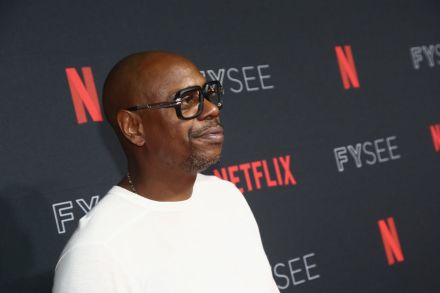
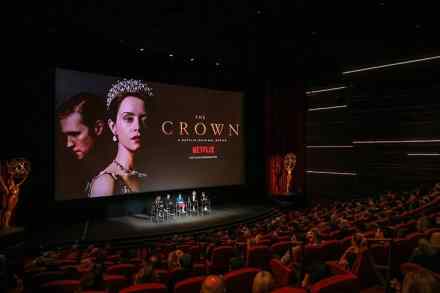
Cockburn has always said that when the going gets tough, the tough gets going…to a bar. But when the going gets tough for giant corporations — in this case, “tough” meaning $50 billion in lost subscriptions for Netflix — companies tend to get going in whatever direction will induce the mob to keep paying for their goods and services. Netflix has done just that by updating its “corporate culture memo” to let employees know they may have to work on material that triggers them. And letting them know if they don’t like it, they can leave. Over the course of the last several months, as he kept searching in a stupor for The Crown in the wee hours, Cockburn began to notice an increase in the amount of Netflix programming featuring in-your-face progressive messaging.

The BBC’s obsession with youth

From our UK edition

At long last the state of Oregon has got around to installing tampon machines in the male lavatories of its many schools. I have campaigned long and hard on this issue. It has always seemed to me grossly unfair that girls should be provided with this facility but the poor boys utterly ignored. The sense of shame that these young men must have felt when their monthly cycles arrived unexpectedly – and remember that many of them will be victims of ‘period poverty’. Now, though, thanks to the state’s chirpily named Menstrual Dignity Act, equality has been achieved and I will therefore turn my attention to another consequence of social injustice – the continued proliferation of parking spaces which are not designated solely for disabled persons.

Around and around the world

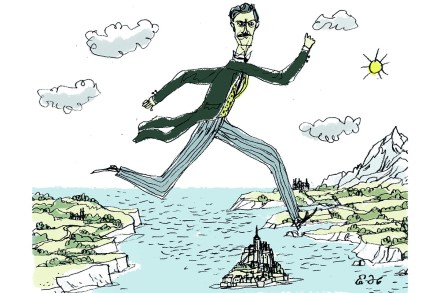
Kudos to Masterpiece’s new eight-part series Around the World in 80 Days, if only for nudging me to read Jules Verne’s original tale of an eccentric Englishman who sets out from London in 1872 on a strict deadline to girdle the globe, as well as to revisit Michael Todd’s Oscar-winning 1956 movie version. Bad translations and Disney movies long consigned much of Verne’s prodigious output to the realm of juvenile entertainment, in the popular mind anyway. Serious critics tell us that we should think again — that in a novel like Around the World in Eighty Days (1873) there is indeed a lot going on. The character of Phileas Fogg has layers beneath his serene reserve, as his passage around the world begins to reveal.

masterpiece around

Is this Premier Inn all I’ll be remembered for?

From our UK edition

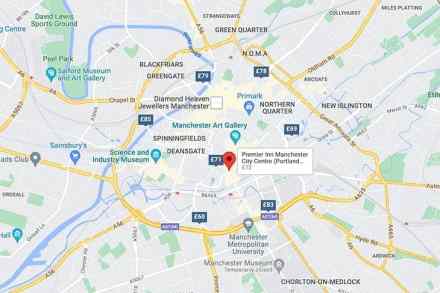
It’s fairly commonplace for people to wonder what, if anything, they’ll be remembered for. I’m going to be 59 later this year, so it’s been preying on my mind. Will it be the self-deprecating memoir I wrote about failing to take Manhattan? The schools I helped set up? The Free Speech Union? The answer, I’m afraid, is none of the above. I’ve just received an email from Google that has conclusively answered this question – and it’s not good news. According to the email, I added a location to Google Maps on 4 October 2017 that has been viewed 24 million times. Now, I might take some satisfaction from this if the place in question was a charming, out-of-the-way pub or an historic building.

How to watch YouTube on your TV – and why you should

From our UK edition

According to Pliny the Elder, Scipio Aemilianus was the first man to shave daily. The origin of the name Boeing is Welsh. The family emigrated to the US from Germany, where they were called Böing, but this was a Germanisation of the Welsh patronymic ab Owen. In Pembrokeshire there is a Church of St Elvis. Helen Viola Jackson, the last recipient of a US Civil War widow’s pension, died in 2020. Nothing beats videos produced by the obsessive for the obsessive At the time of the Napoleonic wars, France was the fourth most populous country in the world, behind only China, India and Japan, with double the population of the UK. The origin of the word ‘zydeco’ – to describe the Cajun musical genre – is uncertain.

Stop hating on celebrity politicians

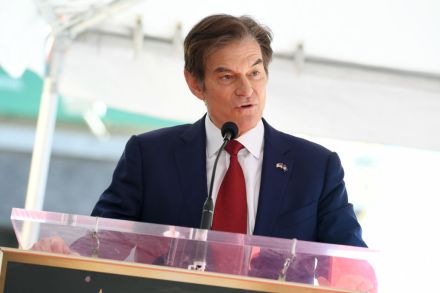
I recently had the chance to peek behind Dr. Mehmet Oz’s curtain, and what I saw made me view the TV doctor-turned candidate for Pennsylvania’s US Senate seat in a new light. As I waited for Oz to appear, I decided to take the pulse of the patient crowd. The first woman d’un certain âge (I’d estimate the average age in the room was 62 and majority female) said she was absolutely decided in her support for Oz. She enjoyed watching his show for years and came to the political rally more as a fan than a voter. But then she revised her unequivocal vote to say, “Well, if Trump endorses him. I’ll vote for whoever Trump picks. There’s no question.” The next person I talked to was of an identical demographic and also a big fan of The Dr. Oz Show.

The most disadvantaged group in Britain? White working-class men

From our UK edition

I’m not sure what to think about the BBC’s announcement that it wants a quarter of its staff to be from working-class backgrounds by 2027. On the one hand, I’m against hiring quotas of any kind and think every position should be filled by the person best qualified for the job. But on the other, if the BBC is going to have diversity targets – and fighting against them seems futile at this point – then this one seems better than most. The rationale for this quota, according to the BBC, is it wants its staff to ‘better reflect UK society’, but I’m not sure it will achieve that. The problem lies in the way the BBC has defined ‘working-class’.

‘Slow Horses’ is thriller television at its best

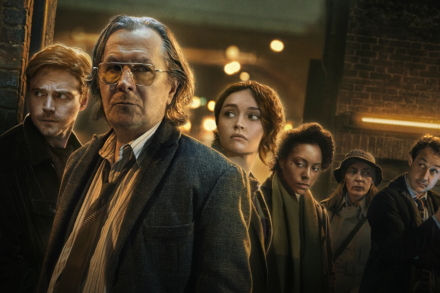
It may come as a surprise to anyone who has read Mick Herron’s peerless Slough House novels, but Slow Horses, Apple TV’s high-profile adaptation of the first book in the series, is not funny. Instead, it takes Herron’s uproariously comic premise — that a group of misfit British spies, cast out of MI5 for misdemeanors exaggerated and accurate alike, have been reduced to grubbing about in a grim office on the periphery of the City of London — and plays it almost entirely straight. Gone are the laugh-out-loud one-liners and endearingly witty pieces of throwaway badinage. Instead, we have a big-budget spy thriller, polished and scripted to within an inch of its life. It’s a bit like seeing the Fresh Prince of Bel-Air reinvented as a gritty urban drama.

horses

The day I nearly brought RT down

From our UK edition

It is interesting to watch Ofcom finally remove the broadcasting licence from the Russian propaganda channel Russia Today (RT). I almost managed to do the job myself about 12 years ago. Back in the 2000s, a number of bad regimes were rushing into the broadcasting space to try to give themselves a better international image. The Chinese Communist party set up a London branch of its state television network called CCTV, apparently unaware of the hilarity this would cause in the English language. Meanwhile, the Iranian government started PressTV to push the ayatollahs’ views of the world. It set up its propaganda channel from a roundabout on the Hanger Lane gyratory system, proving again that totalitarian regimes are not always brilliant.

Volodymyr Zelensky’s sitcom is now as sad as it is funny

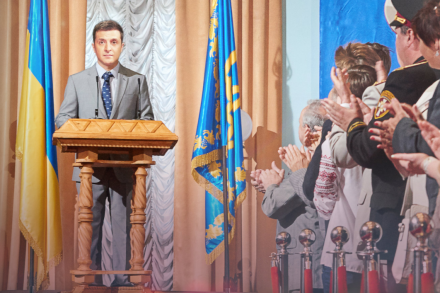
There are few world leaders braver than Volodymyr Zelensky. Ukraine's president spends his time holed up in his capital, defending his homeland from an onslaught of invading Russian troops. He's addressed every major parliament in the West to plead for weapons and aid. Joe Biden calls him weekly; Emmanuel Macron has started to dress like him. Given his present international standing, it's incredible to think that just six and a half years ago, Zelensky was settling down to watch himself play the president of Ukraine in the premiere of Servant of the People, the sitcom which set the stage for his political career.

Reality bit

If a single television genre defines the twenty-first century so far, it is the reality show. These relatively low-budget and therefore lucrative unscripted programs often feature people competing to survive in the most hostile environments imaginable — and those are just the series about the Kardashian family. Many such shows are lowbrow entertainment at its most bingeable, the visual equivalents of a bag of potato chips: “I can’t believe I watched the whole thing.” Danielle J. Lindemann, a sociology professor at Lehigh University and an avid reality television fan, would probably agree with at least some of that description, but she would add that these shows are also quite instructive.

reality

The unseen Victoria Wood

From our UK edition

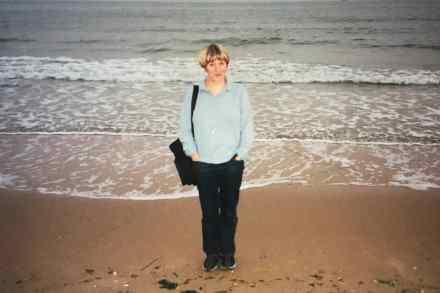
For a few years now I have been living with Victoria Wood. That sounds all wrong, obviously, and yet no more apt phrase suggests itself. Not long after her death I was invited to write her authorised biography, and in due course a vast collection of documents was delivered to my address. Packed into storage boxes, which I stacked in corners and stuffed under beds, her intellectual legacy became a physical fact. It was in sifting through this remarkable archive that I started to come across work — masses of it — that had never seen the light of day. At its core was a stash of 100 television sketches.

Sky Sports is ruining my football season

From our UK edition

When I promised my 13-year-old son, Charlie, that we would go to as many QPR games as possible in 2021-22 to make up for not going to any last season, I hadn’t anticipated that the match schedule would be in a constant state of flux thanks to the capricious, all-powerful tyrant that is Sky Sports. It makes trying to plan your life more than a few weeks ahead impossible. For instance, I booked an eye-wateringly expensive three-day break for the whole family in Margate from 27 to 30 December, meaning we would be in London to watch the Boxing Day fixture against Bournemouth at home and miss only one game on 29 December.

In blockbuster Britain, the BBC is being left behind

From our UK edition

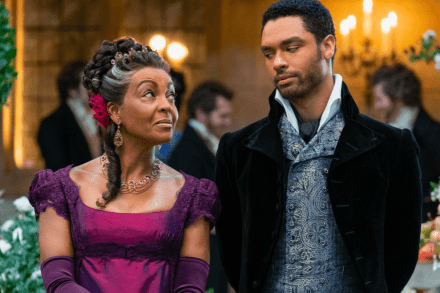
There’s a great revival under way in the British TV and film industry, but it’s not the BBC that’s behind it. Netflix is normally secretive about its figures but this week published a list of its most popular shows and top of the pile is Bridgerton, which imagines Regency London as a racially mixed society. Although funded with US money, it is shot in Yorkshire with a British cast, using British technical know-how, and, thanks to Netflix’s global audience of more than 200 million, this British show has now become the most-watched series in the history of television. Not so long ago, it was argued that subscription television would never work in Britain because we had all the broadcasting we could wish for.

The BBC is being left behind in blockbuster Britain

From our UK edition

There’s a great revival under way in the British TV and film industry, but it’s not the BBC that’s behind it. Netflix is normally secretive about its figures but this week published a list of its most popular shows and top of the pile is Bridgerton, which imagines Regency London as a racially mixed society. Although funded with US money, it is shot in Yorkshire with a British cast, using British technical know-how, and, thanks to Netflix’s global audience of more than 200 million, this British show has now become the most-watched series in the history of television. Not so long ago, it was argued that subscription television would never work in Britain because we had all the broadcasting we could wish for.

My literary heroes have led me astray

From our UK edition

Gstaad   Good manners aside, what I miss nowadays is a new, intelligent, finely acted movie. Never have I seen so much garbage as there is on TV: sci-fi trash, superhero rubbish, dystopian crap and junk about ugly, solipsistic youths revolting against overbearing parents. The director Jimmy Toback blames the subject matter for the lousy content, driven as it is by the need for diversity. I think lack of talent is the culprit. The non-stop use of the F-word is a given in Hollywood productions. Combined with constant violence, it makes for a lousy and unwatchable film.

The must-see shows on Netflix this autumn

From our UK edition

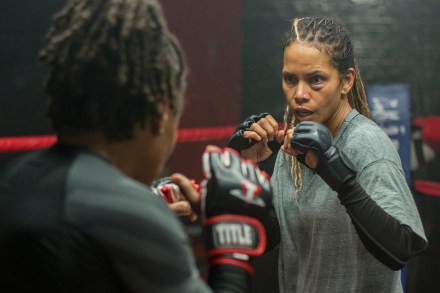
As the nights start to draw in, it will be up to the likes of Netflix to provide that lazy autumn entertainment. Here’s our pick of what’s coming up on the streaming service over the next few months: Bruised, 24 NovemberImage: Netflix Two decades on from her star turn as a Bond Girl in Die Another Day, Halle Berry makes her debut in the director’s seat with her first feature film. Bruised tells the story of a scandalised cage fighter on a mission to restore her name and rebuild a relationship with the son she abandoned years earlier. Not content with just calling the shots, Berry also stars in the film too: managing to break two ribs in the process. Last year, she told one interviewer she had been pushing through the pain to get the project finished on time.

Perry Mason was America’s Sherlock Holmes

I was well into my thirties when my parents acquired a television set, for no good reason that I could discern after they’d gone so many years without one without obvious damage to their health or intellects. Growing up in the Fifties and Sixties, my sister and I were permitted to watch two television shows while visiting with relatives. One was Topper. The other was Perry Mason, which they occasionally joined us for: a small family grouping that was the closest thing the Williamsons ever came to resembling a painting by Norman Rockwell. Over the past year and a half, I have been re-watching episodes of the original show starring Raymond Burr as Mason, Barbara Hale as Della Street, William Hopper as Paul Drake, Ray Collins as Lieutenant Tragg and William Talman as Hamilton Burger.

mason

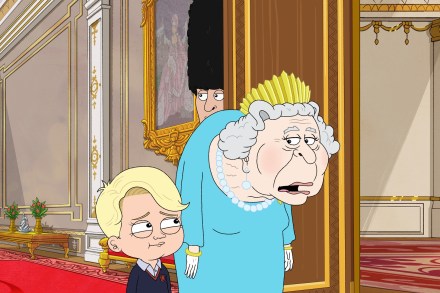
HBO’s The Prince should leave George alone

From our UK edition

Last year Netflix refused to add a disclaimer to the beginning of every episode of The Crown, warning viewers that it is part fiction. HBO Max’s new cartoon The Prince, however, had no choice: the series has been sitting on the shelf so long that it was out of date before it was even broadcast, so every episode bears a warning that ‘this isn’t really the royal family. It’s like, a parody, or whatever. And certain recent events will not be reflected in this programme.’ The streaming service’s new cartoon comedy (if one can call it that) is based around an imagined child’s-eye-view of life in the palace. The protagonist is eight-year-old Prince George.

Modern soap operas have lost the plot

From our UK edition

I have Asperger’s syndrome and since childhood have been watching TV soaps: mainly EastEnders and Neighbours. I found classic EastEnders from the 1980s and 1990s highly reassuring during a dark time in my life three years ago, and in lockdown. I would say, though, that in recent years these two soaps have gone downhill. They are more staged, the storylines less intriguing and the themes exaggerated. They don’t seem to be about everyday life any more. In the EastEnders of the 1980s and early 1990s you could relate wholeheartedly to the characters and reflect on their behaviour. You would feel they were real, and also that they were part of the real life of the East End.