Television

Ten underrated thrillers

From our UK edition

As we are now well into the unwanted Lockdown sequel and winter approaches, time perhaps to enjoy an enforced home cinema experience with a selection of movie thrillers that you may have missed the first time round. Titles range from big budget star vehicles to smaller scale pictures that introduced us to some of the possible on and off-screen icons of tomorrow. The Coldest Game (2019) – Netflix https://www.youtube.com/watch?v=12DftzVD2Gg I came across this Polish-produced Cold War thriller one night when searching for movies similar to Bridge of Spies (2015).

The best Scandi Noir to watch this winter

From our UK edition

With the dark evenings rolling in and the headlines sounding gloomier than ever, what better way to enter winter than by getting stuck into a good Scandi noir? Once the preserve of late nights on BBC Four, the genre has become a bankable success for streaming services - and a source of friendly(ish) competition between the Nordic nations. Here are eight of the best recent offerings currently available on Netflix: Bordertown https://www.youtube.com/watch?v=DjOFzeVynVY Brooding crime drama Bordertown has attracted praise from such luminaries as horror supremo Stephen King, as well as smashing viewing records in its native Finland.

In defence of Emily in Paris

From our UK edition

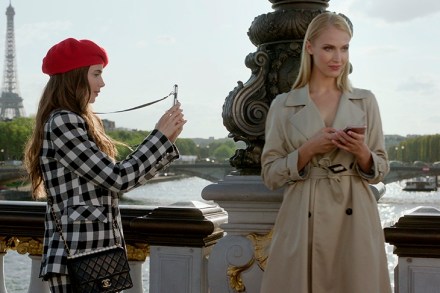
A frothy new drama called Emily in Paris arrived on Netflix last month. Starring Lily Collins — daughter of Phil — it tells the story of a pretty social media ‘expert’ who moves from Chicago to Paris, where she manages to offend almost everybody she meets, and yet somehow triumphs. It is Eloise in Paris for the Instagram/Trump generation. The show is a croquembouche-esque fantasy of Frenchness. Anorexic-looking chicks eat croissants and pretend to enjoy them. There are pre-war apartments with parquet flooring, and windows decorated with twinkling fairy lights. The men are handsome bastards who know how to cook omelettes.

Spare us David Hare

From our UK edition

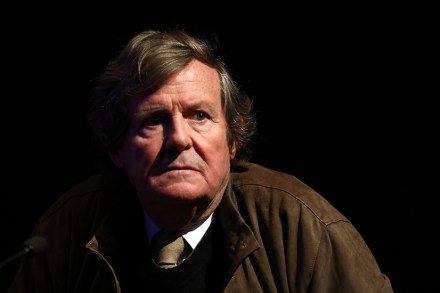
Having not watched television for nine months and already growing bored of the 1,000-piece jigsaw of General Alfredo Stroessner (part of the ‘Vigorous Leaders’ range from Waddingtons), my wife suggested — for a novelty — that maybe we should take in the new political thriller starring Hugh Laurie, called Roadkill. We have fond memories of Laurie from previous dramas and are both mildly interested in politics, so it seemed an agreeable idea. ‘What side is it on?’ I asked, with a note of warning. ‘BBC One,’ replied the missus, and we looked at each other glumly and I said: ‘Oh Christ. It’ll be a woke BAME-athon.

The end of the line for the rail franchise fiasco

From our UK edition

Good riddance to the passenger rail franchise system which has finally been killed off by Covid, though a majority of the travelling public might say it should long ago have been put out of its — and, more pertinently, their — misery. The complex scheme to privatise British Rail launched by the Major government in 1993 defied those who said it couldn’t be done and was designed by the Treasury to maximise proceeds to itself. In doing so, it fractured the industry into a myriad of separate owners, operators and service providers that rarely worked in harmony or created competition for the benefit of users. The consequences of this structural fiasco were as random as they were unsatisfactory.

The bluff and bluster of Boris’s bland boy Brexiteers

From our UK edition

From the balcony where I take my daily exercise there is a view of the commercial centre of London that is so susceptible to changes of the light you feel you are in a different city every day. When the dying sun is reflected in its glass towers, the city looks like Las Vegas burning. Under a dark sky it could be Pittsburgh. The other day was so louring that I saw Moscow. ‘I’m looking at the Kremlin,’ I shouted in to my wife. She’s been worrying about me. She thinks it’s time I relaxed the promise I made myself not to go out until the virus has gone and the world is more to my liking. ‘You’ll have a long wait,’ she says. She knows I’m being ironical.

There’s nothing normal about getting nude on set

From our UK edition

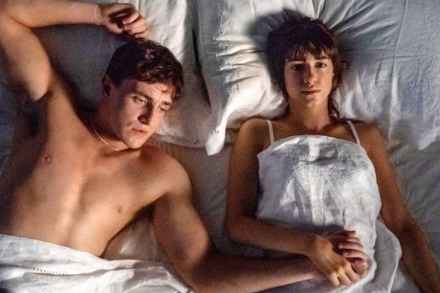
I remember how I felt the first time I saw Daisy Edgar-Jones’ nipples. Sitting on my sofa at home during lockdown, watching the BBC Three adaptation of Sally Rooney’s prize winning novel, Normal People, my jaw dropped as Edgar-Jones casually stretched an arm above her head, her bare chest fully exposed towards the camera. “She’s so brave!” I shouted out of nowhere, at my boyfriend. “What?” he replied, eyes glued to the screen, lost in his own (potentially quite different) stream of thought. Whilst both Edgar-Jones and Paul Mescal appear in the nude throughout the series, it was Edgar-Jones’ full frontal nakedness in particular that shocked me.Having worked on film and TV sets when I was her age, I know how tough it is.

Movie-makers should look to the Athenians before cashing in on this crisis

From our UK edition

Covid-19 has not yet reached its peak but already the moguls of the small screen are plotting how to monetise, with exquisite sensitivity, of course, the tragic deaths of thousands of people. They would be wise to listen to the Athenian lovers of tragedy. In 499 bc the powerful Greek city of Miletus on the coast of western Turkey (Asia Minor) raised a revolt against its Persian overlords. It failed and in 494 bc Persia took its revenge: the city was sacked, its women and children sold into slavery, and most of its men slaughtered. Just a year or so later, the poet Phrynichus turned this historical incident into a tragedy, our first record of such a development. It was not a success.

The next American revolution will be televised

Is America becoming a developing country? We’re seeing increasing evidence of reverse convergence. We used to think that the developing world would in time become like America, but it now seems that the United States has developed an emulation complex of its own. What has not been explained are the reasons. In some fundamental areas America does resemble a traditional society, with its belief in transcendence and its quaint ways of enforcing justice and delivering public goods. The US executes prisoners on a scale matched only by China, Iran and Saudi Arabia. Guns are more readily available than in Pakistan and more than half of Americans pray every single day. No other state spends so much money on health care, yet Americans’ life expectancy keeps falling.

trump television

How I fell out of love with the BBC

From our UK edition

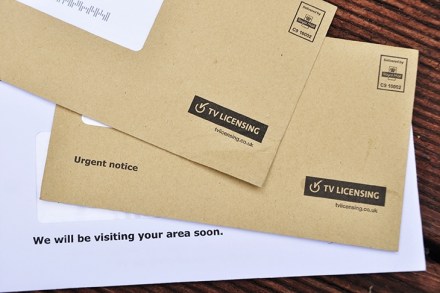
One of the many technological things I don’t understand is, how come I’m paying to watch television? I know why I used to pay. I used to switch on a box in the corner of the room and marvel at the choice of three quite interesting programmes and something slightly racy on Channel 4. It was all reassuringly underwhelming, with everyone doing as well as could be expected given the circumstances. The cardboard sets on a lot of the shows wobbled and we were happier for it, one could argue. There was an obvious balance of earnestly attempted light entertainment and archly presented informative content and I for one didn’t mind paying a fee to the BBC for this arrangement because the BBC was providing precisely 50 per cent of it.

Why the BBC licence fee makes sense

From our UK edition

A consensus seems to be forming that the BBC licence fee is for the chop. In a digital age, the reasoning goes, we should not be forced to subscribe to huge bundles of content, with no choice over what we pay for and what we don’t. This argument, intriguingly, is both true and false at the same time. It is worth remarking that Netflix and Spotify succeeded by adopting a very similar model to, er, the BBC What’s true is that technology has removed two constraints which made the licence fee necessary in the first place. At the BBC’s outset, the airwaves were limited, creating a monopoly. Moreover it was impossible to charge for specific content: anyone with a wireless set could freely enjoy anything on air. Other than advertising, a licence was the only option.

Are viewers falling out of love with the Trump presidency?

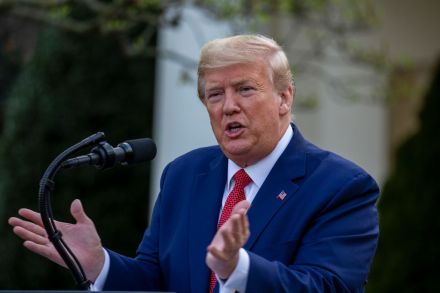
Trump: The Presidency began airing in January 2017 on CNN, MSNBC, FOX and every other television channel in the free and unfree world. Immediately drawing favorable comparisons with blockbuster sagas like Game of Thrones and The Sopranos, T:TP soon overtook them in prominence and popularity. But as the hit show’s ratings tumble in its third year, and with key contracts up for review in 2020, it’s time to ask a question that was unimaginable even two years ago. Are viewers falling out of love with the media’s favorite show? Whether you loved or hated Trump: The Presidency, whether you came to it for comedy or tragedy, one thing above all could not be denied about the show: it was unmissable television. It wasn’t simply that everyone talked about it.

viewers trump presidency

Russell Baker and Masterpiece Journalism

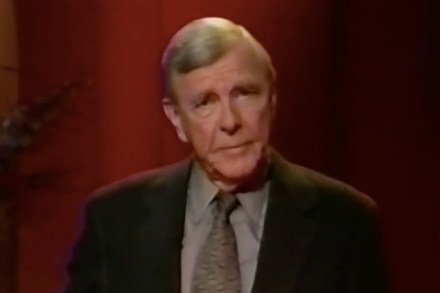
The one program worth watching on PBS isn’t made by PBS. It’s Masterpiece on Sunday nights, and the masterpieces are British-made. PBS puts in a small amount funding before filming starts, then packages the variable results with a flourish of Baroque music and a spoken introduction. Since 2009, this address to the nation has been delivered by Laura Linney, affecting the gown and breathlessness of a Henry James ingénue about to attend a ball in old Vienna. Earlier speakers included Alastair Cooke, and Russell Baker, who died yesterday at 93. Baker and Cooke were writers, not actors.

russell baker masterpiece