Television

The deeply human Walking Dead

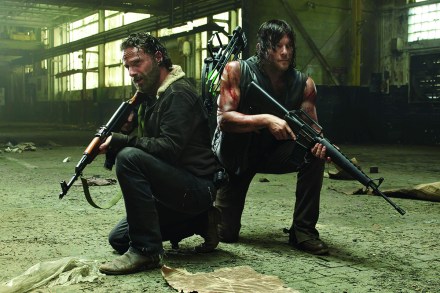
It was the middle of July 2007. The dead-summer streets of Phoenix, Arizona, were fairly smoldering, so I went into a comic-book shop to beat the heat. I was shipping out to Iraq with the Marine Corps in two days and needed something to distract me. Indulging in a bit of casual melodrama, I asked the half-stoned employee behind the desk what he would read if he had two days to live. Without a second’s pause, he gave a knowing smile and said: “The Walking Dead, man.” Robert Kirkman never expected his comic to turn into the dominant media phenomenon it has become over the past two decades. But nerd culture has a funny way of jumping the bridge into mass media.

walking dead

I think I’ll sue over my appearance in Sky’s Boris drama

From our UK edition

There on my television screen, in a somewhat surreal sequence, was Boris Johnson contemplating the women in his life. And suddenly before me appeared the famous Wyatt features: first eyes, then a nose and then a mouth, right into camera. Medium-range shot and then a close-up. Ah, we had faces then. And then I looked harder, and my blood turned to Freon. It was just a large photograph of me stuck on a 10ft projector screen. Couldn’t those cheapskates at Sky have got a goddamn actress instead of a Polaroid?  As it turns out, This England, the Kenneth Branagh series about my old friend Boris, is more Psycho than psychodrama. Someone in the make-up department seems to have thought they were remaking What Ever Happened to Baby Jane?

Sky’s Boris Johnson drama has a fatal flaw

From our UK edition

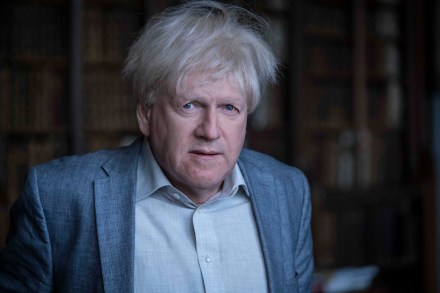
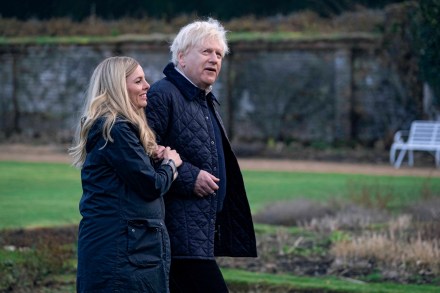
You almost have to feel sorry for Sky. After spending 18 months building up to their big Boris Johnson drama, they end up releasing it at exactly the same time that British politics enters its own cliffhanger mode with drama that could rival any season finale. This England – which tells the story of the start of Johnson’s premiership and the first wave of the Covid crisis – begins tonight on Sky Atlantic, starring Kenneth Branagh as Johnson and Ophelia Lovibond as Carrie. But should Sky have known better than to air it now? Generally the best real-life dramas follow a simple rule of thumb: time is on your side. Rather than rush out your first draft of history, much better to wait until the dust has settled – even if you do have Branagh on board.

In defence of Amazon’s The Rings of Power

From our UK edition

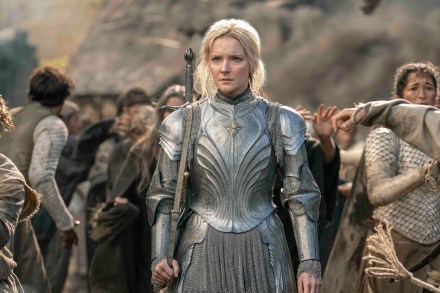
Why is Amazon’s new Lord of the Rings show taking so much flak? The way I see it, there are two (mostly separate) factors at play: Tolkien fandom and race. First, Tolkien fandom. Despite the best efforts of the Tolkien Society to 'queer' Tolkien studies, the Inkling’s biggest admirers tend to be Christians on the cultural and political right. Most of this crowd (aside from those who think hating universally beloved things is a good substitute for a personality) loved Peter Jackson’s Lord of the Rings trilogy. His adaptation of The Hobbit, which took plenty of liberties in order to stretch about 300 pages into three feature films, was less well received.

Why do bankers love techno?

From our UK edition

Bankers and other assorted finance bros are an inescapable presence on the London nightlife scene. Industry, the British-made TV drama that follows a group of graduates on (and off) a City trading floor, begins its second series on BBC1 tonight and spares no detail of the drug-fuelled hedonism of its young bankers. One plot arc in the first series starts when the protagonist, exhausted after a long night on the powder, executes a trade in the wrong currency. Some in the field have protested that the on-screen excess is unrealistic. But much of it is apparently inspired by real-world experience. Mickey Down, one of Industry’s creators, spent just over a year working at Rothschild at the beginning of the 2010s.

The enduring brilliance of Mad Men

From our UK edition

If you were one of the many millions who watched Top Gun: Maverick this year, it may have been a pleasant surprise to see Jon Hamm in the (admittedly thankless) role of Vice Admiral Simpson, who has to look stern and angry at the various transgressions committed by Tom Cruise’s protagonist. Hamm has been cornering the market in these sorts of roles thanks to his appearance of square-jawed rectitude. He is a natural fit for FBI agents, police detectives, and, indeed, vice admirals. But it was a different kind of vice altogether that he followed in his best-known and most beloved role, that of the dynamically charismatic – yet entirely fraudulent – Don Draper, advertising executive extraordinaire in Matthew Weiner’s cult series Mad Men, which was first broadcast 15 years ago.

Why must film delight in making us feel stupid?

From our UK edition

‘What did the rampant chimp have to do with any of it?’ I squawked in bewildered disappointment to a friend at the end of Nope, the long-awaited third film from Oscar-winning writer-director Jordan Peele. I had hastened in great excitement to see Nope on the first day of its cinema release, hoping for a work that would rival Peele’s sparkling debut Get Out in its idiosyncratic mash-up of razor-sharp social commentary and horror. Instead, I paid £14.20 to sit through 130 minutes of barely explained peril that were resolved in a manner that was even less clear. Peele, I concluded sadly, had crossed over to the dark side of artists who appear to believe that it is fashionable to be incomprehensible.

The problem with Netflix’s Indian Matchmaking

From our UK edition

On a recent trip from London to New Delhi, I found out that an acquaintance I see once or twice a year had pulled out of her wedding just 24 hours before the ceremony. An almighty row? Infidelity? Good old-fashioned cold feet? No – her family had simply decided they weren’t happy with the groom and decided to pull the plug. Welcome to the world of arranged marriages. As a woman who was born and grew up in India, arranged marriages – those planned and agreed by the families of the couple, rather than due to the romantic inclinations of the couple themselves – have never made sense to me. But they remain the norm in many South Asian communities. In a 2018 survey of more than 160,000 Indian households, 93 per cent of married couples said theirs was an arranged marriage.

The time trap of Irma Vep

In April, director Robert Eggers told GQ that “every time period interests me except for the one we’re living in.” The director of The Witch, The Lighthouse and The Northman will never make a movie set in modern times: “I get enough of the kitchen sink in my kitchen sink... For whatever reason, it just does not inspire me. And you can’t shoot something that doesn’t inspire you.” That’s a good attitude for a director to have, but it’s alarming how many American filmmakers are either uninterested, unwilling or unable to make work that speaks directly, not only to our present moment, but to our future and its possibilities, however limited and grim. Who can blame anyone for being hopeless now?

irma vep

The utter misery of BBC’s Marriage

From our UK edition

‘Who are these people and why should we care about them?' This is the most important question any screenwriter must ask before committing pen to paper. Sadly it's a question I failed to come anywhere near answering during the interminable 'realism' of the BBC’s much discussed (and much praised) Marriage. Sean Bean and Nicola Walker play Ian and Emma, an uptight midlife couple caught in the tedium of marital graft after 27 years together. The four-part 'drama' has been widely commended for showing the profound inanity of ordinary people's domestic lives. While I consider myself to be pretty ordinary, I failed to recognise either of these dullards as anything other than famous actors trying to appear real and failing miserably.

Game of Thrones was the last water cooler show

I realize this is an unpopular opinion, but I actually didn’t hate the ending of Game of Thrones. Sure, the showrunners fumbled some of the character arcs and made some odd decisions (King Bran? Really?). But the broad thematic arc of the series was perfect. Daenerys’s dark turn into madness and mass murder and the subsequent destruction of the Iron Throne served as a hopeful proclamation that, even in our bloody, jaded, pornified world, the true faith lives on. The show understood, on some level, that neither the ideal redistribution of power nor its unfettered aggrandizement could ever be our salvation. Martin made his name as the anti-Tolkien, but it was all a ruse. If his intentions were truly insidious, his story would “look fairer and feel fouler.

In praise of Jodie Comer

From our UK edition

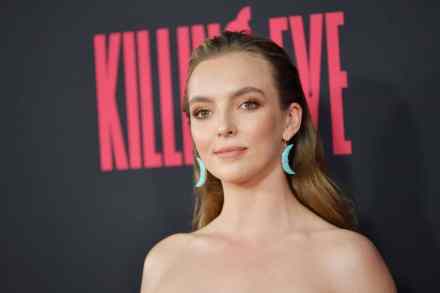
She’s got all the trappings of superstardom: killer looks, a clutch of awards and £4.5 million in the bank. But mention ‘Jodie Comer’ to your friends and you’re bound to get a few blank stares. The British actress, best known for playing super-stylish assassin Villanelle in the BBC series Killing Eve, has yet to become a household name. And, like many in her growing legion of fans, I want to know why. This month I saw Jodie, 29, in Prima Facie, her debut West End play. It’s a masterpiece of a monologue in which she confronts gruelling issues including sexual assault, misogyny and bias in the criminal justice system – and she was nothing short of astonishing. When the curtain fell, I could barely speak.

Is Netflix losing the battle of the streaming giants?

From our UK edition

From time to time, Netflix’s marketing brains like to get a bit cute with the company’s past. ‘Don’t give up on your dreams – we started with DVDs,’ read one recent viral post. But while the streaming giant happily references its most famous transition, it’s much more coy (and probably wisely) when it comes to its latest one. It isn’t hard to see that 2022 Netflix is a very different beast to the one most of us signed up for. If you joined Netflix during its peak – e.g. somewhere in the long window between House of Cards and Tiger King – you would have likely bought into the idea of it being a one-stop shop for all things streaming. But has it really kept that promise?

The quiet end of the Golden Age of television

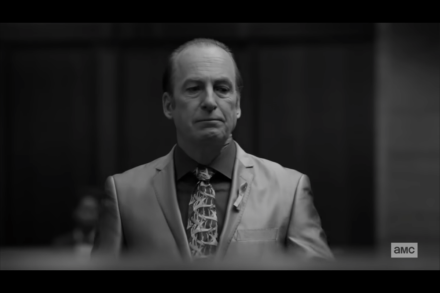
This week's finale of AMC's Better Call Saul represented a quiet end to the Golden Age of Television. It's a fitting end for Prestige TV — marked by lavish sets, sex, violence and episodes as expensive as feature films — to end with a small black-and-white ode to a spin-off. Bob Odenkirk's performance as Jimmy McGill/Saul Goodman, a pivotal bit character in Breaking Bad a decade ago, was marked by over-the-top colorful courtroom flair, but it ends with somber black-and-white drama and a quiet prison cell, serving almost as a muted on-screen act of penance for all that came before.

prestige tv golden age television better call saul

Charlie Rose, comeback king

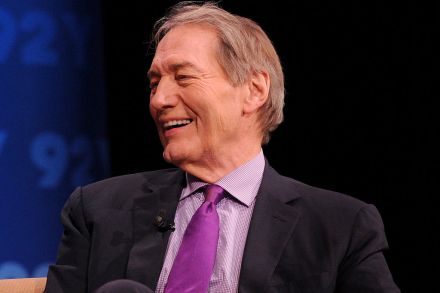
For some of us, Charlie Rose serves the same function as Proust’s madeleine. His eponymous public television interview program, which began airing in 1991, was a fixture of the pre-millennium media landscape, a halcyon age in which newspapers carried the news, Amazon was a mere purveyor of books, and “woke” referred to a state of wakefulness rather than political correctness. Such nostalgia augurs well for the carefully managed reemergence of the disgraced broadcaster, who has ended his exile with new conversations thrown up on his website, charlierose.com. But we’re getting ahead of ourselves. Five years ago, Rose — by then, also the co-host of CBS This Morning — first became the subject of sexual misconduct allegations.

Boris, Sherwood and the politics of the past

From our UK edition

It feels like the end, but we’ve been here before. The past months of Boris Johnson’s teetering administration have felt like the final act of a Shakespearean tragedy and yet the curtain just won’t fall. This week saw one of those rare electric nights of drama when a prime minister looks set to be toppled. At least, they used to be rare. In the first 25 years of my life I had only three prime ministers. The past chaotic decade looks to be about to produce its fourth. The axe hovered in the air for Johnson, but was prevented from falling – at least at the time of writing – by Nadhim Zahawi, the MP for Shakespeare’s Stratford-upon-Avon, denying us the climax. The question many have is – why?

A masterclass in evenhandedness: James Graham’s Sherwood reviewed

From our UK edition

James Graham has made his considerable name writing political-based dramas of a highly unusual type: non-polemical ones. And this certainly applies to his television work as well as his stage plays. Coalition (about the 2010 Conservative-Lib Dem alliance) and Brexit: The Uncivil War (which gave Dominic Cummings the signal honour of being played by Benedict Cumberbatch) both went so far as to suggest that most politicians try to do the right thing. Even when he abandoned politics to supply the lockdown hit Quiz, Graham’s unfashionable commitment to centrism remained. Rather than taking sides on the ‘coughing major’ scandal, he extended sympathy and understanding to all involved.

I’m a tourist in my own town

From our UK edition

‘Just when I thought I was out, they pull me back in,’ groans a weary Al Pacino in The Godfather III. This is what it feels like being in/out (I’m not sure which) of the Sex Pistols. Oscar-winning director Danny Boyle has filmed a six-part drama about the life and crimes of my childhood buddy and Pistols guitar hero Steve Jones, based on his autobiography Lonely Boy. So, here we go again with endless rounds of interviews, with such profound questions as, what was Sid/Malcolm really like? Why is Johnny so angry? Will you ever play again? No! First off, it’s New York for the drama’s US premiere, courtesy of Vanity Fair. Not very punk I know.

Ricky Gervais, Netflix and clickbait controversy

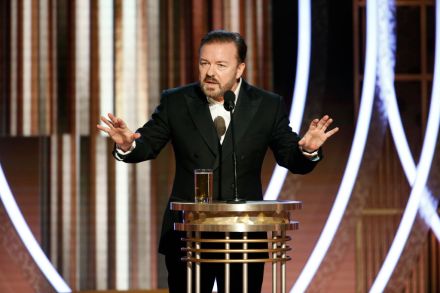
Ricky Gervais has caused a stir. This is not, perhaps, the least expected thing you could hear about the sixty-year-old British comedian, but his new Netflix show, SuperNature, has attracted an unusual amount of opprobrium for what people have perceived as anti-trans jokes. In the show, Gervais makes a distinction between “the old-fashioned women, the ones with wombs” and “the new women... with beards and cocks.” He calls upon the latter to “lose the cock,” and the audience laughs along with him hysterically.

ricky gervais

Changing channels: the new war for political broadcasting

From our UK edition

It’s hard to step outside nowadays without being confronted with a massive picture of Piers Morgan. In the adverts for his new TalkTV show he can be seen crushing the House of Commons in his hands or pointing to an address for the channel’s complaints department. ‘Love him or hate him,’ the adverts declare, ‘you won’t want to miss him.’ Actually, it seems, people don’t mind if they do. At the last count, barely 40,000 tuned in. In contrast, Morgan’s final appearance on Good Morning Britain drew almost two million viewers. So what’s going on? One answer is that TalkTV, like any new channel, will take a while to establish itself.