Tel Aviv

Iran attacks Israel: what does it mean and what happens next?

A few hours before Iran launched missiles at Israel, America’s spy satellite saw Iran moving the weapons onto their launching pads. They told Israel (and leaked to the media) that an attack was “imminent.” They were right. Within hours, several hundred Iranian missiles were flying toward the Jewish State, just as they had in April. The earlier attack caused little damage — most of the missiles were intercepted — and early reports are that the recent attack met the same fate. Israel’s success shooting down the missiles is crucial, not only because it saved lives but because it does not require Israel to launch a full-scale counter-attack. Safety from the missiles did not protect all Israelis, though.


With Israel, the US is caught in a world of contradictions

Ever since a 2,000-pound bomb demolished Hezbollah’s headquarters in Southern Beirut last Friday and killed Hassan Nasrallah, the leader of the organization since 1992, there was an expectation among the commentariat that Iran would retaliate. The scope of that response, however, was very much in dispute. The Iranian government was reportedly divided about whether to respond at all, with the newly-elected president, Masoud Pezeshkian, taking the position that an attack against Israel would likely ruin his foreign policy agenda — he offered the West the thinnest of olive branches during his time in New York for the UN General Assembly meetings — and give the Israeli government an excuse to strike inside Iranian borders.

Inside the real Israel

Tel Aviv Like most people, and most Jews, I’ve been experiencing the war in Israel and Gaza from thousands of miles away. I spent the weeks after October 7 with my face glued to my phone, rather than hiding in a shelter as rockets flew above. I experienced every wave of despair, every GoPro atrocity, every moment, hours away in another world; one that wasn’t directly affected by the chaos but was still consumed by it anyway. When the kibbutzim were being destroyed by gleeful Hamas militants, I was at a wedding in Barcelona. When Israel started to fight back, I was safely at my desk doing my work emails, ensconced in the security of distance.

Jerusalem israel

No nonsense in the kitchen

From our UK edition

I rather bristle at newspaper column collections. They strike me as a bit lazy, a cheat’s way of getting another book under the belt, often just in time for the gift-giving season. When it comes to Rachel Cooke’s Kitchen Person, however, I have to eat my words. It draws from the 14 years of monthly food columns Cooke wrote for the Observer from 2009. Each comes with a postscript from the author looking back on her thoughts at the time, ensuring that the pieces hold their own as a collection, as something cohesive. You sit down to read one essay, and look up 75 pages later. The tone, too, is instrumental in achieving this.

Remembering Dido – and the fate of Carthage

From our UK edition

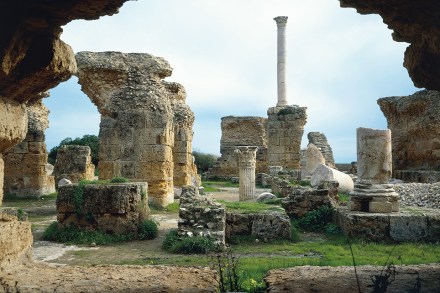
It is a curious fact that between the foundation of Tunis by the Arabs in the 7th century and the foundation of Tel Aviv in the early 20th century no major cities were created on the shores of the Mediterranean. Even those cities were not quite new: Tunis, as Katherine Pangonis points out, was partly constructed out of rubble from Roman Carthage, situated nearby; and Tel Aviv originated as a Jewish suburb of Jaffa. Nor were ancient Mediterranean cities as sizeable as we imagine. Only Rome, Alexandria and Constantinople can be called megalopolises, and Constantinople lies much closer to the Black Sea than the Mediterranean.