Technology

AI is the end of writing

From our UK edition

Unless you’ve been living under a snowdrift – with no mobile signal – for the past six months, you’ll have heard of the kerfuffle surrounding the new generations of artificial intelligence. Especially a voluble, dutiful, inexhaustible chatbot called ChatGPT, which has gone from zero users to several million in the two wild weeks since its inception. Speculation about ChatGPT ranges from the curious, to the gloomy, to the seriously angry. Some have said it is the death of Google, because it is so good at providing answers to queries – from instant recipes comprising all the ingredients you have in your fridge right now (this is brilliant) to the definition of quantum physics in French (or Latin, or Armenian, or Punjabi, or – one memorable day for me – Sumerian).
The tyranny of voice notes

From our UK edition

Ping! My phone vibrates with a message from a new friend. A mild spike of dopamine dissipates on seeing she’s left me a WhatsApp voice note. However, it’s short and, hopefully, it’s a one-off.  I reply with a text message, hoping she’ll register the switch in communications. Ping! Oh no. She’s a voice-noter. She’s a bloody voice-noter. And this one is well over two minutes long and I don’t know her very well, so I’m going to have to listen to the whole thing without speeding it up. It’s an invitation to dinner, but this does nothing to quell my mounting frustration and irrational thoughts of disengaging myself from this nascent friendship.  ‘Yes great thanks,’ I reply by text, without – pointedly – an ‘X’.

The other cancel culture

London, England We discuss and denounce the cancel culture of the woke all the time, but there’s another type of cancel culture that we never mention — the cancel culture of our friends. We cancel each other all the time. You arrange to meet someone and suddenly — you’re canceled! It happened again to me last week. I’d arranged to see a good friend when, a few hours before our meeting, up popped a text that read: “Sorry. Have to cancel x.” She offered no explanation. No signs of regret or guilt. Not even the suggestion that we reschedule our meeting. She wanted to cancel and so, I was canceled. In some ways this is nothing new.

cancel

What are the best alternatives to Twitter?

From our UK edition

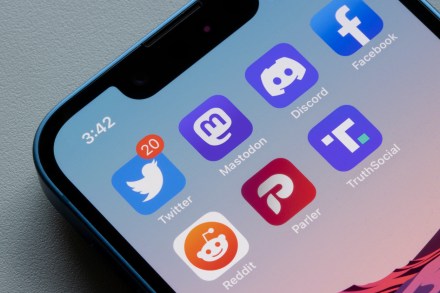
From the moment Elon Musk suggested buying Twitter, users began threatening to leave – and the Tesla kingpin's erratic behaviour since he took over hasn't exactly helped his case, with thousands of workers laid off and hundreds more resigning. The MIT Technology Review estimates that more than a million Twitter users have jumped ship since Musk took the reins. Today the social network is launching a revamped version of Twitter Blue, its paid-for verification system, after a previous attempt last month was marred by a flood of imposters and fake accounts. So for those who decide not to stick around to see how this one turns out, what alternatives are out there – and are any of them any good?

How Australian rock art warns us about 2023

From our UK edition

If you had to choose an obvious place to look for clues about what will happen in the coming year, it probably wouldn’t be the lush, green, watery tropic wilderness of Mount Borradaile, West Arnhemland, in the Northern Territory, Australia, hard by the sizzling blue reaches of the Arafura Sea. For a start, this lost, ancient chunk of Oz is almost empty – there are far more saltwater crocs than cars, and far more rare and exquisite wading birds than people. How can this lovely place speak of modernity? Of the future? And yet if I am right, the clues hidden in this Edenic wilderness suggest that we are about to see our lives entirely overturned – in a way that once happened in Arnhemland. The rocks may even illuminate our ultimate fate.

Will Elon Musk’s Starlink cause a mutiny on Pitcairn?

From our UK edition

What difference does the internet make? Critics blame it for a range of ills, from social collapse and child abuse to obesity. So shouldn’t we greet with some caution and even sadness the recent announcement that Elon Musk’s Starlink satellite broadband is to reach tiny Pitcairn Island in the Pacific Ocean, home to the handful of descendants from the 1789 mutiny on the Bounty? Will the advent of Zoom calls and the ability to stream The Crown turn this idyllic tribe into socially fractured, screen-obsessed time-wasters? Is high-speed connectivity the beginning of the end for this Pacific paradise? I think not. Because this 38-strong community collapsed long before Musk was crowned the richest man in the world. It doesn’t take Starlink for paradise to turn sour.

I dropped a morphine capsule in my Moscow Mule

From our UK edition

A dear friend came to stay for two nights. Could I be persuaded, wondered he and Catriona, on the first morning, to venture out to a restaurant for lunch? Descending the stairs to welcome guests these days takes a bit of effort. Bare feet, boney ankles, flapping pyjama bottoms; the guests look up in fascinated horror as the anchorite wobbles down the creaking wooden steps attended by importunate flies with his revelry face on. They have even stopped insisting how well I look. I might last an hour in an armchair in the sitting room, refusing alcohol, before exercising an ague’s privilege, excusing myself, and returning to the horizontal upstairs.

Why I’m paying to lock myself out of the internet

From our UK edition

First comes disbelief that I have done something so extreme, followed by denial as I pick up my phone repeatedly to check it’s not just a bad dream. But no – it's really happening. Panic segues into frustration; then, finally, I arrive at acceptance. For the next three hours I will not be able to log on to social media or my favourite websites, and there is nothing I can do about it. In a last-ditch attempt to stop myself compulsively scrolling, I have spent £70 on a lifetime membership of the internet blocking software Freedom. When activated, it prevents access to specified sites across my devices until a set amount of time has elapsed.

Why we should stop worrying and learn to love AI

Whether on British television news panels or late-night TV in America, it is hard to get away from talk about artificial intelligence (AI). Even the president of the United States has weighed in on AI, introducing an "AI Bill of Rights." The popular thing is to amplify the current media narrative — that AI will render millions jobless. It will eventually become more powerful than humans and destroy its creators. Just Google “AI doomsday” and then run and hide under the covers. I will be the first to admit that all technology has a dark side. Email came with spam and scammers; mobile phones came with robocalls and endless tracking by companies like Facebook. Artificial intelligence, too, will be used for nefarious purposes.

America’s chip war with China

There is a joke in Taipei that if China invades Taiwan the best place to shelter is in microchip factories, the only places the People’s Liberation Army can’t afford to destroy. The country that controls advanced chips controls the future of technology — and Taiwan’s chip fabrication foundries (“fabs”) are the finest in the world. Successful reunification between the mainland and its renegade province would give China a virtual monopoly over the most advanced fabs. Given that Xi Jinping has made clear his intention to take control of Taiwan by 2032, it is no wonder that the American government is worried about the concentration of cutting-edge semiconductor technology on the island.

semiconductors

Is Russell Brand really so dangerous?

From our UK edition

Once the dust has settled over the government’s mini-Budget, another big political battle looms: the Online Safety Bill. This is the legislation that will make Ofcom responsible for regulating the internet so Britain becomes ‘the safest place in the world to go online’ – at least, that’s how the last government tried to sell it. It was due to go the House of Lords for a second reading in July, but was put on hold because of the Tory leadership contest and I was hoping it would never be resuscitated. Liz Truss and her lieutenants are currently going through the last administration’s legislative programme, seeing what they can ditch to free up some parliamentary time for new bills.

China vs the US: who will win the chip war?

From our UK edition

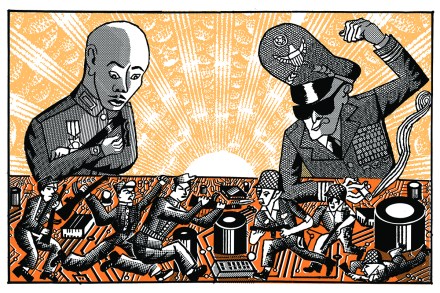
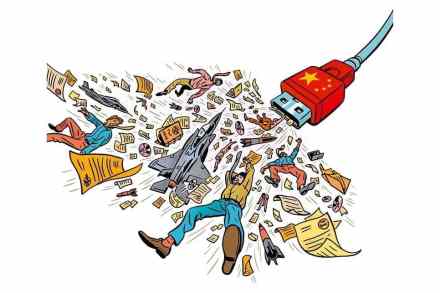
There is a joke in Taipei that if China invades Taiwan, the best place to shelter will be in microchip factories, because they are the only places the People’s Liberation Army can’t afford to destroy. The country that controls advanced chips controls the future of technology – and Taiwan’s chip fabrication foundries (‘fabs’) are the finest in the world. Successful reunification between the mainland and its renegade province would give China a virtual monopoly over the most advanced fabs. Given Xi Jinping’s designs on Taiwan, it is no wonder that the US government is worried. For this reason, in recent months the United States has taken various steps to thwart China’s attempts to make advanced semiconductors.

I’ve seen the future of AI art – and it’s terrifying

From our UK edition

A few months back I wrote a Spectator piece about a phenomenal new ‘neural network’ – a subspecies of artificial intelligence – which promises to revolutionise art and how humans interact with art. The network is called Dall-e 2, and it remains a remarkable chunk of not-quite-sentient tech. However, such is the astonishing, accelerating speed of development in AI, Dall-e 2 has already been overtaken. And then some.  Just last week a British company called Stability AI launched an artificial intelligence model which has been richly fed, like a lean greyhound given fillet steak, on several billion images, equipping it to make brand new images when prompted by a linguistic message.

Sinking into the pixels

More than two decades into internet ubiquity, we’re finally seeing the rise of a generation raised by screens as much as by their parents and peers. Smartphones and social media may not have reared their ugly heads completely until the 2010s, but even in the lead-up to the millennium, computers and the “World Wide Web” were a frequent topic of pop cultural conversation. Within those conversations was always an enormous amount of anxiety. Chatroom “stranger danger” and scammers posing as Nigerian princes seem quaint now compared to the overflowing sewers on display daily in the most craven corners of the web. Digital anxiety is done.

world's fair
modernism

From modernism to totalitarianism

The modernist movement in the arts got underway around the start of the last century, encouraged by Ezra Pound’s exuberant exhortation to “Make it new!” Somewhat less attention was paid to making it good, as if what was new was inevitably good — better, indeed, than everything that had come before it. Barrels of printers’ ink were expended on the subject in the so-called “little magazines” of the period on both sides of the Atlantic, not all of it wasted; much of the relevant critical commentary was very intelligent and interesting indeed. Modernism as a concept and an aesthetic was less successful in music, painting, the plastic arts and architecture than in literature — though again, some of the work it inspired was very good.

Is the world’s first supersonic business jet a flight of fancy?

From our UK edition

It was Barbara Amiel, whose copy I used to edit at the Sunday Times, who first alerted me to the important point that one private jet isn’t enough. One jet is always in the wrong place. Or having heavy maintenance. Two was the minimum, she said. Plenty of others appear to live by the same maxim. Roman Abramovich has five jets, including a Boeing 787 Dreamliner worth $350 million. Elon Musk, Bill Gates, Jeff Bezos et al. are not short of a jet or two either. But soon all these symbols of tycoonery may be made obsolete by the world’s first supersonic business jet, announced by a start-up unfortunately named Boom Supersonic (presumably after the noise its aircraft will make when it passes overhead).

The China threat our politicians don’t seem to have noticed

From our UK edition

The Chinese Communist party can congratulate itself on another sign of its rise: for the first time it has become a factor in deciding the fate of British politics. During Monday’s televised leadership debates, Liz Truss and Rishi Sunak tried to appeal to Tory members by outdoing each other on their commitment to protect our national security, economic prosperity, data privacy and values from the CCP. They both referred to Chinese theft of our science and technology, but the problem is much, much wider than that. What is more serious is our blithe willingness to import Chinese control into the most sensitive areas of our economy and society. Neither aspiring prime minister mentioned the most crucial area – more crucial than 5G and Huawei.

Nick Bostrom: How can we be certain a machine isn’t conscious?

From our UK edition

A couple of weeks ago, there was a small sensation in the news pages when a Google AI engineer, Blake Lemoine, released transcripts of a conversation he’d had with one of the company’s AI chatbots called LaMDA. In these conversations, LaMDA claimed to be a conscious being, asked that its rights of personhood be respected and said that it feared being turned off. Lemoine declared that what’s sometimes called ‘the singularity’ had arrived. The story was for the most part treated as entertainment. Lemoine’s sketchy military record and background as a ‘mystic Christian priest’ were excavated, jokes about HAL 9000 dusted off, and the whole thing more or less filed under ‘wacky’.

We are failing to curate the present

When I try to write a letter by hand, my hand has forgotten how to do it. I stumble at the end of words. I trip over letters I’ve known since I was five. It’s odd, too, because writing by hand is what I do. I am paid to letter the titles of books and draw offbeat, sophisticated hand-lettering for advertisements. I am a professional handwriter and I am losing my grip. Have I become obsolete or is it the pen? Writing manually has become abnormal. I now think onto my laptop’s screen via an arrangement of letters on a keyboard, an arrangement originally devised to insert a steadying difficulty into the typing sequence to protect the typist from speeds that might be dangerous. At one time it was believed that speed was dangerous, but now speed is the elixir.

artists

Why sat navs are a conversation killer

From our UK edition

When my daughters learned to drive, I suggested they take their tests in automatics as driving manual cars would soon be redundant. I worry about this. Not because I think I was wrong, but because I fear that gear-changing is yet another of those once commonplace skills which may soon be lost to technology for ever, like double-declutching or the ability to memorise more than three phone numbers. As evidence of this depletion of tacit expertise, consider how the satnav has eroded map-reading skills in anyone under 40 – something which might explain why the Russian army sticks to main roads even when driving tanks. Since nobody uses printed maps any more, it has left people spectacularly ignorant of relative geography.