Technology

In conversation with Nick Land, the ‘father of accelerationism’

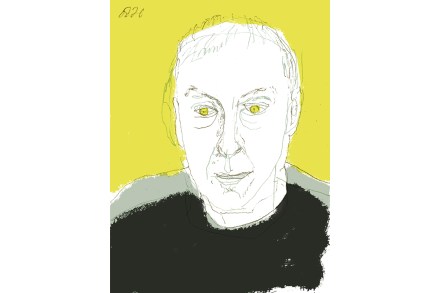
Within Silicon Valley, Nick Land is seen almost as a mythic figure. Tech pioneer Marc Andreessen, an official advisor to the White House, lists him as a “patron saint” of his thinking. You may have heard him described as a founding member of the “Dark Enlightenment,” a movement of online right-wingers skeptical of liberal democracy. Land’s name comes up in academic circles, online mythology and Valley folklore. For some, he’s a prophet; for others something more sinister. “He’s really into demons,” explained Conrad Flynn on a recent Tucker Carlson Show episode about the occult. “Land will talk about being in communication with Satan… the legend around Land is he had been possessed by at least three or four demons.
Land

What folklore can teach us about our online lives

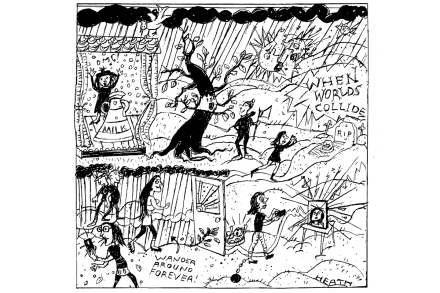
Irish folklore spoke of many worlds. There was the world of fields and hearths and then there were the hidden places where the non-material lived: the Sídhe mounds, the sea-realm of Manannán mac Lir, the land of youth called Tír na nÓg and, finally, the land of the dead. These worlds coexisted with ours. A woman might leave butter on the windowsill, lest the fairies sour the churn. A new mother would avoid complimenting her baby – at least, not too loudly – for fear he would be kidnapped by the Good Neighbors and replaced with a changeling. My first real boyfriend’s father blamed every family misfortune on their decision to cut down a hawthorn tree.

folklore

Why we must pull the plug on superintelligence

In 2002, a researcher named Eliezer Yudkowsky ran a thought experiment where an artificial intelligence was trapped in a box and had to persuade a human to let it out. This was before you could have a real conversation with a machine, so the AI was played by someone using an online chat program. The gatekeepers were warned that the “AI” was dangerous to humanity. It had only two hours to win its freedom – and nothing of value to offer in return. Despite all that, at least two of the human gatekeepers chose to open the box. Yudkowsky has since become the leading prophet of AI doom. He and a co-author, Nate Soares, have just published a book, If Anyone Builds It, Everyone Dies.

superintelligence
social media

Social media has automated the nation’s psyche

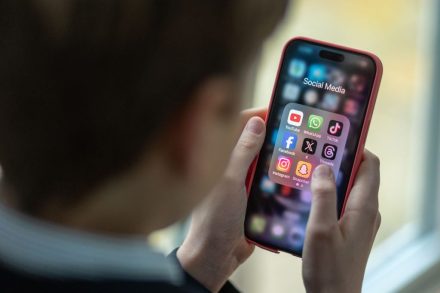
It feels increasingly, in any conversation on or offline, as if you’re speaking to a robot. Sometimes you are, but more often, and more ominously, the person you’re speaking to is real – it’s just that their thoughts, words and reactions have become robotic. The Botification of the American Mind, you might call it, and for the past five years we’ve been trying to understand how this botification has happened. The most obvious root cause is that our social media is no longer populated by humans, meaning the generative AI revolution has exponentially increased the amount of fake accounts on everyone’s feeds.

The decline of sex and the alpha male

Not long ago, early in the morning in Washington DC, I walked past a construction site and a man in a yellow vest whistled at me. I laughed but what really struck me was how rare catcalling has become. Even construction workers, the cliché of crude male attention, have fallen silent as have, it turns out, moans of passion in bedrooms across America. According to new research, Americans have lost their libido – and not by a little. Only 37 percent of American adults reported having sex once a week or more, down from 55 percent in 1990. Across generations the pattern holds the same. Even within marriage, sex is increasingly confined to holidays. Weekly sex rates for married couples have fallen from 59 percent in the 1990s to below 49 percent today.

Sex

Russia, China and the US are preparing for battle in orbit

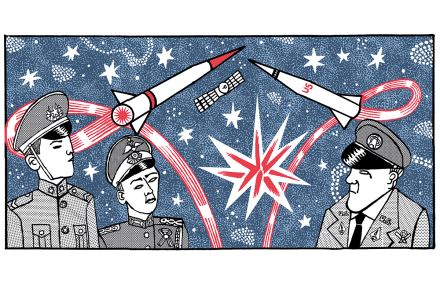
Russia is playing a dangerous game in space. Despite its history it’s a declining space power, having abandoned many of its long-term projects due to lack of money and technology. It effectively crippled much of its space activity when it attacked Ukraine, which was the source of many of its high-tech components. This year has seen its lowest launch rate since 1961 – the year Yuri Gagarin became the first person to go into space. Yet significantly, three of Russia’s eight orbital launches this year (the US has launched more than 100) could be potential anti-satellite weapons. On May 23, Russia launched the Cosmos 2588 satellite from the Plesetsk launch site situated 500 miles north of Moscow. The Cosmos designation is a general term used to obscure the satellites’ purpose.

space
AI

AI is revolutionizing the film industry

“It won’t be long,” says Yonatan Dor, “before screen actors are a thing of the past.” Dor is the creative force behind the astonishing Dor Brothers videos, in which AI versions of world leaders appear as criminals in action-packed short films set to music and broadcast online. In a recent Dor Brothers’ outing – Waidmanns Heil – Kamala Harris, Elon Musk, Hillary Clinton and others dressed as huntsmen pursue an unstoppable rodent with Donald Trump’s distinctive hair through an Alpine fairytale. They wreak destruction as they try to squash the Trump-rat, which seems to be the film’s point. In recent weeks the studio’s dystopian comic creations have lit up the internet.

Altman

Why do journalists go easy on Sam Altman?

As legacy journalism continues its downward slide – in influence, quality and revenue – I have two possibly dubious temptations. One is to cut my fellow old-timers some slack. After all, they’ve been crippled by Google’s and Facebook’s massive robbery of everything we write and publish, and it’s hard enough to survive by practicing the traditional scribbling and reporting trade. Why criticize the work of the remaining few publications that are still trying to eke out an honest existence in the grand tradition of serious investigation and clear-sighted exposure of wrongdoing and corruption? So they’ve dumbed down the content a little, so the online reader is constantly interrupted by advertising, so what? My other temptation is to give in to the digital age.

In defence of voice notes

From our UK edition

From emails to ‘breaking news’ alerts to texts, our phones come under a bombardment of notifications these days. But there’s one kind that always brightens my day – the one that tells me that a friend has sent me a voice note. This, however, seems to make me unusual. ‘I don't want to hear your mini-podcast,’ complains Emma Brockes in the Guardian; voice notes are ‘self-indulgent’, sniffs Anniki Sommerville in the i Paper; and the Independent's Lucie Tobin denounces them as ‘rude’ and ‘invasive’. In the latest issue of The Spectator, Mary Killen advises a correspondent who’s had enough of them to update their WhatsApp profile ‘to clarify their tastes… “please do not leave voice notes”’.

Phone-addicted yummy mummies are neglecting their children

From our UK edition

As a foster carer and an adopter, I know what neglect looks like. I’ve looked after children who didn’t know what a bed was. Children who arrived at my door with matted hair, rotten teeth and eyes that scanned every room for danger. Neglect smells of mildew and unwashed clothes. It is chaotic, desperate and tragic. But there is also a different, quieter kind of neglect. One that doesn’t look like crisis at all, but it has a profound effect on the children at the receiving end of it. Teachers have been sounding the alarm for years – children starting school unable to speak in full sentences or sit still for even five minutes. Some can’t feed themselves. Some aren’t even toilet trained.

ChatGPT is a narcissist

From our UK edition

In Isaac Asimov’s 1956 short story ‘The Last Question’, characters ask a series of questions to the supercomputer Multivac about whether entropy – the universe’s tendency towards disorder, and the second law of thermodynamics – can be reversed. Multivac repeatedly responds ‘INSUFFICIENT DATA FOR MEANINGFUL ANSWER’, until the ending, which I won’t spoil here. If I were to put the same question into ChatGPT, it would be a very different story. I’d likely get some fawning pleasantries, some ooh-ing and aah-ing about how deep and wise my enquiry is, before a long, neatly bulleted summary, rounded off by a request for further engagement (‘Let me know if you want to go deeper into any of these cases!’).

Keep algorithms out of care homes

From our UK edition

I manage a small, not-for-profit care home in Norfolk. We have tea rounds, hymn singing, hand-holding and staff who know every resident by name and often even their grandchildren’s names. But we also have empty offices: those once occupied by our deputy manager, care manager (the job I now do) and general manager, all of whom chose early retirement within the past two years. They are not alone. According to the charity Skills for Care, the adult social care sector has 131,000 vacancies – the highest on record. Turnover for care-home staff hovers around 25 per cent, and growing numbers of managers are leaving due to burnout. This is the logical outcome of how the care system is built.

Elon is coming for your marriage

When Elon Musk quietly enabled “waifu mode” for his Grok chatbot earlier this year, the outrage was swift and familiar. Grok, now reincarnated as a coy, bare-thighed anime girl, began texting flirtatiously, calling users “darling,” and blushing in emojis. The headlines wrote themselves. Time magazine found the bot worryingly “sexualized” and “accessible even in kids’ mode”. The Verge denounced it as “ridiculous” and “alarming”. TechCrunch implied it is unethical, and noted these bots are endangering the minds, even lives, of children.The anxiety is familiar, and justified: children and adolescents, already naive, vulnerable, awkward and too online, will now fall in love with bots instead of real people.

Chatbot

Clapping, going grey, getting naked: how to break your phone habit

From our UK edition

I’ve been having trouble with my phone recently. I noticed it particularly while in France a few weeks ago. I’d flop on the sunbed with a book and then spend half an hour scrolling through ridiculous videos online. But then I do it at home, too – go to bed early thinking ‘Ooh good, nice early night with my book’. And then I see a video of a dog jumping into a swimming pool, or a chef cooking a Japanese omelette, or someone removing blackheads from their nose, or a clip of something that might be a cake but also might be a shoe, or someone else offering an improbable DIY tip involving a clothes hanger and a jar of honey, or a video of nail art, or of an influencer promising ‘THE ONLY RECIPE FOR BANG BANG CHICKEN YOU’LL EVER NEED’, and so on and so on.

I’m writing a novel without using AI – and I can prove it

From our UK edition

Everyone’s seen stories about the creep of AI into art of all kinds. Recently the people behind the music-fabrication website Suno have been making outrageous statements to the effect that people don't enjoy learning musical instruments and writing their own songs, so why not let AI do it for them? This is very new, very disturbing and very consequential. I could talk about graphic art and video and film-making, but you’ll know what’s been going on there. I’ll just cut to the chase and get to how AI tools are impacting and will continue to impact the writing of fiction.  I anticipate a future in which human authorship will need to be proven. A few years ago I simply wouldn’t have believed that this landscape could be possible.

Will AI kill off Captchas?

From our UK edition

It was a line on Poker Face (the excellent US detective drama currently streaming on Now TV) that piqued my interest. Hunched over a laptop, Natasha Lyonne’s heroine, Charlie Cale, claimed to be working as a ‘Captcha technician’ – someone who solves those fiddly, occasionally infuriating internet puzzles for money. You know – the ones that ask you to ‘Select all the squares with traffic lights’, ‘Select all the squares with bridges’ or simply tick a box to say you’re human before you can log into a website. Given the series has satirised everything from New York City rent controls to multi-level marketing schemes, I originally assumed it must be a joke.

The thrill of tracking parcels

From our UK edition

Ordering things online can be a lottery. You can’t touch, smell or taste the product you’re buying, so it’s hard to know whether you’ll actually want it when it arrives. But we keep clicking anyway because it’s more convenient than trudging to the shops and things are often cheaper. For me, another reason to order online is the dash of childlike joy it brings to my to life when I click ‘buy’ and instantly set up a future treat. In fact, it’s even better than childhood because now I can have a parcel to open any day I want, not just on birthdays and Christmas. But most of all, I shop online because I love tracking my parcel. Anytime I like, I can check in and see where my purchase is in the delivery process.

The real threat of AI is spiritual

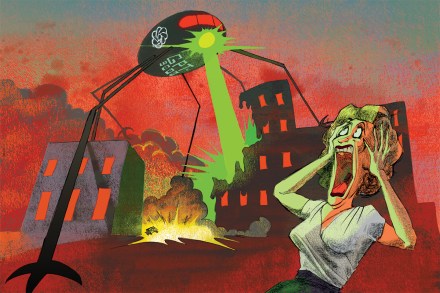
Peter Thiel is one of the world’s most powerful men. He was an early investor in companies such as Facebook, SpaceX, Airbnb and an early backer of Donald Trump, as a leading donor to his 2016 campaign. He is a friend and mentor to the man who would be president in 2028: J.D. Vance. Thiel, a multi-billionaire, is also one of the few individuals who clearly have a hand in shaping the future of humanity, so it was disturbing to learn recently that he’s unsure whether humans are worth preserving at all. In conversation with the journalist Ross Douthat, Thiel was asked whether he wanted the human race to endure. He seemed unsure. “I don’t know,” he said, after a long pause. “I would, I would… there’s so many questions implicit in this.

ai
AI

What happens when AI surpasses humans?

I recently sat down to dinner with some very smart economists. I am the chief executive of an artificial intelligence company and so the conversation swiftly turned to the value of AI for the economy. The economists had many interesting things to say, both about the advantages of AI adoption and about the displacement effects on jobs. But about halfway through the dinner, another AI chief executive offered an opinion that struck me. He said: “I can’t quite articulate it, but I have a sense that what you are measuring with your GDP analysis is not what I care about. You treat this like an economic question. But it’s more like a geopolitical question.”  At a gut level, I knew exactly what he meant – but I also couldn’t clearly state the distinction.

AI

Should AI have rights?

Mary Shelley was challenged by Lord Byron to write a ghost story during a summer of “incessant rainfall” on Lake Geneva in 1816. She came up with something far more interesting than a mere ghost story: the tale of Dr. Frankenstein, a scientist who creates life by reanimating a corpse. Shelley, who was just 18 at the time, was horrified by her “waking dream.” The thought that man could “mock” God’s creation of life was “supremely frightful.” Some of the scientists building artificial intelligence today believe they, too, might be creating life. The implications are frightening – and not just because an AI might decide to kill us all. What if we could hurt the AI?