Technology

Red handed

From our UK edition

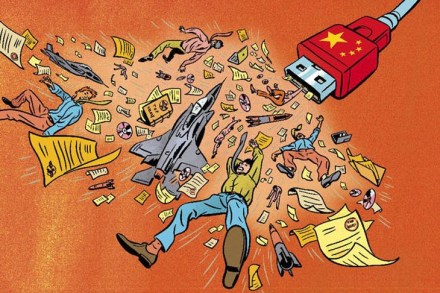
The world is a better place for China’s emergence from behind the bamboo curtain where it hid for half a century. Economic and market reforms have led to the greatest reduction of poverty in world history. For some western manufacturers, competition from low-cost China has sometimes proved fatal, yet the overall economic effect has been beneficial, helping to deliver years of global growth without the inflation which once acted quickly to snuff out the boom times. All this arouses a protectionist backlash, especially in America, but the American case against Huawei, the largest Chinese tech company, shows how many of these concerns are well-grounded.
Low life | 24 January 2019

From our UK edition

My first night back in Blighty, I sat all evening at the kitchen table drinking wine with a charming, courteous English gentleman stricken in years. (I’ll call him Bertie. He enjoys the column and wrote inviting me to visit him at his pile on Exmoor.) I’m partial to old-fashioned English gentlemen, relishing above all their many rare qualities their disinterestedness. Before dinner we had slowly and deliberately drunk a bottle of red wine, and another one after that. He did most of the talking. His body was a calamity, but his mind was completely lucid. The vocabulary with which he expressed his mind was about ten times as large as mine and he wielded it with precision and virtuosity.

The TWaT revolution: office on Tuesday, Wednesday and Thursday only

From our UK edition

I recently saw a series of photographs depicting a rural home in China. Pride of place in a grimly furnished main room was given to a gargantuan new flat-screen television, while the sole toilet was a hole in the ground in an outside shed. What strange priorities, I thought. On reflection, though, under the same circumstances, I suspect quite a few of us would do the same thing. In Britain, for a hundred years or so, we never faced such a choice: you could install a decent indoor toilet, but not a Samsung 75in 4K LED TV, because the latter hadn’t been invented yet. So in Britain we almost all installed plumbing before we bought televisions — because that is the order in which they became available.

The first amendment and the internet’s free speech clash

From our UK edition

For Silicon Valley, 2018 was defined by one impossible question: should there be limits to free speech on the internet? The first amendment is hardwired into the (American) CEOs of the big three social media sites: Twitter, YouTube and Facebook. Each platform grew its user-base with a “words can never hurt me” attitude. Back in 2012, Twitter defined itself as the “free speech wing of the free speech party”; Facebook CEO Mark Zuckerberg has defended his users' right to be wrong – even for Holocaust deniers. For years, social media platforms allowed posts that could arguably inspire real-life violence in the US, Germany and in Myanmar. But now things are changing.

The most underpriced present you can buy

From our UK edition

During the second Gulf war, simply out of curiosity, I found myself visiting the website of a giant American mercenary organisation. At the top of its home page I was surprised to see the words ‘online shop’. Thinking I could perhaps order an airstrike, or a fleet of Humvees to collect my daughters from school, I clicked on the link. All that was on offer was a range of brightly coloured beach towels displaying the company’s logo — a giant bear’s pawprint next to the word ‘Blackwater’. Needless to say, I bought two: one in orange and one in pink. In all honesty, I don’t think my wife was entirely thrilled with them that Christmas. So I’d never claim to be one of the world’s great gift-givers.

The all-seeing state

From our UK edition

The bullet train from Beijing to Shanghai is the fastest in the world. It takes just over four hours to travel the 819-mile journey. From the train, it is impossible to ignore China’s economic success. There are cities the size of London that many westerners will never even have heard of. They are filled with glass towers and shopping centres, selling Cartier watches and Gucci bags. As the train sets off from each station, an announcement plays in both Chinese and stilted English: ‘Dear passengers, people who travel without a ticket or behave disorderly, or smoke in public areas, will be punished according to regulations and the behaviour will be recorded in the individual credit information system.

Why the four-day week could work

From our UK edition

Most people were scandalised by John McDonnell’s proposal to promote a four-day working week. But before we get incensed about giving people more leisure during their working life, we need to ask another question. If it really is so vital to the economy that people spend more time at work, then why does the government spend £41 billion every year (a third of the cost of the NHS) providing tax relief on pension contributions? This merely encourages older and more experienced employees to leave the workforce several years earlier than necessary. Remember, five years needlessly spent in retirement is 20 years that could have been spent enjoying a working life of three-day weekends.

Black Mirror politics is coming to the midterms

Black Mirror politics is coming to America, courtesy of a new Democratic initiative called Citizen Strong. Announcing their existence in Bloomberg this week, Citizen Strong claims to have assembled an army of 17,000 amateur secret police who have spent months looking for damaging material on dozens of vulnerable Republicans in Congress and state legislatures. The information - presumably embarrassing at least, career ending at worst - will be unleashed on them just in time for the midterms. Though this kind of dirt-digging is as old as politics itself, the direction the Democrats are taking opposition research through Citizen Strong reveals how it has been re-energised and refashioned by the communications technology of the early 21st century.

bryce dallas howard black mirror politics nosedive rating

Hey Alexa, let’s make Sean feel like a loser

From our UK edition

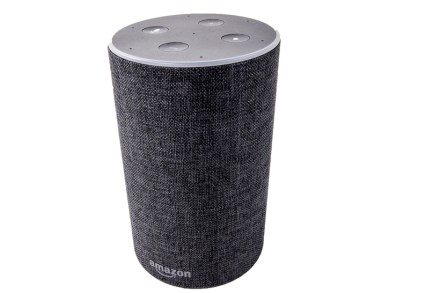
My oldest friend Sean Langan came to lunch last Sunday and, rather disappointingly, he seemed more interested in playing with our Amazon Alexa than asking me what I’d been up to. Sean is a documentary filmmaker who spends a lot of time in war zones — he’s just back from Syria —and he often reminds me of that Japanese soldier stranded in the Philippines who didn’t realise the second world war was over until 29 years later. The technological changes that occur while he’s in some god-for-saken hellhole are a constant source of wonder to him. I half-expected him to stop dead in front of our TV in amazement: ‘You mean to tell me the pictures are actually in colour? Whatever will they come up with next!

High life | 27 September 2018

From our UK edition

The grandest view of Gstaad and the surrounding Saanen valley bar none — and that includes the vista from my high-up-on-the-hill farm — belongs to an imposing house that was originally a sanatorium but is now a home for the blind. It’s ironic that it is located where only eagles dare, but its residents are unable to view the sights. Such are the jokes that fate plays on mankind. I had just finished a very hard training session and was looking up the mountain at the blind people’s home, which looks like a very luxurious hotel from the outside. My heart went out to the poor folks inside, blind to the magnificent valleys, streams and mountains that surround them.

The Spectator Podcast: can we fight back against digital addiction?

From our UK edition

It seems that everyone, young or old, has a smartphone these days. But why are the brightest in Silicon Valley taking screen time away from their children? Have they realised that we’re addicted? Also on this podcast, Tory MEPs recently voted in favour of the Viktor Orbán government in European Parliament. Are British Tories flirting with the far right? If they are, it could be because the Conservative Party has no attractive policies. Should we return to One Nation Toryism? First, it’s time for a wake-up call. Smartphones now seem so attached to us that they may as well be organically grown. Both adults and children are addicted, and it’s having an impact on their mental health.

A wake-up call

From our UK edition

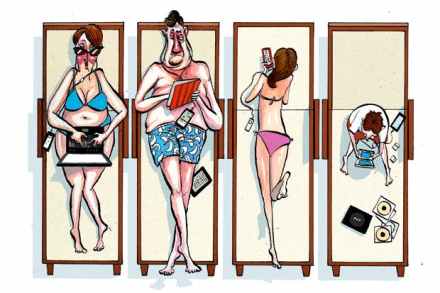
Pupils are back in classrooms and parents can finally have a brief respite from worrying about their children’s excessive screen use — or, at least, worrying it is all their fault. This angst peaks each year in the summer holidays, those long, sunny weeks illuminated in large part by the blueish light from children’s smartphones, tablets and laptops. The beep and ping of devices triggers complicated emotions. In many homes, parents simultaneously castigate their offspring’s use of tech and are relieved by it: like some goblin babysitter, it squats in the corner of family life, whispering powerfully, turning children silent and glassy-eyed. The erratically applied adult phrases ‘That’s enough screen time!’ and ‘Give me that iPad!

The weird world of Silicon Valley

From our UK edition

Which is more diverse: London or Devon? That’s not a trick question. London is much more diverse than Devon. But let’s tweak the question slightly. Which is more diverse: a pub in London or a pub in Devon? Here the answer is not so easy. Though low in ethnic diversity, a pub in Devon might contain a more representative mix of ages, educational backgrounds, earnings, wealth, sexual proclivities and political opinions than a pub in central London. London, for all its vaunted diversity, is a place where you can practise extreme homophily — spending your time exclusively with people nearly identical to you. People largely socialise with contemporaries from work. Social life is delineated by age and education more than in smaller cities or towns.

What data does not tell us

From our UK edition

In late 1973 the graduate admissions department at UC Berkeley discovered that for the forthcoming year it had awarded places to 44 per cent of male applicants and only 35 per cent of women. Concerned about possible lawsuits or bad publicity, they approached Peter Bickel, a professor of statistics, to analyse the data in more detail. Looking for patterns of prejudice, Bickel broke down the data by university department. He was suddenly presented with a contradictory picture. Department data suggested Berkeley was mostly even-handed in admissions. Stranger still — though a minority of departments exhibited some gender bias, it was more likely to be a preference towards female candidates than the other way about. Eh? How so? I mean a 44:35 ratio seems clear-cut, no?

Amateur porn is not empowering

If ever you find yourself bored and with 15 minutes to spare, I recommend looking up Pornhub’s annual report, the closest thing you will get to a statistical breakdown of the planet’s libido. Here you will discover that the average visit to Pornhub lasts nine minutes 59 seconds; that the most popular time to watch porn is a Sunday evening; and that sexual tastes for the most part tend to follow cultural lines, with English-speakers prizing lesbian material most highly, and eastern Europeans on the whole preferring anal. There’s nothing new about porn, and humans have been trying to get their hands on it pretty much since they left the primordial soup. The novelty is in the rate of change.

The joy of boredom

From our UK edition

After an hour’s beach work I was just about done. I’d read some book, I’d skimmed the papers, I’d eaten some bits of cheese on some oat biscuits (the closest I’ll concede to picnics, which I hate), I’d drunk some water as per my instructions from the Fawn (‘Drink some water! You never drink enough water’), I’d dried off from the swim, I’d got a pair of very numb buttocks after sundry failed attempts to get comfy on the not very flat rock: surely I’d done enough now to earn my release? But I knew I’d never be allowed to get away with it. Not this soon. The Boy, maybe: he’d be OK with an early escape. Definitely not the Fawn, though. She’d see through my motives straight away.

Porn power

If ever you find yourself bored and with 15 minutes to spare, I recommend looking up Pornhub’s annual report, the closest thing you will get to a statistical breakdown of the planet’s libido. Here you will discover that the average visit to Pornhub lasts nine minutes 59 seconds; that the most popular time to watch porn is a Sunday evening; and that sexual tastes for the most part tend to follow cultural lines, with English-speakers prizing lesbian material most highly, and eastern Europeans on the whole preferring anal. There’s nothing new about porn, and humans have been trying to get their hands on it pretty much since they left the primordial soup. The novelty is in the rate of change.

We’re all Luddites at heart

From our UK edition

When I saw my first jogger in Wales in the early 1970s, I assumed he was running away from the police. Presumably joggers were familiar in California by then, but not elsewhere. I can’t imagine any of the characters in Goodfellas going jogging, any more than I can imagine Rick in Casablanca going to a spinning class. Nothing was stopping you from running around the streets back then. It was simply that there is always a high social cost to doing things most people don’t do. Our brain’s two most powerful default settings are social copying and acquired habit. Hence our preferences are not independent of our past behaviour, nor of that of others.

Not so fast

From our UK edition

I’m losing my patience. Not so long ago I’d happily wait ten minutes for a bus, or even whole days for the next instalment of my favourite television programme. It didn’t seem to bother me in the slightest that my holiday photos would not be seen until I’d picked them up from the chemist. I even went to the library to get information from an encyclopaedia. Life, in short, used to be a waiting game, and patience was not just a virtue but a habit. Now I wonder how I survived in a world without Google Maps, Uber or smartphones with in-built cameras. The whole direction and purpose of modern life, at least on the surface and for those well-off enough to benefit, is to make everything frictionless, personalised, easy. Click a button, a taxi turns up to your house.

The Spectator Podcast: 190th birthday

From our UK edition

Happy birthday to the Spectator. This week, we’re celebrating our 190th birthday. Lara Prendergast takes a walk down memory lane with three editors of the Spectator, past and present. But before that, it’s the podcast as usual. This week, we’re asking - do anti-Trump protests achieve anything other than virtue signalling? And are driverless cars on a road to nowhere? Donald Trump is soon to visit the UK, and after two false alarms, this time, it will actually happen. Next Friday, Trump will be welcomed by May in London and greeted with major protests. There is a carnival of resistance organised, with special guests such as Lily Allen and a giant inflatable blimp of Trump in a nappy.