Technology

High life | 19 April 2018

From our UK edition

New York Remember when the internet, Twitter, Facebook and other such useless gimmicks were supposed to usher in an era of transparency and knowledgable bliss? This technology makes George Orwell’s Nineteen Eighty-Four redundant: no longer science fiction; more Knights of the Round Table. Big Brother is more powerful and more all-knowing than ever before, and we have that Errol Flynn lookalike Mark Zuckerberg to thank. There is no such thing as privacy any longer, unless of course one writes letters by hand and does not possess a smart telephone. (Include me out — I own a mobile but use it only when on board a sailing boat.

Real life | 19 April 2018

From our UK edition

‘If this madness goes on, I will not be able to leave my house without downloading the app,’ I told my friend, who had been exhorting me to download the app for something. In fact, I had been trying to book a fun ride. Every year, my horsey friends and I go on these cross country jollies during the summer months. And every year all we do is ring or email the secretary of the relevant riding club, say we are coming, send a cheque, get our start time and turn up in our trailer on the appointed day. Not any more. The riding clubs have discovered apps. And so now, when one tries to register to go on a fun ride, the antithesis of fun begins. You cannot ring or email anyone to book anything anymore, let’s face it.

Investing in zero-carbon shipping will only benefit the UK economy

From our UK edition

The shipping industry contributes around 2% of all global carbon emissions – a figure comparable to the entire CO2 emissions of a country the size of Germany.  In many ways that isn’t surprising: shipping powers the world economy, and carries 90% of all international trade. But although people understand the link between trade and prosperity, they quite rightly demand it is done in a responsible and environmentally friendly way. Globalised trade has brought rapid growth and helped see a remarkable fall in extreme poverty around the world, but it is not without negative consequences. Scientists say that to stave off potentially dangerous levels of warming later in the century, global emissions need to decline quickly to near-zero.

We’re still waiting for the internet revolution

From our UK edition

At the risk of sounding like Jean Baudrillard, I would like to suggest that the internet revolution has not yet taken place. So far, lots of very clever people have performed amazing feats of technical ingenuity. But for the most part our collective behaviour has so far failed to change enough to truly benefit us. Rather than making us freer, more relaxed and more efficient, in general everyone seems busier, more distracted and more tense. Unfortunately, technology is a bit like Hitler: it doesn’t know when to stop. No sooner has it annexed the Sudetenland than it starts invading Czechoslovakia. The world might be happier if Silicon Valley were put on a two-day week, to give us — and our social norms — time to catch up.

Mark Zuckerberg’s ‘team’ are the real losers of the Facebook hearing

From our UK edition

Right now, in some tasteful open plan office in California, Mark Zuckerberg’s ‘team’ is hard at work. Or at least they should be, because they have a lot to do. When he wasn’t trying to explain the 101 basics of how the internet actually works, Zuck was telling senators that his team would look into the details, and would be in touch.  The reason he was there at all, subjecting himself to five gruelling hours of intensive and sometimes wildly misdirected questioning, was to reassure three groups of people: Facebook users, who need to know Zuck cares about privacy. Investors, who need to know the company is dealing with the crisis. And finally the politicians themselves, who are wondering if more rules and laws are needed to tame the giant.

Can technology make the NHS more efficient?

From our UK edition

As the Spectator held its inaugural health summit last week, the fraught issue of NHS funding was once again on the front pages. Jeremy Hunt, the Health Secretary, proposed a 10-year funding deal for the NHS. Two days later Theresa May announced there would be a 'long-term funding plan'. However, while a multibillion pound cash injection may help, this isn’t going to fix the bigger problem: that is, a rapid rise in demand for healthcare, in part because of an ageing population. So what else can be done? Can technology make the NHS more efficient? The summit’s keynote speech, by health minister Lord O’Shaughnessy, made the case for data as the potential saviour of the NHS. Its patient dataset is unique, he said, as it encompasses all citizens across their lifetime.

The Cambridge Analytica row shows politics moving in a disturbing direction

From the outside it all looked haphazard and frenzied. A campaign that was -skidding from scandal to crisis on its way to total defeat. That’s not how it felt inside the ‘Project Alamo’ offices in San Antonio, Texas where Trump’s digital division — led by Brad Parscale, who’d worked previously with Trump’s estate division setting up websites — was running one of the most sophisticated data-led election campaigns ever. Once Trump’s nomination was secured, the Republican Party heavyweights moved in, and so did seconded staff from Facebook and Google, there to help their well-paying clients best use their platforms to reach voters.

It’s not all Twitter mobs – the internet can be a force for good

From our UK edition

Few readerships of any intelligent national magazine will be more alive to the perils and downsides of 21st--century cyber-life than you, fellow Spectator readers. Many of you might share my use of the generalised expression ‘the internet’ for the whole damn thing — while not being quite sure what we’re referring to. Few, on the other hand, will be more likely to show a lively appreciation of community, locality, the sense of belonging and of place that even in this fast-paced and mobile age, our country at its best can still nurture. You might think those two dispositions make comfortable bedfellows.

Real life | 22 February 2018

From our UK edition

Everything since the ZX Spectrum has pretty much left me cold. Ghetto blasters, Sony Walkmans, CDs, Apple Macs, iPods, PlayStations… I didn’t want any of them. Back in 1981, I did want a CB radio and I nearly got one too, but then my mother found out that lorry drivers were on them and the thorny issue of whether it would be appropriate for a nine-year-old girl to converse with a trucker put the kibosh on the whole thing. I was bitterly disappointed. I seem to remember I cried. I did not cry about not being bought a Commodore 64 or a BBC Computer, as the technological bee’s knees was then called, or any other home computer with plastic rather than rubber buttons like mine had. I did not covet them. Nor did I covet a video game machine.

How the Rat sniffed out £15,000 down the back of my virtual sofa

From our UK edition

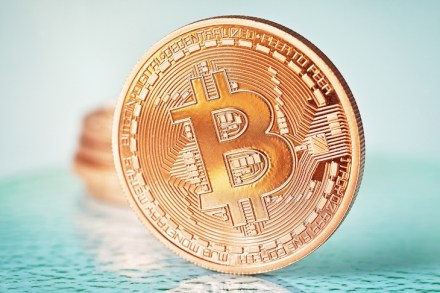
It must be about 25 years since the Rat first made an appearance in The Spectator. He started out as my girlfriend’s six-year-old boy, then became my stepson and featured here quite often over the years because, being a scaly-tailed creature of evil, he was always good for some copy. This new year, with his agreement, I upgraded him to full son status. Let me explain why in a way that I hope you’ll find charming, rather than one that makes you want to throw up. The first reason is purely mercenary. During Christmas, while over with his wife Chloe from Hong Kong, the Rat managed to find about £10,000 down the back of my virtual sofa, in the form of seven Bitcoin Cash that I thought I’d lost forever.

Should we believe the hype about blockchains?

From our UK edition

Blockchain is an idea whose time has come. By which I mean it’s still mostly an idea, and is currently the only thing tech people want to talk about. But it’s in danger of getting hyped out of control, which in the end will damage it. So what actually is a blockchain? Very broadly speaking, a blockchain is a way to store information. Boring, yet possibly revolutionary. A copy of every transaction between people is stored on a chronologically ordered, secure database, and identical copies of that database are hosted on multiple computers. New transactions can only be added once they have been verified by other computers, and it’s not possible to edit, change or delete old entries.

The great online advertising swindle

From our UK edition

Conmen and fraudsters thrive in confusion. And few places are more confusing and opaque than the jargon-ridden world of online advertising. Which is odd really, since the entire social media edifice – Google, Facebook, Twitter, Snapchat – depends on it. 2017 was the year of the tech-lash, when people and politicians started to push back against tech-led disruption. But there’s potentially a far more significant threat looming for the tech giants: ad fraud. On one level, online advertising is very simple: you get shown endless adverts as you bounce your way around the net, and an advertiser pays whenever someone either looks at, or – the holy grail! – clicks on one of the damn things.

Bitcoin’s rocketing value is undermining its original purpose

From our UK edition

Everyone interested in technology has their own bitcoin story. As is the way with these things, the earlier you were on the scene the better. I cashed out back in 2012 when a bitcoin was worth just £7, says one. Well, I bought a pizza in 2014 with bitcoin which, at today’s rate, cost me almost ten grand, replies another. And so on. These stories are usually told with a hint of pride. The more you lost the better in fact, since it signifies that you were in the know before everyone else, long before it was cool. I have my own story too of course, involving dark net drugs markets back in 2013, when drug pushing was the main use of bitcoin. I will tell it to anyone who listens, especially if they are Johnny-come-latelies.

These inventions will change your life

From our UK edition

At last. And just what you’ve been waiting for. The official Wiki Man guide to the best gadgets and gizmos for giving this Christmas. The Philips AirFryer, from £70-ish. Spectator readers may remember a craze for cooking things via a French method called sous-vide. Using this senseless technology, you could cook soggy food for days at low temperatures by warming it gently in a colostomy bag; handy if you fancied a couple of days off work with botulism, but frankly bugger all use for anything else. The AirFryer is the opposite of sous-vide: it isn’t French and is actually useful. It quickly makes food hot and crispy as God intended, not with fat but with superheated air. Everyone who buys one becomes an evangelist. Available from Amazon and some tax-compliant retailers.

The driverless car revolution will open up all sorts of dilemmas

From our UK edition

Philip Hammond wants fully autonomous driverless cars on our roads by 2021. That’s not too far away, is it? I know it sounds like a science fiction year, but it’s only about fifty months off. Technologically, it’s plausible. Earlier this year I travelled over 100 miles in a driverless truck across Florida with the BBC. True, it was on long straight highways and not through Slough town centre in the rain, but still. Millions are being spent on this technology, and in the race between Google, Uber, Tesla and the rest, there will be rapid progress. And there is no doubt that driverless cars will be safer than these killing machines being operated by texting, confused and tired humans. Thousands are killed every year by human drivers.

The hidden danger of electric cars

From our UK edition

Wasn’t the whole point of electric vehicles supposed to be to civilise our cities, making them safer and less-polluted places to live? I just wonder what the mung bean-eaters who act as cheerleaders for the industry are making of the latest performance by Elon Musk, the founder of Tesla. Launching his latest vehicle, a £150,000 ($200,000) roadster which apparently does 0-60 mph in 1.9 seconds, he was asked what the point of the vehicle was. He replied: “to deliver a hardcore smackdown to gasoline cars”.   A hardcore smackdown, eh? I am not sure that is quite what environment secretary Michael Gove had in mind in July when he announced that, as of 2040, no new conventional petrol or diesel cars would be sold in Britain.

How tech lobbyists harness the power of grassroots activism

From our UK edition

A strange thing happened after TFL’s decision last month not to renew Uber’s license to operate in London. The ride sharing app started a petition on the website change.org. To defend the livelihoods of 40,000 drivers - and the consumer choice of millions of Londoners - sign this petition asking to reverse the decision to ban Uber in London. Thousands of stranded bus-shy Londoners rushed to sign, making it the fastest growing petition in the UK this year. (At the time of writing it’s reached 855 thousand signatures). And of course it was accompanied by the mandatory hashtag #saveyouruber, which was shared by the official Uber UK Twitter account. Big business has always used its clout and money to lobby.

iAddicts

From our UK edition

For many years The Spectator employed a television reviewer who did not own a colour television. Now they have decided to go one better and have asked me to write a piece to mark the tenth anniversary of the iPhone. I have never owned an iPhone. (In the metropolitan media world I inhabit, this is tantamount to putting on your CV that you ‘enjoy line dancing, child pornography and collecting Nazi memorabilia’). But, even though I’m a diehard Android fan, I still cannot help paying attention to every single thing Apple does and says. I don’t think this happens in reverse. I doubt Apple owners pay any attention to the next phone announcement from LG or Nokia — any more than Anna Wintour lies awake wondering what Primark’s autumn season has in store.

Decision breakers

From our UK edition

‘The risk of a wrong decision is preferable to the terror of indecision,’ said Maimonides. How right he was. Today, we are racked with choice, and decision-making has never been more fraught. It’s hell. Look at restaurant menus. Anything longer than a page is alarming. So much margin for error. ‘Hold on a minute, I just need another look.’ ‘What’s the special, again?’ Glance at a neighbouring table. ‘That looks nice, is it the lamb?’ Turn to your partner. ‘What are you having?’ At least you’ve settled on a restaurant.

How much is your child’s schoolbag worth? The answer might surprise you

From our UK edition

As a new school term starts, this often spells an expensive shopping list for parents. School uniforms that no longer fit, new schoolbooks and lunchboxes; research shows that the average parent spends £170 on each of their children at the start of a new school year. But although much of that spending can’t be avoided – after all, you can hardly send your child back to school with shoes that don’t fit – there is another area of the back-to-school routine where we might be missing a financial trick. Why? Well because the average child has £302 worth of gadgets in their school rucksack.