Technology

The problem with the Tory obsession with DARPA

From our UK edition

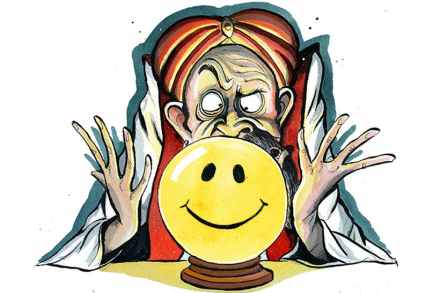
Dominic Cummings’s two catchphrases ‘take back control’ and ‘get Brexit done’ have transformed British politics. Now the PM’s top aide wants to do the same with the British economy through the creation of another ARPA. But will it work? The first Advanced Research Projects Agency was created in the US in 1958. The previous year the Soviets had launched the world’s first artificial orbital satellite, Sputnik, which made Americans fear that the USSR’s economy was about to overtake the US’s. The thought was that only if the US immediately copied the brilliant engineers who ran the Soviet Union could the West hope to keep up. ARPA was the outcome.
The risks and rewards of ransomware

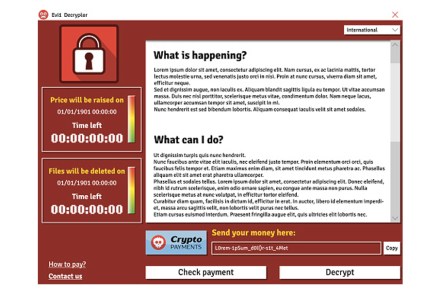
Ransomware, the locking up of large networks through hacking until payment is made, is exploding. Recent attacks have crippled more than 200 city and local government networks in Baltimore, Albany and Atlanta, while specific hacking tools have been successfully used against mortgage companies, universities, hospitals, banks and consulting firms. A report this month from the cybersecurity firm, Emsisoft, reveals that the cost of ransomware in the US last year was over $7.5 billion, involving 113 state and local governments, 764 health care providers and 1,233 schools. In 2018, the FBI received reports of 1,500 ransomware attacks (the latest available FBI figures) which does not include hundreds of attacks that were never reported with ransoms secretly paid.

ransomware

Automation and the future of modern warfare

There is an epic moment in the latest Gerard Butler movie Angel Has Fallen where he gets to save the life of the US president (again). The bad guys launch a swarm of dozens of micro drones able to detect and kill dozens of Secret Service agents, destroying anything and anyone that might get in the way of their mission to kill the president.It’s a chilling moment in the movie that clearly demonstrates just how powerless mere mortals will be in the face of superior technology that can operate independently of any direct human control.As with so much in Hollywood these days, movie truth is remarkably close to a reality that has been prefaced since 1984 when the first Terminator movie appeared and suggested the idea of autonomous robots as terrifying killing machines.

drones automation

We’ve just had the best decade in human history. Seriously

From our UK edition

Let nobody tell you that the second decade of the 21st century has been a bad time. We are living through the greatest improvement in human living standards in history. Extreme poverty has fallen below 10 per cent of the world’s population for the first time. It was 60 per cent when I was born. Global inequality has been plunging as Africa and Asia experience faster economic growth than Europe and North America; child mortality has fallen to record low levels; famine virtually went extinct; malaria, polio and heart disease are all in decline. Little of this made the news, because good news is no news. But I’ve been watching it all closely.

My 2019: mice, Marrakesh and a fond farewell to my dear friend Christopher Booker

From our UK edition

Another year over and it wasn’t all bad, you know. Here are some of my personal highlights. Best birthday parties: my dear old friend Liz Hogg’s 90th and my dear older friend’s Jim Lovelock’s 100th. The latter, in the Orangerie at Blenheim Palace, was possibly the most unboring semi-formal social occasion I’ve ever attended. My table included the philosopher John Gray, a dapper Japanese gentleman who had been blown out of his bed by the Hiroshima bomb, and an economist from northern Uganda who’d narrowly escaped the Lord’s Resistance Army massacres. For her PhD, she had delighted in triggering her thesis supervisors by arguing that western aid programmes don’t work.

Technological progress is as messy as Darwinian evolution

From our UK edition

There is a famous chart which shows the time it took for various technologies to be adopted by 50 million people. From its introduction, the telephone took 75 years to reach 50 million users. For radio, it was 38; for television, 13; for the world wide web, merely four. Online services are faster still. Facebook reached the 50 million mark in two years, YouTube in ten months, Twitter in nine months. Pokémon Go reached the same watermark in 19 days — as did Pornhub. (For the benefit of the uninitiated, Pokémon Go was a 2016 augmented reality game where you used your phone to catch animated monsters; Pornhub is a helpful website which kindly reminds men to set their laptops to ‘mute’ after their wives have gone to bed, to avoid waking them.

Don’t tell me model railways aren’t art. My little engine is a thing of spirit and beauty

From our UK edition

It’s a summer day at Llangenydd station, and the afternoon train is already late, not that anyone seems to mind. A smartly dressed man has leaned his bicycle against the station’s water tower, and his terrier jumps up as he unwraps his sandwich. A commercial traveller, perhaps, or a professor from Liverpool University on a cycling tour of Snowdonia. Even though we’ve never been here before, we can guess where we are. The colour of the stone, the yellow gorse on the embankments, and the distant glimpse of the sea all tell us that we’re in the top left-hand corner of Wales.

This year’s top gadgets – according to my inner chimp

From our UK edition

I’d hoped to spend this week writing about my new Geberit Japanese-style toilet, but since the grout is not yet dry, all you filthy toilet-gaijin will have to wait until the new year for my review. So I thought I’d write instead some reviews of my favourite gadgets of the year. But since our real reasons for buying gadgetry have nothing to do with the hastily contrived post-rationalisations created in the prefrontal cortex, in the interests of impartiality, I have asked my inner chimp to provide an honest second opinion on each.   1) Smart energy meter (free). Prefrontal cortex verdict: ‘Blah blah blah energy reduction, green industrial revolution, global warming, polar bears.’ Inner chimp: ‘Sod the bears —they’re terrifying.

Keeping up with the sex robots

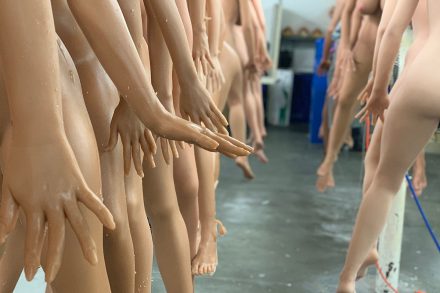
This article is in The Spectator’s November 2019 US edition. Subscribe here. The floor is slippery. I guess I shouldn’t be surprised, I’m taking a tour of Abyss Creations, the factory where the ‘Ferraris of love dolls’, RealDoll and Realbotix, are made. A thin layer of silicone coats almost every surface. A (real) woman in her late twenties, the PR coordinator, Catherine, shows me round. She has the attitude of a hostess at a theme-park restaurant: bored or stoned or maybe both. I’m sure she’s given hundreds of these tours, heard the same dumb jokes a million times and watched us all slap the ass of a doll reluctantly yet instinctively.

sex robot

Does this make your brain tingle? The rapid rise of ASMR

From our UK edition

I once had a flatmate called Tom, who behaved very oddly when our cleaner came round. On mornings when she was due he’d become strangely excited, like a man waiting for a date, though Madge (70) seemed an unlikely target. I would leave the flat so that Madge could get on with it, but Tom would insist on staying. He’d settle himself into an armchair, close his eyes and sit there, still as a toad, as she hoovered and dusted around him. Eventually I asked him about it, and he confessed. Listening to Madge, he said, ‘makes my brain feel nice’. As he explained it, the sounds of cleaning, sweeping and busying about sent delicious shivers running across his scalp. ‘It’s blissful — like a tingling feeling.

Here’s a consumer tip, for what it’s worth

From our UK edition

‘Suppose you bought a case of claret a few years ago for £20 a bottle. It now sells at auction for about £75. You have decided to drink a bottle. Which of the following best captures your feeling of the cost to you of drinking the bottle?   1. £0. I already paid for it. 2. £20 — what I paid for it. 3. £20 plus interest. 4. £75, what I could get if I sold the bottle. 5. -£55. I get to drink a bottle that is worth £75 that I only paid £20 for, so I save money by drinking it.’   This question (with prices in dollars) was given to readers of Liquid Assets, an annual newsletter on wine auction pricing. It was posed by Richard Thaler, later to win the Nobel Prize in Economics.

Health warning

From our UK edition

Everyone agrees something dramatic has to be done to help the NHS. It is crumbling and the canary in the mine is general practice. I work as a psychiatrist but my GP colleagues are almost all frazzled, overworked and frustrated at not being able to give the care they want to their patients. They’re quitting in their droves. So it makes sense that politicians, desperate for a quick and easy answer to an overwhelming and complex problem, have leapt on technology as a solution. And, in particular, on  the idea of an app that offers a GP consultation via your mobile phone. In theory, it sounds great: the patient can dial up, speak to and (via phone camera) see a doctor, who could be anywhere. The poster boy is an app called GP at Hand, run by British start-up Babylon.

Outside the box

From our UK edition

In the summer of 1999 I did something radical. Spurred on by my husband’s universal loathing of television I took our TV set to the landfill and I haven’t owned one since. Twenty unrepentant years without the demon box, and alive to tell the tale. My family long ago accepted this stubborn eccentricity. They’ve grown used to the silence, the missing screen, the brutal fact that they won’t be able to watch the final of Strictly round at my place. A few friends have taken a different line, still hoping to sell me the benefits of owning a TV, particularly since my husband moved to a nursing home and I live alone. ‘It must get lonely,’ they say. ‘Get a cat, get a goldfish, get a telly.

iSpy

From our UK edition

Did you see the Welsh Tory MP David Davies and a pro-Brexit protester arguing outside parliament, pointing cameras at one another? Davies was being interviewed for BBC Wales about why he had taken to wearing a body camera. Having been on the receiving end of abuse from both pro- and anti-Brexit protesters, he said he did it for his protection. As chance would have it, one such protester — a hard-right social-media activist — was walking past, doing a live-stream to her followers. The protester who challenged Davies goes by the name Based Amy, or the Bacon Lady (don’t ask), and is part of a small association of hard-right agitators who have taken to haranguing people in Westminster.

You can get the staff

From our UK edition

 Montego Bay, Jamaica When the Kennedy clan were children, JFK and his siblings would tear off their clothes before leaping from the pier at Hyannis Port, Massachusetts — safe in the knowledge their servants would pick up their discarded clothes. That used to strike me as the ultimate in entitlement before I ended up here in a hotel in Jamaica. I’m being waited on hand and foot in a way that wouldn’t have disgraced the Kennedys — or a 19th--century duke. Someone’s just rung to ask when would be a good time to fill my fridge with beer. A driver is waiting to take me on a tour of Montego Bay. When a friend, also staying here, forgot her diary, her butler brought it from her room to our breakfast table.

High life | 25 April 2019

From our UK edition

David Niven’s younger son Jamie, now an old man and a bit overweight, approached my table and announced that he had seen a video of me lunching elsewhere with two friends. He said this in front of the two ladies I was with, one of whom has in the past had issues with my behaviour — namely, the wife. Luckily the video showed me with the designer Carolina Herrera and her husband, who are social friends, so after a pregnant pause Jamie Niven said goodbye and left. It was the end of the story and for once I was doing something innocent, like having lunch. Thinking back, however, I am outraged. Someone I don’t know, and most likely have never heard of, points a smartphone and shoots away, monitoring my every move for strangers’ eyes.

More than human

From our UK edition

Every ten to 15 years there is a technology breakthrough that really changes what it means to be human. The internet, mobile phones, social media and, most recently, AI voice assistance: all of these amplify the human experience. And with each technological game-changer we go through much of the same series of questions and anxieties. We worry both that it’s all too much, and too little. With the recent advances in artificial intelligence we leap ahead to the existential dangers, and at the same time wonder whether there aren’t more pressing issues to discuss: healthcare, climate change, education, the economy. Well, they are pressing issues — but AI has an impact on all of them.

The techlash has well and truly begun

Given the immense power that it wields, ‘Big Tech’ has ridden a gentle wave of goodwill. Steve Jobs was beloved, Elon Musk is admired and Mark Zuckerberg is generally seen as a well-meaning oddball. A 2018 study found that Amazon is the second most trusted institution in the US, behind only the military. How much that trust is based on knowledge of its procedures and how much on the relatively swift arrival of its packages is another question. That goodwill is fast dissipating. Across, the political spectrum people are beginning to resent the internet giants. This week, a leftist campaign in New York managed to stop Amazon from building a second headquarters in Long Island, Queens.

techlash

We need to get better at using technology

From our UK edition

I’d like to propose a new scientific institution: the IUT, or Institute of Underrated Technology. Rather than trying to invent yet more bloody things, it will instead be devoted to helping us derive greater value from things we can do already using technology which already exists. Innovation is a two-stage process. First you discover something; then over time people discover how best to use it. Many ideas fall at the second hurdle: the Chinese invented gunpowder but used it only for fireworks; early Mesoamericans invented the wheel, but attached it only to children’s toys. In recent times, the internet seems to have delivered a lot more in entertainment value than in productivity. What we need is not more technology, but better uses for it.

We need to change the outdated perception of flexible working

From our UK edition

It’s been almost two decades since the UK Government first introduced the right to request flexible working for parents and carers. Since then, a lot has changed within our working environments; from the introduction of innovative technologies right through to our daily routine. All employees now have the legal right to request flexible working arrangements, yet since 2010 the percentage of the UK workforce adopting smarter ways of working has not risen above 27 per cent. Research has proved that flexible working arrangements contribute to a more balanced and fulfilled life and are a fantastic way to attract and motivate the best talent for employers.