Technology

I was held to ransom by hackers

From our UK edition

I’m the owner of two small galleries which sell 20th-century ceramics and artworks. One of the ways we’ve become known is through Instagram. We’ve got almost 50,000 followers and sell a lot of work through there. In May, I was away for the weekend with friends in Somerset. On Saturday morning, I saw an email in our shared work account (purporting to be) from Instagram. It was congratulating us for getting a blue tick — verification that confirms the account is an ‘authentic presence’. Thrilled, I clicked the link in the email to confirm. It took me to an official-looking Instagram page where I entered our login details. I was then met with a landing page thanking me for confirming our account’s status.

Into the Darknet Diaries

Do you ever get the sense that no one in legacy media knows any weirdos? And, given how deeply strange our world has gotten lately, how that might be a problem? From the New York Times’s inability to find any Trump voters to talk to until they were literally storming the Capitol to the widespread media panic about incels, to the total ignorance of QAnon until the conspiracy theory movement had gobbled up thousands of people’s brains, it just feels like if our reporters were in touch with the malcontents and drifters and losers, they would understand the world a bit better. Nowhere does the gap between coverage and reality seem bigger than in the field of technology and the internet.

darknet

The true cost of the convenience economy

From our UK edition

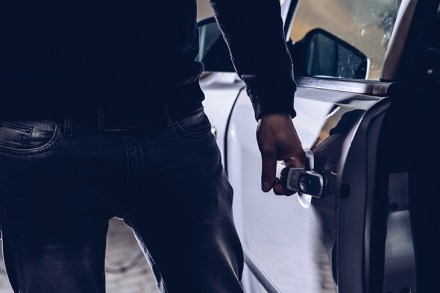
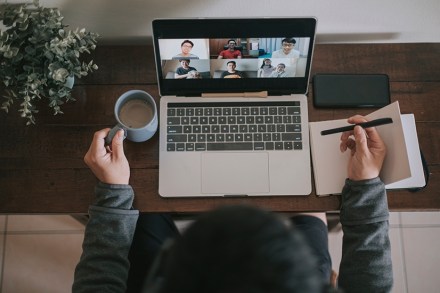
‘Where’s the car?’ said my wife Alice, interrupting my Zoom meeting on Saturday morning. ‘It’s where you left it,’ I said perhaps more pointedly than was kind. ‘When you drove it home last night. On the drive.’ ‘No it isn’t,’ she said. I left my Zoom meeting, shambled to the front of the house and looked out of the window. She was right. Half-full skip, yes. Wheelie bins, yes. The usual pizza boxes, empty vodka miniatures and crisp packets scattered outside our house by generous pedestrians? Present and correct. But no car. ‘It’s been stolen,’ I said gloomily and, of course, I was right.

Could hydrogen power turn air travel green?

From our UK edition

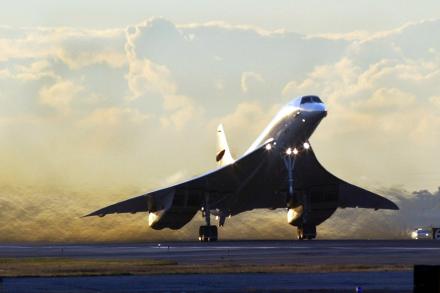
Have you been scanning airline websites for exotic destinations to which your double-jabbed status might allow you to slip away in August? I certainly have, but I’ve ruled out the parts of Canada and the United States that are stricken by record-breaking heatwaves and forest fires — and I’m wondering what impact such extreme climate events will have on the aviation industry as it struggles back to life after the pandemic. Having survived a year of near-total shutdown, I suspect it will now face an onslaught of green rhetoric to which governments — positioning for November’s COP26 climate conference in Glasgow — will be forced to respond.

Is lockdown’s tech bubble about to burst?

From our UK edition

Netflix is not signing up subscribers at the rate it once did. Disney+ has stalled. At Boohoo, growth is not as red hot as it was just a few months ago, while Deliveroo’s float on the London stock market was quickly dubbed ‘flopperoo’ by City wags. Zoom’s shares price has stopped, er, zooming, at least in the upward direction. A random collection of snippets of business news? Well, to some degree. But there is also a common theme to all these stories, and one that is significant for investors. We are about to witness a serious bout of what might be termed the post-pandemic blues. The companies that did brilliantly while the world locked down are going to see a significant slowdown as it opens up again.

Taking charge: it’s time to buy an electric car

From our UK edition

As a wise colleague once said: ‘Yesterday is a great time to buy a computer, because you have already enjoyed it for a day. Alternatively, buy a computer tomorrow. The computer you buy tomorrow will be both faster and cheaper than the computers available now. On no account, however, should you ever buy a computer today.’ One factor delaying our adoption of electric cars is that experience has taught us it pays to wait when buying anything with a plug. There is a huge impetus to buy property because, over time, your options get fewer and dearer. But when contemplating the purchase of an electric car we assume every year will bring a fall in price, an increase in range and a further boost in performance. And new models are being introduced all the time.

It’s time the British faced some uncomfortable truths, says Matthew d’Ancona

From our UK edition

As Britain starts its long Covid recovery, are deeper problems lurking beneath the surface? Matthew d’Ancona certainly thinks so, and in this brief, rather shrill polemic, he urges us to face some uncomfortable truths. Uppermost in his mind is the threat posed by the populist right, which he worries will try to blame Britain’s post-Covid economic hardship on immigrants. D’Ancona suggests that a message of intolerance would fall on fertile ground. Britain, he says, is already in a state of disarray: Public confidence in our institutions has plummeted, as has the belief in a widely honoured social contract; the notion of shared universal rights and responsibilities is mortally threatened in many places by a sense of futility and voicelessness.

Brave new virtual world: The Startup Wife, by Tahmima Anam, reviewed

From our UK edition

Welcome to Utopia — not an idyllic arcadia but a secretive tech incubator in a Manhattan office block. Here a computer scientist, Asha Ray, the narrator of The Startup Wife, her charismatic husband Cyrus and best friend Jules are nervously pitching their app platform — Asha’s cutting-edge algorithm aimed at people yearning for ritual without religion. Drawing on dreams, obsessions and secret desires — an Odyssey wedding, Game of Thrones funeral, pharaonic celebration — the app will create micro-communities of users; a virtual parish. Their startup gets the crucial nod, and they join the cool, shiny Utopians who are pursuing projects to support humanity ‘when there’s nothing left’. ‘You’re planning for the apocalypse?

The social tyranny of singing ‘Happy Birthday’

From our UK edition

Among the horrors, some aspects of lockdown were bizarrely less gruelling than expected; indeed for some people, the experience was mildly positive. It’s time to ask ourselves why. One possible explanation is ‘jomo’ — the joy of missing out. Much ostensibly voluntary human activity is not really voluntary at all. Like dressing for dinner in the 19th century, many elements of life are performative — things done to signal commitment or driven by social pressure.

TikTok intifada: the role of new media in old conflicts

From our UK edition

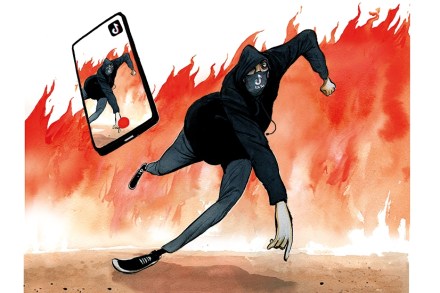
In Israel last month, a video on the social media platform TikTok encouraged users to film themselves assaulting Orthodox Jews. That video became a spark that ignited outrage across the country. A band of Jewish extremists, Lehava, organised a march in response. They clashed with Arab groups at Damascus Gate. In a situation that was already a tinderbox, things escalated from there. Why did it happen? Why would any ordinary person get pleasure from assault? ‘There is a competition for likes and views,’ a 15-year-old victim told an Israeli news organisation. ‘A video of an Arab slapping an ultra-Orthodox man will get you both.’ A violent riot set off by teenage longing for likes. Welcome to the TikTokisation of global politics.

The Proustian power of handwriting

From our UK edition

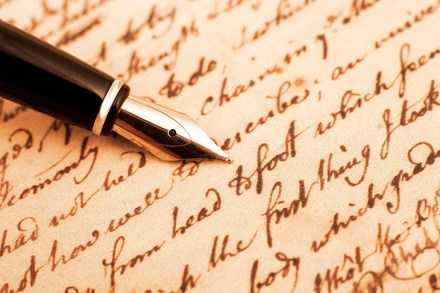
Towards the end of April, my mum sent me a letter. She doesn’t write as a rule — we speak on the phone — but this time she sent something. It’s hard to explain the effect her handwriting had on me after so many months of being apart. It was as if she was there, in envelope form, on the doormat. And because her handwriting’s been so familiar for so long, it wasn’t simply my mum as she is now, but Mum through three decades. I stood there in the gloom of the hall, vertiginous with memory, and I realised how unlikely it is that any future generation will have this same experience. I’m Generation X, the last of the analogue gang, brought up on handwriting. Our things weren’t encoded, they were imprinted: records and tapes.

The hidden cost of free technology

From our UK edition

Back in late 2019 I met someone from Zoom who was visiting London. The company, then as now, offered free video-conferencing calls for up to 40 minutes, but charged a fee of around £10 a month to users who wanted longer calls. Towards the end of the conversation, I flippantly asked what I thought was a hypothetical question: ‘How much would you charge to give full Zoom access to the whole UK population?’ I didn’t think much more about it, but to my surprise they came back to me a few days later: ‘If you know anyone in the government who’d be interested in this, we’d like to talk.’ In the end, I never got round to doing anything, and then the pandemic hit, which solved their adoption problem overnight.

Who’s really to blame for the Post Office scandal?

From our UK edition

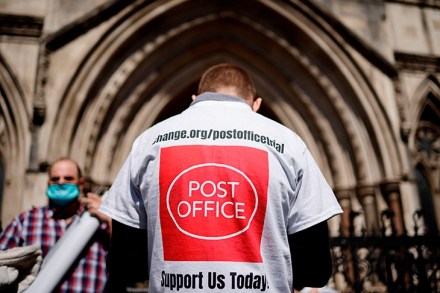
The alleged frauds for which the Post Office prosecuted no fewer than 736 of its sub-postmasters has turned out in almost all cases to be the result of faults in a computer system called Horizon which Post Office managers and the system’s supplier, Fujitsu of Japan, were reluctant to acknowledge. That’s the short summary of a miscarriage of justice which also looks like a case of mismanagement to the point of delusion: how could anyone believe a copy-cat crime wave on this scale was sweeping through a cohort of small businesspeople generally seen as the most upstanding of local citizens? And if that wasn’t the belief, the only other explanation is worse: cynical concealment of a 15-year IT cock-up for which no one was willing to carry the can.

The age of cyber warfare is a threat to us all

From our UK edition

In his recent State of the Nation address, Vladimir Putin said that if challenged by another state, Russia’s response would be swift, harsh and ‘asymmetrical’. An unusual word, but anyone who has been paying attention to the developments in cyber warfare will know what he means. Despite Russia pulling back more than 100,000 soldiers positioned on the Ukrainian border, British troops will shortly join Ukrainian counterparts to prepare for any misadventures from the Kremlin. And if a conflict were to escalate, the action may not be limited to faraway battlefields. It might involve cyberattacks, which would hit us at home. This, too, is a threat the Ministry of Defence seeks to prevent.

Video calls are the new penny post

From our UK edition

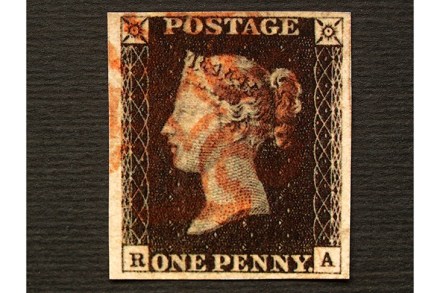
Dear Sir, I beg to introduce myself to you as a clerk in the Accounts Department of the Port Trust Office at Madras on a salary of only £20 per annum. I am now about 23 years of age. I have had no university education but I have undergone the ordinary school course… I have made a special investigation of divergent series in general and the results I get are termed by the local mathematicians as “startling”. This was the opening of the letter written by the Indian maths prodigy Srinivasa Ramanujan to Professor G.H. Hardy at Trinity College, Cambridge in January 1913.

Who can take on China in the tech arms race?

From our UK edition

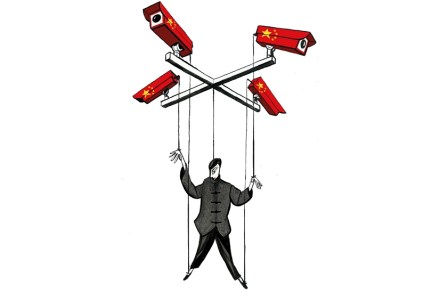
The government’s decision to water down new foreign investment rules designed to protect national security casts serious doubt about its resolve to keep China out of the most sensitive parts of the British economy. Raising the threshold above which an overseas stake must be examined from 15 per cent to 25 per cent will sharply reduce the number of deals facing scrutiny. The amendment to the National Security and Investment Bill, now wending its way through parliament, was presented by business secretary Kwasi Kwarteng as necessary to show Britain is still ‘open for business’.

My password amnesia got me into hot water

From our UK edition

Chelsea/Gstaad Oh, to be in England! But let’s start at the beginning. I challenge any reader to claim they are more technologically disadvantaged than yours truly. Or anyone not suffering from Alzheimer’s, at least. I resisted getting a mobile telephone until my days on board a sailing boat became a nightmare. I missed get-togethers, lost friends, and finally gave in around ten years ago. More trouble followed. For example, I get pings all the time and can see on screen the names of Pugs members sending messages to each other. But I don’t know how to put in my five cents. Prince Pavlos of Greece set my phone up so that it rings, but in the meantime poor little Taki is voiceless. And it gets better — or worse rather.

After Covid, get ready for the Great Acceleration

From our UK edition

Before the pandemic struck, there was talk of a ‘Great Stagnation’ – the idea that the world economy was doomed to lacklustre growth and had hit a technological plateau with no game-changers in sight. But Covid - and lockdown - has changed all that. There was such doubt about the vaccines because it normally takes at least ten years to develop a successful immunisation. Now, we have six working ones. The innovation will not stop there: breakthroughs are happening at rapid speed, from transport and energy, to medicine and science, and even when it comes to currencies. Take transportation and energy. Last October, for example, Waymo finally announced the launch of a taxi service that is fully driverless and open to the public.

Remote lessons have been an education for teachers like me

From our UK edition

I had a Post-it note beside my laptop during the online lessons I taught during lockdown. It simply said ‘shut up’. I have spent 20 years teaching maths in urban comprehensives, reflecting and refining my methods and trying to train others. I thought I was doing a pretty decent job, but the pandemic and the necessity of teaching remotely has made me rethink the whole process. Early on in May I realised I had to work out, from scratch, what I actually wanted my students to become and how, in the world of screen-mediated learning, I could help them achieve this. What do I want my students to become? I want them to become autonomous problem-solvers, courageous in the face of the Unknown Problem.

The 31 inventions that Britain really needs

From our UK edition

‘Get Brexit done, then Arpa’ read Dominic Cummings’s WhatsApp profile. Arpa was what’s now the American Defense Advanced Research Projects Agency. Mr Cummings has departed, but our very own British Arpa has arrived. Downing Street has tweaked the Yankee acronym to ‘Aria’ — the Advanced Research and Invention Agency. Its aim? ‘High-risk, high-reward’ scientific research. The cost? £800 million over four years. Ludicrous, no doubt: one of those fast-forgotten ‘eye-catching initiatives’ beloved of our leaders. But it got me thinking. We’re responsible for so many of the world’s great technologies and inventions.