Teachers unions

Axing the Department of Education will improve education

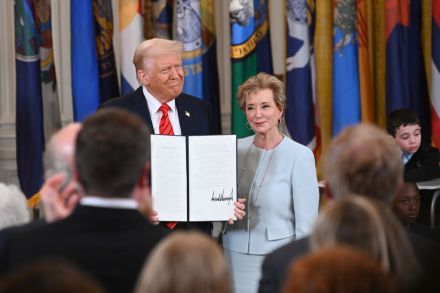
The big education news this week is a court ruling that allows the Trump administration to begin cutting jobs at the Department of Education. A cascade of familiar voices can be heard lamenting that ruling. That’s the angry, unified message from Democrats, the Washington Blob and their Media buddies. Woe betide the students, they wail. Damn this President. They are not just wrong. They are 180 degrees wrong. Why? First, they are wrong for democratic reasons. Donald Trump campaigned on a pledge to demolish the Department of Education. He’s carrying out that pledge, not backpedaling. That’s what citizens should expect from elected leaders in a constitutional democracy. They seldom receive it. Trump is not only right democratically, he’s right educationally.

Donald Trump

The Californication of the Democratic Party

When Joe Biden was elected in 2020, an overjoyed Los Angeles Times boasted that his goal was to “make America California again.” Biden has fulfilled the Times’s vision, if with less than complete success. Over the past few weeks, however, lunchbucket Joe from Scranton has been unceremoniously dumped by the Golden State elite — Nancy Pelosi, Adam Schiff, George Clooney and a passel of tech oligarchs — to be replaced with one of their own, Vice President Kamala Harris. But given the chances of a GOP win this year, the Californians have another favorite in the wings, Governor Gavin Newsom, for 2028. Harris’s elevation and Newsom’s looming challenge are but parts of what can be best described as the Californication of the Democratic Party.

California

Was 2023 the year of the labor union?

It is only fitting that the low point of the American labor movement occurred in 2009, the Year of the Rat. The Great Recession may have started with Wall Street speculation in the housing market, but your average American had most likely never heard of Henry Lehman or his siblings until the day Dick Fuld drove the 150-year-old bank bearing their name into the ditch. But General Motors, Chrysler? Cars, even more than Hollywood, jazz and the semi-automatic rifle, are the quintessential American business. How could those get driven into the ground? As soon as freshly evicted homeowners finished packing the remains of their subprime split-levels into the backseats of their battered Tahoes, they went looking for culprits. They settled on the United Auto Workers.

labor

Why public schools never have enough money

The new school year is just a few weeks away, and that can only mean one thing: right on cue, school districts are once again bemoaning a “lack of funding.” It’s the same story every year. Along with notices advertising the local high school drama department’s production of Grease come headlines announcing the school district is in dire straits and schools will literally fall to pieces if they aren’t pumped full of life-saving funding, stat. Year after year, it’s the same old song and dance: school funding increases, and the next year they need even more. Why is it never enough, though, and where does all the money go?

schools

Why civics test scores are falling in American schools

Twenty years ago, one of the most popular bits on late-night television was “Jaywalking,” where Tonight Show host Jay Leno quizzed passersby on world events, geography, history and more. He would ask random people on the street about literature, who the vice president was, or who we fought in World War Two. The clips that made the cut inevitably involved embarrassingly ignorant answers. Today, America is a nation of Jaywalking Allstars; whereas it was once a punchline for someone to be that ignorant, ignorance is now the norm. In early May, news emerged about record low scores for history and civics for eighth grade students nationwide.

test scores

How teachers’ unions could unwittingly usher in school choice

In a surprise development, teachers' unions in eight states recently announced drives to pass legislation that would establish so-called “wealth taxes.” Working with progressive legislators in California, Connecticut, Hawaii, Illinois, Maryland, Minnesota, New York, and Washington, the unions have devised what they believe are the best ways to tap, not just the incomes, but the assets of the most successful earners. Under the bill proposed in California, for example, residents with both financial and illiquid assets would be required to file yearly reports on their holdings, obligating those worth more than a certain amount to pay 1 to 1.5 percent of the total to Sacramento, even if they move out.

Don’t believe everything you hear about the ‘teacher shortage’

According to the mainstream media, there’s a national teacher shortage, though ongoing reports of this “catastrophic” phenomenon have left me skeptical. On one hand, there does seem to be a shortage of almost every type of worker these days, yet on the other, public school teaching has traditionally been a comfortable sort of job, offering a pretty predictable schedule, plenty of time off, benefits, and the rewarding opportunity to improve children’s lives. Where I live, teaching is considered a high-class career. It has its fair share of challenges, no doubt, but it's also not a sector where I would expect to see a shortfall of employees.

The data is in and the cost of school closings was terrible

Monday's release of the nation's report card on the academic performance of schoolchildren is just the latest stunning measure of how closed schools damaged young Americans. The National Assessment of Educational Progress, which looks at the test scores of fourth and eighth graders in math and reading, is a devastating indictment of the nation's political leaders and teachers' unions, who collaborated to shut down schools and keep them shut for in-person learning long after those across most of the West had already reopened. We're only just beginning to comprehend the wreckage, which has had significant effects on school districts across the country, even after it was clear they could reopen safely. When Covid first arrived in America, its danger to young students was unclear.

randi weingarten

The school choice moment is now

There’s been a lot of professed outrage lately over woke school boards. According to Republican candidates for office, they're infiltrating children’s curricula with critical race theory, recruiting drag queens to read at story hour for pre-schoolers, and engaging in other forms of — shall we say — “incompetence.” But the real heroes pushing back against left-wing ideologies in government schools are the parents, when it ought to be lawmakers. Outspoken parents in New Jersey made headlines when they protested their school district removing holiday names from the school calendar. Voters in San Francisco — yes! — recalled school board members who thought renaming schools “with a connection to colonialism” was more important than educating kids.

Why are government unions never the bad guys?

If there is such a thing as a formula for making a hit film, it has something to do with giving audiences a new and unusual villain. Over the years, screenwriters have thrown their protagonists up against enemies as thuggish as boss Johnny Friendly in 1954’s On the Waterfront and as smooth as Olivier’s Crassus as in 1960’s Spartacus. “The more successful the villain, the more successful the film,” as Hitchcock himself once put it. Which is why Hollywood’s constant search for new and unusual bad guys has explored almost every conceivable milieu: corporate America (The Big Short), street gangs (The Warriors), hospitals (Coma), prisons (Shawshank Redemption), law firms (The Firm), and even the movie studio itself (The Bad and the Beautiful).

Why a post-Covid world might not be so bad

No one need ask why the strict public health regime to manage Covid — masks, mandates, quarantines, and required inoculations — has begun to collapse. Between angry truckers, unfavorable polling for continued lockdowns, the perception of a Wuhan coverup, changing reports of vaccine effectiveness, and declining hospitalizations, even President Biden and blue state governors realize they have but two options: pretend to be leading a return to normalcy or face an unpredictable grassroots rebellion. The interesting question for Americans is not why the sudden prospect of a return to normalcy but what “returning to normalcy” really means.

Banning Critical Race Theory in schools isn’t enough

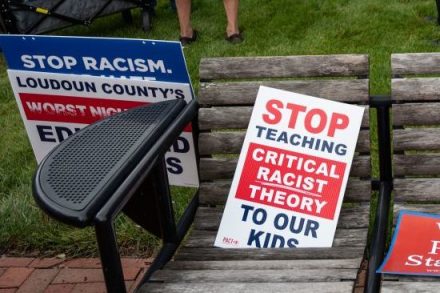
While pundits bicker about whether bills targeting critical race theory in schools are ethical or constitutional, an equally important question is whether they’re effective. While such legislation is a workable stopgap to loathsome practices like affinity groups, it can only work as a temporary measure. CRT is manifested not primarily as a set of explicit ideas to be taught like the freezing point of water or the causes of World War Two. Rather, it’s a philosophy that informs the instruction, curriculum, and policies of various districts. We cannot outright ban CRT from our schools anymore than we can ban the influence of philosopher John Dewey. When the culprit is a belief system, bans are the wrong tool.

critical race theory

The evidence is in: remote learning doesn’t work

As the omicron wave crests and public schools face teacher sickouts, strikes, and a rash of student absences, it is worth reviewing some basic facts about the pandemic and public education. The results of last year's experiment in remote learning have confirmed what any minimally competent teacher could have told you from the outset: instructing students online yields disastrous consequences. Indeed, the results are so bad that defenders of a maximally cautious approach can only argue about terminology (please don’t say “learning loss!”) while proposing that we shouldn’t actually measure how far students fell behind under lockdown. Meanwhile, the psychological costs of the pandemic era continue to mount.

zoom

Ms. Work-to-Rule and our fading school standards

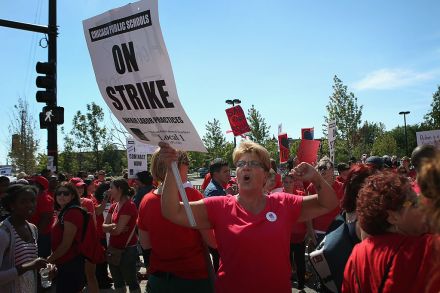
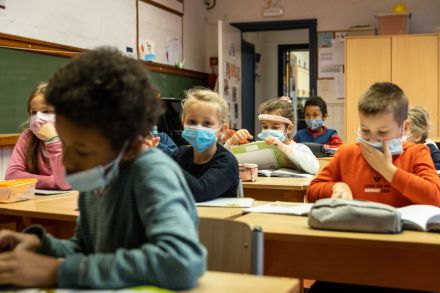
Ms. Work-to-Rule, chair of the local teacher’s union, smiles icily at the bezel. The weekly Zoom conference with the district superintendent and his many assistants is not going in the direction she would like. As schools across the country prepare to resume in-person classes, Covid purists insist on strict testing, vaccine proofs and other protections. If draconian demands are not met, a few big-city locals threaten teacher strikes. Some states require masks for students and teachers regardless of vaccination status. Others prohibit districts from requiring students to wear masks at all. School board meetings might be battlegrounds. The mild but highly contagious variant, Omicron, puts everyone — administrators, teachers, parents, and students — on edge.