Taxes

The taxman is coming for the self-employed

Spare a thought for Mrs McClafferty & Co. Like thousands of small business owners, she has spent years managing things the old-fashioned way: jotting down figures in a Silvine cash book, stuffing receipts into a shoebox and sorting it all out when the tax return comes around. But according to HMRC, taxpayers like her are partly responsible for a £24 billion black hole in UK tax receipts. Which means the taxman is coming for them. If you are self-employed and had an income of more than £50,000 last year, get ready for Making Tax Digital (MTD). From 6 April, you will have to file an income and expenses update four times a year, then an adjustment, then the annual return. You must use HMRC-approved software to do it all.

The real reason I left Britain

This is a two-parter, albeit linked. If you’re interested in the duplicitousness of British journalists, then keep reading. If you’re only interested in self-destructive British tax policy, skip to the middle. Burnt repeatedly by hacks who pretend to be enraptured by my latest novel while snooping through my cupboards, I long ago learned the hard way not to let British journalists into my home. Thus for years I only conducted interviews in the safely impersonal lobby of a West End hotel. But lessons learned are too often lessons lost. That may be an overly kind formulation of: I am an idiot. In my new hang in Portugal, I reverted to gormless naivety last month and let a British journalist into my house.

Why not privatise tax collection?

Twice a year the taxman comes to call, exhibiting all the bossy incompetence one expects from the government machine. Why not do as the Romans did, and privatise it? After all, one would surely rather give one’s money to a publican, even if a sinner. The publicanus, as the name suggests, was a public servant, i.e. a contractor for public works of any kind. Indeed, from early on, wars were fought, roads built and mines worked on the back of service contracts offered out to hopeful bidders, as was the right to gather dues from harbours and toll stations.

Trump is playing a high-stakes game of international poker

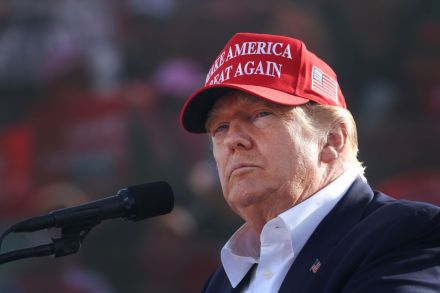
On what he called “Liberation Day,” President Trump announced a new tariff schedule. While the markets had been up in anticipation, they are down sharply, with the Dow dropping 2,200 points, perhaps surprised by the extent of them. Basically, Trump has laid tariffs equal to about half what other countries charge on US exports, inviting them to lower theirs in exchange for reciprocity. What the final result will be is anyone’s guess, for the Trump tariffs are chips in a high-stakes game of international poker. They have already had an effect. Canada has promised retaliatory tariffs while Israel has dropped all tariffs on US goods. A tariff is a tax laid on goods passing through a port.

trump

Reversing our economic decline is not easy, but it is simple

Our immiseration came swiftly and stealthily. At the start of the 21st century, Britain was a prosperous country. Ambitious people fought to come here. We trusted that, over time, we would become wealthier – an expectation that had been accurate for most of the previous two centuries. Since the millennium, Britain and western Europe have pretty much stopped growing – especially if we ignore the impact of immigration and calculate GDP per head. Reversing this slowdown should be the top issue at every election, but it is surprisingly under-discussed. In theory, almost all our politicians want growth. Keir Starmer and Rachel Reeves keep describing it, nasally and tautologically, as their ‘number one priority’.

The audacity of Kwarteng’s tax cut for the rich

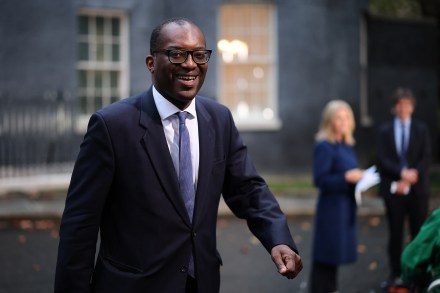
George Osborne dreamed about it and Rishi Sunak told friends that he’d like to do it if everything went well and he was feeling brave. But this morning Kwasi Kwarteng has gone ahead and done it.  The ‘additional rate of tax’ – set up by Gordon Brown as a trap for the Tories in 2009 – has just been abolished. Right now, those earning more than £150,000 per year will pay 48.25 per cent on every pound they earn (45 per cent income tax plus 3.25 per cent National Insurance). From April next year, it will fall to 42 per cent (40 per cent income tax plus 2 per cent NI). A double tax cut: the additional rate goes and NI is also cut. So the biggest tax cut of Kwarteng’s ‘mini-Budget’ has gone to the very richest.

Will Rishi Sunak stick to his ‘golden rule’?

Here’s the Rishi Sunak paradox: he proudly defines himself as a low-tax Tory but under his watch taxes are reaching a 71-year high. There are plenty of Tories who want to ditch next month’s National Insurance increase but Sunak is firmly opposed – mainly because he wants to link up in people’s minds that more money for the NHS and social care doesn’t manifest out of thin air. But pressure is on at tomorrow’s spring statement to make clear what kind of Chancellor he really is. Does he come from the long line of Tories who like tax cuts in theory but not in practice – or does he have another agenda? Sunak’s starting position is that to cut tax, you need to restrain spending. For the Chancellor, it’s a simple point about trade-offs.

Rayner hits Johnson where it hurts

The first PMQs of the year gave us a preview of the political debate we’ll be having for the next few months. Labour went after the government on inflation. Angela Rayner asked Boris Johnson why he had dismissed fears over it as unfounded back in October: Johnson denied he had said it — which is an odd claim given what he said in that interview. She then punched the Tory bruise, by asking why Johnson wasn’t cutting VAT on fuel, as he had said he would do during the EU referendum. Johnson made the point that this help wouldn’t be well targeted, which is true. But the political pressure for this from Labour and his own backbenchers are going to make it very hard for him to resist.

Will the Tories cut taxes before the next election?

The Tory party has reached a fork in the road, I say in the Times today. One path involves sticking to the spending plans, hoping to cut taxes before the next election and getting rid of the new perception of them as tax raisers. The other drags them into ever more spending, led by big increases in public sector pay, and ends with them going to the country as a high-tax party. In his Budget speech and his address to Tory MPs, Rishi Sunak made clear that his preference was for the former approach, which should cut taxes before the country goes to the polls again. But sticking to even the spending limits set out this week will require tough choices that the Tories have not wanted to make in recent years.

Rishi Sunak’s low tax pitch to MPs

Is Rishi Sunak a low tax chancellor? He certainly likes to tell anyone who will listen that he is. Yet his actions tend to suggest the opposite. The tax burden is currently on track to reach its highest level since the early 1950s, and while Sunak unveiled one big tax slash in the Budget in the universal credit taper rate cut, the main thrust of Sunak's announcements was spend, spend, spend. Tonight Sunak addressed Tory MPs at a meeting of the 1922 committee. After announcing £150 billion in extra public spending, Sunak sought to convince his party that, despite this, he was committed to lowering taxes.

Lewis Hamilton doesn’t need a knighthood

Given that I know about as much about Lewis Hamilton’s tax affairs as I do about Formula One motor racing it would be unwise for me to be churlish about his knighthood, announced in the New Year Honours list. For all I know, he could be making generous voluntary donations to HMRC. A few weeks ago, it was reported that his tax status was being vetted by the Palace, and it doesn’t appear to have prevented his name appearing on the honours list. Then again, it is hard to escape a suspicion that the big attraction for his decision to live in Monaco might just possibly have been the modesty of its fiscal demands upon its residents – in which case it is not hard to wonder whether a more appropriate honour might have been the Ordre du Merite Culturel, bestowed by Albert II.