Tax

The government’s social care reform plans don’t add up

From our UK edition

As Covid-19 swept through care homes in the spring of last year, the public watched on with horror and helplessness. About a third of all Covid deaths in England took place among residents of these homes. It was worse overseas. In Spain, care home residents accounted for 40 per cent of Covid deaths last year. In the Netherlands and Sweden, it was around 50 per cent. In Canada, almost 60 per cent. But this doesn’t provide much comfort. Britain may belong to a large club of countries that got their pandemic policy wrong — but the results, regardless, were deadly. The huge holes in Britain’s social care system have been exposed. They had been expanding for decades but comprehensive reform was avoided time and time again.

How do the Tories stop the rise of an ever-bigger state?

From our UK edition

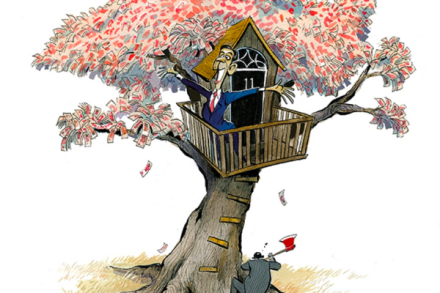
When Gordon Brown raised National Insurance in 2002 to put more money into the health service, it was seen as a huge political gamble. The Tories — including one Boris Johnson — denounced the move in furious terms. In a sign of how far to the left the country has moved, the Tories are planning to do something very similar to cover the cost of a social care cap and dealing with the NHS backlog. If the Tories do this, it will put Labour in a tricky position. How do they respond when a Tory government raises taxes to put more money into the NHS? If the Tories do this, it will put Labour in a tricky position But there is a political, as well as an economic, danger to the Tories in such an approach.

What the NHS pay rise says about Boris Johnson’s priorities

From our UK edition

Well, that didn’t take long. Two days ago, a leaked report revealed that the government was considering using a national insurance tax hike to pay for the NHS backlog and social care. Now it looks as though the money could be diverted elsewhere.  The anticipated increase of at least one per cent on national insurance would transfer an additional £6bn from taxpayers to the Treasury. But today, the Times reports that £1.5bn of that sum may not go to hip replacements or speeding up the timeline for cancer patients to access treatment. Instead it could help fund the three per cent NHS pay raise, which has been promised by health secretary Sajid Javid.

The tax-and-spend Tories

From our UK edition

When you ask a government minister why something hasn’t happened, you get a one-word answer: ‘Covid’. It has become the catch-all excuse for manifesto promises not materialising. But in the case of social care, there is a particular truth to it. A meeting last week between the Prime Minister, the Chancellor and the Health Secretary nearly resulted in an agreed policy. A plan was expected this week. Then Sajid Javid tested positive for Covid, putting the three into isolation and the policy on hold. Johnson feels he needs a solution to social care, having promised to solve the issue when he became PM two years ago and again in the Tory manifesto.

A tax rise for care won’t solve the problem

From our UK edition

The tax burden in the UK is nearing a 70-year high — but that’s not stopping ministers from mulling over plans to hike taxes further. According to reports this morning, Boris Johnson and Rishi Sunak are close to agreeing an increase to national insurance to help address the NHS backlog (five million patients in England, and counting). They also want to fill the long-standing black hole in the social care budget: something Johnson promised he’d address nearly two years ago to the day when he first entered Downing Street. The rumours have immediately led to criticism of the government’s willingness to break its manifesto pledge, not to raise income tax, national insurance or VAT.

A minimum corporation tax is nothing to celebrate

From our UK edition

So is this what the new era of global co-operation looks like? The EU has agreed to delay the introduction of its proposed digital levy until the autumn to allow negotiations for a global minimum corporation tax. Biden had demanded that the digital tax be dropped, seeing it as a direct attack on US tech giants. In other words, the EU appears keen to compromise in the face of US pressure — something that it would have been less likely to do under Donald Trump. The move makes it more likely that a global minimum corporation tax of 15 per cent will now become reality. Is that a cause to cheer? Not if you are Ireland, which has grown wealthy in recent decades by setting a corporation tax rate of 12.

Should flights be taxed more?

From our UK edition

The European Commission is set to propose EU-wide minimum taxes on kerosene, the fuel for planes, as part of their EU energy taxation plans to meet the new eco 2030 targets. However, it remains to be seen if this tax will be agreed by all member states, as taxation issues require unanimity.  A leaked draft from the Commission proposes a minimum tax on flights inside the EU. Freight flights are to be exempted, so as not to give a competitive advantage to non-EU competitors, which could be seen as a muddled approach to satisfy too many objectives at once. And there are alternatives, such as including aviation companies in the CO2 emissions trading. Taxes are the prerogative of member states, though the EU can set minimum rates Why do planes not have to pay taxes on their fuel?

Won’t someone please think of the billionaires?

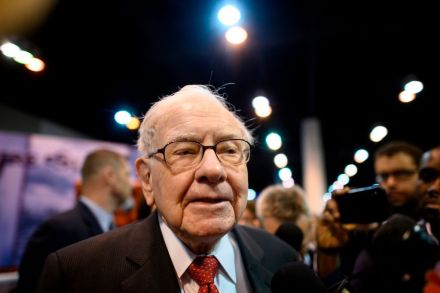
As that peerless philosopher of the 20th century Marvin Gaye once pointed out, there are three things in life of which we can all be certain: taxes, death and trouble. Cockburn has long admired the late soul legend’s lyrics, but this week, that weary little aperçu has rung somewhat hollowly in his mind. You will have no doubt read of the damning report published this week by ProPublica, investigating the murky relationship between the taxable assets and actual taxes paid by some of America’s billionaires. If so, you probably agree that it makes for thoroughly depressing reading.

buffett billionaires

Suddenly used cars are hot property

From our UK edition

Companies should willingly pay tax wherever they generate profits — this column has long argued — because it’s fair they should contribute to the cost of the public services on which all business ultimately relies, and because the reputation of capitalism as a whole is tainted when corporate tax bills are reduced to absurdly low levels by the use of offshore domiciles and spurious royalty payments that most governments lack the willpower to challenge. So I welcome at least one half of the G7 finance ministers’ agreement last weekend on a new global corporate tax regime. The half I’m ready to praise is the proposal that all countries should have the right to tax some of the locally generated profits of the world’s largest multinationals.

How many Lilibets are there in the world?

From our UK edition

Rare Lili Other than the new royal baby, is there anyone in the world formally called Lilibet? — There are 141 Lilibets in the US. None have been born since 1999 — when 8 were born, according to the US Social Security Administration. — Lilibet Foster, born in the US Virgin Islands in 1965, is a documentary-maker whose film Speaking in Strings, about the violinist Nadja Salerno-Sonnenberg, was nominated in the 72nd Academy Awards. — In answer to a freedom of information request in 2017, the Office for National Statistics refused to provide a full breakdown of the first names of people living in Britain. But it does publish a list of the top 100 girls’ names for recent years, which haven’t included Lilibet.

Will the G7 tax deal survive?

From our UK edition

What are the chances of the G7’s agreement on a minimum rate of corporation tax actually coming into effect? While it was presented as a done deal last weekend, things are not going too well. Firstly, the G20 will have to agree — which is far from guaranteed given that smaller countries have less to gain from the proposal than the US. It is a tax designed to help countries with a large number of multinational companies who currently operate through subsidiaries in countries with lower corporation tax rates. While no G20 country currently has a rate below the agreed 15 per cent, (and the biggest loser, Ireland, with its 12.

Why should Amazon be exempt from Biden’s global tax?

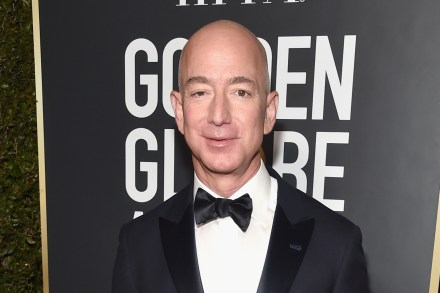
Donald Trump wasn’t a man for international agreements. Just imagine for a moment, though, that it was him rather than Joe Biden who had just persuaded the G7 to back a minimum global corporation tax rate. Would it be hailed as a great breakthrough for fairness, a sideswipe against amoral global corporations?  Like hell it would. On the contrary, the same deal pulled off by Trump would have been attacked as a charter for the big tax avoiders to carry on as they are — as well as a bullying attempt by the US to divert more tax revenues to its own shores at the expense of smaller countries with competitive tax rates. There are two elements to the agreement reached over the weekend. The first is the proposed minimum tax rate of 15 percent.

jeff bezos amazon

The trouble with capital gains tax

President Biden wants to nearly double the tax on income from capital gains, currently at 20 percent, to 39.6 percent. Add to that the 3.8 percent Obamacare surcharge and you’re up to 43.4 percent. Many states tax capital gains as well and in 13 of them (plus the District of Columbia) the total tax on capital gains would be over 50 percent with the proposed new federal rate. In California it would be a staggering 56.7 percent. But it gets worse. Unlike the tax on regular income, the capital gains tax is not indexed for inflation. So with long-held assets, much of the gain is illusory. For instance, if you bought an asset in 1971 for $50,000 and sold it this year for $1,000,000, you would owe taxes on a nominal capital gain of $950,000. At 56.

capital gains tax

Stop the global tax!

Multilateralism was supposed to be the great theme of the Biden presidency. No longer would the US plow its lonely furrow. Instead it would engage with the rest of the world on matters of mutual interest. Where, though, does that fit with the attempt by treasury secretary Janet Yellen today to try to set a minimum level of corporate income tax for the whole world to whole world to observe? The US is no longer withdrawing from international agreements, as it did in Trump’s day — it is doing something far more objectionable, by trying to lay down American rules for the rest of the world to follow.

global tax

The case for keeping business taxes low

From our UK edition

Why should business pay tax at all? That’s a provocative but forlorn question to ask in Budget week. Business pays corporation tax on profits because that’s what voters expect, partly because many are conditioned to believe profit is a sin and partly because all would prefer to pay less tax themselves. Investors pay tax on capital gains because — as the American bank robber Willie Sutton said of his crimes — that’s where the money is. And companies pay more tax as business rates on premises because that’s the easiest way to collect contributions towards public services from which they benefit — but it’s also an easy levy to relieve at times, like now, when the private sector needs help.

Which countries still haven’t had a single case of Covid?

From our UK edition

French lessons France’s former president Nicolas Sarkozy was sentenced to three years in jail, with two of them suspended, for corruption and ‘influence peddling’ after seeking to bribe a judge. Some other French leaders who have been convicted in criminal courts:— Jacques Chirac got a two-year suspended sentence in 2011 for setting up fake jobs to claim public funds for political purposes.— Christine Lagarde was convicted in 2016 of making payouts to a businessman while she was finance minister in 2008. She was not punished and went on to be appointed head of the European Central Bank.— In 2020 former PM François Fillon was given a five-year sentence, three suspended, for paying his wife for a job she never did.

20 taxes Rishi should bin

From our UK edition

When Rishi Sunak takes to the Despatch Box on Wednesday it will be against a backdrop of colossal national debt, the recent rise in government bond yields and the ongoing Coronavirus crisis. The British state owes £2.1 trillion, ten times the size of the entire economy of an independent Scotland. Yet some concerns over the health of the public finances are misguided – or at least exaggerated. The increase in borrowing to pay for Covid does not itself have to be repaid (at least in the short term). Why? Because provided the government can continue to make the interest payments, debt can simply be rolled over. What's more, the UK economy is already at – or close to – its maximum taxable capacity.

A proportional property tax would be a disaster

From our UK edition

Two of the most unpopular taxes in Britain are stamp duty and council tax, property taxes both, seen as economically damaging and unfair. So it is not surprising there is a noisy campaign, gaining widespread coverage, to abolish them both and replace them with a simple 'proportional property tax'. The more your home is worth, the more you pay — what could be fairer and simpler? Although well intentioned, this new property tax is a genuinely bad idea. To be revenue neutral for the Treasury, campaigners estimate it needs to be set at 0.48 per cent of the value of the property per year — so that someone with a £1 million home will pay £4,800 a year in this tax.

If taxes must rise, Sunak should pick on private equity instead

From our UK edition

It’s not axiomatic that taxes must rise to pay for the pandemic, if you seriously believe the surge in growth, jobs and prosperity that will follow the rollout of a hyper-efficient national vaccination programme will generate sufficient revenues for Rishi Sunak to stabilise the public finances, albeit at the highest level of debt ever seen in modern times. On the other hand, the Chancellor is surely pondering this question: in the current mood of public gratitude for the NHS and government support for the economy, there must be taxes I can tweak that won’t lose sackloads of Tory votes and might chip the peak off the debt mountain — so where are they?

The Barrett hearings show the Democrats have wised up since Kavanaugh

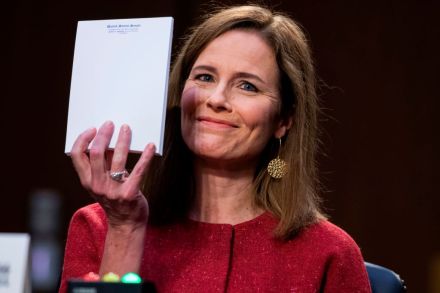
There was nothing original about Amy Coney Barrett’s appearance before the Senate Judiciary Committee other than her incessant professions of her fidelity to an originalist approach to the American Constitution. Originalism is a convenient smokescreen for conservatives to act as what they claim not to be — judicial activists, ascribing their own views to the founders. But to acknowledge this would be to land Barrett in a host of difficulties. For the likes of Barrett, originalist theory is the judicial equivalent of an SDI shield. She wielded it well. Throughout, she dutifully supplied answers that were none at all. She has no ‘agenda’. She has no view on whether a president can delay an election. Voter intimidation at the polls? Once again, she punted. After Sen.

amy coney barrett