Tariffs

Free markets are part of the American tradition

Election aftermaths are always an opportunity for taking stock. Since the 2022 midterms, we’ve heard prominent Republicans stressing the need to revisit questions ranging from electoral strategy to how to engage the culture wars. What desperately needs discussion on the American right, however, is conservatism’s approach to economic policy. Since 2015, American conservatives have been deeply divided over economics. Conservative skepticism about markets predates Donald Trump, but there’s little question that Trump shattered the favorable views of free markets that had prevailed since Ronald Reagan’s presidency.

It’s time for the US to revoke China’s ‘normal trade’ status

In April 2022, six weeks after Moscow’s invasion of Ukraine, President Biden signed legislation to suspend Russia’s Permanent Normal Trade Relations (PNTR) status. “Revoking PNTR from Russia,” he said, “is going to make it harder for Russia to do business with the United States… The free world is coming together to defeat Putin.” PNTR status, also known as Most Favored Nation (MFN) status, is a designation granted among World Trade Organization members. Receiving nations are awarded all trade advantages that any other nation receives. Revoking PNTR status from Russia was a strategic move. It opened the door to deliver comprehensive economic strikes against Moscow and sent a clear signal to markets.

Manufacturing in the US shouldn’t be so hard

There’s an automotive parts manufacturer in my hometown. The company has grown over the course of its 19-year life, from around 20 employees two decades ago to 45 full-time employees today. Despite the dirty nature of much of the work, the facility is kept clean, open, airy, and bright. There are no shavings on the floor or fumes in the air. The men who weld, bend, blast, and powder coat the metal parts and send them to the warehouse for packaging and shipment do so energetically. “Honestly, [the work] is very satisfying,” the shop’s lead welder, Joe, told me during a recent tour of the facility. “I’ve always wanted to do things with my hands, and I’ve always enjoyed welding.

Can protectionism bring back my father’s world?

My father was born in 1948. He’s the same age as Jackson Browne: ’65 I was 17, ’69 I was 21. His plan was to graduate from his Western Pennsylvania public high school and join the Marine Corps. The local draft board came damn close to saving him the trouble of enlisting. But near the end of his high school career, it was discovered that his girlfriend was “in a family way.” His parents briefly floated the idea of obtaining an illegal abortion. Fortunately, my 17-year-old father, his soon-to-be in-laws, and his Episcopal priest (in those days such men could be depended upon) stood firm. He and his girlfriend were married. Soon after, my half-brother was born and my father enrolled in an apprenticeship program with the International Brotherhood of Electrical Workers.

Boycotting China is not that easy

China’s various human rights abuses, their treatment of women, their savagery toward religious people and their chokehold on Taiwan and Hong Kong, has long made them a target for economic boycotts by Westerners. But executing a successful one is exceedingly difficult to achieve. In 2003, disappointed that the George W. Bush administration reaffirmed their ‘One China’ policy in regards to Taiwan, I launched my own boycott of Chinese goods. It was difficult but felt worthwhile to spend extra time looking for the ‘made in’ label on goods I was buying. And then I needed a shower curtain. I visited store after store and could not find one made anywhere except in China. I lived without a curtain for months before giving in and buying a Chinese-made one.

boycotting

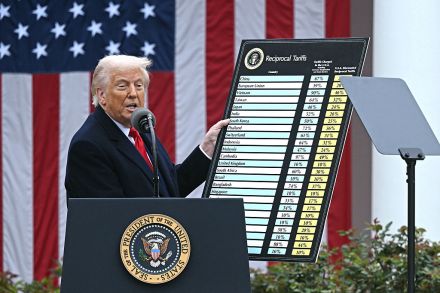
There’s a long way to go before Trump can declare victory in his trade war

There is no shortage of quotes by Donald Trump that his opponents have tried to use against him — few of which have so far damaged him politically, still less embarrass the man himself. But there is one which really does have the potential to cause him harm in this year’s presidential election: his claim, in March 2018, that ‘trade wars are good, and easy to win’. That isn’t looking quite so clever now, two years later when the trade war that Trump started with China is still far from won. The deal signed today by Trump and Chinese vice premier Liu He brings a respite in hostilities, but there is a long way to go before the US can be claimed to have won, or even to have restored trade to what it was prior to 2018.

trade war

The Chinese trade deal is a Christmas gift to Xi

If Donald Trump wanted to deliver a seasonal gift to his ‘good friend’ Xi Jinping, the ‘Phase One’ trade deal reached this weekend fits the bill pretty well.  From the viewpoint of the Beijing leadership, it vindicates the Chinese refusal to budge during the long months of trade negotiations despite the threat of escalating duties. What has resulted is less the kind of overall trade agreement originally aimed at by the Trump administration and feared by China as interference in its economy —  and more of a purchase agreement accompanied by reduced tariffs.

xi

Trump’s Chinese tariffs are simply a scare tactic

Ever since Donald Trump began his trade war with China there have been two possibilities: firstly, that he intends tariffs to form a permanent feature of the landscape in relations between the US and China: a protectionist device designed to protect American jobs indefinitely; or secondly, that he sees his tariffs as a shock tactic devised to draw China into talks which it would otherwise be loathe to join, and with the ultimate aim of freeing up trade. The latest development, halving a set of tariffs which had been in place since September and canceling another set which had been due to come into place this week, points heavily to the latter.

chinese tariffs

They may take our wine, but they’ll never take our brie-dom

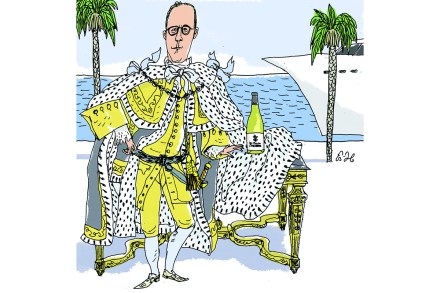
I was poking at a dessicated branzino at the Union League yesterday, half-listening to a schoolmate drone on about international alternatives, when he mentioned off-hand that the United States and France are gearing up for a trade war. Bordeaux could cost a bomb; brie could break the bank. I dare say, it shook me to my coeur. Thank God it’s not Sancerre season. They’re decorating the club for Christmas, so I worried I was delirious from the smell of brass polish. I excused myself and discreetly logged on to see that, alas, the dreadful news is true. It’s bad enough that they’re banning foie gras in New York, which is as civilized as burning churches. Now the feds are getting in on the act too.

wine brie

America should kidnap pandas to end the trade war

It’s near the witching hour as the wolves begin to howl, the Tasmanian devil spins itself into a frenzy, and the red-eyed tree frog blinks into glass. The zoo is oddly quiet as US commandos (trained in zoology) scale the walls and deploy a well-placed and tiny explosive gum inside the lock to pop open the enclosure. The sleepy giant simply rolls over with dreams of bamboo and blasé dancing in its head. A bearded captain pulls out a black sack and pulls it over the animal’s head as they tranquilize the heavy sleeper — the panda rendition is complete. That’s right, I am proposing kidnapping the American domiciled pandas to expedite an end to the US-China trade war.

pandas

Are inside-traders profiting from the US-China trade war?

Of all the 9/11 conspiracy stories, one of the most persistent is the suggestion that al-Qaeda funded its operations by short-selling the shares of airline companies in the days before the attack. Inevitably, airline shares plummeted that day, netting short-sellers vast profits. While there was an increase in short-selling before the attack, no-one has proved one way or the other whether that was history’s most audacious case of insider-dealing or just a reaction to an industry which was already in trouble for purely commercial reasons. But is someone now trying on the same trick with the US-China trade war?

inside-traders

The ur-Trump has re-emerged at last

Is Donald Trump bonkers? In the past few days, the notion that Trump is not all there has been picking up steam. His references to what would amount to a divine mandate — 'I am the chosen one' — or eager embrace of his putative status as King of the Jews have prompted more than a little head shaking in the media. Perhaps the most vociferous member of the Trump-as-nutcase brigade is his aggrieved former aide Anthony Scaramucci who most recently likened the president to Rev. Jim Jones. Trump has reciprocated Scaramucci’s concern about his mental health by deeming him, in turn, a 'nut job.' But it is Trump’s actions today that have his detractors sounding fresh alarms. After Federal Reserve chairman Jerome H.

donald trump

America should view China as a hostile, revolutionary power

Much has been made of the return of great power competition. In truth, it never went away, although the great game was so one-sided for a time that almost everyone in the West tuned out, assuming the match was over in perpetuity. It was too boring to contemplate and so attention drifted to other concerns and second- and third-order problems. China’s attention did not deviate, and once again it is a great power. Like cholesterol, great powers can be good, in that they accept the present international order, or bad, in that they do not. China does not, and seeks to overturn the contemporary order the West created.  This is the source of what is already the great conflict of 21st century. China is not a status quo great power.

xi jinping power

Trump heals the nation…by attacking Beto for his ‘phony name’

The Democratic party, mired in infighting only a week ago, has reunited over racial division. New Jersey senator Cory Booker stated in a speech on Wednesday in Charleston, S.C., that the recent acts of white nationalist violence received a stimulus 'from the highest office in our land, where we see in tweets and rhetoric, hateful words that ultimately endanger the lives of people in our country.' Joe Biden took direct aim at President Trump: in an impassioned speech in Burlington, Iowa, he declared, 'in both clear language and in code, the president has fanned the flames of white supremacy in this nation.' A day earlier, Fox News host Tucker Carlson tried to douse the controversy over white nationalism by averring that the phenomenon is a 'hoax.

phony name

When Mexico enforces its own laws, immigration drops

‘We’re holding a gun to our own heads,’ said Sen. John Cornyn in June. He was talking about President Trump’s threat to impose tariffs in order to force Mexico to crack down on illegal immigration into the Unites States. Many congressmen agreed, fearing, as establishment figures are prone to do, that Trump was risking the whole economy for some nebulous border demand. A month later, it seems Trump’s tariff gambit has worked. After Mexican officials agreed to crack down on illegal immigration to avoid US-imposed tariffs, the Department of Homeland Security reports that border apprehensions dropped from 144,278 in May to 104,344 in June — a 28 percent decrease.

mexico

Trump was right to threaten Mexico with tariffs

Let's not mince words. President Trump and his loyalists were dead right. His threat of tariffs pushed Mexico to work harder to stop the Central American caravans, and the migrants who hope to exploit immigration law loopholes in order to receive asylum in the United States. And the bipartisan, Trump-loathing political, business and media establishments were all dead wrong. They warned that his strong-arming would ignite a trade war, disrupt the thick web of supply chains linking the American and Mexican economies, and risk a recession. Equally off-base was the establishmentarians' angst that Trump's gambit would endanger the revamp of the North American Free Trade Agreement (Nafta) that he has sought and which Mexico and Canada recently signed.

donald trump mexico trade deal

Trump is Joe Biden’s best campaign aide

They warn generals not to fight the last war. The same admonition might apply to presidential races. Donald Trump was out on the White House lawn attacking Joe Biden with his usual battery of epithets — ‘dummy,’ ‘loser,’ and so forth — and it sounded like déjà vu all over again. Even as he derides Biden as ‘slower than he used to be,’ it is Trump who is starting to look as though he’s losing his mojo. In 2016, Trump ran a guerrilla campaign in which he was able to sneak up on the enemy, first the Republicans vying for the nomination, then Hillary Clinton. No one took Trump that seriously.

joe biden campaign

Trump’s Mexican tariffs could wipe out his 2017 tax cut

Donald Trump likes to brag about his deal-making prowess. During his visit to the United Kingdom, he’s touting the prospects for a ‘very, very substantial trade deal.’ But even as he dangles sugarplums before the British, he’s blowing up another agreement that he wanted to complete before the 2020 election — the United-States-Mexico-Canada Agreement, which is supposed to supplant NAFTA.His attempt to fuse national security and nationalism in the form of a tariff on Mexico could end up torching his own presidency. Trump’s big idea — concocted by his aide Stephen Miller — is that he can pressure Mexico to crack down on immigration by pressuring it with tariffs.

mexican tariffs

Donald Trump’s one-front trade war

At 12:01 a.m. on Monday, President Donald Trump went a long way toward defusing a potential war – not with Iran, but Canada and Mexico, where Trump revoked tariffs he had imposed in the name of national security. Why the sudden bout of tariff reduction? The president is focusing on a one-front trade war with China. The restrictions began as two fronts of the same war. Trump imposed 25 percent tariffs on steel and 10 percent tariffs on aluminum imported from China last March. Then he extended those tariffs to the EU, Canada, and Mexico on June 1. But the president seems to have concluded that the US can no more fight a two-front war in trade than on the battlefield.

Donald Trump one-front trade war

How I learned to stop worrying and love Trump’s trade war

Alarmist news reports and panicky stock sell-offs. A threat to impose tariffs on US goods in retaliation for President Trump’s threatened levies. You’d think that Beijing had just ruthlessly shut down a major engine of American growth. But the truth is that tariff fear-mongering reveals the gulf between America’s financial markets and its real economy that provides everyday goods and services. The Chinese economy has grown spectacularly since Beijing turned away from Maoism in the 1980s. It’s true that major American industries from aircraft to agriculture have profited handsomely from supplying Chinese demand. The offshoring model supercharged by China’s admission to the World Trade Organization (WTO) in 2002 has been especially lucrative.

donald trump trade war