T.s. eliot

The Trump trial is a precursor to how a republic ends

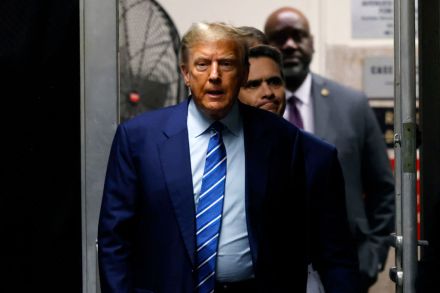
Among the many great lines in T. S. Eliot’s Four Quartets, is this mournful observation from “The Dry Salvages,” the third of the bunch: “We had the experience but missed the meaning.” How much happens to us that we only half register or undergo without really twigging its significance? One example that is both pedestrian and historical: the criminal trial in Manhattan of Donald Trump.  As I write, Trump is leading slightly in the polls, which means he is not only at the head of the chief opposition party, but also that he represents an existential threat to the future of the regime that is persecuting — er, prosecuting him.  The trial, brought by Soros-funded district attorney Alvin Bragg is often described as being about “hush money,” i.e.

donald trump trial

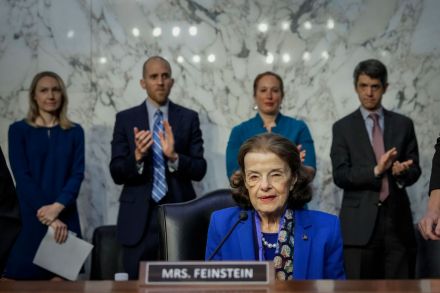
Has America lapsed into a gerontocracy?

Although I write at high summer, by the time you read this another school year will be upon us. I wonder: do students still read T.S. Eliot? They should. A lot of what he wrote continues to reverberate with significance. Consider, to take just one example, these lines from his poem “Gerontion.” History has many cunning passages, contrived corridors And issues, deceives with whispering ambitions, Guides us by vanities. Think now She gives when our attention is distractedAnd what she gives, gives with such supple confusionsThat the giving famishes the craving.Gives too lateWhat’s not believed in, or if still believed,In memory only, reconsidered passion.Gives too soonInto weak hands, what’s thought can be dispensed withTill the refusal propagates a fear.

gerontocracy

T.S. Eliot’s The Waste Land at 100

In the United States a century ago, a single poet dominated the literary sphere. He was not only the recipient of the first ever Pulitzer Prize for Poetry — which he would win twice more during the course of an internationally distinguished career — but would be nominated for the Nobel Prize for Literature on four separate occasions. He was beloved by presidents, described by one admirer as “more artful than Hardy and more coy than Frost” and found himself one of the bestselling writers in America. His reputation seemed assured forever.

waste land

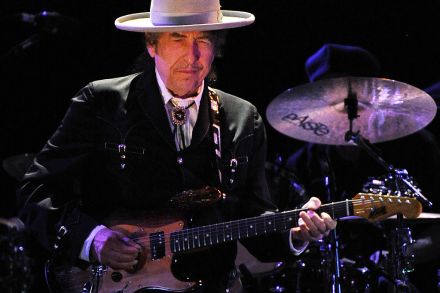
Bob Dylan’s and T.S. Eliot’s search for truth

The fact that the master songwriter Bob Dylan is a fan of a literary allusion should come as no surprise. This is the man who, in his autobiography Chronicles Vol. 1, declared that reading the French symbolist poet Arthur Rimbaud made “bells [go] off.” (Incidentally, it was Suze Rotolo, his first love whom he so cruelly lambasted in “Ballad of Plain D,” who introduced him to the poet. One feels that Dylan should have paid her a little more retrospective credit than the all-but-bitter love songs on The Freewheelin’ Bob Dylan.

Et in Arcadia ego

"Oxford I do not enjoy,” wrote T.S. Eliot to Conrad Aiken in February 1915. “The food and the climate are execrable, I suffer indigestion, constipation, and colds constantly.” The poet was clearly having one of his bad days. Since arriving at the university the previous October, he had found himself in and out of love with the place, which was hardly surprising, given the timing. Most of the undergraduates at Oxford had either left or were on the verge of leaving to fight for their country, meaning that the lecture and tutorial rooms were almost empty, the sports fields green through lack of use, and the centuries-old traditions stalling like motor cars on the long stretch of the High.

Oxford

Ocean Vuong’s immature poetry

Time is a Mother — Ocean Vuong’s second poetry collection — should have been a scene-stealer, a much-awaited literary event of the type normally reserved for a J.K. Rowling. The collection has been talked about in the breathy, excited terms not normally associated with poetry — the least glitzy of the literary genres — and in a way not heard of since the blockbuster release of Ted Hughes’s Birthday Letters (1998). Vuong, rightly, won the T.S. Eliot prize in 2017 with Night Sky With Exit Wounds. The collection had flashes of brilliance and was a mark of a young poet making his way in the world. It also won the Forward Prize for best first collection, and, in 2019, Vuong was awarded a MacArthur “genius” grant.

We’re deep into Cats

After T.S. Eliot died in 1965, his second wife Valerie became notorious for not releasing his letters or unpublished verse, and for not licensing his published work for vulgar adaptation. This is why ‘The Love Song of J. Alfred Prufrock’ was never made into a musical with an opening number in which the protagonist jumps off an operating table as a female chorus come and go, talking of Michelangelo.

cats

When Tom met Groucho

The man of distinction who longs to be acclaimed for something else is a recurring and quite endearing figure. A few years ago, I wrote a small book about the fraught relationship of Arthur Conan Doyle and Harry Houdini. The escapologist was driven by shame about his lack of formal education. He had dropped out of school at the age of 12 to support himself as a shoeshine boy before embarking on a career as an acrobat and magician. For Conan Doyle, the attainment of influence and wealth as the author of the Sherlock Holmes stories apparently never dispelled the vulnerability that dwelled inside the alcoholic’s son from a slum household in Edinburgh.

groucho marx