Syria

Little Britain

From our UK edition

The foreign news pages read increasingly like some terrible satire on western military decline. Two years ago French and British forces, with the help of the US Navy, managed to help Libyan rebels topple Colonel Gaddafi. This year, the French needed British support to go to war against some tribesmen in Mali. It was a successful operation, but the ‘Timbuktu Freed’ headline rather summed up the extent of European military power today. The French have only two drone aircraft (the Americans have hundreds) and had to drop concrete bombs on Tripoli when they ran low on real ones. As the foreign policy rhetoric of our media and political leadership grows, the contrast with the resources grows starker.
No, the Syrian civil war is not “Obama’s Rwanda”

From our UK edition

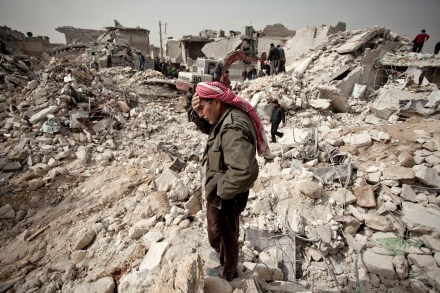
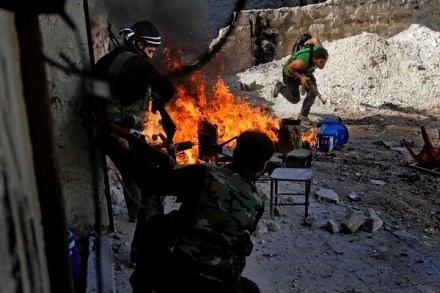
Today's Question To Which the Answer Is No is asked by Will Inboden over at Foreign Policy. To wit: Has Syria Become Obama's Rwanda? There are many reasons why it has not, not the least of them being that the question rests upon an utterly false premise. According to Inboden, however: In the crucible of policymaking, officials should ask themselves more often how they will look back on the decisions they made while in power. Former President Bill Clinton has repeatedly said that one of his biggest regrets was not intervening in Rwanda.

What Iran wants in Syria

From our UK edition

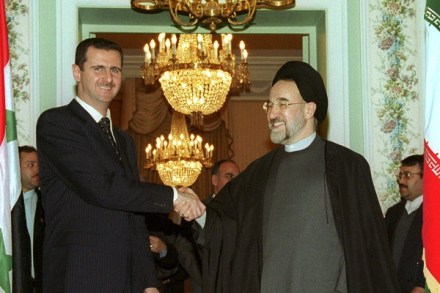
The Washington Post has an important story about how the Iranian regime is preparing for post-Assad Syria. The paper reports that American and Middle Eastern governments believe that Tehran is backing a 50,000 strong militia in the hope of keeping Assad in power and, if that’s not possible, defending its interests in the aftermath of his downfall. Iran’s ultimate aim, the paper suggests, is the establishment of a client state on the coast. This would enable it to continue funneling weapons to Hezbollah in Lebanon allowing it to maintain its influence in Lebanese politics and to carry on supporting terrorist attacks against Israel.

Syria exposé shows the BBC at its best

From our UK edition

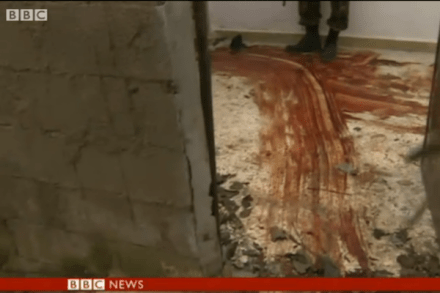
Superb piece of journalism on the BBC News from Lyse Doucet. A horrible story, of some appalling mass murder in Syria – told calmly and bravely; unpartisan, questioning and undoubtedly exposing the team to danger, for our benefit. The very best of journalism. You can see it here. Actually, the piece which followed Doucet’s wasn’t bad either – a fine report from Damian Grammaticus on the Chinese economic slowdown as seen from the ghastly city of Wuhan. I mention this because the corporation isn’t simply a handy base for collective noncing, overpaid middle managers and political bias.

International silence on suspected chemical weapons will embolden Assad

From our UK edition

Foreign Policy magazine published a remarkable story last night revealing that American diplomats have concluded that Bashar al-Assad probably used chemical weapons against his own people last month. After speaking with activists on the ground, doctors, and key military defectors who previously played a role in the country’s WMD programme, one official concluded: ‘We can't definitely say 100 percent, but Syrian contacts made a compelling case that Agent 15 was used in Homs on Dec. 23.’ (Activists uploaded this graphic video showing the effects on its victims). This would chime with other intelligence the Obama administration is receiving, particularly from Assad’s former spokesman Jihad Makdissi who defected last month and is now in America.

The aid group brokering the Syria prisoner exchange

From our UK edition

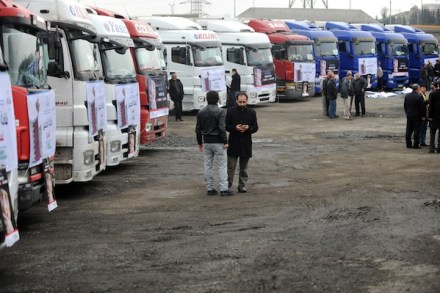
There’s an interesting subplot to yesterday’s prisoner exchange in Syria which has not received as much attention as it should. While government and rebel forces were busy swapping captives (more than 2,000 in total), little has been made of the role played by aid group IHH in brokering the deal. The group came to prominence during the Gaza flotilla in 2010 when its members became involved in a deadly confrontation with the Israeli army after refusing to cooperate with the coastguard. The IHH has since dismissed accusations of being linked to jihadist groups and insists its aims are purely humanitarian. Its role in the Syrian prisoner exchange belies these claims.

How Obama united Syria’s rebel groups

From our UK edition

How soon the revolutionaries forget. You only need a sketchy knowledge of what happens to the pigs in Animal Farm to appreciate how easily revolutions are deflected from their original course. A recent – and rare – show of unity by disparate Syrian rebel groups suggests this is happening in Syria, too. Throughout the 20 month uprising President Obama has watched and wavered with almost blithe indifference (save for the occasional condemnation) as Bashar al-Assad has killed more than 50,000 of his own people. This changed last week when the White House finally intervened. In its most decisive pronouncement on the conflict to date, the jihadist group known as Jabhat al-Nusrah (which has ties to al-Qaeda) was proscribed.

Don’t trust Hezbollah — whatever Terry Waite says

From our UK edition

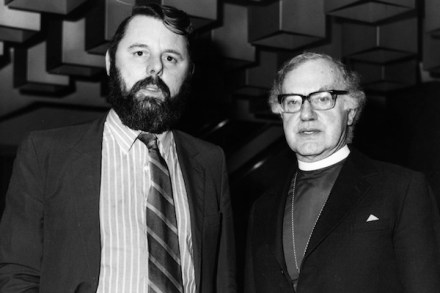
Earlier this month, while he was in Lebanon to highlight the plight of Christians in the Middle East, in particular those fleeing the fighting in neighboring Syria, Terry Waite, the former special envoy to the Archbishop of Canterbury, kissed and made up with Hezbollah, the militant Shia group that held him captive in Lebanon between 1987 and 1991. One probably shouldn’t blame Waite, now 73, for wanting to exorcise any residual demons of his 1,763-day nightmare, but in doing so he unwittingly gave Hezbollah dangerous and unwarranted legitimacy.

Tyranny’s fellow travel writers (Part 3)

From our UK edition

Earlier this year I noted a piece by Michael Moynihan in Foreign Policy. He looked at how the authors of the Rough Guide and Lonely Planet guide books were producing apologias for tyranny. I argued that the kind words for Assad’s Syria, Gaddafi’s Libya and the Khomeinist Iran, were a result of the capitalist leftism – or politically correct capitalism – of the last decade. The whitewashing of dictatorial crimes could appear left-wing because the regimes opposed the West, or more specifically Bush’s America.

What can the international community do to stop Assad using chemical weapons?

From our UK edition

Bashar al-Assad is busy writing his suicide note, ordering military officials to prepare the country’s chemical weapons for use. That’s the assessment of Pentagon officials overnight who have detected a flurry of activity at two facilities where these weapons are known to be stored – in al-Safir, on the outskirts of Aleppo; and Furqlus, about 30 miles from the already destroyed city of Homs. The precursor chemicals for Sarin nerve gas, an extremely lethal toxin, have now been loaded into bombs that can be delivered by Syrian aircraft. Sarin was deployed most notoriously by Saddam Hussein who used it to crush a Kurdish uprising in 1988 during the Halabja massacre. More than 5,000 people were killed by a single missile.

Could a major escalation in the Syrian conflict be imminent?

From our UK edition

In the last 12 hours all mobile and internet lines have been cut in Syria, plunging the country into a communications vacuum. The regime has been badly hit in recent days. Almost all of its supply lines into Aleppo have been cut off and a number of strategic military bases were overrun in recent days. Heavy fighting also resulted in Damascus airport closing down earlier today, suggesting the rebels are enjoying a degree of momentum at the moment. For its part, the Assad regime is saying the rebels are responsible for the communications blackout. That might be so, but if true, it reveals just how far Assad’s grip on power has been weakened.

Bigotry on the Beeb

From our UK edition

I have only just caught up on the latest episode of BBC Radio 4’s ‘Any Questions’. In that programme, from All Saints Church in Somerset, a Mr Stephen Bedford asked the panel this question: ‘Despite all the foreign aid and support Israel has spectacularly failed to get on with its neighbours.  Does Israel deserve a future?’ More people have been killed in Syria in the last twelve months than have died in the whole of the conflict between the Israelis and Palestinians over recent decades. In addition, the Assads have spent recent decades destabilising the Lebanon, assassinating leading politicians there and much more.

Jordanians protest against King Abdullah

From our UK edition

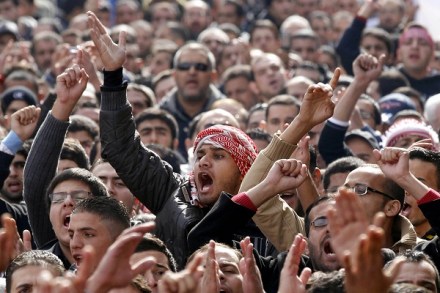
Large protests have gripped parts of the Jordanian capital, Amman, today in a country where criticism of the king is punishable by three years in prison. King Abdullah has been careful not to repeat the errors of Bashar al-Assad’s authoritarian crackdown which quickly escalated matters in neighbouring Syria. So far, Jordanian police have adopted a passive approach to protesters. Abdullah will be hoping the momentum behind these protests subsides over the coming days. He can still take some relief from the fact these protests have been caused by a hike in fuel prices. This is the vital difference here. The popular uprisings which swept away regimes in Tunisia, Libya and Egypt were principally about corruption and the lack accountability. Abdullah is not yet facing similar criticisms.

Picking sides in Syria, the Algerian experience

From our UK edition

Some thirty-five years ago, in 1977 to be exact, I first published A Savage War of Peace, a definitive history of France’s war in Algeria. The war dragged on from 1954 to 1962, torpedoed six French governments, and the Fourth Republic itself, bringing de Gaulle to power. It also introduced a new meaning to the word ‘insurgence.’ Thanks to the indolence of my publishers, the book was allowed to go out of print. When the Iraq War began, to my fury I learned that it was changing hands on the free market in Washington at over $200 a copy, with quantities being bought by the Pentagon.

Philip Hammond’s Iranian justification for keeping Trident

From our UK edition

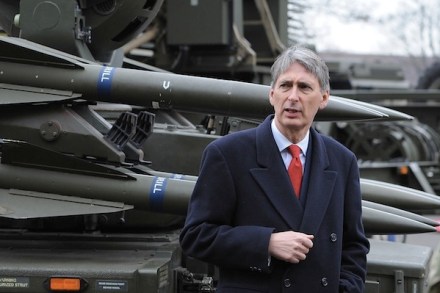
The Sunday shows have been dominated today by the aftermath of George Entwistle’s resignation. But Phillip Hammond gave a significant and combative interview on the Sunday Politics. Pressed by Andrew Neil on Michael Portillo’s criticisms of renewing Trident, Hammond dismissed them with the line that the former Defence Secretary ‘doesn’t have access to the information that would allow him to make that judgement on a sound basis.’ He then went on to argue that Trident is a necessary insurance policy in a world that will see an ‘an arms race in the Middle East’ if Iran does get the bomb. Iran, and the dangers it poses, was also Hammond’s justification for selling arms to Saudi Arabia.

Cameron ramps up the rhetoric on Syria

From our UK edition

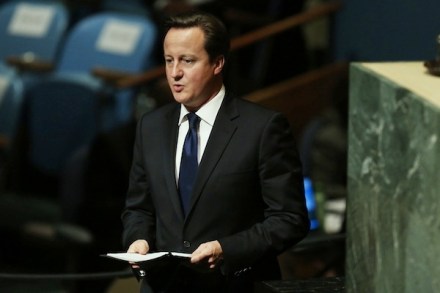
William Hague has a rather awkward meeting in his diary today with his Russian counterpart Sergei Lavrov. The pair were due to discuss Syria, and now they can also discuss David Cameron's provocative comments at the United Nations last night. The Prime Minister told the UN General Assembly that the ongoing atrocities in the country were a 'terrible stain' on the hands of the UN. He said: 'The blood of these young children is a terrible stain on the reputation of this United Nations. And in particular, a stain on those who have failed to stand up to these atrocities and in some cases aided and abetted Assad's reign of terror. 'If the United Nations Charter is to have any value in the 21st century, we must now join together to support a rapid political transition.

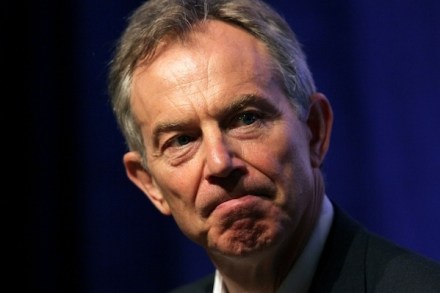
We need to hear more from Tony Blair on Syria

From our UK edition

Conventional wisdom suggests that Bashar al-Assad’s Syrian regime will crumble from within if given enough time. That’s the reasoning which has, in part at least, prevented Western governments from intervening in the conflict so far. Tony Blair challenged proponents of that view yesterday. 'People say inevitably he will go. I don't think it is inevitable, actually, unless we are prepared to make clear our support and solidarity for those people who are struggling against what is a very, very brutal repression now,' he told Radio 4's Today programme. Although Blair isn’t necessarily advocating military intervention, he does think we should be exploring military options more thoroughly. This is the conundrum facing Western governments.

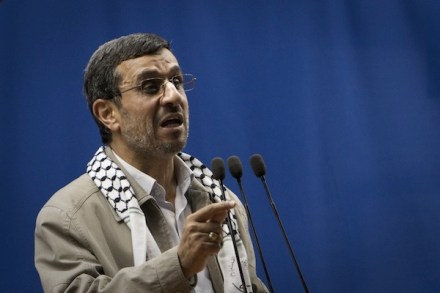
How Iranian media saved Ahmadinejad from embarrassment

From our UK edition

If you ever needed an indication of how the media spouts the propaganda of authoritarian regimes like loyalist apparatchiks faithfully repeating the party line then look no further than Iran. Coffee Housers will remember that last week I highlighted the damning speech given by Mohammed Mursi in Iran during the Non-Aligned Movement conference where he took the opportunity to slam the Syrian regime, describing it as having lost its legitimacy. Mursi’s grandstanding caused some embarrassment to Ahmadinejad given Iran’s unconditional support for Bashar al-Assad – but that’s where the embarrassment seems to have stopped.

George Galloway’s awfulness

From our UK edition

George Galloway's awfulness falls into two categories. First there is the serial dictator-licking. This is a man so profligate, not to say promiscuous, in his affections that he has in succession fawned over Saddam Hussein, Bashar al-Assad and Mahmoud Ahmadinejad. Then there is the personal vileness — pretending to be a dirty cat on live television (still, after all these years, impossible to watch), explaining his curious notions of when rape is, and is not, rape, and using vulgarly dismissive terms about disabled people. The strange thing about this is that though the former is, I suggest, in the great scheme of things the worse stuff, it is always the latter that gets him into trouble.